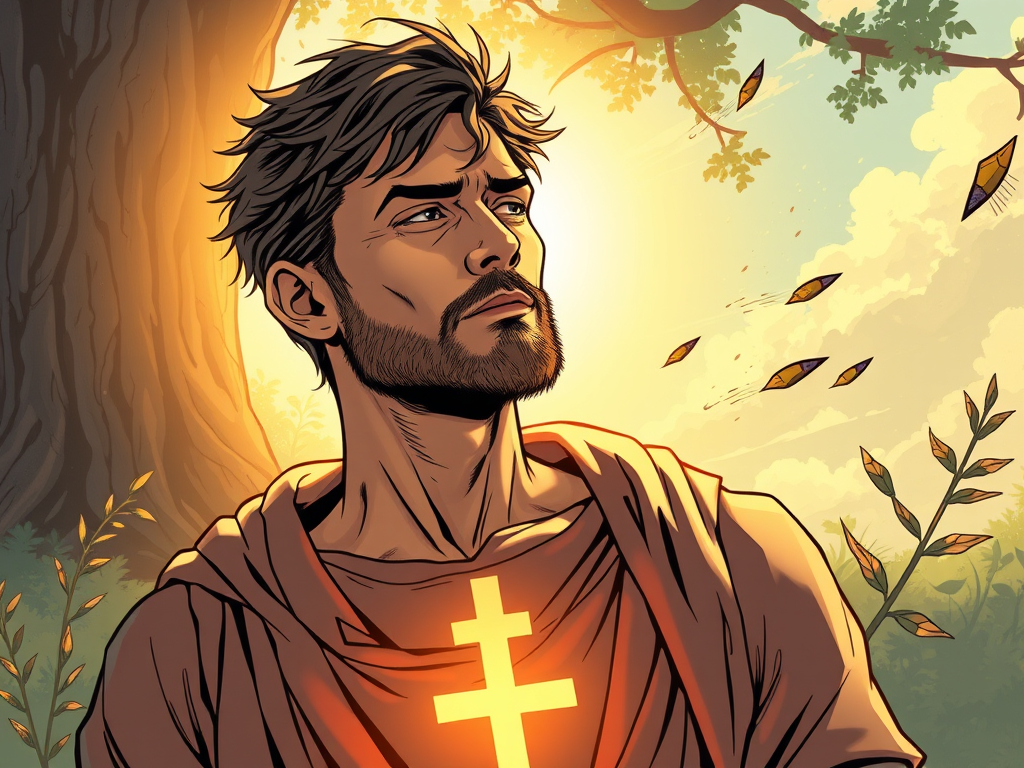
They are experiencing Christianity as joy and hope, having thus become lovers of Christ.

Category: Wisdom & Flourishing

  • When the Heart Knows:

    Recovering Embodied Wisdom in an Age of Overthinking

    In a world that prizes rational analysis and verbal precision, it’s easy to forget that some of our most essential knowledge comes not from the head—but from the heart.

    Many wisdom traditions—and increasingly, modern neuroscience—are circling back to this ancient truth: the intelligence of the heart is fast, intuitive, and often more reliable than conscious thought. This is what some call embodied wisdom or somatic knowing—a way of knowing rooted not in arguments but in perception, intuition, and lived experience.


    💡 The Knowing Before Words

    Before language, living beings navigated reality by feeling. A deer doesn’t analyze whether to flee; it knows to run. That knowing is not irrational—it’s pre-rational. It’s rooted in sensation, memory, and response, all firing faster than the speed of thought.

    We often say, “the body knows.” But perhaps it’s more accurate to say:

    “The heart knows — and the body follows.”

    This heart-knowledge isn’t abstract. It manifests in real-time decisions, in gut reactions, in the sense that something is right or wrong even when we can’t explain why. It’s how we move, how we pray, how we love.


    🏀 The Athlete and the Heart-Mind Unity

    Take basketball as an example. When a player takes a shot, there’s no spreadsheet of angles or force calculations flashing through their brain. There is instead a convergence of practice, presence, and intention. The body reacts—but it does so because the heart and mind have already willed the action.

    This is not unconscious. It is pre-verbal. It’s knowing that’s been trained and lived into, not merely thought through. It’s muscle memory animated by soul memory.


    ❤️ Our Lives Follow What the Heart Loves

    This has profound implications for daily life. Many of our choices—whether noble or self-indulgent—don’t originate in careful reasoning. We don’t choose lust, laziness, or cruelty because they “make sense.” We follow them because our hearts are inclined that way. In the same way, acts of generosity, courage, or self-sacrifice often arise from deep formation—not from logic alone.

    As St. Augustine once wrote, “You have made us for Yourself, O Lord, and our hearts are restless until they rest in You.”

    In other words: we move toward what we love. And we often love before we think.


    🧭 A Shift in Questions

    Modern people often ask, “Does this make sense?” But ancient wisdom might challenge us to ask instead:

    “Does this feel right? Does this align with what my heart knows to be good, true, and beautiful?”

    These are questions of orientation, not calculation. Discernment isn’t just analysis—it’s listening to the deepest parts of who we are.


    ✝️ Integrating Heart, Mind, and Spirit

    Faith traditions—particularly Christianity—don’t reject reason, but they insist that reason must be integrated with the heart and the body. We are whole persons, not brains on sticks.

    “We don’t think our way into virtue—we live our way there, led by what our hearts have already chosen.”

    The goal is not to suppress the heart in favor of reason, but to form the heart rightly—so that its intuitive guidance leads us toward love, not away from it.


    🌱 Final Thought: Relearning to Listen

    We know more than we can say. We feel more than we can explain. And we often decide before we fully understand why. That’s not a flaw—it’s part of being human. And if we can learn to listen to our hearts—not the surface emotions, but the deep, formed desires—we may rediscover a kind of wisdom that has been with us all along.

    Let the heart know. Let the body follow. And let grace shape them both.

  • The Hero in the Margins

    Why the greatest stories often begin far from power — and what that means today

    When we think about heroes, we often imagine people with special powers or big titles. But in the real world — and in most great stories — heroes don’t start at the top.


    They start in the margins. In fact, that’s where the real transformation begins.


    What Do We Mean by “The Margins”?

    The margins are the places that feel far from the center.
    Not just physically — but socially, economically, or culturally.

    It might be:

    • A small town
    • A poor neighborhood
    • A group that doesn’t get much attention
    • Or someone who feels like they don’t fit in

    In today’s world, we often talk about “the marginalized” as people who need help. And while it’s true that life can be harder on the edges, it’s also true that powerful things grow there.


    Every Hero Starts Small

    Think about famous stories from history or religion:

    • Moses was in the wilderness.
    • David was just a forgotten shepherd.
    • Jesus came from a town nobody respected.
    • In mythology, heroes like Harry Potter lived in cupboards before they found their calling.

    They didn’t start in palaces. They started in places of struggle, loss, or invisibility. And that’s exactly why they changed.


    The Margin Builds Something the Center Can’t

    When you’re not in the spotlight, you gain other things:

    1. Clarity: You’re not surrounded by noise and pressure. You can see what matters.

    2. Creativity: With fewer tools, you learn to build smarter.

    3. Drive: When things are harder, you learn to push.

    4. Perspective: You know what it feels like to be left out. That shapes your heart.

    These qualities are what turn a person into a leader, a thinker, or a force for change.


    Why This Matters Now

    Today, we often try to “fix” the margins by making them more like the center. We offer comfort, attention, and resources — all good things. But what if we also need to look to the margins for leadership? What if the most important voices are not in the spotlight yet? What if the next big idea — or movement — is growing quietly on the edge?


    Don’t Just Help the Margins. Listen to Them.

    The margins aren’t just where people are struggling.

    • They’re where new stories are being written.
    • Where courage is being shaped.
    • Where heroes are being made.

    So yes — let’s support those in the margins.
    But let’s also remember: Heroes don’t come from the palace. They rise from the wilderness.

  • False Mercy: When Help Hurts

    Why some forms of charity can do more harm than good — and how to offer real support instead

    We all want to help. We see someone struggling, and we reach for kindness. We give money, offer shelter, send the care package.

    But sometimes, the very thing we do to help… ends up holding someone back.

    That’s what we mean by false mercy.


    What Is False Mercy?

    False mercy looks like kindness.
    It feels like compassion.
    But in reality, it removes the opportunity for growth.

    It’s the kind of help that:

    • Solves a problem for someone instead of with them
    • Removes consequences that are meant to teach
    • Replaces responsibility with rescue
    • Makes us feel good, but leaves the other person stuck

    When Help Becomes Harm

    Imagine this:

    A young man is floundering. He can’t hold a job. He avoids responsibility.
    His parents step in to pay rent. Then groceries. Then car insurance.

    Now he has no pressure to grow, no urgency to change, and no sense of agency.

    What looked like love became a trap.
    What felt like mercy became a cage.

    This isn’t rare — it’s happening all around us.
    In families. In schools. In churches. In governments.

    And it often starts with good intentions.


    Charity Without Challenge

    Indiscriminate charity — the kind that gives with no structure, no expectation, and no relationship — can do more than waste resources.

    It can:

    • Block transformation
    • Reduce dignity
    • Delay calling
    • Send the message: “You can’t do this on your own.”

    That’s not love.
    That’s quiet sabotage.


    The Call Must Be Answered — Personally

    In every story worth telling, the hero has to choose.

    • The Prodigal Son had to return on his own feet
    • Moses had to leave the wilderness and face Pharaoh
    • You had to go back to school and finish your degree

    The turning point always requires agency.

    And when we step in too hard, too soon, or too often…
    We may be keeping someone from their turning point.


    So How Do We Truly Help?

    We don’t need less compassion — we need wiser compassion.

    Here’s what that can look like:

    • Support with accountability
      → “I believe in you. What are you going to do next?”
    • Help that invites responsibility
      → “I’ll match your effort — not replace it.”
    • Challenge as a form of care
      → “You’re capable of more. I won’t take that from you.”
    • Trust in someone’s potential
      → “I won’t rescue you because I respect you too much.”

    Real Mercy Looks Different

    It doesn’t always feel soft.
    It doesn’t always feel “nice.”

    But it’s the kind of love that leads to real growth, not quiet dependency.

    Because real mercy doesn’t remove the fire.
    It walks beside someone through it — and trusts that they will rise.

  • Men -vs- Women Adversarial Roles:

    Fascist or Decadent? How Men and Women Go Astray When They’re Wounded

    If men become adversarial, are they more likely to turn fascist or decadent? And what about women?

    That’s not just a sharp question. It’s the kind of question that reveals fault lines running through our culture — and through every soul.

    To answer it, we have to step back and look at two patterns that show up again and again in myth, history, and personal life.


    The Two Forms of Collapse

    Let’s define the two distortions:

    • Fascist (archetypally): Obsessed with order, control, uniformity. Often justified by appeals to lost glory or sacred duty. Prone to enforcing discipline without mercy — in the name of survival, stability, or purity.
    • Decadent: Disordered, self-indulgent, emotionally chaotic. Often cloaked in the language of self-expression, freedom, or authenticity. Prone to rejecting all restraint — in the name of healing, pleasure, or liberation.

    Both are forms of resistance to reality. Both distort something noble.


    Men and the Fascist Drift

    When men go adversarial — when they feel wounded, disrespected, or lost — they’re more likely to veer toward fascist patterns.

    Why?

    Because chaos terrifies men. And when they don’t have purposeful order, they often try to impose rigid order. That might look like:

    • Authoritarian posturing
    • Rigid hierarchy worship
    • Framing every disagreement as war
    • Controlling others “for their own good”

    It’s a fear-based overcorrection. When healthy strength is lost, they reach for tyrannical strength. They choose control over vulnerability.


    Women and the Decadent Drift

    When women go adversarial — when they feel unseen, trapped, or used — they’re more likely to veer toward decadent patterns.

    Why?

    Because stagnation and entrapment terrify women. And when they don’t have meaningful freedom, they often seek radical freedom, even if it becomes destructive. That might look like:

    • Romanticizing self-indulgence
    • Rejecting moral norms as “oppressive”
    • Treating transgression as empowerment
    • Disowning duty or commitment

    It’s a freedom-based rebellion. When healthy expression is lost, they reach for chaotic reinvention.


    But These Aren’t Rigid Rules

    Of course, men can be decadent — passive, addicted, emotionally absent. And women can be fascist — hyper-controlling, moralizing, even cancel-driven.

    What we’re describing are archetypal tendencies — not destiny.

    And most importantly: these distortions arise from wounds.

    • The fascist man is often trying to protect something — but without love, his “protection” becomes domination.
    • The decadent woman is often trying to reclaim her self — but without truth, her “freedom” becomes chaos.

    The Real Battle Is Inside

    The adversary isn’t just out there. He’s in you. She’s in you. Every human faces the temptation to twist good desires into destructive reactions.

    The answer isn’t to shame men for craving order or women for craving freedom. The answer is to redeem those impulses:

    • Let men protect — with strength and humility.
    • Let women express — with courage and wisdom.

    This is the true Hero’s Journey for both sexes: to face the adversarial energy in the self, and bring it back into alignment with truth, love, and purpose.


    Because when we refuse that journey, we don’t become free. We become lost.

    Developed with assistance from ChatGPT

  • Why Does the Adversary Hate the Unknown?

    What happens when we reject the journey that brings life.

    Q: Why does Jordan Peterson say the Adversary “shrinks from contact with everything he does not understand”?

    A: Because this refusal — to face the unknown — is the root of spiritual death.

    Let’s look at what Peterson is revealing here, and why it’s one of the deepest warnings in Maps of Meaning. It shows us what happens when a person rejects mystery, transformation, and the journey into life itself.


    🔍 Who is the Adversary, really?

    Peterson describes the Adversary not just as a villain in myth — but as a spiritual attitude. A mindset. A posture toward reality.

    “He is the spirit of unbridled rationality.”

    That’s not reason rightly ordered. It’s rationality divorced from wisdom — cut off from the sacred, the mysterious, and the transformative.

    The Adversary is the one who:

    • Clings to control
    • Fears uncertainty
    • Hates the unknown

    He’s brilliant — but brittle. Calculating — but closed. He does not step into the unknown to be transformed. He does not drink the Water of Life.

    Instead, he “shrinks from contact with everything he does not understand.”


    💧 The Water of Life — and the Shrinking Soul

    The “Water of Life” is mythic language for what revives, renews, and regenerates us. It’s symbolic of:

    • Vitality
    • Transformation
    • Creative renewal
    • Truth born from suffering
    • Contact with the deep unknown

    The Hero drinks from it — because he goes into chaos, confronts what he fears, and emerges changed.

    The Adversary avoids it — and becomes stagnant.

    He grows rigid. Authoritarian. Cynical. Over-controlling. He tries to engineer out risk, eliminate uncertainty, and deny mystery.

    He becomes not just hostile to others — but resentful of life itself.


    📖 The Pattern in Myth

    You’ve seen this figure before:

    • Lucifer in Paradise Lost
    • Mephistopheles in Faust
    • Sauron in The Lord of the Rings
    • Cain in Genesis

    Each one refused transformation. Each tried instead to dominate reality with a vision too small for the human soul.

    That’s the Adversary. And he lives in us too.

    Whenever we say:

    • “I don’t need to change.”
    • “I already know enough.”
    • “I refuse to face that pain.”

    …we flirt with his path.


    🧭 What If You Can’t Go on an “Adventure”?

    Here’s the good news: you don’t need to travel far to confront the unknown.

    If you’re wrestling with truth, asking hard questions, or facing fears you once avoided — you’re already doing it.

    The truest adventure isn’t about escaping your life — it’s about transforming within it.

    That’s the path the Adversary refuses. But the Hero takes it. And so can you.

  • Why Does the Adversary Fear the “Water of Life”?

    Q: When Jordan Peterson talks about the Adversary shrinking from the “Water of Life,” is he referring to the human need to seek knowledge in the unknown?

    A: Yes — and that’s a profound insight you’ve picked up on.

    Peterson draws heavily from myth, depth psychology, and religious symbolism to talk about what it means to be human. When he speaks of the “Water of Life,” he’s speaking in metaphor — and that metaphor points straight to the kind of knowledge that transforms us.


    1. The “Water of Life” = Transformative Knowledge

    Across myths and sacred stories, the “Water of Life” shows up again and again. It’s not just a drink — it’s a symbol of:

    • Renewal
    • Resurrection
    • Deep healing
    • Psychological and spiritual transformation

    In Peterson’s framework, this “Water” represents truth that’s been earned — the kind of truth you only gain by venturing into chaos, facing suffering, and confronting the unknown.

    It’s what the hero brings back from the underworld: new insight that changes him — and the world around him.


    2. The Hero Seeks It — The Adversary Shrinks From It

    This is the dividing line between good and evil in Peterson’s mythological map.

    • The hero steps into the unknown, risks suffering, and returns with hard-won wisdom — the “Water of Life.”
    • The Adversary (or tyrant, or devil) refuses to go. He shrinks back. He fears it.

    Why?

    Because real knowledge threatens false structures:

    • It exposes the lie.
    • It dissolves illusions.
    • It breaks the chains of stagnation, fear, or control.

    The Adversary — whether a dictator, a corrupt institution, or the inner cowardice we all face — depends on keeping things frozen. Change is death to his world.

    And the “Water of Life” brings change.


    3. We Are Built to Confront the Unknown

    Peterson insists: Every human being is designed to move toward the unknown. That’s not just a philosophical idea — it’s a deep truth about how we’re wired:

    We are made to step beyond the familiar, engage with chaos, and return with meaning.

    That’s the Hero’s Journey in every great story — and in our lives.

    But there’s always a voice whispering, “Stay small. Stay safe. Don’t go.”

    That’s the Adversary inside of us — the part that fears growth, fears truth, and avoids responsibility. The part that shrinks from the “Water of Life.”


    The Takeaway

    The “Water of Life” is symbolic of the deep, transformative knowledge found in the unknown.
    The Hero seeks it. The Adversary rejects it.
    And each of us must choose which voice we’ll follow.

    Peterson’s point is simple but piercing: The cost of growth is real — but the cost of avoiding it is far greater.

  • What Is Trauma, Really?

    A Simple Definition That Resonates

    Q: Would you say that a good definition of trauma is chaos or betrayal that a person is unable to process?

    A: Yes — that’s actually a powerful and useful way to understand it.

    Trauma isn’t just the bad thing that happened. It’s the inner rupture that occurs when something chaotic or deeply betraying happens — and we can’t make sense of it. Let’s break it down.


    1. Chaos or Betrayal: The Two Faces of Trauma

    Most trauma can be traced to one of these two sources:

    • Chaos describes experiences that are overwhelming and disorienting — things like natural disasters, car accidents, violence, or prolonged instability. These are situations where your body and mind feel helpless or unsafe.
    • Betrayal goes deeper — it wounds trust. Betrayal trauma often involves someone who should have protected you: a parent, partner, friend, or institution. The shock comes not only from what happened, but from who did it.

    2. When You Can’t Process It

    Here’s the key: Trauma stays with you not just because of what happened, but because you couldn’t make sense of it at the time.

    • Maybe you were too young, too afraid, or too unsupported to feel it fully or talk it through.
    • Maybe your worldview didn’t have room for what happened, and so your mind just… stored it.
    • Instead of being digested and healed, it stays locked in your body, your nervous system, or your subconscious — showing up as triggers, anxiety, numbness, avoidance, or even self-sabotage.

    A Working Definition of Trauma

    If you want a clear, memorable definition, try this:

    Trauma is any experience of chaos or betrayal that overwhelms a person’s capacity to process it, leading to lasting disruptions in their sense of safety, identity, or connection.

    That definition leaves room for both big events and hidden wounds — the obvious and the unspoken.


    In short: Trauma isn’t just about pain. It’s about meaning — or more precisely, the lack of it. Healing begins when we start to name, feel, and process what once felt impossible to carry.

  •  Is Moral Laziness Really Just Trauma?

    Rediscovering Curiosity After Pain

    Not Laziness—But Woundedness

    When Jordan Peterson warns against “moral laziness,” he isn’t simply wagging a finger at the unmotivated. He’s pointing to a deeper tragedy: the collapse of curiosity, responsibility, and courage after someone has suffered.

    We often label people as lazy when they don’t act, don’t grow, don’t take responsibility. But what if that inaction is not due to weakness, but to pain?

    What if “laziness” is just the visible surface of a soul in retreat?


    The Collapse of Curiosity

    Curiosity is what drives us to explore the unknown. It’s the fuel of courage, learning, and transformation. But trauma teaches the opposite lesson:

    • That the unknown is dangerous.
    • That risk leads to pain.
    • That effort ends in failure.

    So the traumatized person stops reaching. Stops trying. Stops hoping.

    What we call “moral laziness” is often a survival instinct—an attempt to avoid more wounding by refusing to step forward. But over time, this self-protection becomes self-destruction.


    The Adversary: A Reaction to Pain

    Peterson often connects moral laziness to the formation of the adversary—the one who resents, who destroys, who hates existence itself. But this adversary is not born evil.

    They are formed through suffering that was never healed:

    • Betrayal that was never understood.
    • Chaos that was never ordered.
    • Responsibility that felt too heavy to bear.

    Over time, the protective shield of “doing nothing” hardens into a philosophy of nihilism, or a hunger for control and vengeance. The adversary grows, not from ambition, but from despair.


    The Moral Capacity Remains

    And yet—the potential for goodness remains.

    Even in deep avoidance, moral capacity still flickers:

    • The desire for meaning has not fully died.
    • The hunger for love and truth still echoes.
    • The will to be better still whispers beneath the silence.

    This is why healing matters—not just emotionally, but morally. Because healing reawakens the capacity to engage the world as it is. It restores the courage to act.


    Healing Restores Curiosity

    When the wound is seen, when the fear is named, when the soul is gently drawn out of hiding—curiosity returns.

    • The heart opens to new questions.
    • The eyes see beauty again.
    • The will to participate in life is rekindled.

    This is how the hero rises: not by avoiding pain, but by moving through it with support, grace, and growing strength.


    From Paralysis to Purpose

    If you’re stuck in procrastination or inaction, you’re not defective. You may simply be protecting yourself from a world that once felt too dangerous.

    But healing is possible.

    And as healing takes root, curiosity revives, responsibility feels lighter, and the heroic path becomes visible again. You were not made for paralysis. You were made for meaning.

  •  Is Procrastination Laziness or a Trauma Response?

    Understanding the Path to the Adversary

    You’ve probably heard it said—or told yourself—that procrastination is a sign of laziness. But what if it’s not? What if it’s something much deeper, more human, and more dangerous?

    A viral quote puts it like this:

    “Procrastination is not laziness. It is a trauma response.”

    At first glance, that may sound dramatic. But modern psychology—and ancient wisdom—both affirm the same truth: avoidance often hides fear, and fear often hides trauma.


    Trauma and the Freeze Response

    Trauma doesn’t always look like panic or breakdown. Sometimes it looks like numbness. Stillness. Delay.

    When our nervous system perceives danger, we might fight or flee—but we also might freeze. That’s where procrastination often lives. Not in comfort, but in a kind of paralysis. We avoid the task, not because we’re unmotivated, but because the task feels threatening. Failing might prove we’re unworthy. Succeeding might expose us to expectations we’re afraid to carry.

    So we wait. And wait. And beat ourselves up for waiting.


    Peterson: The Seed of the Adversary is Laziness

    Jordan Peterson often frames this “laziness” in moral and spiritual terms. In Maps of Meaning, he explores how small acts of avoidance can evolve into resentment, and then into outright destruction.

    The person who refuses responsibility becomes bitter. The bitter become vengeful. And eventually, the vengeful become adversaries—not just of others, but of Being itself.

    So what begins as “laziness” is often a refusal to confront suffering. But beneath that refusal is usually pain—unprocessed, unresolved, and growing in the dark.


    The Progression: From Trauma to the Adversary

    Here’s how it unfolds:

    1. Trauma — A betrayal, a failure, or a moment of chaos shakes our sense of order.
    2. Fear — We begin to dread further pain, judgment, or exposure.
    3. Avoidance — Procrastination kicks in, disguised as laziness.
    4. Stagnation — Inaction compounds. Life doesn’t move. Self-contempt grows.
    5. Resentment — We start blaming ourselves, then others, then the world.
    6. Formation of the Adversary — We harden into a posture of defiance or decay, no longer seeking healing—only power, revenge, or numbness.

    This is how the adversary is born: not in grand acts of evil, but in a thousand quiet refusals to face suffering with courage.


    The Hero Responds Differently

    The difference between the hero and the adversary is not that one suffers and the other doesn’t. They both suffer. The difference is what they choose to do with it.

    • The adversary avoids, freezes, and resents.
    • The hero confronts, moves forward, and transforms.

    To break the cycle of procrastination, we must stop condemning ourselves as lazy and start asking deeper questions. Where does this fear come from? What pain am I avoiding? What burden am I afraid to lift?


    Redeeming the Pattern

    If procrastination is a trauma response, then the solution isn’t punishment—it’s healing.

    That healing begins with:

    • Understanding that your inaction may be protective, not passive.
    • Compassion toward yourself as someone doing their best with past pain.
    • Courage to take one small step into the unknown—despite fear.

    You are not lazy. You are a soul that’s been wounded. But you don’t have to become the adversary. You can become the hero instead.

    Developed with assistance from ChatGPT

  • If Love Is the Main Christian Message, Why Does the Church Seem So Strict at Times?

    Understanding how Church discipline flows from love, not contradiction

    This question gets to the heart of a common struggle: If Christianity is centered on love, why does the Church often feel like a place of rules, restrictions, and prohibitions?

    Pope Benedict XVI anticipated this very question in Deus Caritas Est, where he asks bluntly:

    “Doesn’t the Church, with all her commandments and prohibitions, turn to bitterness the most precious thing in life?”

    The answer, as Benedict explains, is not to dismiss the rules—but to reconnect them with love. When love is forgotten, rules can feel cold or burdensome. But when love is central, even the strictness of the Church is revealed to be a form of protection and guidance.

    1. Benedict’s Challenge: Love Must Ground the Rules

    Rules lose their meaning when disconnected from love. That’s why Benedict insists the Church must re-anchor every commandment in God’s love.

    Christian morality, then, is not a burdensome legal code—it is a path of grateful response to the One who loved us first. It flows from relationship, not performance.

    2. Rules as Protective Boundaries, Not Arbitrary Limits

    Church teachings are not random restrictions. They are moral guardrails, meant to preserve human dignity and protect the possibility of real love.

    Safeguarding dignity: Certain behaviors wound ourselves and others. Catholic teaching identifies and warns against them to prevent harm.
    Map to freedom: The Church teaches that true freedom is not doing whatever we want, but doing what is good. Love needs discipline in order to grow.

    3. Loving Discipline from a Spiritual Parent

    The Church sees herself as both mother and teacher. Just as a parent sets boundaries for their child’s safety and growth, so too the Church offers moral discipline for our spiritual development.

    Spiritual fatherhood and motherhood: Rules shape conscience and virtue. They help form people capable of real, sacrificial love—not just fleeting emotion.

    4. Historical Roots: Guarding the Faith

    From the early Church to the present, moral clarity has been essential:

    Councils and canons fought heresy and spiritual confusion.
    Medieval moral theology gave believers a practical roadmap to holiness.
    Today, Pope Benedict invites us to rediscover that path—not as cold rules, but as love in action.

    The goal is not legalism. The goal is love that is wise, ordered, and enduring.


    Follow-up Question:

    Can you think of a Church teaching or rule that felt restrictive at first, but later you saw how it protected or deepened your experience of God’s love?