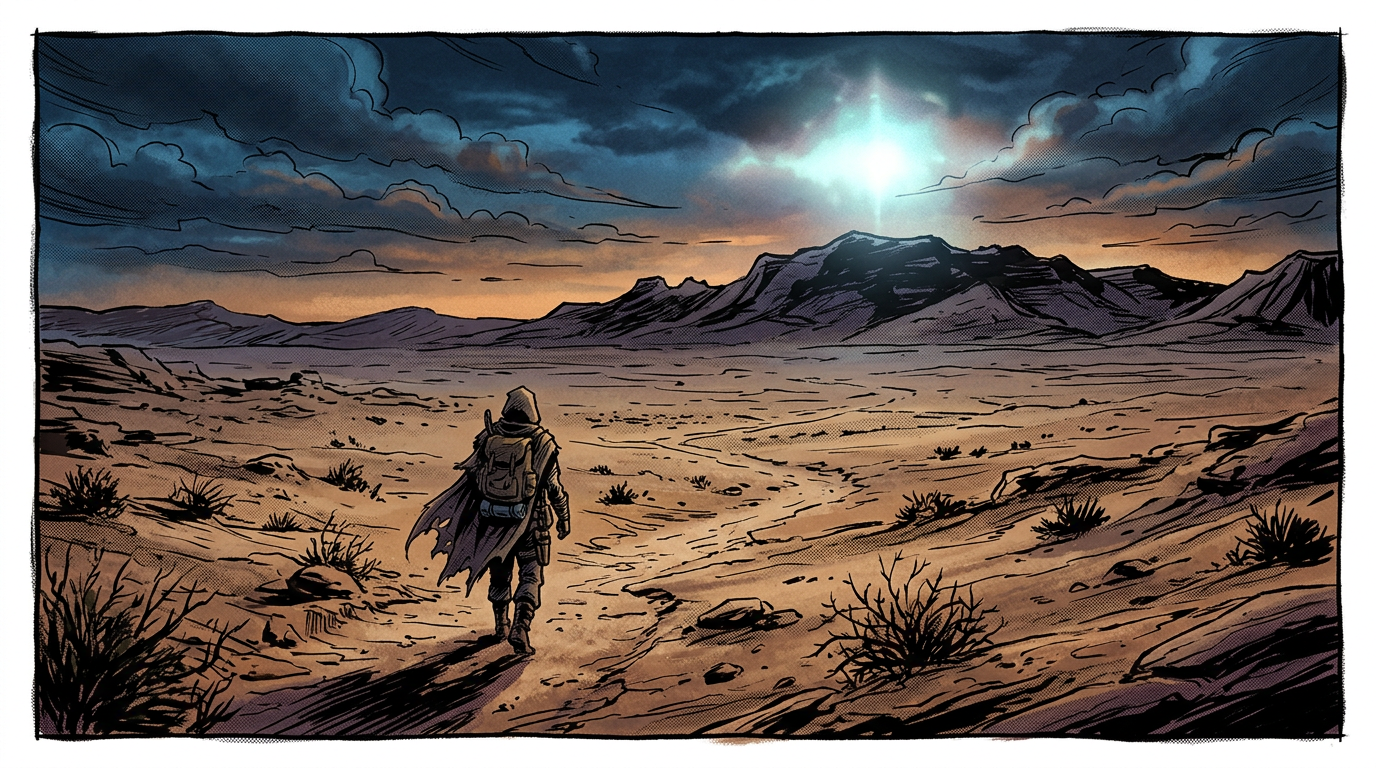
They are experiencing Christianity as joy and hope, having thus become lovers of Christ.

Category: Wisdom & Flourishing

  • We Don’t Have Nearly as Much Free Will as We Think

    Most of us walk around convinced we’re the captains of our own ships — that our choices are pure products of rational, independent will. Science and lived experience tell a different story. We have far less conscious control than we imagine. We are, to a surprising degree, the integration of our environment, our subconscious drives, our biology, and a thousand unseen influences. And paradoxically, the sooner we accept that, the more deliberate and effective our lives become.

    Neuroscience and psychology have been hammering this home for decades. The vast majority of our decisions arise from “System 1” thinking — fast, automatic, emotional — shaped by environmental priming, habits, blood-sugar levels, sleep quality, social cues, childhood conditioning, and even the words we read five minutes ago. We like to believe we weigh options logically and then choose, but often the choice is already tilting before we’re even aware of it. As C.G. Jung put it, “Until you make the unconscious conscious, it will direct your life and you will call it fate.”

    That sounds depressing at first. If we’re not really “free,” why bother trying? But here’s the powerful flip: accepting limited free will is not fatalism — it’s the starting point for genuine agency.

    Once you realize you’re a high-precision instrument easily knocked out of tune by your surroundings, you stop relying on heroic willpower and start doing something smarter: you engineer your environment. You become radically responsible for the inputs you allow in — the people you spend time with, the media you consume, the habits you repeat, the physical spaces you inhabit. You treat your mind and body like a garden: the “plants” (your thoughts and actions) will grow according to the soil and seeds you provide.

    This is where ascetic practices shine. Fasting, regular prayer or meditation, simplicity, physical discipline, limiting screens — these aren’t ancient religious quirks. They’re practical technologies for reducing the power of disordered passions and subconscious impulses. They create space between stimulus and response so the unconscious doesn’t run the show by default.

    The key ingredient is a clear north star — a conscious purpose or goal. Without it, the machine simply follows the path of least resistance or the loudest external pressure. With it, the same deterministic reality becomes a tool: you deliberately choose which influences to amplify and which to block.

    The result is a quieter, more compassionate way of living. You judge yourself and others less harshly (“They couldn’t help it — they’re shaped by their own unseen forces”) while becoming far more intentional about shaping your own forces. You move from fighting an illusion of unlimited willpower to mastering the influences that actually steer you.

    So yes — we don’t have nearly as much free will as we like to believe. But that realization doesn’t diminish us. It liberates us to stop pretending we’re blank slates and start building the life we actually want, one carefully chosen input at a time.

    What do you think? Has accepting the limits of your own “free will” ever made you more effective at steering your life? I’d love to hear your experiences.

  • The Geometry of Grace:

    The Geometry of Grace:

    Why the Yoke is Actually Light

    We’ve all heard the cynical refrain: “Misfortune falls on the good and the bad alike.” We treat life like a chaotic lottery where lightning strikes the saint and the sinner with equal indifference.

    But is that actually true?

    If we look through the lenses of Catholic Exegesis, Neurobiology, and the Hero’s Journey, we discover a startling reality: Grace isn’t just a theological “extra.” It is a fundamental shift in how a human being interacts with reality.

    1. The Suburbs of Heaven

    C.S. Lewis famously suggested that for those who say “Yes” to God, this life is the beginning of Heaven; for those who say “No,” it is the beginning of Hell.

    This isn’t just a poetic thought. It is a description of an internal ecosystem. The Book of Wisdom tells us that those who do good fare well. When you live a life of grace, you are no longer rowing against the current of the universe. You are aligned with the Creator’s design. This alignment creates a “protective shield”—not by magic, but by a radical reordering of your life.

    2. The Biological Advantage of Peace

    Let’s look at the “structure of the brain.” A life of sin—gluttony, drunkenness, aggressive driving, or constant domestic strife—keeps the brain in a state of chronic Amygdala Hijack. This is the “fight or flight” center. When it’s overactive, your body is flooded with cortisol, your immune system weakens, and your peripheral vision literally narrows. You become more “prone to injury” and “susceptible to accidents” because your brain is too cluttered to pay attention.

    A “Real Christian,” however, operates from the Prefrontal Cortex—the seat of peace and discernment. By practicing chastity, fasting, and a clean conscience, you are essentially “fine-tuning” your biological machine.

    • Better Sleep: Because your conscience is clear.
    • Less Sickness: Because your stress levels are lower and your habits are more responsible.
    • Fewer Accidents: Because you are “less in a hurry” and more aware of the people around you.

    3. The Hero’s Risk and the Martyr’s Paradox

    Now, there is one place where the “Safety of Grace” seems to fail: Sacrifice. In the classic Hero’s Journey, the protagonist eventually leaves the “Safe Zone” to face the dragon for the sake of the village. For the Christian, this is the call to be a Martyr or a servant. We are much more willing to take an injury for others.

    But even here, the experience is different. As Brother Lawrence noted, God does not permit a soul totally abandoned to Him to suffer for “any appreciable length of time” without Divine support. When the world sees a catastrophe, the Christian sees a rebirth.

    4. A Different Dimension of Suffering

    When trials do come—and they will—the “Real Christian” isn’t living in the same dimension as the worldling. For those living only for this world, a trial is “sheer hell” because it threatens their only treasure.

    For the person in Grace, suffering is Sacred Alchemy. Following the thought of St. John Paul II, we see that suffering:

    1. Consumes Evil: It burns away the parts of our ego that we haven’t yet surrendered.
    2. Acts as Penance: It helps us understand the true cost of sin—our own and others’.
    3. Opens a Door: It is the “New Jerusalem” mindset, asking not “Why is this happening to me?” but “What is God trying to show me?”

    The Call to Action: Die to the Hurry

    Spiritual transformation isn’t a theory; it’s a practice. If you want to experience this “Light Yoke,” start with the Great Simplification. * Clean your conscience: Go to Confession and clear the mental clutter.

    • Audit your pace: Intentionally move slower this week. Watch how your “luck” changes when you are no longer in a frantic hurry.
    • Fix your eyes: When the next trial hits, ask God for the strength to see it as a “door” rather than a “wall.”

    Edited with assistance from Gemini

  • “Wake Up and Walk in the Light: Advent and the Great Human Awakening”

    “Wake Up and Walk in the Light: Advent and the Great Human Awakening”

    A 10–15 minute Advent reflection

    Isaiah 2:1-5; Psalm 121(122):1-2,4-5,6-9; Romans 13:11-14; Matthew 24:37-44

    Today is the First Sunday of Advent—the beginning of the Church’s year.
    And the very first word the Church gives us is: Wake up.

    Not “be cozy.”
    Not “ease into the holidays.”
    But Wake up.
    Be alert. Open your eyes.
    Something is coming.
    Someone is coming.

    And the way Scripture tells the story today, this awakening is not optional.
    It is the difference between remaining asleep in the old world—or stepping into the new creation God desires for us.


    1. Isaiah’s Mountain: The Call of the Hero at Dawn

    The prophet Isaiah begins with a vision of the “days to come.”
    He sees Mount Zion—the Temple mountain—lifted above all other mountains.
    Nations stream toward it.
    People without number ascend the hill saying:

    “Come, let us go up to the mountain of the Lord… that he may teach us his ways.”

    This is the biblical version of the call to adventure—the moment in every great myth when humans are summoned upward, summoned out of the ordinary world and toward a divine encounter.

    The mountain is a universal symbol in myth:

    • Mount Olympus for the Greeks
    • Mount Meru in Hindu cosmology
    • Sinai for Moses
    • Tabor for Christ

    The mountain always represents the highest meaning, the place where heaven and earth meet, where God reveals Himself, and where human beings are changed.

    Isaiah’s point is clear:
    Humanity’s future is not down in the valley of violence, distraction, and conflict.
    Our future is an ascent.
    A pilgrimage.
    A transformation.

    Psychologically, this ascent points to the integration of the self—the movement from fragmentation to unity, from instinct-driven living (the lower brain layers) toward a life governed by truth, conscience, and grace (the highest faculties).

    Isaiah describes the result of this ascent:

    “They shall beat their swords into ploughshares.”

    This is transformation—not by force, but by teaching, by truth, by hearing God.
    The weapons of self-destruction become the tools of cultivation.
    What once harmed now heals.

    This is what happens when a person climbs the mountain of the Lord.


    2. “I Rejoiced When I Heard Them Say”: The Joy of a Heart That Is Waking Up

    The psalm today echoes the upward movement:

    “I rejoiced when I heard them say: ‘Let us go to God’s house.’”

    This is the joy of someone who has heard the call.
    Someone whose feet are already on the path.
    Someone who has realized:
    My home is not here. My destiny is above.

    Psychologically, this is the movement from numbness to desire.
    From apathy to longing.
    From spiritual sleep to spiritual hunger.

    St. Augustine described it as the “weight of love” lifting the soul upward.

    Every Hero’s Journey begins—not with skill or strength—but with desire, the dawning awareness that “There must be more.”

    Advent awakens that desire.


    3. St. Paul: “Wake Up Now” — The Battle Between Night and Day

    Then St. Paul tells us plainly:

    “You know the time.
    The night is almost over.
    The day is at hand.
    Wake up now.”

    Paul speaks here like a drill sergeant of the soul.
    He knows we like comfort.
    We like the dark because our weaknesses hide there.
    But Paul says:

    “Give up the things done under cover of darkness…
    and put on the armor of light.”

    This is spiritual psychology at its sharpest.

    The “night” represents:

    • impulsivity
    • old habits
    • addictions
    • self-deception
    • sin we have learned to tolerate

    The “day” represents:

    • clarity
    • responsibility
    • moral courage
    • virtue
    • the renewing power of Jesus Christ

    Paul says:
    Do not wait until you feel ready. Light never begins with readiness.
    It begins with decision.

    Mythologically, this is the moment when the hero must leave home.
    Leave comfort.
    Leave childishness.
    The doorway to the adventure is dawn—and dawn always interrupts our sleep.


    4. Jesus in the Gospel: The Flood Comes to the Spiritually Asleep

    Now Christ speaks the hardest words of the day:

    “As in the days of Noah, so will it be at the coming of the Son of Man.”

    People were living as if nothing mattered:

    • eating
    • drinking
    • marrying
    • working

    None of these are evil.
    The problem is not the activities—it is the unconsciousness with which people lived.

    They were asleep inside their own lives.

    The Flood did not simply wash away bodies—it washed away illusions.
    It revealed who was awake and who was not.

    Then Jesus gives His teaching with startling urgency:

    “Stay awake…
    Stand ready…
    The Son of Man is coming at an hour you do not expect.”

    This is not meant to frighten us—it is meant to awaken us.

    Jesus is not warning about the end of the world;
    He is warning about the end of your illusions.
    The end of self-deception.
    The end of sleepwalking through life.

    In psychological terms, Jesus is calling us to conscious living—to a life where we no longer hide behind distraction, addiction, work, or noise.


    5. The Hero’s Journey of Advent

    Advent is the beginning of the Church’s New Year, but it is also the beginning of your own Hero’s Journey.

    The pattern is always the same:

    1. The Call — “Come, let us go up to the mountain of the Lord.”
    2. The Awakening — “I rejoiced when I heard them say…”
    3. The Separation — “The night is almost over… put on the armor of light.”
    4. The Testing — “Stay awake, for you do not know the hour…”
    5. The Transformation — Christ born in the soul, illuminating everything.
    6. The Return — A transformed life that brings peace and grace to others.

    Mythologies echo this pattern because they echo the deepest truth of the human spirit:
    We were made for ascent.
    We were made for God.


    6. A Call to Action: How to Begin Your Advent Awakening

    Here is the practical challenge of the Gospel:

    1. Identify where you are asleep.

    Where have you allowed routine, distraction, or sin to dull your conscience?
    What parts of your life run on autopilot?

    2. Begin one concrete act of awakening.

    • Set a real prayer time.
    • Go to Confession.
    • Fast from a comfort that keeps you numb.
    • Read Scripture daily.
    • Reconcile with someone.

    3. Put on the armor of light.

    Don’t wait to “feel holy.”
    Act first.
    The feelings follow.

    4. Live today as if the Lord is near—because He is.

    Advent is not pretend.
    It is training.
    It is rehearsal for the real coming of Christ—
    in death,
    in judgment,
    in the Eucharist,
    in grace,
    in the quiet call of conscience.

    5. Make this Advent your turning point.

    Advent is not about nostalgia.
    It is about awakening.

    Christ does not want to catch you off guard.
    He wants to find you alive.


    7. Conclusion: Walk in the Light of the Lord

    Isaiah ends his vision with a simple command:

    “O house of Jacob, come—
    let us walk in the light of the Lord.”

    This is the entire Gospel in one sentence.

    Walk.
    Move.
    Begin.
    Awaken.
    Step toward the mountain.
    Let the Lord teach you His ways.
    Let His light pierce your darkness.
    Let Christ become your armor.

    And when the Son of Man comes—today, tomorrow, or at the end of your life—may He find you wide awake, standing ready, rejoicing to enter the house of the Lord.

    Amen.

    Developed with assistance from ChatGPT-5

  • Capture Your Mary Icon in 5 Minutes

    Capture Your Mary Icon in 5 Minutes

    The Glow

    Every mother cradling her child mirrors Mary with Jesus.

    One framed photo turns that moment into a living icon.


    Windows, Not Portraits

    Icons (Hodegetria, Eleusa) show love, not faces.

    Your hug already does the same.

    Soft light + real clothes = instant sacred vibe.


    4 Micro-Moves

    1. Hold close (left arm works).
    2. Gaze with love—wiggles welcome.
    3. Window light, 5 minutes max.
    4. Blue/red fabric if it feels right.

    Frame the Divine

    Print large. Simple frame.

    Hang where morning eyes land.

    Daily dopamine: “This love is holy.”


    Join the Circle

    Snap yours. Post with #MaryIconMoments. on X!

    Next post: how every culture sees “Mother + Child” as sacred.

  • Why Inner Life and Love Matter More Than Ever

    Why Inner Life and Love Matter More Than Ever

    How faith, purpose, and connection can guide you in a busy, chaotic world

    In today’s world, it can feel like everything is moving too fast. Social media, work, family responsibilities, and constant news cycles make it easy to feel overwhelmed. But what if the secret to thriving isn’t doing more, but living deeper?

    The Church has always faced this challenge. She must bring a message of hope to the world while nurturing her own inner life. And while you don’t need to be religious to take the lesson, the principle is universal: without a strong inner foundation, no mission or goal can truly succeed.

    Here’s the takeaway for modern life:

    1. Know yourself and your purpose. Just as the Church must understand her role, you need to understand yours. What drives you? What do you stand for?
    2. Faith can mean trust. You don’t have to be religious to see the value here. Faith, in a modern sense, is trust in what you know is right, and confidence in your ability to make a difference.
    3. Inner life matters. Reflection, mindfulness, and spiritual practice (whatever that looks like for you) help you stay grounded amid chaos.
    4. Balance action with depth. Doing good in the world—helping others, pursuing meaningful work—is powerful, but it’s more effective when paired with thought, reflection, and integrity.
    5. Beware of extremes. It’s easy to get caught up in outward achievement or personal ego. Both can be empty without inner depth and values to guide them.
    6. Love and connection are essential. Real growth comes when you care about others and invest in relationships. Empathy and compassion create the foundation for lasting impact.
    7. You are loved beyond measure. Whether you see it spiritually or simply as human connection, recognizing that you matter—and that your actions ripple out—gives purpose to everything you do.
    8. Your work matters, but your heart matters more. Success without integrity or care is hollow. Align your actions with values that elevate others.
    9. Small acts, big impact. Even small gestures of kindness or integrity can transform your environment, just as individual faith strengthens the Church.
    10. Hope fuels resilience. Knowing you can make a difference—even amid setbacks—keeps you moving forward, grounded in something larger than yourself.

    In short, thriving isn’t about doing everything; it’s about being rooted. Strong inner life, trust in what’s true, and a commitment to love and connection—these are what let you face today’s challenges with courage and purpose.

    Think of it this way: your life can become like a spark that lights a bigger fire, for yourself and everyone around you. Start small, start intentional, and let your inner strength guide your actions in the world.

    Ref: Pope Paul VI General Audience 25 October 1972

    With development and editing assistance from ChatGPT-5

  • Inventio:

    Inventio:

    Finding Before Creating

    In classical rhetoric, inventio was the very first step in preparing a speech. It meant discovering the arguments or proofs already available to support your case. The orator didn’t create truth—he uncovered it, drew it out, and presented it persuasively.

    This same spirit carries into the life of faith. We don’t create the truths of God. We don’t design our own reality. Instead, we are called to find what God has already revealed, to discover His grace present in the world, and to allow our lives to bear witness to it.

    Think of the way we form relationships. A stranger gradually becomes an acquaintance, a friend, and perhaps even a close companion. We don’t create that person; we discover who they are through time and trust. Faith works in the same way—truth draws closer to us as we seek it, until it becomes intimate and lived.

    The modern world often prizes “creativity” in the sense of originality. But for Christians, true creativity begins with discovery. Before we can offer something beautiful, we must first receive what is already there.

    Think of an artist painting a landscape. He doesn’t invent the mountains, trees, or sky. He finds them, attends to them, and renders them in a new way. So it is with us—we must first seek and find God’s truth before we can share it with others.

    What would happen if we lived our faith this way? Instead of trying to invent our own way to God, we would practice inventio—the humble, attentive discovery of His presence in Scripture, in tradition, in the sacraments, and in the quiet places of our daily lives.

    Our task, then, is not to create faith but to uncover it. Not to invent truth but to find it. And once we do, the act of creation follows naturally, as our words, our lives, and our love give new expression to what we have discovered.

    Developed with assistance from Gemini AI and ChatGPT-5

  • Valley of the Shadow of Death

    The choice of every lost soul can be expressed in the words: “Better to reign in hell than serve in Heaven”

    In the actual language of the Lost, the words will be different, no doubt. One will say he has always served his country right or wrong; another that he has sacrificed everything to his art; and some that they’ve never been taken in; and some that, thank God, they’ve always looked after Number One; and nearly all, that, at least, they’ve been true to themselves.

    There is always something they insist on keeping, even at the price of misery. There is always something they prefer to Joy – that is, to reality.

    Of some sinful pleasure they say: “Let me but have this, and I’ll take the consequences”, little dreaming how damnation will spread back and back into their past and contaminate the pleasure of the sin. 

    The process begins even before death. The bad man’s past already conforms to his badness and is filled only with dreariness. And that is why the Lost will say: “We were always in hell”

    They are those to whom God says, in the end: “Thy will be done.” 

    All that are in hell choose it. Without that self-choice, there could be no hell.

    Ye can call those sad streets the Valley of the Shadow of Death. if they leave that grey town behind it will not have been hell. To any that leaves it, it is Purgatory.

    For those who remain there it will have been hell even from the beginning.

    C.S. Lewis – The Great Divorce

  • A Word If Spoken

    I’ve carried this meditation for a while.

    I believe that for every person, there is a word—a message—that, if spoken, would cause them to freely and joyfully choose faith and to live for Christ.

    Everyone I’ve ever known who serves Christ with sincerity has heard this word. Maybe not in the same form, not the same message or tone, but they’ve received a word that reached the core of their heart. Something called them—not by force, but with the unmistakable pull of truth and love.

    And because I believe Jesus came that all might be saved, I also believe such a word exists for every person. A message capable of lighting up the heart.

    The only problem?
    I don’t know what that word is.


    The Work-Around

    So here’s what I try instead.

    I tell people: I know there’s a word that, if you heard it, would make you want to seek God with everything in you. I don’t know the word itself. But I’m asking you to assume that maybe it has not yet been spoken to you. 

    And if that’s true, then the most logical response is to begin seeking. Listening. Asking.

    Because if you can believe that at some point the door will be opened, … now it’s just a matter of stepping through.


    What This Says About Grace and Free Will

    This meditation walks a fine line between two deep truths of the faith:

    • That God desires all to be saved (1 Timothy 2:4),
    • And that faith comes by hearing (Romans 10:17).

    Why This Matters to Me

    This belief gives me two things:

    • Hope: That no one is beyond the reach of grace.
    • Humility: That I don’t have to be the one to say the perfect thing. I just have to point toward the Word, however I can.

    In some cases, I believe people are simply too “high up”—too successful, too secure, too self-assured—to look up. They haven’t been brought low enough to feel the need for God. But if they become curious now,… perhaps it will prevent that fall. Or prepare them for it.

    How About You?

    Have you ever had a moment where something clicked—a word, a thought, a memory—that stirred something deeper in you?

    Or maybe you’re still waiting for your word to be spoken?I’d love to hear your reflections, questions, or stories.

    You can leave a comment below. I’d love to hear your reflections, questions, or stories.

    Written with assistance from ChatGPT