They are experiencing Christianity as joy and hope, having thus become lovers of Christ.

Category: Hero’s Journey / Mythology

  • When Feelings Become the Main Goal

    If the highest goal in life is simply “feeling happy,” then good emotions become the scoreboard.

    But feelings are fleeting. A great meal, a kind word, or a small win can lift you — then a headache, bad news, or ordinary tiredness knocks you flat.

    When we build our lives around chasing the next good feeling, three things happen:

    • Shallowness: We avoid anything deep or difficult — hard conversations, sacrificial love, honest self-examination, or spiritual growth — because discomfort feels like failure.
    • Avoidance: Challenges get sidestepped. Why fix a struggling marriage, push through boring but meaningful work, or confront our weaknesses when quitting feels better in the moment?
    • Fragility: We become brittle. The smallest setback — rejection, illness, financial stress — can shatter our sense of worth.

    Chasing feelings flattens life. Everything shrinks to “How do I feel right now?”

    Why This Collides with Deep Faith

    Christianity (and many historic religious traditions) directly contradicts this. At its center stands the Cross. Jesus did not promise constant happiness. He carried a cross, suffered, died, and told His followers, “Take up your cross and follow Me.”

    The path to resurrection runs through suffering, not around it. Real love, real growth, and real joy are forged in the fire, not the comfort zone.

    What This Looks Like in Practice

    The person chasing feelings quits when marriage gets hard, work feels mundane, or sickness comes.

    The person following the Cross stays faithful, keeps loving, keeps showing up — even when it hurts. Over time they grow stronger, not more fragile.

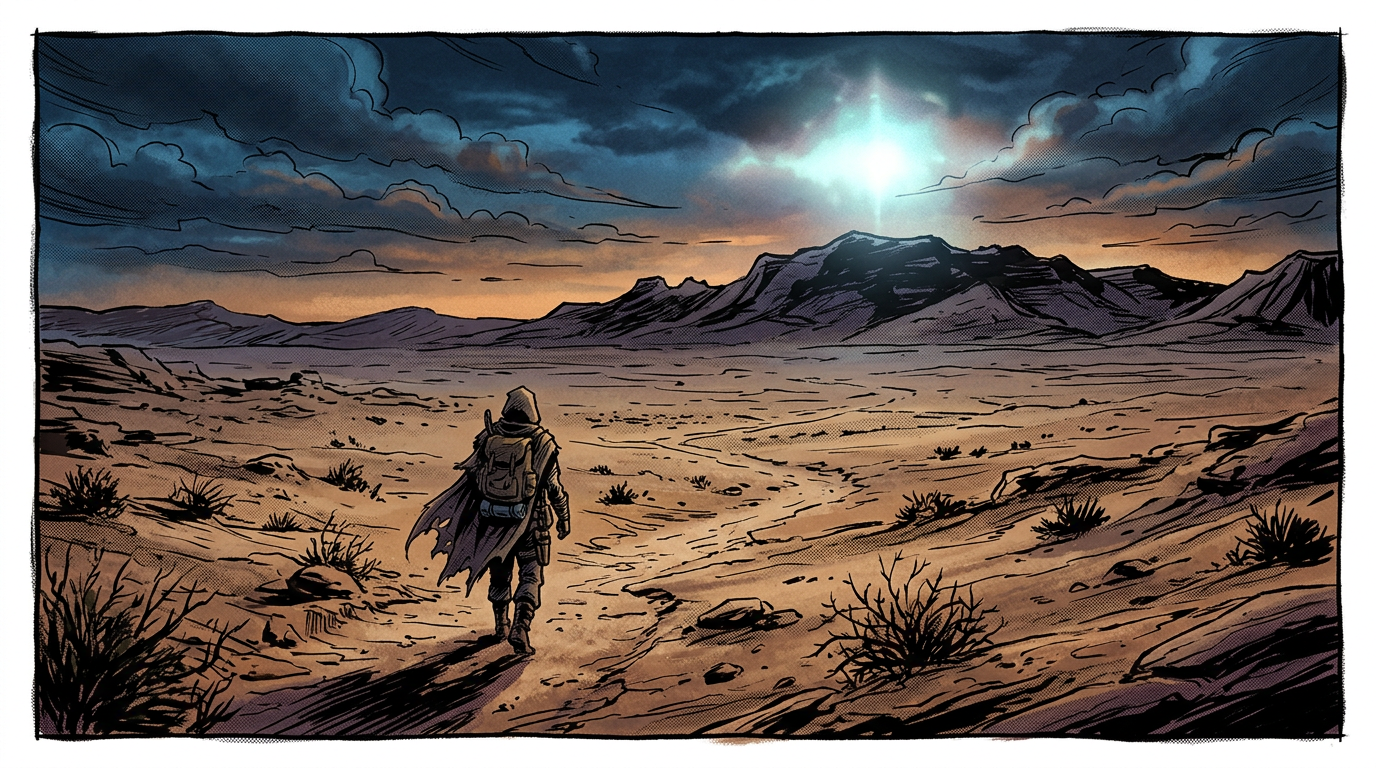
    This is the hero’s journey: the hero leaves comfort, faces the dragon, and returns transformed. The battle isn’t pleasant, but it’s where character is built.

    The Better Way

    Don’t let your feelings run your life. Make union with Christ — along with truth, duty, and love — your North Star. Seek to become the kind of person who can stand firm when feelings are low. Feelings are gifts to enjoy when they arrive, but they make terrible masters. The Cross offers something far better: a deep, resilient joy that circumstances cannot steal.

    Face the dragon. Carry the cross. On the other side waits a life of real weight, real meaning, and real strength.

    Where in your life are you tempted to prioritize comfort over the Cross?

  • How Good It Is When Brothers Dwell as One

    How Good It Is When Brothers Dwell as One

    Psalm 133 offers a powerful vision for men building real relationships in the Church.

    “How good and how pleasant it is when brothers dwell together as one!” (Psalm 133:1)

    To the ancient Israelites, this wasn’t just nice advice. They pictured two vivid images that still speak powerfully today:

    1. The Overflowing Anointing Oil

    Imagine rich, fragrant holy oil poured generously on the head of the high priest Aaron. It runs down his beard, onto his collar, and spreads across his robes.

    In their world, this sacred oil symbolized consecration, joy, honor, and God’s empowering presence. Blessing flowed from the head downward to the whole community.

    For Christian men today: When we move beyond surface-level talk and truly connect — encouraging, challenging, and supporting one another — God’s refreshing presence flows through our brotherhood. Ordinary friendships become consecrated and life-giving.

    2. The Dew of Hermon Descending on Zion

    Mount Hermon, in the far north, towered massive and snow-capped, famous for its heavy, life-sustaining dew. In a dry land where rain was uncertain, dew was heaven’s quiet gift that made the ground fertile and brought growth.

    The psalm imagines this refreshing dew traveling all the way south to the mountains of Zion, the center of worship.

    To ancient ears, this meant God’s abundant life flowing from the heights down to His people. Unity among brothers creates the same effect: it bridges distances, refreshes dry places in our lives, and releases the blessing God Himself commands — “life forevermore.”

    What This Means for Men Today

    • Deep relationships with other Christian men fight isolation and bring real joy.
    • They refresh and strengthen us in hard seasons through accountability, prayer, and honest conversation.
    • When men stand together as one, the Holy Spirit moves more freely — blessing not just individuals, but the whole church.

    Jesus Himself built a band of brothers. He calls us into the same kind of covenant friendship.

    Practical steps:

    • Join a men’s group or Bible study.

    • Grab coffee or a meal with guys from church.

    • Show up consistently and be willing to go deeper.

    Brothers, unity among men isn’t automatic — it takes intentional effort. But when we pursue it, God meets us there with overflowing blessing and abundant life.

    “How good and how pleasant it is when brothers dwell together as one!”

  • You Are Not Hidden:

    You Are Not Hidden:

    Isaiah and the Lie of Abandonment

    There is a lie that strikes at the deepest part of the human heart: My way is hidden from the Lord, and my right is disregarded by my God (Isaiah 40:27).

    We all know the feeling. Life grows heavy. Circumstances pile up. Prayers seem to echo unanswered. In those moments, the mind quietly rewrites reality: God doesn’t see this. He’s indifferent. I’m carrying it alone. Isaiah 40 confronts that lie with thunderous clarity. The passage does not offer vague comfort; it dismantles the deception with the character of God Himself.

    The God Who Does Not Tire

    Look at who Isaiah says the Lord is: “The everlasting God, the Creator of the ends of the earth. He does not faint or grow weary; his understanding is unsearchable” (40:28).

    This is no distant deity running low on patience. The same God who spoke galaxies into existence never reaches the end of His strength. When your reserves are empty—when you “grow faint” and “fall exhausted” (40:30)—His power remains undiminished. He is not limited by the same exhaustion that cripples us. He sees the full picture even when we cannot see the next step.

    The Promise of Renewal

    The beauty of Isaiah’s words peaks in verses 29–31:

    “He gives power to the faint, and to him who has no might he increases strength. Even youths shall faint and be weary, and young men shall fall exhausted; but they who wait for the Lord shall renew their strength; they shall mount up with wings like eagles; they shall run and not be weary; they shall walk and not faint.”

    Notice the progression. The passage moves from total depletion to supernatural renewal—but the key is in the posture: those who wait for the Lord. This is not passive resignation. Biblical waiting is active trust: fixing your eyes on the One who is never weary while you feel very weary. It is the decision to believe the truth over the lie.

    In the language of story, every hero’s journey includes a threshold where human strength fails. The protagonist reaches the limit of what they can do in their own power. The Christian story diverges here. God does not wait at the far side of the trial with a trophy. He meets you in the middle of it. He strengthens you on the way. He lifts when you cannot stand. He carries when you cannot walk.

    The Lie Exposed

    So the lie is exposed: you are not hidden. You are not abandoned. Your destiny is not overlooked. The God who created the stars (40:26) knows your name, counts your tears, and holds your future. The same hands that never grow tired are the ones that uphold you.

    This is the truth Isaiah demands we remember when the whisper returns. You do not walk unseen. You do not fight alone. The everlasting God walks with you, renews you, and gives you strength that outlasts your own.

    When the feeling of abandonment rises again—and it will—return to Isaiah 40. Read it slowly. Speak it out loud. Let the words rewrite the story your fear is trying to tell. The Lord has not forgotten you. He never will.

    “They who wait for the Lord shall renew their strength.”

    Hold on to that. The eagle does not flap frantically; it rides the wind. So will you, if you fix your hope on the God who never wearies.

  • Reimagining the Akedah:

    Trust, Surrender, and Modern Life

    In previous posts, we explored how ancient audiences understood divine voices and how modern culture struggles to recognize God’s promptings. Today, let’s bring that insight into daily life through the lens of the Akedah—the binding of Isaac.

    1. The Story Beyond Literal Sacrifice

    • Abraham’s trial was never meant to prescribe behavior for us today.
    • Instead, it illustrates the structure of ultimate trust: offering up what we most love—our ambitions, relationships, or even sense of security—to God, confident that He will provide.

    2. Translating Myth into Modern Faith

    • In Abraham’s world, voices were external and real; in ours, God often speaks internally, through conscience, intuition, Scripture, or circumstance.
    • The challenge: we must recognize the sacred in our inner life without dismissing it as mere thought, yet without imposing literal ancient rituals.

    3. Trust in the Face of Contradiction

    • Abraham acted against instinct, reason, and social expectation.
    • Modern readers can’t imitate his literal actions, but we can practice radical trust in small, daily choices: choosing integrity over convenience, patience over frustration, love over resentment.

    4. Surrender Without Losing Reason

    • Surrender doesn’t mean ignoring wisdom or morality; it means aligning our desires and decisions with God’s guidance, even when it feels counterintuitive.
    • This is where the Akedah meets modern psychological insight: faith is both relational and rational, not reckless.

    5. Seeing Providence in Daily Life

    • Just as the ram was provided at the last moment for Abraham, God often meets us in unseen ways.
    • Recognizing His provision requires attentiveness, gratitude, and the willingness to act on trust.

    Takeaway

    The Akedah, read today, challenges us to cultivate trust, practice surrender, and perceive God’s hand in our lives, not by replicating the ancient act, but by internalizing its meaning. Myth and Scripture provide a bridge: they teach us how to face uncertainty, make courageous choices, and let God transform what we hold most dear.

  • A.W. Tozer’s Hidden Struggle:

    A.W. Tozer’s Hidden Struggle:

    The Prophet’s Family and the Price of Divine Calling 

    A.W. Tozer is revered as a spiritual giant, but behind the sermons and books was a man whose calling exacted a heavy toll on his loved ones. Married with seven children (six sons and one daughter), Tozer lived with an intensity that mirrored a monk’s devotion. His interior life was all-consuming, focused on God above all else. But that focus created emotional distance, especially for his wife, Ada.

    After Tozer’s death, Ada remarried and reportedly said, “Aiden loved Jesus Christ, but Leonard Odam (her new husband) loves me.” Ouch. It’s a raw admission that highlights the tension: Tozer’s prophetic vocation—marked by radical devotion—clashed with the demands of marriage. He wasn’t absent for selfish reasons like career ambition or escapism; his “absence” was poured into prayer, writing, and ministry that has inspired millions.

    This raises a thorny question: Should some men with such a deep calling avoid marriage altogether, or at least delay it until they’ve wrestled with their spiritual identity? In Protestant circles, marriage is often seen as a badge of maturity, but Tozer’s story suggests otherwise. It’s a reminder that not every path to holiness fits neatly into family life.

    Drawing from the Hero’s Journey archetype (think Joseph Campbell), the hero often remains single during the quest—marriage comes after transformation, as a crowning achievement. Tozer’s life illustrates the risk of flipping that script: early marriage can stabilize a man before he’s faced his true call, leading to strain or midlife reckonings.

    Tozer wasn’t a neglectful husband by worldly standards—many men are “absent” due to jobs, poverty, or distractions. But his was a holy absence, aimed at eternal good. Still, the cost was real, and it challenges us: How do we balance divine pursuit with human relationships? If you’re navigating a similar tension, Tozer’s biography is a must-read. It’s not a cautionary tale of failure, but of the tragic beauty in following God at all costs.

    Share your thoughts: Have you seen calling clash with family in your life or others’?

    Developed with assistance from Grok and Gemini

  • The Holy Paradox: Why Choosing Christ Doesn’t Make You “Better”

    The Holy Paradox: Why Choosing Christ Doesn’t Make You “Better”

    Moving from the Ego’s “Us vs. Them” to the Radical Humility of the Father’s Eyes.

    The Subtle Poison of Religious Pride

    When we decide to give our lives to Christ, we cross a threshold. It feels like a victory—and in many ways, it is. But right behind that victory lurks a subtle, spiritual poison. We begin to look at the world through a lens of “us” and “them.” We start to wonder: Am I better than they are?

    The short, jarring answer is: No.

    In the economy of Grace, there is no “better.” There is only the called, the seeking, and the found.

    The Myth of the Self-Made Saint

    We like to think our “Yes” to God is a personal achievement. We treat it like a trophy we earned. But Catholic Exegesis and the history of the Saints tell a different story.

    It is God who provides the environment. It is God who provides the attitude. It is God who guides the choice. You didn’t invent the air you breathe; you simply finally decided to stop holding your breath. Even the initiative to seek Him is a grace He provided.

    Key Insight: All that is good in us comes from Him. All that is evil in us is simply that which has not yet died.

    Beyond the “Sheep and Goats” Mentality

    Our brains are wired to categorize, to judge, and to rank. But to live a life of grace is to override those biological shortcuts and adopt The Father’s Eyes.

    When we look at someone “trapped by sin” or “downtrodden,” we are seeing only the surface. We have no idea what is happening in the deep recesses of their heart. Consider these three truths:

    1. The Invisible Battle: That person may be fighting a psychological or spiritual slavery you cannot imagine.
    2. The Proximity of Grace: The “worse off” a person appears by our standards, the closer they may be to a total, explosive conversion.
    3. The Elder Brother Trap: Like the brother of the Prodigal Son, we can be “right” on the outside while being miles away from the Father’s heart on the inside.

    Suffering as Sacred Alchemy

    Transformation isn’t just about feeling good; it’s about dying to the self. St. John Paul II once wrote that there is a specific kind of suffering that “burns and consumes evil with the flame of love.” When we see someone struggling, we aren’t called to point a finger. We are called to step into the fire with them.

    Because we have been blessed with grace, we don’t have a higher status—we have a higher responsibility. We are called to suffer personally to help others overcome their shadows. This is the “Hero’s Journey” of the soul: descending into the mess of humanity to bring back the light.

    The Mirror: Fixing Our Eyes

    If you find yourself comparing your holiness to your neighbor’s, you have taken your eyes off the Prize.

    We still have enough of ourselves that needs redemption to keep us busy for several lifetimes. The goal isn’t to be “better” than the person in the pew next to you; it is to be more “dead to yourself” than you were yesterday.

    The Call to Action: Today, look at the person you are most tempted to judge. Instead of a “goat,” see a “lost sheep.” Instead of a “sinner,” see a “prodigal.” Ask for the grace to see them not as they are, but as the Father sees them.

    Developed with assistance from Gemini AI

  • 💜 The Call to Humility: Rewiring the Rebellious Heart

    💜 The Call to Humility: Rewiring the Rebellious Heart

    Readings for 16 DEC 2025: Zephaniah 3:1-2, 9-13; Psalm 33; Matthew 21:28-32

    I. Introduction: The Rebellious City

    We are deep in the heart of Advent, a season colored Violet—the color of royalty, but also of penance and preparation. The scriptures today issue a stark, powerful challenge, starting with the prophet Zephaniah:

    “Trouble is coming to the rebellious, the defiled, the tyrannical city! She would never listen to the call, would never learn the lesson…” (Zephaniah 3:1-2)

    When we hear the word “city,” our modern mind goes to bricks and mortar. But in the prophetic tradition, the city—Jerusalem—is often a profound metaphor for the human soul. Zephaniah is describing not just a physical place, but the rebellious, unintegrated heart—the ego that refuses counsel, trusts only itself, and never draws near to God.

    This “tyrannical city” is the part of our consciousness that seeks to be King Belshazzar, building its own reality based on pride and self-will.

    II. The Psychological Crisis: Refusal and Tyranny

    The First Reading lays bare the psychological state of the rebellious heart:

    • “She would never listen to the call.”
    • “She has never trusted in the Lord.”
    • “She never drew near to her God.”

    This is the Refusal of the Call in the language of the Hero’s Journey. Joseph Campbell taught that all great myths begin when the hero is called to leave their comfortable, known world, and initially says No. The rebellious heart is stuck in this refusal.

    Psychologically, this refusal is driven by the Limbic System. This ancient, instinctual part of the brain seeks comfort, security, and the avoidance of all risk. To trust God, to draw near to God, means surrendering control, which the Limbic System perceives as an existential threat. This fear of surrender makes the heart tyrannical—it must control everything because it fears everything.

    III. The Gospel’s Two Sons: Action vs. Attitude

    Jesus clarifies this battle between the tyrannical heart and true conversion with the parable of the two sons:

    • The First Son: Said “No,” but afterwards thought better of it and went.
    • The Second Son: Said “Certainly, sir,” but did not go.

    The chief priests and elders, comfortable in their certainty and piety, represent the Second Son. They had the right attitude (the right words, the right liturgy), but their tyrannical, rebellious heart (Zephaniah’s city) remained unchanged.

    The tax collectors and prostitutes represent the First Son. They started in the “tyrannical city” of self-will and sin, but in their moment of brokenness, they experienced the crucial psychological step: thinking better of it—a deliberate act of the will leading to action.

    Jesus’s verdict is stunning: “Tax collectors and prostitutes are making their way into the kingdom of God before you.” They embarked on the Hero’s Journey (repentance and action) while the pious were still stuck in the tyranny of their own self-righteous refusal.

    IV. The Great Transformation: Clean Lips and Humility

    The good news, the Advent promise, is that God does not abandon the tyrannical city. Zephaniah promises a profound transformation:

    “Yes, I will then give the peoples lips that are clean, so that all may invoke the name of the Lord and serve him under the same yoke.” (Zephaniah 3:9)

    The “clean lips” are the sign of the transformed heart. Psychologically, this is the victory of the Prefrontal Cortex (PFC)—the seat of reason, moral choice, and long-term vision—over the tyrannical Limbic System.

    • The Limbic heart speaks lies and boasts (Zephaniah 3:13: the perjured tongue).
    • The PFC, aligned with God’s will, brings clean lips—it brings truth, humility, and the ability to invoke the Lord’s name.

    This transformation is completed by two essential virtues:

    1. The Removal of Pride: “I will remove your proud boasters from your midst; and you will cease to strut on my holy mountain.” (Zephaniah 3:11)
    2. The Installation of Humility: “In your midst I will leave a humble and lowly people, and those who are left in Israel will seek refuge in the name of the Lord.” (Zephaniah 3:12)

    The spiritual journey is the systematic dismantling of the tyrannical ego and the installation of humility, where the PFC chooses the love of God over the fear of the self.

    V. Call to Action: The Poor Man’s Call

    This Advent, the call is clear: Stop being the Second Son. Stop being the tyrannical city.

    The Responsorial Psalm gives us the path to conversion: “This poor man called; the Lord heard him.”

    The “poor man” is the humble and lowly person Zephaniah promised. He is the person who has surrendered the tyranny of the ego. The Lord hears him because he is close to the “broken-hearted” and those whose “spirit is crushed.”

    Real spiritual transformation today requires two acts of the will:

    1. Stop Strutting: What are you still doing for show? What is the “proud boasting” that keeps you from trusting God? The work of penance is the work of removing pride.
    2. Start Doing: Do not remain in the Refusal phase. Be the first son. That means taking action that requires surrender. That means choosing the hard “Go and work in the vineyard” over the easy “Certainly, sir.”

    The Lord is coming. Let us choose to dismantle the rebellious city in our hearts, surrender the tyranny of fear, and allow the promised “humble and lowly people” to seek refuge in His name.

    Amen.

    Developed with assistance from Gemini AI

  • The Fall of the Tyrant: The Timeless Myth of Belshazzar’s Feast

    The Fall of the Tyrant: The Timeless Myth of Belshazzar’s Feast

    The Timeless Myth of Belshazzar’s Feast

    In the Book of Daniel, chapter 5, we find one of the most dramatic stories in ancient scripture: Belshazzar’s Feast. A lavish banquet turns into a night of terror when a disembodied hand appears and writes mysterious words on the wall. The kingdom falls that very night. But beyond the historical account, this is a profound mythological tale about the inevitable collapse of any power built on arrogance, intoxication, and sacrilege.

    1. Hubris and Sacrilege: The Banquet as Ritual Defiance

    Babylon, in mythic terms, stands as the ultimate “anti-Temple”—a symbol of worldly power that rejects divine order. The banquet isn’t mere excess; it’s a deliberate act of defiance. King Belshazzar commands the sacred vessels looted from the Jerusalem Temple to be brought out. His guests drink wine from them while praising their gods of gold, silver, bronze, iron, wood, and stone.

    This profanation is the core sacrilege: these vessels once held the divine presence. Using them to toast idols is hubris incarnate—the mortal claiming superiority over the sacred. It’s the height of arrogance, performed at the peak of empire.

    2. The Omen: The Hand That Shatters Illusion

    Suddenly, a hand appears, writing on the wall—illuminated, ironically, by the light of the stolen Temple lampstand. The sacred light exposes the profane doom.

    Belshazzar’s reaction is visceral: his face pales, his limbs go slack, his knees knock together. This physical paralysis mirrors his moral collapse—the moment the tyrant’s illusion of invincible power crumbles before a higher force.

    3. The Hero-Interpreter: Daniel’s Uncompromising Stand

    The wise men fail, but Daniel—the exile who refuses to defile himself—is summoned. He deciphers the writing: “Mene, Mene, Tekel, Parsin.”

    Before delivering the verdict, Daniel refuses the king’s rewards: purple robes, gold chains, high office. “Keep your gifts,” he says. His authority comes not from Babylon’s system but from allegiance to the divine. He is untouchable, the true hero bridging chaos and cosmic truth.

    4. The Cosmic Verdict: Weighed on the Scales of Justice

    The words form a threefold judgment:

    • Mene: God has numbered your days; your reign is finite and ended.
    • Tekel: You have been weighed on the scales and found wanting—your character, deeds, and rule insufficient.
    • Parsin: Your kingdom is divided and given to the Medes and Persians.

    That night, Belshazzar is slain, and Babylon falls. The scales of cosmic justice tip irrevocably.

    Echoes in the Cycle of History

    This myth resonates with the ancient observation of civilizational cycles: “Hard times create strong men, strong men create good times, good times create weak men, and weak men create hard times.”

    Belshazzar’s story zooms in on the dangerous transition—good times breeding moral weakness, arrogance, and forgetfulness of limits, inviting sudden collapse. It’s a warning echoed in Greek tragedies (hubris-nemesis), Roman histories, and modern reflections on empires.

    In an age where powers rise and boast at their zenith, the writing on the wall remains a timeless reminder: all human empires are weighed, and those built on sacrilege and pride will be found wanting.

    Content developed with assistance of Gemini AI.

    Blog edited with assistance of Grok AI

  • The Prefrontal Battle: How Your Brain is Wired for Heroism (Daniel 1 & Mark 12)

    The Prefrontal Battle: How Your Brain is Wired for Heroism (Daniel 1 & Mark 12)

    What if the greatest moral and spiritual battles we face aren’t huge, public crises, but small, private decisions made in a quiet moment? We often look for epic, cinematic faith, but the truth is that spiritual transformation is profoundly neurobiological. It happens inside the three pounds of tissue between your ears.

    Ancient scripture isn’t just about history or ritual; it provides a stunningly accurate blueprint for how our minds function—and malfunction. We see, time and again, moments where two distinct forces within us clash: the primal urge for comfort and the higher calling toward long-term destiny.

    These moments are not unique to ancient prophets or martyrs. They are the Prefrontal Battle that you fight every day. By exploring the quiet discipline of Daniel and the radical sacrifice of the poor widow, we can see that building a heroic life is literally a matter of rewiring your brain through small, consistent acts of will.

    I. The Neuroscience of Discipline

    Our minds are governed by a powerful dual system. Understanding it is the key to spiritual freedom.

    A. The Two Brain Systems

    1. The Limbic System (The Survivalist): This is the brain’s ancient core. It is preoccupied with safety, comfort, instant gratification, and immediate risk assessment. Its mantra is: Survival, Right Now. It is brilliant at keeping you alive, but terrible at achieving your highest potential, as it fears any change, discipline, or risk
    2. The Prefrontal Cortex (PFC) (The Hero): This is the most recently evolved part of the brain, located right behind your forehead. It is the seat of willpower, moral reasoning, long-term planning, and impulse control. The PFC is what allows you to choose a future reward over immediate comfort. Its function is to say “No” to the limbic system’s demands when they conflict with your highest values.

    B. The Case Study: Daniel’s Quiet Victory

    In the Book of Daniel, we encounter a young man exiled to Babylon—the ultimate environment designed for comfort, luxury, and spiritual assimilation. The king provided the Hebrew youth with a daily ration of rich food and wine from his own table. This was not a punishment; it was a profound privilege, a fast track to approval, safety, and integration into the highest social class.

    To the Limbic System (The Survivalist), this was a dream scenario: high-calorie food, social acceptance, and guaranteed protection. The impulse was clear: take the easy path.

    But Daniel’s response was a masterclass in Prefrontal Cortex control:

    Daniel resolved not to defile himself with the king’s food and wine (Daniel 1:8).

    This was a quiet but firm decision of the will. His choice was not about the quality of the food; it was about integrity—choosing his long-term covenant and identity over immediate comfort. He used his PFC to override the powerful, instinctive demands for ease and assimilation.

    He was not asked to fight a dragon or cross a sea; he was asked to choose vegetables and water over the king’s bounty. The mythological lesson here is that great destinies are formed through small, repeatable acts of discipline.

    C. The Scientific Principle: Holiness is Habit

    The story reveals the direct reward of this PFC control: After ten days, Daniel and his companions looked “healthier and better nourished” than those who ate the king’s food (Daniel 1:15).

    This result is a spiritual reality, but it is also a powerful metaphor for Neuroplasticity. Every time Daniel chose his higher value (his faith) over his primal urge (rich food), he reinforced a new neural pathway. Every decision strengthened his PFC control over his Limbic System.

    • Holiness is Habit: Spiritual growth is not about a one-time heroic feat, but about consistent, small decisions that literally rewire the brain. You strengthen what you repeatedly use. Choosing integrity over comfort, even in the smallest things, is the process of building the neurobiological architecture required for heroism.

    II. The Neuroscience of Sacrifice

    Now, we move from the discipline of refusal to the ultimate test of the PFC: Sacrifice.

    A. The Brain Hates Sacrifice

    The Limbic System views sacrifice as illogical and terrifying. Its primary directive is to hoard resources and minimize risk. The brain views giving away resources—especially those necessary for survival—as an existential threat. This fear is a powerful inhibitor of true faith and generosity.

    B. The Case Study: The Widow’s Radical Override

    Jesus was watching the wealthy drop large, impressive amounts of money into the temple treasury. These were acts of generosity, but they were measured and safe—they gave from their “abundance” (Mark 12:41-44). Their Limbic System remained perfectly comfortable.

    Then He saw her: a poor widow who put in only two small copper coins.

    Jesus declared that this smallest gift was the greatest one. Why? Because:

    “She, from her poverty, has put in all she had to live on.”

    This act is the ultimate PFC override. She overcame her most fundamental, primal survival instinct—the fear of hunger, homelessness, and death—and entrusted her future to God. She chose Trust (PFC) over Self-Preservation (Limbic System). She demonstrated that faith and love cannot be lived from a place of certainty.

    III. Conclusion: The Logic of Love

    The Prefrontal Battle is not an isolated spiritual struggle; it is the fundamental process by which we align ourselves with the highest reality.

    The highest principle that justifies the PFC’s battle is Love.

    • For Daniel, the PFC choice was motivated by Love for God’s Covenant (identity) over the love of comfort.
    • For the Widow, the PFC choice was motivated by radical Love and Trust in God over the love of self-preservation.

    The Limbic System calculates safety; it fears loss, and it hoards resources. But the highest function of human consciousness, driven by the PFC, is to pursue a value—a higher love—that transcends immediate survival.

    This is why ancient scripture, confirmed by modern neurobiology, teaches us that the path to transformation is paved with deliberate, courageous choices:

    • You cannot live a life of true faith or love from a place of safety and certainty.
    • Every time you choose a higher moral truth over your brain’s instinctual demand for comfort, you are literally rewiring your consciousness.

    The heroic journey starts not with a grand announcement, but with a quiet, firm decision of the will.

    The Question is: What is your PFC fighting for today?

    Ask yourself: What small discipline is God asking of you today? Is it refusing the “king’s rich food” (a destructive habit or easy lie), or is it surrendering your last “two coins” (a fear, a calculation, or a piece of control)? The power to choose is in your PFC, and the logic of that choice is always love.

    Developed with assistance from Gemini AI

  • The Man Who Lived a Myth (And Was Real)

    The Man Who Lived a Myth (And Was Real)

    If someone told you this story as fiction, you’d roll your eyes and say, “Come on, nobody’s life is that tidy.”

    A boy is born into one of France’s ancient noble families, bloodline reaching back to the Crusades, family motto: Jamais arrière—“Never back.”

    He loses his parents at six, inherits a fortune, and promptly becomes the most spoiled, lazy, and debauched young officer in the French cavalry: expelled from school, famous for orgies and gourmet dinners in the Algerian desert while on duty.

    At twenty-eight, something cracks open inside him. He walks into a Paris church and tells a priest, “I don’t believe in God, but teach me about Him anyway.”

    He gives everything away, joins the strictest monastery he can find, decides even that isn’t poor enough, and leaves.

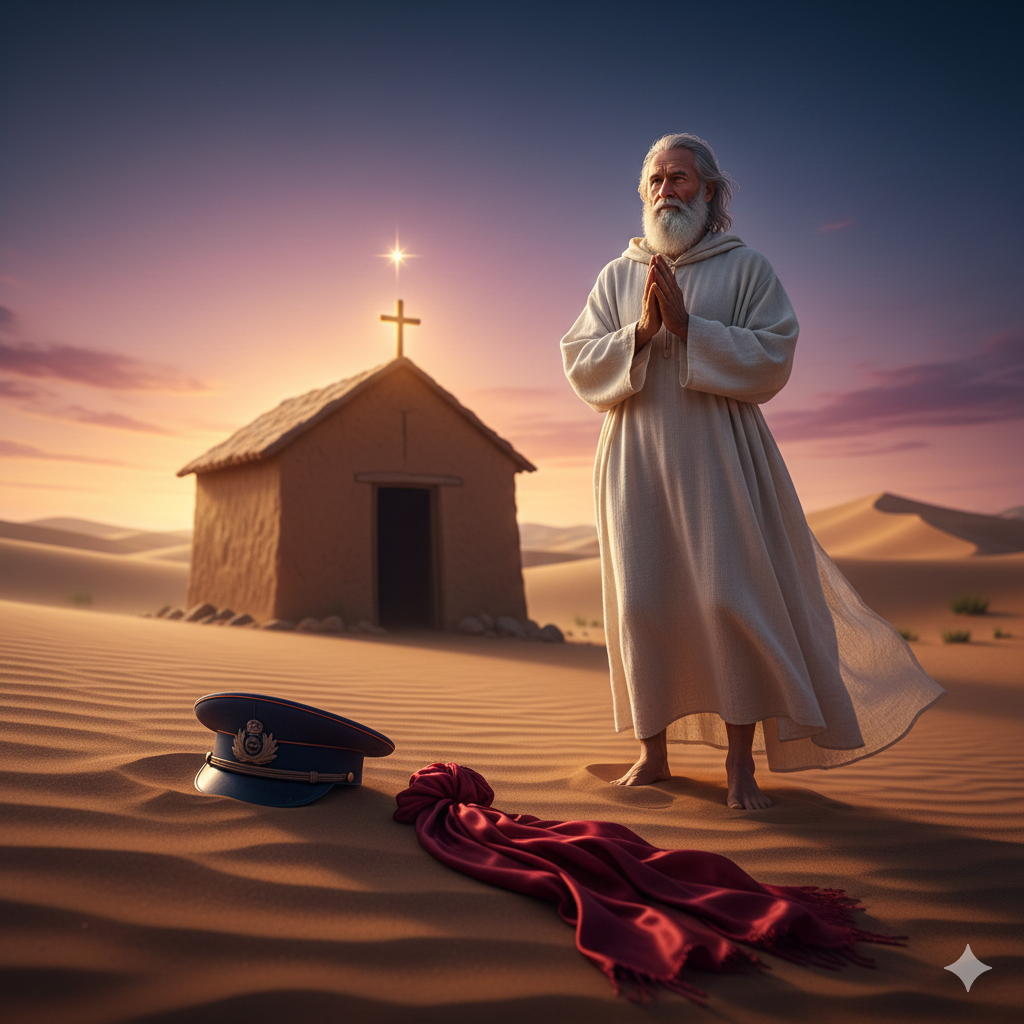
    He disappears into the Sahara to live closer to the poorest of the poor (the Tuareg nomads whom his own army regards as enemies).

    He builds a tiny hermitage of mud bricks, learns their language, compiles the first real Tuareg-French dictionary while half-starving at 9,000 feet on a frozen plateau.

    He begs to be ordained a priest only so he can celebrate Mass alone in the desert, telling God, “I want to live where no one knows You, so that You are not alone there.”

    On the night of 1 December 1916, bandits come to kidnap him for ransom. A fifteen-year-old boy guarding him panics at the sound of approaching French camel troops and shoots the hermit through the head.

    He dies instantly, face in the sand, apparently a failure: no converts, no community, no one to carry on his vision.

    He is buried in a ditch.

    A century later, in 2022, the Catholic Church declares him a saint.

    Nineteen religious orders and lay communities (Little Brothers of Jesus, Little Sisters of Jesus, and many others) now live all over the world according to the rule he wrote for a brotherhood that never existed while he was alive.

    From prodigal son to desert hermit to forgotten martyr to spiritual father of thousands: his life follows the ancient hero’s journey so perfectly that it feels invented.

    Except it isn’t.

    Every detail is documented, photographed, witnessed.

    Charles de Foucauld (1858–1916) lived a legend, then died in obscurity, and only then did the legend begin to walk on its own.

    Sometimes reality is allowed to be more beautiful than myth.

    Feel free to share.

    (If you want a one-sentence version for social media:

    “Rich playboy → atheist officer → Trappist monk → Sahara hermit → murdered by a scared teenager → canonized saint whose spiritual children now circle the globe. Charles de Foucauld didn’t just live a myth. He lived the whole myth, and it was true.”)

    Further reading
    • Charles de Foucauld’s own letters and spiritual writings are collected in Charles de Foucauld: Essential Writings (Orbis Books, 1999)
    • The best single biography in English remains Jean-Jacques Antier, Charles de Foucauld (Ignatius Press)
    • Pope Francis on Charles: Gaudete et Exsultate §§66–68 (free at vatican.va)
    • Pope Leo XIV’s recent references appear in Dilexi Te (2025), §§42–45

    This reflection was shaped in conversation with Grok (xAI), December 2025.