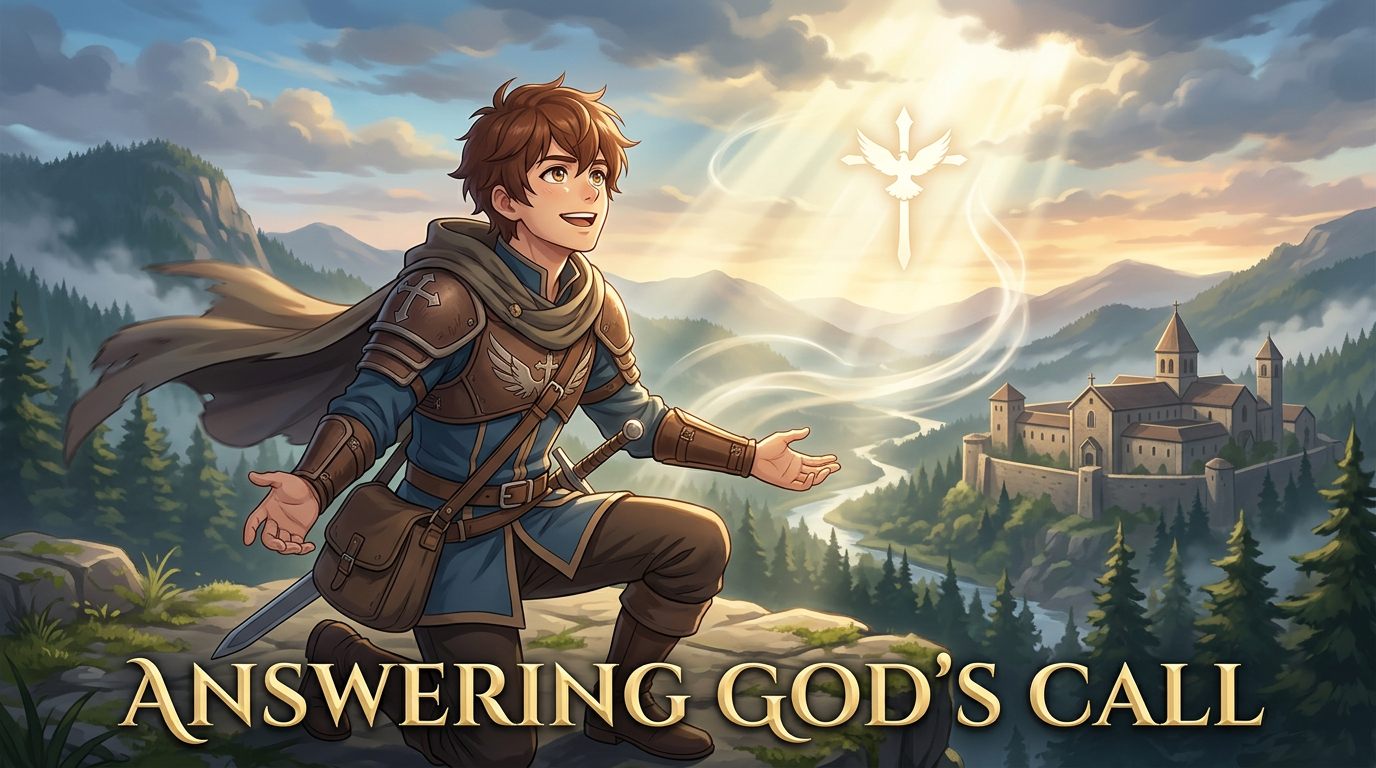
They are experiencing Christianity as joy and hope, having thus become lovers of Christ.

Category: Hero’s Journey / Mythology

  • When Inaction Is a Wound:

    Restoring Curiosity After Trauma

    Not Laziness—But Woundedness

    When Jordan Peterson warns against “moral laziness,” he isn’t simply wagging a finger at the unmotivated. He’s pointing to a deeper tragedy: the collapse of curiosity, responsibility, and courage after someone has suffered.

    We often label people as lazy when they don’t act, don’t grow, don’t take responsibility. But what if that inaction is not due to weakness, but to pain?

    What if “laziness” is just the visible surface of a soul in retreat?

    The Collapse of Curiosity

    Curiosity is what drives us to explore the unknown. It’s the fuel of courage, learning, and transformation. But trauma teaches the opposite lesson:

    • That the unknown is dangerous.
    • That risk leads to pain.
    • That effort ends in failure.

    So the traumatized person stops reaching. Stops trying. Stops hoping.

    What we call “moral laziness” is often a survival instinct—an attempt to avoid more wounding by refusing to step forward. But over time, this self-protection becomes self-destruction.

    The Adversary: A Reaction to Pain

    Peterson often connects moral laziness to the formation of the adversary—the one who resents, who destroys, who hates existence itself. But this adversary is not born evil.

    They are formed through suffering that was never healed:

    • Betrayal that was never understood.
    • Chaos that was never ordered.
    • Responsibility that felt too heavy to bear.

    Over time, the protective shield of “doing nothing” hardens into a philosophy of nihilism, or a hunger for control and vengeance. The adversary grows, not from ambition, but from despair.

    The Moral Capacity Remains

    And yet—the potential for goodness remains.

    Even in deep avoidance, moral capacity still flickers:

    • The desire for meaning has not fully died.
    • The hunger for love and truth still echoes.
    • The will to be better still whispers beneath the silence.

    This is why healing matters—not just emotionally, but morally. Because healing reawakens the capacity to engage the world as it is. It restores the courage to act. In Christian terms, it is the slow recovery of the image of God in us—an image that trauma can obscure but never erase.

    Healing Restores Curiosity

    When the wound is seen, when the fear is named, when the soul is gently drawn out of hiding—curiosity returns.

    • The heart opens to new questions.
    • The eyes see beauty again.
    • The will to participate in life is rekindled.

    This is how the hero rises: not by avoiding pain, but by moving through it with support, grace, and growing strength. Christ Himself is the wounded Healer who meets us in our retreat and calls us forward again.

    From Paralysis to Purpose

    If you’re stuck in procrastination or inaction, you’re not defective. You may simply be protecting yourself from a world that once felt too dangerous.

    But healing is possible.

    And as healing takes root, curiosity revives, responsibility feels lighter, and the heroic path becomes visible again. You were not made for paralysis. You were made for meaning.

    A few gentle next steps can help:

    • Name the wound honestly before God and, if possible, a trusted person.
    • Take one small act of responsibility today—something modest that reintroduces movement.
    • Ask for the grace to become curious again, even in small ways.

    The Lord does not despise the bruised reed. He restores it, so that it can once more lean toward the light.

  • The Generational Loop:

    The Generational Loop:

    Breaking History’s Habitual Cycle

    In the classic movie Groundhog Day, the protagonist Phil Connors finds himself trapped in a time loop. With no tomorrow and no lasting consequences, he initially cycles through everything you might expect: reckless hedonism, chasing shortcuts, manipulation, and eventually, a dark, empty nihilism. The loop only breaks when he stops trying to game the system and begins practicing virtue for its own sake—learning skills, serving others, and building character in private.

    It is a brilliant piece of storytelling, but it carries a much deeper truth when applied to the macro-level of human civilization.

    If we look closely at history, each generation is essentially another iteration of Phil’s loop.

    The Playbook of Wasted Days

    As a human race, we have already lived through the chaotic, self-destructive early phases of the loop. Over thousands of years, previous generations have tested the boundaries of absolute moral relativism. They tried the “shortcuts” of building societies purely on material abundance, radical individualism, or total freedom from accountability.

    And just like Phil waking up at 6:00 AM to the same cold reality, those historical iterations consistently proved one thing: chasing fleeting pleasure and ignoring moral foundations ultimately leaves a society spiritually empty and socially fractured.

    But we have an advantage Phil didn’t have in the beginning. We don’t actually start completely from scratch. Because of the trial, error, and suffering of the “generations” that came before us, the collective human experience has mapped out exactly what fails and what flourishes. Over time, humanity has “learned the piano” and figured out how to save the town. We have recorded these hard-fought lessons in our deepest philosophical, cultural, and spiritual traditions. We “know” what works:

     * Strong character and integrity as the only real defense against corruption.

     * Stable families and real relationships as the bedrock of trust.

     * Practical wisdom over trendy, untested ideologies.

     * Doing the right thing even when there is no immediate reward.

    The Choice Before Us

    This brings us to the unique tension of modern life. The loop is still running, but the playbook is wide open.

    Every new generation—and every individual within it—is faced with a critical choice: Do we leverage the accumulated wisdom of the previous iterations, or do we insist on wasting our “day” re-learning the exact same painful lessons?

    Society falters when comfort leads us to believe we are immune to the rules of history. When we attempt to experiment with “new and improved” ways of bypassing character, responsibility, or commitment, we aren’t being progressive; we are just hitting the snooze button on history’s loop.

    The expected consequences of our choices have never changed. If we choose the shortcuts, we force another cycle of cultural decay. But if we choose to inherit the wisdom of the past, we skip the despair and step directly into real flourishing.

    Breaking Your Own Loop

    You do not need to rewrite the laws of human nature to live a life of impact. The map has already been drawn.

    Start exactly where you are today. Choose to build on the experience of the generations that came before you rather than repeating their mistakes. Practice one solid habit. Restore trust in your closest relationships. Focus on becoming someone worth admiring, even when no one is watching.

    When enough of us choose to follow the proven path of virtue, we stop spinning our wheels in a repeating cycle of cultural apathy. Like Phil on the morning of February 3rd, we can finally wake up to a world that has been transformed—not by magic, but by the steady, deliberate choice to flourish.

    Inspired by this excellent X post: https://x.com/Kristof_Poland/status/2077850293031862347

  • Groaning for New Creation:

    Groaning for New Creation:

    What Romans 8 Teaches Us About Suffering and Heroism

    A powerful passage from Romans 8 offers a vivid picture of how God brings new life into the world. In it, St. Paul describes creation itself as being in labor—groaning and travailing in pain as it waits for something better to be born.

    Quick Look at the Passage

    Paul writes that “the creation waits with eager longing for the revealing of the sons of God” (Romans 8:19). Right now, the world is broken and full of suffering. It’s like a mother in childbirth: intense, uncomfortable, and full of groans.

    Creation isn’t passively waiting. It’s actively straining toward the moment when God’s people—mature, adopted sons and daughters conformed to Christ—will be fully revealed in glory.

    Believers aren’t spectators either. We “groan inwardly” too (v. 23) as we share in Christ’s sufferings now, so we can share in His glory later. The Christian life, Paul says, is one of co-laboring with God. New creation doesn’t just happen to us. It comes through us—through ordinary people who say yes to responsibility, die to self, and keep going when it hurts.

    The childbirth image is perfect because it’s honest: there is no birth without labor. Comfort that avoids all pain short-circuits the process. Real fruitfulness requires travail.

    Why This Matters for Everyday Heroes

    In times of cultural or personal crisis, old ways pass away and something new struggles to be born. The “heroes” who step forward aren’t the loudest or the most comfortable. They are the ones willing to embrace the groaning:

    • They accept difficulty or marginalization instead of escaping into distraction.
    • They take up responsibility when it would be easier to stay passive.
    • They practice the daily disciplines of dying to self—forgiveness, honesty, service, prayer—so that Christ’s life can come through them.

    This is the hero’s journey in biblical terms: suffering, responsibility, and then new life. Scripture links the two sides tightly. No labor, no birth.

    As one reflection put it:

    “New life does not come without labor. The heroes who step forward are those willing to embrace that suffering and responsibility, dying to self so that the new creation can be born through them.”

    A Simple Invitation

    If you’re feeling the weight of the times—the groans in your own heart or in the world around you—take heart. That discomfort may be the very sign that something good is coming. Don’t numb it or run from it. Offer it to God. Let it form you into the mature son or daughter He’s calling you to be.

    The revealing of the sons of God is worth the labor. Creation itself is counting on it.

  • Dying to Live:

    Dying to Live:

    Marginalization, the Hero’s Journey, and Becoming One with Christ

    Several weeks ago, the Sunday reading spoke of those who are alive in Christ having also died with Christ. I’ve been meditating on this ever since, and it strikes me as literally true in the deepest sense.

    Those who truly identify with Christ have gone through a death to themselves and a rebirth in the Spirit. In their own lives, they have experienced a death to the old self—often painful—followed by an inspiration, an awakening that makes them one with Christ in a real, transformative way.

    Christ died for our sins. Our own death to self is frequently the direct result of our sins, our avoidance, our need for control. In this way, we participate in “paying for our sins”—not as a way to earn salvation, but as the lived reality of union with the One who paid the full price.

    United with Christ in Death and Life

    The New Testament doesn’t present this as a metaphor to admire from a distance. It is a spiritual reality we are invited to enter:

    “I have been crucified with Christ and I no longer live, but Christ lives in me. The life I now live in the body, I live by faith in the Son of God, who loved me and gave himself for me.”
    — Galatians 2:20

    “Or don’t you know that all of us who were baptized into Christ Jesus were baptized into his death? We were therefore buried with him through baptism into death in order that, just as Christ was raised from the dead through the glory of the Father, we too may live a new life.”
    — Romans 6:3-4

    “For you died, and your life is now hidden with Christ in God.”
    — Colossians 3:3

    “Therefore, if anyone is in Christ, the new creation has come: The old has gone, the new is here!”
    — 2 Corinthians 5:17

    We are called to count ourselves “dead to sin but alive to God in Christ Jesus” (Romans 6:11). This is not something we achieve by effort alone; it is something we receive by faith and live out daily.

    Marginalization: The Common Doorway

    Everyone who becomes truly one with Christ has been marginalized in some way—by society, by circumstances, or by the consequences of their own sins.

    Jesus made this abundantly clear:

    “It is not the healthy who need a doctor, but the sick. I have not come to call the righteous, but sinners to repentance.”
    — Luke 5:31-32 (see also Mark 2:17, Matthew 9:13)

    He spent His time with tax collectors, prostitutes, lepers, and outcasts—the people on the margins. The parables of the lost sheep, the lost coin, and the prodigal son all celebrate the joy in heaven over one sinner who repents.

    The ones who start life on the margins often have only one direction to go: upward, toward God. For the rest of us, the death to self usually comes—willingly through surrender or unwillingly through crisis.

    When Society Makes “Hitting Bottom” Difficult

    Our modern society, with its genuine compassion and generous safety nets, often makes it hard for anyone to actually reach the margins or fall completely off the edge. While these supports help many people in real, practical ways, they can also unintentionally prevent the kind of desperation that forces us to confront our need for God.

    Many people live comfortable, respectable lives that never quite bring them to the end of themselves. As a result, the dramatic “come to Jesus” moment that so many saints and ordinary believers describe remains elusive.

    If You Haven’t Had Your “Come to Jesus” Moment Yet

    If you’re reading this and thinking, “I don’t believe I’ve had that moment yet—what can I do?”, then you have already been stirred by grace. The very fact that you’re asking shows the Spirit is at work.

    The next step is honest self-examination: Are you satisfied with your current state? If the answer is no, then the invitation is clear—undertake the hero’s journey. Seek God with all your heart, soul, mind, and strength.

    One of the most powerful examples is the prodigal son. He had to hit rock bottom—feeding pigs, longing for their food—before he “came to his senses” and returned home. His father didn’t wait on the porch; he ran to meet him.

    Basic Training for the Journey

    While on this journey, we need practical disciplines—the “basic training” of the Christian life:

    • Prayer — to grow in humility and dependence on God.
    • Fasting or voluntary sacrifice — to help overcome our passions and disordered desires.
    • Charity (generosity toward others) — to grow in the selfless love of Christ. This means actively looking for the good of the other and taking our eyes off ourselves.

    These three practices—prayer, fasting, and almsgiving—appear throughout Scripture as the classic path of transformation. As we faithfully “fill these water jars,” God does what only He can do: He reveals Himself and turns our ordinary water into wine.

    The Transformation Is Real

    This is not a self-improvement project. It is participation in the death and resurrection of Jesus. The old self dies (sometimes kicking and screaming), and the new creation emerges. Christ lives in us.

    The journey may begin with pain or dissatisfaction, but it ends in freedom, love, and the joy of knowing we are no longer our own.

    If this reflection resonates with you, I invite you to begin—or continue—the journey today. Start small: an honest prayer of surrender, one act of generosity, or a simple fast from something that has too much hold on you.

    God is not waiting for you to be perfect. He is waiting for you to come to the end of yourself—so He can raise you to new life in Him.

    Have you experienced a “death to self” moment in your own life? What practices have helped you most on the journey? I’d love to hear your thoughts in the comments.

  • Why America Needs a Hero’s Journey, Not Just Another Marching Band

    Why America Needs a Hero’s Journey, Not Just Another Marching Band

    How The Music Man, myth, and modern comfort expose our spiritual apathy — and what we can do about it

    What if America’s deepest crisis isn’t scarcity, but abundance without meaning?

    Civilizations tend to follow a recognizable pattern: bondage → faith → courage → liberty → abundance → complacency → apathy → dependence → bondage. Whether or not that exact sequence is historical, the later stages feel uncomfortably familiar today. We live in material comfort and digital distraction, yet many sense a growing restlessness and loss of purpose.“Ya got trouble… right here in River City!”

    In Meredith Willson’s The Music Man, the fast-talking Professor Harold Hill scares the town by claiming their boys are being ruined by a new pool hall. He’s a con man — but ironically, he’s not entirely wrong. The boys are drifting. Their solution? A boys’ band — instruments, uniforms, and marches. What begins as a scam becomes something true: a call to discipline, beauty, teamwork, and higher purpose. Even a flawed messenger can awaken a community to the Hero’s Journey.

    Apathy Is Quiet Bondage

    In every great myth and in Scripture, the story begins in bondage. Israel in Egypt. The Prodigal Son in the far country. The soul caught in habitual sin. Today, our bondage often looks comfortable: endless scrolling, comfort foods, entertainment on demand — a dopamine haze that dulls the hunger for God and real virtue.

    When life feels “good enough,” the Call to Adventure sounds unnecessary. Why risk the journey when the couch is soft and the screen is bright?

    The Band Must Play

    The Music Man is a parable for our time. The town didn’t just need order — it needed a song worth marching to. 

    We don’t need another hustle or another distraction. We need:

    • A higher aim that demands virtue and effort
    • Communities that form character instead of enabling comfort
    • Messengers (flawed or not) who stir souls awake

    The Hero’s Journey always begins when someone sees the trouble and chooses to respond. In Christ, that response is possible for anyone. The same Lord who turned water into wine at a wedding feast can turn our apathy into zeal.

    Let the Music Start

    The question is no longer whether trouble has reached our city. It has. The real question is whether we will keep drifting toward the pool hall… or pick up an instrument and join the band.

    Start small. Form the habit. Answer the call.

    The music is waiting to be played.

  • What About Those Who Lose Faith in Times of Crisis?

    What About Those Who Lose Faith in Times of Crisis?

    When the Shaking Hits Home

    What About Those Who Lose Faith?

    In my last reflection, I wrote about how the Church has endured massive instability — Arianism, the Reformation, Modernism — and how each crisis felt like the very ground was shaking. Yet every time, God raised up saints who preserved and renewed the faith. He has not abandoned His Church.

    But an uncomfortable question remains: what about those who don’t make it through the shaking? What about those who lose their faith?

    Why We Must Care

    Jesus took this seriously. He warned, “Whoever causes one of these little ones who believe in me to sin, it would be better for him to have a great millstone fastened around his neck and to be drowned in the depth of the sea” (Matthew 18:6). Many ordinary Catholics grew up believing the Church was a solid rock. When scandals, confusion, or division appear, they feel betrayed. Some quietly walk away, concluding the whole thing was never true. That is a real tragedy, and we should feel sorrow over every soul that drifts.

    Why Some Faith Collapses

    At the same time, much of today’s faith is built on thin soil. Cultural Catholicism, social habit, or sentimental attachment can look strong in good times but cracks quickly under pressure. This is exactly what Jesus described in the Parable of the Sower: seed that springs up fast on rocky ground, but withers when the sun beats down (Matthew 13:5-6, 20-21).

    The Tension We Carry

    Here is the hard truth we live with:

    • Every soul is infinitely precious to God. He desires none to be lost (cf. 2 Peter 3:9).
    • Yet trial has a purifying purpose. Untested faith rarely grows deep.
    • Many of the greatest saints began with weak, shaky, or even childish faith. What changed them was being forced to wrestle honestly with their doubts, cling to Christ in the darkness, and emerge purified.

    A Sifting for Our Time

    Perhaps God is allowing a sifting. Shallow faith collapses. But others, seeing the cracks, are driven to press closer to Christ and discover what is truly real. History shows this pattern repeatedly: crisis exposes, purifies, and eventually raises up stronger witnesses.

    It is not easy to live in such days. Watching people we love lose faith is painful. But we are not without hope. The same Lord who walked with the disciples through the storm is walking with us. The Rock has not moved.

    The Choice Before Us

    The shaking will reveal what our faith is built upon. Will it drive us away in bitterness or disappointment? Or will it drive us deeper into Jesus Christ — the only foundation that cannot be shaken (cf. Hebrews 12:26-28)?

    Let us pray fervently for those whose faith is wavering. Let us strengthen what remains in ourselves. And let us trust that even now, God is raising up the saints our age so desperately needs.

  • Answering the Heroic Call

    Answering the Heroic Call

    Discovering God’s Adventure for Your Life

    Introduction: The Call to Adventure

    Every life has a calling. As C.S. Lewis observed, there are infinitely many good vocations—each as different from one another as good is from evil. Some are well-known: raising a family, serving the poor, building a business with integrity, or creating beauty that lifts the soul. Others are quieter, waiting for someone courageous enough to say “yes.”

    In the language of the Hero’s Journey, every great story begins with a Call. In the Christian life, that call is ultimately from God, inviting us to spend our one life on something that matters.

    What Makes a Vocation Heroic?

    Christian heroism is not about fame or power. It is the willingness to spend yourself—quietly or publicly—for love of God and neighbor. It is the courage to be faithful where you are planted.

    The Heroic Vocational Questions

    Take time with these in prayer:

    • Where do I feel most alive when serving or creating?
    • What injustice or need stirs courage and compassion in me?
    • Which relationships or mentors bring out the best version of me?
    • What work makes me lose track of time while clearly benefiting others?
    • What cause or activity do I keep returning to, even when it’s hard?
    • How would I hope my life is remembered if I gave it fully to this path?
    • What sacrifice would I be willing to make for this good?
    • How does this calling serve the greater good, my community, and God’s Kingdom?

    Reflection and Discernment

    Discernment is rarely a lightning-bolt moment. It is usually a slow unfolding. Journal, pray (especially before the Blessed Sacrament if you’re Catholic), speak with a wise spiritual director or mentor, and be patient. St. Ignatius of Loyola’s rules of discernment or the example of Samuel (“Speak, Lord, your servant is listening”) can be helpful companions.

    Practical Next Steps

    • Volunteer or shadow someone already living a similar vocation.
    • Seek mentors who are further along the path.
    • Invest in formation: courses, books, apprenticeships.
    • Start small—launch a modest project and see what fruit appears.
    • Regularly bring it back to prayer: “Lord, if this is not from You, close the door. If it is, give me the grace to walk through it.”

    Conclusion

    Your vocation—whether priesthood, marriage, consecrated life, creative work, business, or hidden service—is heroic the moment you offer it to God. The adventure begins the instant you respond to the stirrings in your heart.

    Pay attention. Ask the questions. Take the next small step.

    And trust that the One who calls you will also sustain you.

  • The Beatitudes’ Radical Reversal:

    The Beatitudes’ Radical Reversal:

    What “Blessed” Really Means

    Jesus turns our idea of success and happiness completely upside down in the Beatitudes (Matthew 5:3-12). In this powerful part of the Sermon on the Mount, He reveals the true meaning of being “blessed” — and it’s not what the world expects.The fortunate ones in God’s Kingdom aren’t the powerful, wealthy, or comfortable. Instead, Jesus declares that the truly blessed are:

    • The poor in spirit — those who know they desperately need God
    • Those who mourn — over sin, suffering, and a broken world
    • The meek, the merciful, the pure in heart, the peacemakers, and those persecuted for doing what is right

    Their reward? “The Kingdom of Heaven belongs to them” — both now and forever.

    The Greek word makarios (often translated “blessed”) means far more than a passing feeling of happiness. It speaks of deep, enviable flourishing that comes from God’s favor.

    A helpful picture comes from Spanish: “Blessed” is more like ser — an essential, permanent state of being. It’s who you are in Christ, not just how you feel in the moment (estar). That’s why the paradoxes make sense: you can be deeply blessed even while mourning, poor in spirit, or persecuted.

    Jesus isn’t promising easy circumstances or constant good moods. He’s revealing a new identity in the Beatitudes: In God’s Kingdom, humility, mercy, and endurance open the door to real, lasting flourishing.

    This is stable divine favor that holds you even when life is hard.

    Which Beatitude challenges you the most right now?

    Which one brings you the most comfort?

  • Why Chaos Is the Only Way to See Your Crown

    Why Chaos Is the Only Way to See Your Crown

    The prophet Daniel sees a vision that still terrifies readers today. In a dream, he watches the great sea churned by violent winds. From those dark waters rise four monstrous beasts — wild, devouring, and trampling everything in their path (Daniel 7:2-14).This is not just ancient history. It is a picture of what happens inside us when chaos hits.The “great sea” represents our own soul in turmoil. The beasts are the raw, destructive passions that rise up when life feels out of control: crushing fear, raging anger, the desperate need to dominate people or circumstances. When the winds of crisis blow, these inner beasts awaken and threaten to devour our peace.

    But God does not leave us there.

    Right in the middle of the terror comes a clear, supernatural command — the Gospel acclamation we hear today:

    “Stand erect and hold your heads high, because your liberation is near at hand.” (Luke 21:28)

    This is the turning point.

    Our natural instinct when beasts appear is to run or freeze. But the Lord calls us to something higher: a deliberate, Spirit-led posture. To stand erect is to refuse to let fear or chaos define us. It is the moment the will, strengthened by grace, takes its proper place and says, “My identity does not rest on how stable my life feels right now.”

    The beasts look powerful, but they are temporary.

    Daniel’s vision ends with a far greater sight: the Ancient of Days seated on the throne, and “one like a son of man” coming on the clouds to receive an everlasting kingdom (Daniel 7:13-14).

    Jesus deliberately takes this title — Son of Man — for Himself. His Kingdom is not temporary like the beasts. As He says in the Gospel:

    “Heaven and earth will pass away, but my words will never pass away.” (Luke 21:33)

    The chaos is loud. The Word is quiet. But only one of them lasts.

    Look at the Fig Tree

    Jesus gives us a simple image:

    “Consider the fig tree and all the other trees. When their buds burst open, you see for yourselves and know that summer is now near. In the same way, when you see these things happening, know that the Kingdom of God is near.” (Luke 21:29-31)

    Even in the middle of chaos we are meant to look for signs of the Kingdom breaking through — small buds of patience, compassion, trust, or peace where there used to be only fear and anger.So what does “standing erect” actually look like in daily life?

    • Stop feeding the beasts. Limit what stirs up unnecessary fear, comparison, or rage.
    • Anchor yourself in the Word. When the roar gets loud, speak Christ’s promises out loud.
    • Look for the buds. Ask: Where is grace trying to grow in me right now?

    Chaos is painful, but it is often the only place where we finally see our true Crown — the eternal kingship of Christ that the beasts can never touch.

    Stand tall. Your liberation is drawing near.

  • Isaiah 40 and the Anatomy of Grace

    Isaiah 40 and the Anatomy of Grace

    One of the most encouraging passages in the Bible is found in Isaiah 40. It ends with this promise: “Those who hope in the Lord will renew their strength. They will soar on wings like eagles; they will run and not grow weary, they will walk and not be faint” (Isaiah 40:31).

    This isn’t just beautiful poetry. It describes a real kind of transformation— spiritual, emotional, and even psychological. It shows what grace actually does in the life of someone who is worn out.

    Think about what happens when we’re overwhelmed. Life gets heavy—work, relationships, worries, bad news—and our minds and bodies shift into survival mode. Breathing gets shallow. Thinking turns catastrophic (“everything is falling apart”). We get tunnel vision, more cynical, and often pull away from people. Isaiah captures this worn-out state in the verse right before: “Even youths grow tired and weary, and young men stumble and fall” (40:30). No one is immune.

    But here’s the turning point. When we put our hope in the Lord—when we choose to trust Him even in the middle of the mess—something different starts to happen. Hope in God interrupts that downward spiral. It opens us up again. We begin to see a longer-term picture instead of just the immediate crisis. Resilience grows. Trust comes back. And we feel drawn toward connection rather than isolation.

    This isn’t a guaranteed quick fix or a replacement for professional help when it’s needed. It’s the lived experience of countless people across the centuries: turning toward God reattunes the heart and mind. Grace gives strength where our own resources have run dry.

    What makes this promise especially powerful is how it differs from the old stories we all know. In ancient myths, the gods would sometimes step in and give a temporary boost to a hero—Zeus helping Perseus, Athena guiding Odysseus. The help was usually for someone already strong, talented, or favored.

    Isaiah flips the script. The true God doesn’t just prop up the powerful. He “gives strength to the weary and increases the power of the weak” (40:29). The real hero in this story isn’t the person who never needs help. It’s the one who admits they’re exhausted and receives strength as a gift.

    That’s the beautiful Christian twist on the classic hero’s journey. The journey doesn’t start with “I have what it takes.” It starts with honest weakness and dependence on God. From that place, real renewal flows.

    If you’re feeling tired, faint, or like you’re stumbling right now, Isaiah 40 is speaking directly to you. Hope in the Lord. Not as a slogan, but as a daily choice to bring your weariness to Him. Strength will come—maybe not all at once, but enough to keep going. Enough to walk without fainting. Enough, sometimes, to rise up and soar.

    That’s the anatomy of grace. Not self-improvement through sheer willpower, but receiving what we could never manufacture on our own.

    One of the most encouraging passages in the Bible is found in Isaiah 40. It ends with this promise: “Those who hope in the Lord will renew their strength. They will soar on wings like eagles; they will run and not grow weary, they will walk and not be faint” (Isaiah 40:31).

    This isn’t just beautiful poetry. It describes a real kind of transformation— spiritual, emotional, and even psychological. It shows what grace actually does in the life of someone who is worn out.

    Think about what happens when we’re overwhelmed. Life gets heavy—work, relationships, worries, bad news—and our minds and bodies shift into survival mode. Breathing gets shallow. Thinking turns catastrophic (“everything is falling apart”). We get tunnel vision, more cynical, and often pull away from people. Isaiah captures this worn-out state in the verse right before: “Even youths grow tired and weary, and young men stumble and fall” (40:30). No one is immune.

    But here’s the turning point. When we put our hope in the Lord—when we choose to trust Him even in the middle of the mess—something different starts to happen. Hope in God interrupts that downward spiral. It opens us up again. We begin to see a longer-term picture instead of just the immediate crisis. Resilience grows. Trust comes back. And we feel drawn toward connection rather than isolation.

    This isn’t a guaranteed quick fix or a replacement for professional help when it’s needed. It’s the lived experience of countless people across the centuries: turning toward God reattunes the heart and mind. Grace gives strength where our own resources have run dry.

    What makes this promise especially powerful is how it differs from the old stories we all know. In ancient myths, the gods would sometimes step in and give a temporary boost to a hero—Zeus helping Perseus, Athena guiding Odysseus. The help was usually for someone already strong, talented, or favored.

    Isaiah flips the script. The true God doesn’t just prop up the powerful. He “gives strength to the weary and increases the power of the weak” (40:29). The real hero in this story isn’t the person who never needs help. It’s the one who admits they’re exhausted and receives strength as a gift.

    That’s the beautiful Christian twist on the classic hero’s journey. The journey doesn’t start with “I have what it takes.” It starts with honest weakness and dependence on God. From that place, real renewal flows.

    If you’re feeling tired, faint, or like you’re stumbling right now, Isaiah 40 is speaking directly to you. Hope in the Lord. Not as a slogan, but as a daily choice to bring your weariness to Him. Strength will come—maybe not all at once, but enough to keep going. Enough to walk without fainting. Enough, sometimes, to rise up and soar.

    That’s the anatomy of grace. Not self-improvement through sheer willpower, but receiving what we could never manufacture on our own.