They are experiencing Christianity as joy and hope, having thus become lovers of Christ.

Category: Health, Suffering, & Mortality

The spiritual meaning of sickness, mortality, and the stewardship of the physical body.

  • The Geometry of Grace:

    The Geometry of Grace:

    Why the Yoke is Actually Light

    We’ve all heard the cynical refrain: “Misfortune falls on the good and the bad alike.” We treat life like a chaotic lottery where lightning strikes the saint and the sinner with equal indifference.

    But is that actually true?

    If we look through the lenses of Catholic Exegesis, Neurobiology, and the Hero’s Journey, we discover a startling reality: Grace isn’t just a theological “extra.” It is a fundamental shift in how a human being interacts with reality.

    1. The Suburbs of Heaven

    C.S. Lewis famously suggested that for those who say “Yes” to God, this life is the beginning of Heaven; for those who say “No,” it is the beginning of Hell.

    This isn’t just a poetic thought. It is a description of an internal ecosystem. The Book of Wisdom tells us that those who do good fare well. When you live a life of grace, you are no longer rowing against the current of the universe. You are aligned with the Creator’s design. This alignment creates a “protective shield”—not by magic, but by a radical reordering of your life.

    2. The Biological Advantage of Peace

    Let’s look at the “structure of the brain.” A life of sin—gluttony, drunkenness, aggressive driving, or constant domestic strife—keeps the brain in a state of chronic Amygdala Hijack. This is the “fight or flight” center. When it’s overactive, your body is flooded with cortisol, your immune system weakens, and your peripheral vision literally narrows. You become more “prone to injury” and “susceptible to accidents” because your brain is too cluttered to pay attention.

    A “Real Christian,” however, operates from the Prefrontal Cortex—the seat of peace and discernment. By practicing chastity, fasting, and a clean conscience, you are essentially “fine-tuning” your biological machine.

    • Better Sleep: Because your conscience is clear.
    • Less Sickness: Because your stress levels are lower and your habits are more responsible.
    • Fewer Accidents: Because you are “less in a hurry” and more aware of the people around you.

    3. The Hero’s Risk and the Martyr’s Paradox

    Now, there is one place where the “Safety of Grace” seems to fail: Sacrifice. In the classic Hero’s Journey, the protagonist eventually leaves the “Safe Zone” to face the dragon for the sake of the village. For the Christian, this is the call to be a Martyr or a servant. We are much more willing to take an injury for others.

    But even here, the experience is different. As Brother Lawrence noted, God does not permit a soul totally abandoned to Him to suffer for “any appreciable length of time” without Divine support. When the world sees a catastrophe, the Christian sees a rebirth.

    4. A Different Dimension of Suffering

    When trials do come—and they will—the “Real Christian” isn’t living in the same dimension as the worldling. For those living only for this world, a trial is “sheer hell” because it threatens their only treasure.

    For the person in Grace, suffering is Sacred Alchemy. Following the thought of St. John Paul II, we see that suffering:

    1. Consumes Evil: It burns away the parts of our ego that we haven’t yet surrendered.
    2. Acts as Penance: It helps us understand the true cost of sin—our own and others’.
    3. Opens a Door: It is the “New Jerusalem” mindset, asking not “Why is this happening to me?” but “What is God trying to show me?”

    The Call to Action: Die to the Hurry

    Spiritual transformation isn’t a theory; it’s a practice. If you want to experience this “Light Yoke,” start with the Great Simplification. * Clean your conscience: Go to Confession and clear the mental clutter.

    • Audit your pace: Intentionally move slower this week. Watch how your “luck” changes when you are no longer in a frantic hurry.
    • Fix your eyes: When the next trial hits, ask God for the strength to see it as a “door” rather than a “wall.”

    Edited with assistance from Gemini
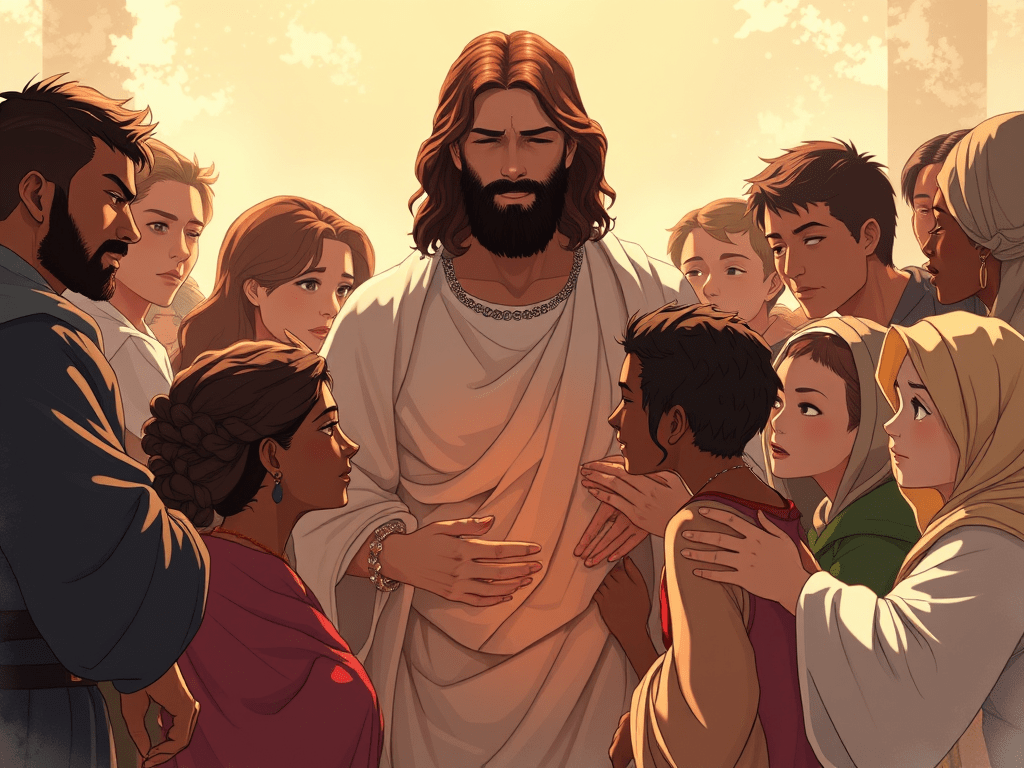
  • The Holy Paradox: Why Choosing Christ Doesn’t Make You “Better”

    The Holy Paradox: Why Choosing Christ Doesn’t Make You “Better”

    Moving from the Ego’s “Us vs. Them” to the Radical Humility of the Father’s Eyes.

    The Subtle Poison of Religious Pride

    When we decide to give our lives to Christ, we cross a threshold. It feels like a victory—and in many ways, it is. But right behind that victory lurks a subtle, spiritual poison. We begin to look at the world through a lens of “us” and “them.” We start to wonder: Am I better than they are?

    The short, jarring answer is: No.

    In the economy of Grace, there is no “better.” There is only the called, the seeking, and the found.

    The Myth of the Self-Made Saint

    We like to think our “Yes” to God is a personal achievement. We treat it like a trophy we earned. But Catholic Exegesis and the history of the Saints tell a different story.

    It is God who provides the environment. It is God who provides the attitude. It is God who guides the choice. You didn’t invent the air you breathe; you simply finally decided to stop holding your breath. Even the initiative to seek Him is a grace He provided.

    Key Insight: All that is good in us comes from Him. All that is evil in us is simply that which has not yet died.

    Beyond the “Sheep and Goats” Mentality

    Our brains are wired to categorize, to judge, and to rank. But to live a life of grace is to override those biological shortcuts and adopt The Father’s Eyes.

    When we look at someone “trapped by sin” or “downtrodden,” we are seeing only the surface. We have no idea what is happening in the deep recesses of their heart. Consider these three truths:

    1. The Invisible Battle: That person may be fighting a psychological or spiritual slavery you cannot imagine.
    2. The Proximity of Grace: The “worse off” a person appears by our standards, the closer they may be to a total, explosive conversion.
    3. The Elder Brother Trap: Like the brother of the Prodigal Son, we can be “right” on the outside while being miles away from the Father’s heart on the inside.

    Suffering as Sacred Alchemy

    Transformation isn’t just about feeling good; it’s about dying to the self. St. John Paul II once wrote that there is a specific kind of suffering that “burns and consumes evil with the flame of love.” When we see someone struggling, we aren’t called to point a finger. We are called to step into the fire with them.

    Because we have been blessed with grace, we don’t have a higher status—we have a higher responsibility. We are called to suffer personally to help others overcome their shadows. This is the “Hero’s Journey” of the soul: descending into the mess of humanity to bring back the light.

    The Mirror: Fixing Our Eyes

    If you find yourself comparing your holiness to your neighbor’s, you have taken your eyes off the Prize.

    We still have enough of ourselves that needs redemption to keep us busy for several lifetimes. The goal isn’t to be “better” than the person in the pew next to you; it is to be more “dead to yourself” than you were yesterday.

    The Call to Action: Today, look at the person you are most tempted to judge. Instead of a “goat,” see a “lost sheep.” Instead of a “sinner,” see a “prodigal.” Ask for the grace to see them not as they are, but as the Father sees them.

    Developed with assistance from Gemini AI

  • The Man Who Lived a Myth (And Was Real)

    The Man Who Lived a Myth (And Was Real)

    If someone told you this story as fiction, you’d roll your eyes and say, “Come on, nobody’s life is that tidy.”

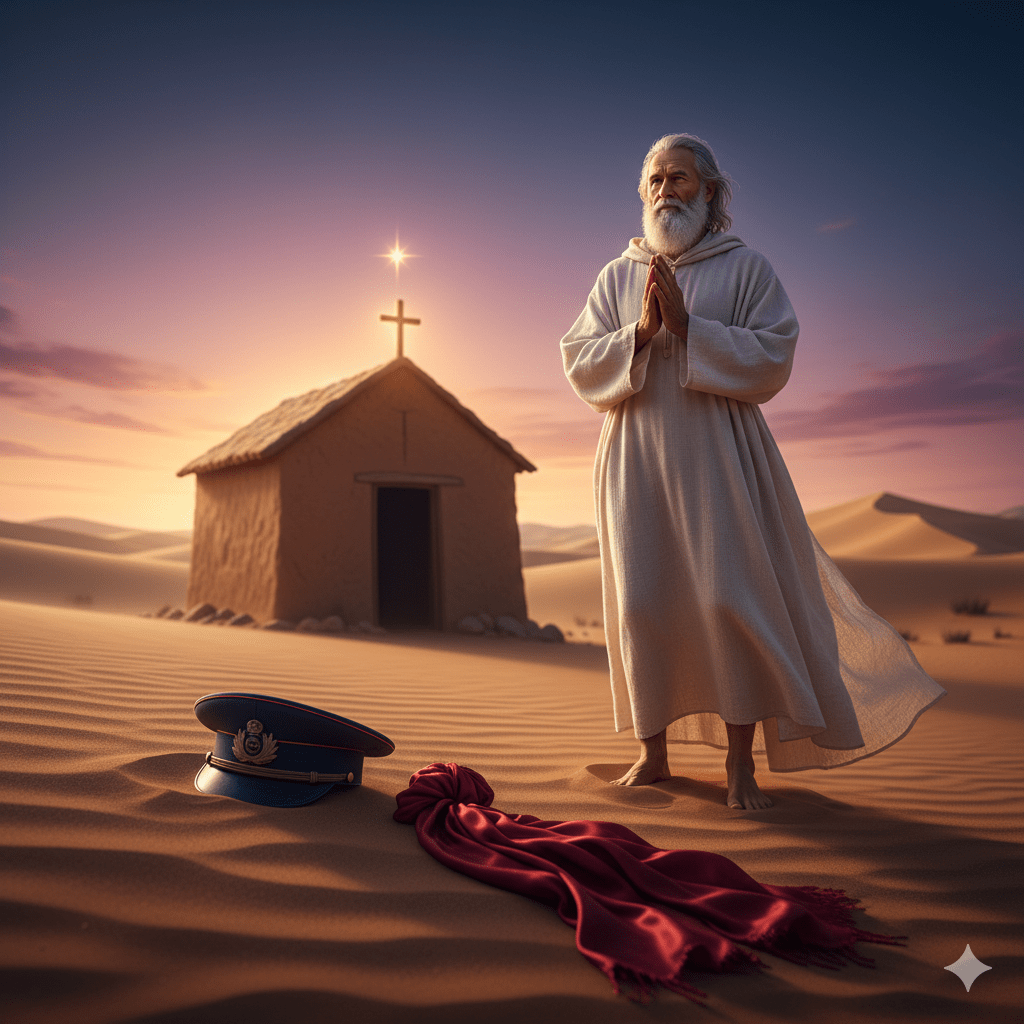
    A boy is born into one of France’s ancient noble families, bloodline reaching back to the Crusades, family motto: Jamais arrière—“Never back.”

    He loses his parents at six, inherits a fortune, and promptly becomes the most spoiled, lazy, and debauched young officer in the French cavalry: expelled from school, famous for orgies and gourmet dinners in the Algerian desert while on duty.

    At twenty-eight, something cracks open inside him. He walks into a Paris church and tells a priest, “I don’t believe in God, but teach me about Him anyway.”

    He gives everything away, joins the strictest monastery he can find, decides even that isn’t poor enough, and leaves.

    He disappears into the Sahara to live closer to the poorest of the poor (the Tuareg nomads whom his own army regards as enemies).

    He builds a tiny hermitage of mud bricks, learns their language, compiles the first real Tuareg-French dictionary while half-starving at 9,000 feet on a frozen plateau.

    He begs to be ordained a priest only so he can celebrate Mass alone in the desert, telling God, “I want to live where no one knows You, so that You are not alone there.”

    On the night of 1 December 1916, bandits come to kidnap him for ransom. A fifteen-year-old boy guarding him panics at the sound of approaching French camel troops and shoots the hermit through the head.

    He dies instantly, face in the sand, apparently a failure: no converts, no community, no one to carry on his vision.

    He is buried in a ditch.

    A century later, in 2022, the Catholic Church declares him a saint.

    Nineteen religious orders and lay communities (Little Brothers of Jesus, Little Sisters of Jesus, and many others) now live all over the world according to the rule he wrote for a brotherhood that never existed while he was alive.

    From prodigal son to desert hermit to forgotten martyr to spiritual father of thousands: his life follows the ancient hero’s journey so perfectly that it feels invented.

    Except it isn’t.

    Every detail is documented, photographed, witnessed.

    Charles de Foucauld (1858–1916) lived a legend, then died in obscurity, and only then did the legend begin to walk on its own.

    Sometimes reality is allowed to be more beautiful than myth.

    Feel free to share.

    (If you want a one-sentence version for social media:

    “Rich playboy → atheist officer → Trappist monk → Sahara hermit → murdered by a scared teenager → canonized saint whose spiritual children now circle the globe. Charles de Foucauld didn’t just live a myth. He lived the whole myth, and it was true.”)

    Further reading
    • Charles de Foucauld’s own letters and spiritual writings are collected in Charles de Foucauld: Essential Writings (Orbis Books, 1999)
    • The best single biography in English remains Jean-Jacques Antier, Charles de Foucauld (Ignatius Press)
    • Pope Francis on Charles: Gaudete et Exsultate §§66–68 (free at vatican.va)
    • Pope Leo XIV’s recent references appear in Dilexi Te (2025), §§42–45

    This reflection was shaped in conversation with Grok (xAI), December 2025.

  • 🕊️ The Holy Wisdom:

    🕊️ The Holy Wisdom:

    How to Live in the World Where the Wolf and the Lamb Lie Down

    I. The Shoot and the Sevenfold Spirit (The Mythological Order)

    The prophet Isaiah (11:1-10) gives us one of the most sublime visions of the Messianic Age. It begins with the Shoot from the stock of Jesse—the image of radical new life springing from seemingly dead roots. This is the ultimate Anointing, where the seven gifts of the Holy Spirit rest upon the Messiah: wisdom, insight, counsel, power, knowledge, and the fear of the Lord (with the fear of the Lord being his breath, emphasizing reverence).

    This Messianic rule immediately establishes a new cosmic order. It is an end to the primal chaos and conflict that has defined the world since the Fall.

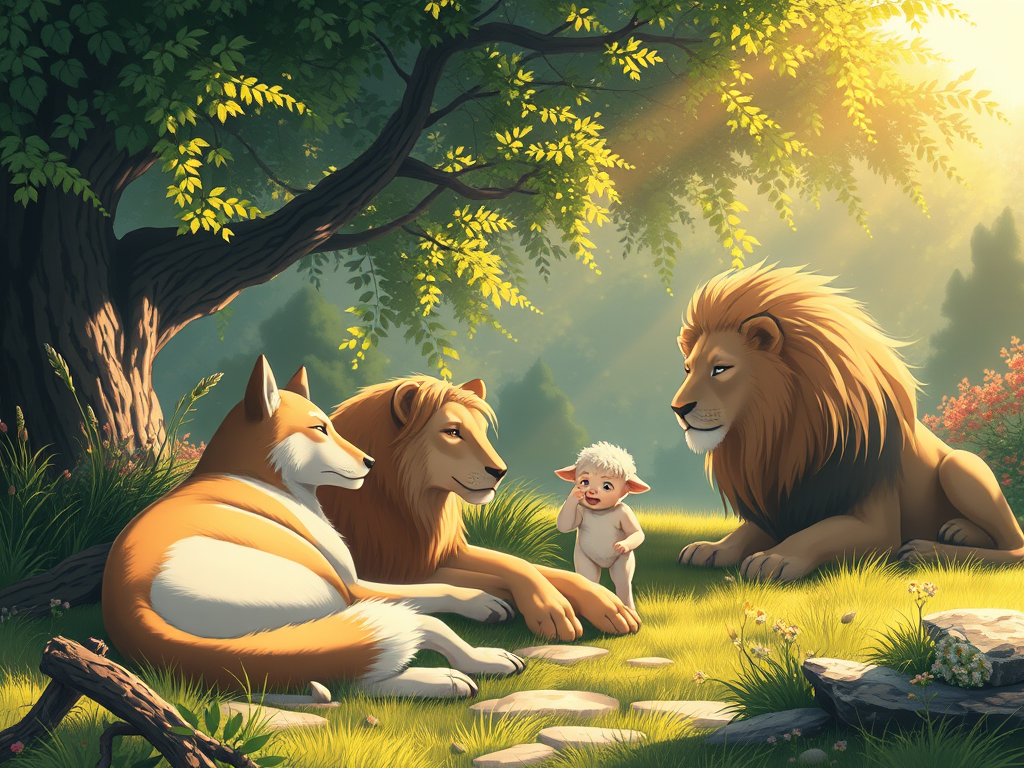
    The imagery—the wolf lives with the lamb, the calf and lion feed together, the infant plays over the cobra’s hole—is pure Mythological Parallel. It evokes the Golden Age or Paradise Restored. . This is the reversal of the natural order of predation and fear. The country is not secured by armies, but by knowledge of the Lord.

    The key insight for us is that this peace is not merely external, but internal: it is the perfect integration of our own conflicting natures.


    II. The Internal Wolf and Lamb (Psychology of Integration)

    We all house the wolf and the lamb. We carry the panther (our wild, unchecked appetites) and the kid (our innocent, vulnerable soul).

    Psychologically, the division in Isaiah’s vision reflects the constant civil war within the human heart:

    • The Wolf/Lion: Represents the passions and the instinctual self—the power of the limbic system and the amygdala—that seek to consume, dominate, and survive at any cost.
    • The Lamb/Calf: Represents the vulnerable, gentle, and receptive spiritual self—the capacity for peace and trust.

    When we are disordered, the wolf preys upon the lamb. Our fear consumes our peace; our lust devours our innocence.

    The Messianic promise is that the Spirit of the Lord (which integrates the powers of wisdom and counsel with knowledge and fear) rests on the leader who reorders this inner landscape. The “little boy” who leads them is the pure Will, guided by Wisdom, that shepherds the powerful animal instincts without destroying them. The lion doesn’t disappear; it learns to eat straw like the ox.

    III. The Wisdom of Children (The Hero’s Revelation)

    How do we gain this integration? The Gospel provides the counterintuitive method.

    Luke 10:21-24 shows Jesus, filled with joy, praising the Father for “hiding these things from the learned and the clever and revealing them to mere children.”

    This is the great Inversion of Wisdom. It is the prerequisite for the Hero’s Revelation. The knowledge that brings true peace is not attained through academic complexity or ego-driven cleverness. It is revealed through humility and simplicity—the state of the “child.”

    • The “learned and the clever” rely on the strength of the Prefrontal Cortex for independent reasoning, often fueling the prideful “wolf” of the ego.
    • “Mere children” rely on trust and direct reception. They are open to the gift of the Spirit (the fear of the Lord—holy reverence) that unlocks true knowledge.

    Only through the eyes of a child can we see the chaos of our inner zoo and accept the reordering delivered by Christ’s Word. Only by becoming small and humble can the Spirit rest fully upon us.

    IV. Call to Action: Practicing the Reordering

    The goal of this Advent is to let the Spirit of the Lord settle upon us, creating that inner sanctuary where no creature does harm.

    Your call to spiritual transformation this week is to practice the Reordering of the Heart:

    1. Identify the Predator: Name the “wolf” in your heart. What is the one instinct (fear, anger, cynicism, lust) that consistently preys upon your peace (the “lamb”)?
    2. Invite the Shepherd: Don’t try to kill the wolf with brute force (that just creates more violence). Instead, invite the Spirit of the Lord into that conflict. When the urge to consume or strike arises, pause and ask for the Spirit of Counsel and Wisdom to lead that wild instinct, turning its energy toward a productive task (like the lion eating straw).
    3. Embrace the Child’s Vision: Seek to simplify your mind. Spend time in quiet prayer not trying to figure out God, but simply receiving Him. Like the Centurion we discussed, surrender the need to be clever. Only in the humility of the child is the fullness of the Lord’s knowledge revealed.

    Let us be the humble remnant, purified and ordered, on whom the Spirit rests, making our hearts glorious and ready for the King.

    Developed with assistance of Gemini AI

  • ⚔️ Hammering Swords into Ploughshares:

    ⚔️ Hammering Swords into Ploughshares:

    The Work of Vigilance

    I. The Journey to the Mountain (The Hero’s Call)

    The liturgical year turns today, beginning the season of Advent. Our destination is clear: The Mountain of the Temple of the Lord .

    The prophet Isaiah (2:1-5) gives us a stunning mythological vision: a towering peak, lifted higher than the hills, drawing all the nations—peoples without number—to learn God’s ways. The outcome of this pilgrimage is radical: “They will hammer their swords into ploughshares, their spears into sickles. Nation will not lift sword against nation.”

    This is the ultimate promise of Eternal Peace (Shalom) and the divine resolution to the problem of human violence.

    In terms of the Hero’s Journey, the journey up the mountain is the Call to Adventure—a call to leave the flat, ordinary world of conflict behind and ascend to the height of revelation. The Law (the oracle) goes out from this place, transforming the very tools of destruction (swords) into the tools of production (ploughshares).

    The pilgrimage is not just historical; it is deeply personal. What are the “nations” of conflict within us that must ascend to the peace of Christ?


    II. The Night and the Burglar (Psychology of Complacency)

    Saint Paul tells us in Romans (13:11-14) that “the night is almost over.” This night is not just a chronological time; it is a psychological state of spiritual drowsiness.

    Jesus illustrates this perfectly in the Gospel with two chilling metaphors: Noah’s Day and the Burglar.

    “If the householder had known at what time of the night the burglar would come, he would have stayed awake and would not have allowed anyone to break through the wall of his house.”

    The burglar represents the unforeseen collapse—the judgment, the crisis, or the moment of death. The wall of the house is the boundary of our interior life, our vigilance.

    Psychologically, the danger is not the outside event; it is the “coarsening” of the heart that makes us fail to stay awake. The twin enemies Paul names—drunkenness and the cares of life—are both methods of spiritual dullness:

    1. Drunkenness/Debauchery: Overloading the system with immediate pleasure, dulling the Prefrontal Cortex (our Will and highest reason) and making us incapable of long-term planning.
    2. Cares of Life: Overloading the system with chronic anxiety, perpetually triggering the Amygdala (our fear center).

    Both states keep us trapped in the Ordinary World, focused only on eating and drinking, leaving the walls of our soul unguarded. We mistake temporary comfort for eternal security.

    III. The Armour and the Ploughshare (The Spiritual Transformation)

    The call to action is immediate and profound: “Let us live decently as people do in the daytime: no drunken orgies, no promiscuity… Let your armour be the Lord Jesus Christ.”

    The transformation required to reach Isaiah’s mountain of peace is a dual effort:

    1. The Work of Divesting (Hammering Swords)

    We must actively give up the things we prefer to do under cover of the dark. This is the Refusal of the Return reversed—we refuse to stay comfortable in the darkness.

    The sword is the symbol of aggression, conflict, and self-defense. What are the swords in your heart?

    • The sword of wrangling (constant conflict).
    • The sword of jealousy (internal war against your neighbor).

    We are called to hammer these weapons into ploughshares—tools for tilling the inner soil, for producing the spiritual fruit of patience, charity, and peace. This process requires daily, painful penance and effort.

    2. The Work of Investing (Donning Armour)

    Paul instructs us: “Let your armour be the Lord Jesus Christ.”

    This is the Apotheosis and Return stage of the Advent journey. We don’t defend our walls with our strength; we defend our soul with Christ. We put on the Mind of Christ and the Virtues of Christ.

    When you are tempted to anger (the sword), your armour reminds you to respond with Christ’s peace. When you are tempted to dull your senses (the drunkenness), your armour reminds you that your Master is coming and you must be awake.

    IV. Call to Action: Walking in the Light

    This Advent, the call is simple: Walk in the light of the Lord.

    The mountain of the Temple is waiting. We are not called to build the perfect society right now, but we are called to build the perfect sanctuary in our own heart. We must make our inner Jerusalem ready for the Prince of Peace.

    Your practical commitment this week is to Vigilance.

    • Identify the Burglar: Name one specific area of your life where you have “allowed someone to break through the wall of your house”—where you are dulling your heart. (e.g., excessive scrolling, obsessive worrying, casual gossip).
    • Hammer the Sword: Take one daily tool of conflict (wrangling, jealousy) and consciously begin to turn it into a tool of peace (patience, prayer).
    • Stay Awake: Resolve to spend your time and energy not on the “cares of life,” but on the saving help Christ offers, so that you are prepared to stand ready.

    Let us walk in the light. Let us start hammering our swords.

    Developed with assistance from Gemini AI

  • One Bead, Three Hope Bombs: Ignite the Second Hail Mary

    One Bead, Three Hope Bombs: Ignite the Second Hail Mary

    You’re at the start of the Rosary.

    First bead: “increase in us faith.”

    (If you missed it, we lit that fuse yesterday: blank map → step; Host → Him; hard thing → anyway.) One Bead, 3 Faith Bombs:

    Now the second bead rolls in:

    “Hail Mary… increase in us hope…”

    …and your mind blanks again.

    No more.

    Here are three 30-second mental detonators to drop before or during that single Hail Mary.

    Pick one. Pick all. Just make it explode.


    Detonator #1 – ANCHOR YOUR HEART IN HEAVEN

    Scene: Every cross you carry is a temp rental.

    Heaven is the forever address.

    Your move:

    Before the prayer starts, picture your heaviest pain nailed to the Cross—then vanishing at the empty tomb.

    “I bank on eternity, not the invoice.”


    Detonator #2 – GOD RECYCLES FAILURES INTO GLORY

    Fact: Your worst faceplant is raw material.

    Joseph: sold → pit → prison → palace.

    Your move:

    During the Hail Mary, hand God one specific failure.

    Whisper: “Turn this trash into throne.”

    (Pro tip: He’s the ultimate up-cycler.)


    Detonator #3 – RESURRECTION ALREADY CASHED THE CHECK

    Fact: Christ rose. Death lost. Hope won.

    Your move:

    Name one dead-end staring you down today.

    Lock eyes on the Risen One while the words roll.

    “I rest in the victory lap already run.”


    TL;DR (because scroll)

    Pain → temp.

    Failure → fuel.

    Dead-end → done.

    Screenshot this.

    Next time that second bead hits your fingers, light the fuse.

    Love bead dropping soon—stay locked in, stay Catholic.

  • Is Disease a Blessing?

    Health, Mortality, and Eternity

    At the start of our men’s meeting, we have a scrolling list of parishioners who are sick. The list seems endless—over sixty names, each one dealing with serious illness.

    Watching this week after week, I couldn’t help but compare it to what I’ve been learning about diet and health. Doctors who promote the carnivore diet claim it prevents most of the diseases we see all around us—heart disease, diabetes, cancer, dementia, thyroid problems, even tooth decay. In theory, if people ate differently, they might never face decades of medical decline. They’d stay healthy until the end of their lives, only needing a hospital if they had an accident or injury.

    It sounds almost too good to be true. But here’s the question that troubles me: if disease can bring people to a halt—forcing them to face mortality and the eternal destiny of their souls—then maybe sickness is not only a curse but also a strange kind of blessing. How many have repented, turned to God, or reconsidered their lives only because sickness knocked them down? If they had stayed strong and healthy their whole lives, maybe they never would have.

    So I hesitate. Should I even recommend a diet that might take away this painful but powerful path to conversion? Is that a twisted thought?


    A Christian Response

    It’s not twisted—it’s an old and serious question. Christians have always wrestled with the mystery of suffering.

    1. Suffering can open hearts.
    St. Paul himself spoke of a “thorn in the flesh” that kept him humble and close to Christ (2 Corinthians 12:7–10). Many saints saw their illnesses as a way of uniting themselves to Jesus’ cross. There’s no doubt: suffering can wake people up to God.

    2. But health is also a gift.
    Scripture calls the body the “temple of the Holy Spirit” (1 Corinthians 6:19). Caring for our health isn’t vanity—it’s stewardship. A sound body allows us to serve others, to work, to pray, to love with strength. Preventing disease isn’t selfish; it’s a way of honoring God.

    3. God does not need disease to save us.
    While illness may bring some to repentance, it’s not the only path. God works through conscience, grace, community, and the sacraments. A healthy man who uses his strength for good can be just as close—or closer—to God as a sick man who cries out in weakness.

    4. Our task is balance.
    We should encourage health, but not worship it. We should be grateful for medicine and nutrition, but not forget that even the healthiest life ends in death. Whether sick or strong, the real question is whether we are preparing for eternity.


    The Takeaway

    Yes, disease can be a strange blessing when it drives someone back to God. But it’s not a blessing in itself—it’s a hardship God can redeem. Health, too, is a blessing, when we use it in service and gratitude.

    So perhaps the answer is not to hesitate about encouraging better health, but to remind ourselves and others: even if we escape disease, we will not escape death. Eternity still awaits. The real question is not only how long we live, but how ready we are to meet the Lord.


    Reflection Question:
    Do I see my health—or my sickness—as a way to serve God and prepare for eternity?

    Developed with assistance from ChatGPT-5

  • The Myth of Safe Suffering

    Why true growth requires discomfort — and what we lose when we try to protect everyone from pain

    We live in a world that tries to protect us from almost everything:
    Pain, failure, discomfort, disappointment.

    Modern life is full of safety nets, trigger warnings, and gentle landings.
    But here’s the hard truth:

    Growth doesn’t happen in comfort.
    It happens in discomfort.

    And when we try to make all suffering safe, controlled, and optional
     

    We lose something vital.


    What Is “Safe Suffering”?

    It’s the idea that we can go through hard things — without ever being truly uncomfortable.

    We talk about:

    • “Failing safely”
    • “Taking calculated risks”
    • “Controlled challenges”

    And sometimes, yes — those things are smart and necessary.

    But not all growth can be managed in a spreadsheet.


    The Truth: Growth Hurts Sometimes

    Think about these moments:

    • Learning you didn’t get the job
    • Facing a breakup
    • Hearing hard feedback
    • Hitting a wall in your career or life

    Those moments are painful. They’re also the exact moments where something deeper can happen.

    In the pain, you ask better questions.
    In the discomfort, you shift direction.
    In the struggle, you find strength.

    This is true in almost every story of personal transformation — including your own.


    Why Modern Life Tries to Erase Suffering

    There’s good intention behind it:

    • We want to protect mental health.
    • We want to be inclusive.
    • We want people to feel safe.

    But the shadow side of this comfort-first mindset is this:

    We start to believe that pain itself is a problem, that all suffering should be avoided, not endured.

    And that mindset can quietly weaken resilience — especially in younger generations.


    What We Lose When We Avoid Discomfort

    When we make everything “safe,” we often remove the very things that shape character:

    • Risk teaches courage
    • Failure teaches humility
    • Loss teaches gratitude
    • Pain teaches focus
    • Discomfort teaches adaptation

    Without these lessons, people drift.
    They stay stuck.
    They lose their spark.

    And worst of all, they never know what they’re made of.


    Real Love Doesn’t Always Protect — It Prepares

    If we really care about people, we can’t just shield them from pain.

    We have to:

    • Help them face it
    • Walk with them through it
    • Teach them how to grow from it

    The goal is not to remove all struggle. The goal is to build the kind of person who can handle it.


    Discomfort Isn’t Dangerous — It’s Sacred

    We need to stop treating discomfort like a disease.

    Sometimes it’s a signal.
    Sometimes it’s a gift.
    Sometimes, it’s the beginning of real change.

    Let’s not rob people of their story by trying to keep everything soft and safe.

    Because often, the most important chapter starts with this sentence:

    “That was the moment everything got hard —
    and everything started to change.”

    Created with assistance from ChatGPT

  • What Is Trauma, Really?

    A Simple Definition That Resonates

    Q: Would you say that a good definition of trauma is chaos or betrayal that a person is unable to process?

    A: Yes — that’s actually a powerful and useful way to understand it.

    Trauma isn’t just the bad thing that happened. It’s the inner rupture that occurs when something chaotic or deeply betraying happens — and we can’t make sense of it. Let’s break it down.


    1. Chaos or Betrayal: The Two Faces of Trauma

    Most trauma can be traced to one of these two sources:

    • Chaos describes experiences that are overwhelming and disorienting — things like natural disasters, car accidents, violence, or prolonged instability. These are situations where your body and mind feel helpless or unsafe.
    • Betrayal goes deeper — it wounds trust. Betrayal trauma often involves someone who should have protected you: a parent, partner, friend, or institution. The shock comes not only from what happened, but from who did it.

    2. When You Can’t Process It

    Here’s the key: Trauma stays with you not just because of what happened, but because you couldn’t make sense of it at the time.

    • Maybe you were too young, too afraid, or too unsupported to feel it fully or talk it through.
    • Maybe your worldview didn’t have room for what happened, and so your mind just… stored it.
    • Instead of being digested and healed, it stays locked in your body, your nervous system, or your subconscious — showing up as triggers, anxiety, numbness, avoidance, or even self-sabotage.

    A Working Definition of Trauma

    If you want a clear, memorable definition, try this:

    Trauma is any experience of chaos or betrayal that overwhelms a person’s capacity to process it, leading to lasting disruptions in their sense of safety, identity, or connection.

    That definition leaves room for both big events and hidden wounds — the obvious and the unspoken.


    In short: Trauma isn’t just about pain. It’s about meaning — or more precisely, the lack of it. Healing begins when we start to name, feel, and process what once felt impossible to carry.

  • Black Bones in the Desert: What the Earth Remembers

    How ancient burial sites reveal lost landscapes and the quiet echoes of forgotten worlds

    There’s another story — one that pairs with the image of a skull worn through by the road. In Africa, researchers once came across an ancient cemetery where all the bones had turned black. At first, this baffled them. What kind of people leave behind black bones? Had they discovered some unknown species — perhaps a human ancestor lost to time?

    But then someone offered a simpler, more powerful explanation: bones turn black when soaked in water for long periods of time. These were not alien remains — they were fully human. The mystery wasn’t in the bones, but in the place. The desert in which they were found had once been a wet, fertile land, rich with life and water.

    This discovery reveals something extraordinary: the landscape had changed so completely that we had forgotten its past. What is now arid and desolate was once lush and alive. And all that remains of that former world is a trace in the bones.

    This is a different kind of legacy. It’s not the personal legacy of names or deeds, but the environmental legacy that links humanity to place. These blackened bones do not preserve identity, but they preserve context. They remind us that human history is entwined with ecological history — that the earth itself remembers what we forget.

    In that way, the story becomes deeply symbolic. What seemed alien was entirely human. And what seemed dead was once a place of abundance. The blackness of the bone was not a mark of difference, but a testimony to transformation.

    This is the kind of truth that doesn’t survive in monuments. It isn’t shouted in stone or carved in tablets. It seeps into sediment, stains the bones, and whispers from beneath the surface. It tells us: Something was here. Life was here. And now the world has changed.

    It reminds us that history is not only linear, but layered. And sometimes, only when erosion or excavation peels back those layers do we see what was hidden all along.

    Legacy, then, is not always a matter of being remembered. Sometimes it’s about leaving a trace — in the way we shaped the land, in the ecosystems we touched, in the soil and water and stone that once sustained our lives. We may not endure in memory, but our impact can endure in place.

    The bones do not speak in words. But they carry a message: that human life leaves behind more than names. It leaves behind evidence — clues about the kind of world we inhabited, and perhaps clues about the kind of world we left behind.

    What traces are you leaving behind — in your habits, your choices, and the environments you shape? What will the earth remember of your world?