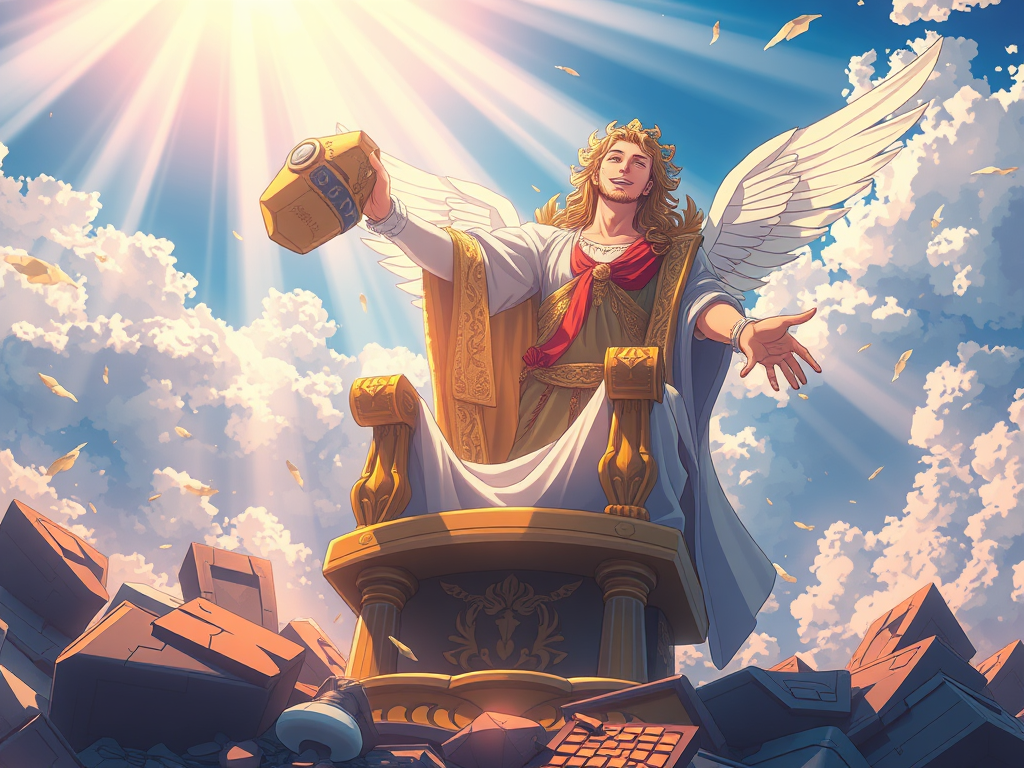
They are experiencing Christianity as joy and hope, having thus become lovers of Christ.

Category: Health, Suffering, & Mortality

The spiritual meaning of sickness, mortality, and the stewardship of the physical body.

  • 🕊️ The Holy Wisdom:

    🕊️ The Holy Wisdom:

    How to Live in the World Where the Wolf and the Lamb Lie Down

    I. The Shoot and the Sevenfold Spirit (The Mythological Order)

    The prophet Isaiah (11:1-10) gives us one of the most sublime visions of the Messianic Age. It begins with the Shoot from the stock of Jesse—the image of radical new life springing from seemingly dead roots. This is the ultimate Anointing, where the seven gifts of the Holy Spirit rest upon the Messiah: wisdom, insight, counsel, power, knowledge, and the fear of the Lord (with the fear of the Lord being his breath, emphasizing reverence).

    This Messianic rule immediately establishes a new cosmic order. It is an end to the primal chaos and conflict that has defined the world since the Fall.

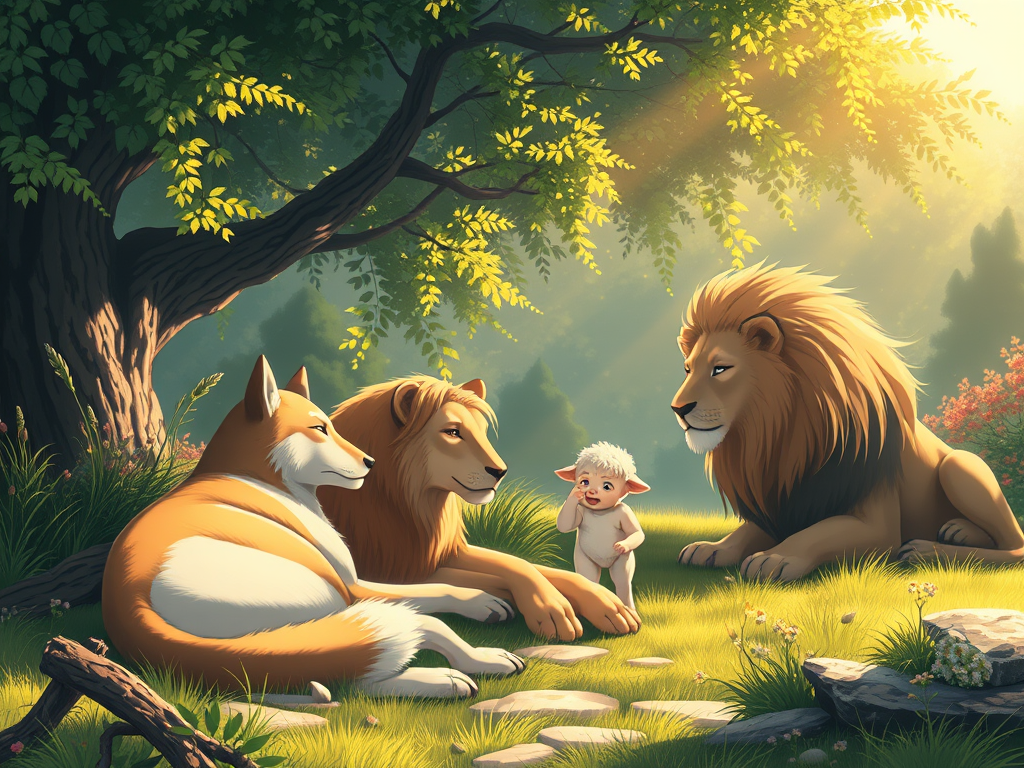
    The imagery—the wolf lives with the lamb, the calf and lion feed together, the infant plays over the cobra’s hole—is pure Mythological Parallel. It evokes the Golden Age or Paradise Restored. . This is the reversal of the natural order of predation and fear. The country is not secured by armies, but by knowledge of the Lord.

    The key insight for us is that this peace is not merely external, but internal: it is the perfect integration of our own conflicting natures.


    II. The Internal Wolf and Lamb (Psychology of Integration)

    We all house the wolf and the lamb. We carry the panther (our wild, unchecked appetites) and the kid (our innocent, vulnerable soul).

    Psychologically, the division in Isaiah’s vision reflects the constant civil war within the human heart:

    • The Wolf/Lion: Represents the passions and the instinctual self—the power of the limbic system and the amygdala—that seek to consume, dominate, and survive at any cost.
    • The Lamb/Calf: Represents the vulnerable, gentle, and receptive spiritual self—the capacity for peace and trust.

    When we are disordered, the wolf preys upon the lamb. Our fear consumes our peace; our lust devours our innocence.

    The Messianic promise is that the Spirit of the Lord (which integrates the powers of wisdom and counsel with knowledge and fear) rests on the leader who reorders this inner landscape. The “little boy” who leads them is the pure Will, guided by Wisdom, that shepherds the powerful animal instincts without destroying them. The lion doesn’t disappear; it learns to eat straw like the ox.

    III. The Wisdom of Children (The Hero’s Revelation)

    How do we gain this integration? The Gospel provides the counterintuitive method.

    Luke 10:21-24 shows Jesus, filled with joy, praising the Father for “hiding these things from the learned and the clever and revealing them to mere children.”

    This is the great Inversion of Wisdom. It is the prerequisite for the Hero’s Revelation. The knowledge that brings true peace is not attained through academic complexity or ego-driven cleverness. It is revealed through humility and simplicity—the state of the “child.”

    • The “learned and the clever” rely on the strength of the Prefrontal Cortex for independent reasoning, often fueling the prideful “wolf” of the ego.
    • “Mere children” rely on trust and direct reception. They are open to the gift of the Spirit (the fear of the Lord—holy reverence) that unlocks true knowledge.

    Only through the eyes of a child can we see the chaos of our inner zoo and accept the reordering delivered by Christ’s Word. Only by becoming small and humble can the Spirit rest fully upon us.

    IV. Call to Action: Practicing the Reordering

    The goal of this Advent is to let the Spirit of the Lord settle upon us, creating that inner sanctuary where no creature does harm.

    Your call to spiritual transformation this week is to practice the Reordering of the Heart:

    1. Identify the Predator: Name the “wolf” in your heart. What is the one instinct (fear, anger, cynicism, lust) that consistently preys upon your peace (the “lamb”)?
    2. Invite the Shepherd: Don’t try to kill the wolf with brute force (that just creates more violence). Instead, invite the Spirit of the Lord into that conflict. When the urge to consume or strike arises, pause and ask for the Spirit of Counsel and Wisdom to lead that wild instinct, turning its energy toward a productive task (like the lion eating straw).
    3. Embrace the Child’s Vision: Seek to simplify your mind. Spend time in quiet prayer not trying to figure out God, but simply receiving Him. Like the Centurion we discussed, surrender the need to be clever. Only in the humility of the child is the fullness of the Lord’s knowledge revealed.

    Let us be the humble remnant, purified and ordered, on whom the Spirit rests, making our hearts glorious and ready for the King.

    Developed with assistance of Gemini AI
  • ⚔️ Hammering Swords into Ploughshares:

    ⚔️ Hammering Swords into Ploughshares:

    The Work of Vigilance

    I. The Journey to the Mountain (The Hero’s Call)

    The liturgical year turns today, beginning the season of Advent. Our destination is clear: The Mountain of the Temple of the Lord .

    The prophet Isaiah (2:1-5) gives us a stunning mythological vision: a towering peak, lifted higher than the hills, drawing all the nations—peoples without number—to learn God’s ways. The outcome of this pilgrimage is radical: “They will hammer their swords into ploughshares, their spears into sickles. Nation will not lift sword against nation.”

    This is the ultimate promise of Eternal Peace (Shalom) and the divine resolution to the problem of human violence.

    In terms of the Hero’s Journey, the journey up the mountain is the Call to Adventure—a call to leave the flat, ordinary world of conflict behind and ascend to the height of revelation. The Law (the oracle) goes out from this place, transforming the very tools of destruction (swords) into the tools of production (ploughshares).

    The pilgrimage is not just historical; it is deeply personal. What are the “nations” of conflict within us that must ascend to the peace of Christ?


    II. The Night and the Burglar (Psychology of Complacency)

    Saint Paul tells us in Romans (13:11-14) that “the night is almost over.” This night is not just a chronological time; it is a psychological state of spiritual drowsiness.

    Jesus illustrates this perfectly in the Gospel with two chilling metaphors: Noah’s Day and the Burglar.

    “If the householder had known at what time of the night the burglar would come, he would have stayed awake and would not have allowed anyone to break through the wall of his house.”

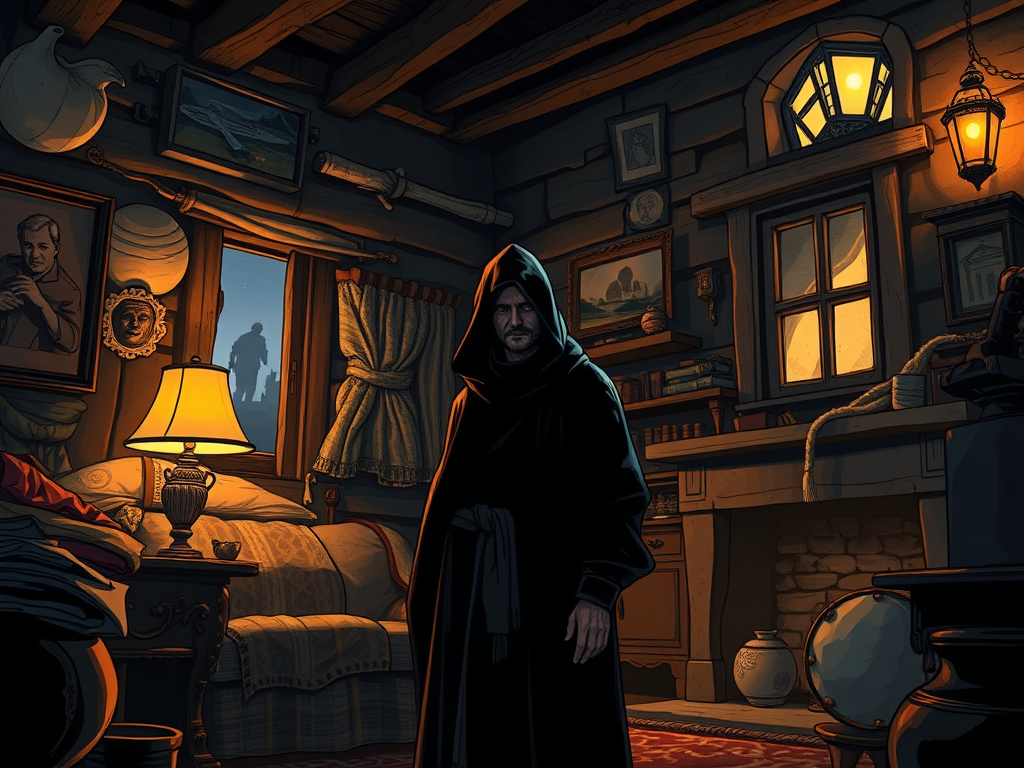
    The burglar represents the unforeseen collapse—the judgment, the crisis, or the moment of death. The wall of the house is the boundary of our interior life, our vigilance.

    Psychologically, the danger is not the outside event; it is the “coarsening” of the heart that makes us fail to stay awake. The twin enemies Paul names—drunkenness and the cares of life—are both methods of spiritual dullness:

    1. Drunkenness/Debauchery: Overloading the system with immediate pleasure, dulling the Prefrontal Cortex (our Will and highest reason) and making us incapable of long-term planning.
    2. Cares of Life: Overloading the system with chronic anxiety, perpetually triggering the Amygdala (our fear center).

    Both states keep us trapped in the Ordinary World, focused only on eating and drinking, leaving the walls of our soul unguarded. We mistake temporary comfort for eternal security.

    III. The Armour and the Ploughshare (The Spiritual Transformation)

    The call to action is immediate and profound: “Let us live decently as people do in the daytime: no drunken orgies, no promiscuity… Let your armour be the Lord Jesus Christ.”

    The transformation required to reach Isaiah’s mountain of peace is a dual effort:

    1. The Work of Divesting (Hammering Swords)

    We must actively give up the things we prefer to do under cover of the dark. This is the Refusal of the Return reversed—we refuse to stay comfortable in the darkness.

    The sword is the symbol of aggression, conflict, and self-defense. What are the swords in your heart?

    • The sword of wrangling (constant conflict).
    • The sword of jealousy (internal war against your neighbor).

    We are called to hammer these weapons into ploughshares—tools for tilling the inner soil, for producing the spiritual fruit of patience, charity, and peace. This process requires daily, painful penance and effort.

    2. The Work of Investing (Donning Armour)

    Paul instructs us: “Let your armour be the Lord Jesus Christ.”

    This is the Apotheosis and Return stage of the Advent journey. We don’t defend our walls with our strength; we defend our soul with Christ. We put on the Mind of Christ and the Virtues of Christ.

    When you are tempted to anger (the sword), your armour reminds you to respond with Christ’s peace. When you are tempted to dull your senses (the drunkenness), your armour reminds you that your Master is coming and you must be awake.

    IV. Call to Action: Walking in the Light

    This Advent, the call is simple: Walk in the light of the Lord.

    The mountain of the Temple is waiting. We are not called to build the perfect society right now, but we are called to build the perfect sanctuary in our own heart. We must make our inner Jerusalem ready for the Prince of Peace.

    Your practical commitment this week is to Vigilance.

    • Identify the Burglar: Name one specific area of your life where you have “allowed someone to break through the wall of your house”—where you are dulling your heart. (e.g., excessive scrolling, obsessive worrying, casual gossip).
    • Hammer the Sword: Take one daily tool of conflict (wrangling, jealousy) and consciously begin to turn it into a tool of peace (patience, prayer).
    • Stay Awake: Resolve to spend your time and energy not on the “cares of life,” but on the saving help Christ offers, so that you are prepared to stand ready.

    Let us walk in the light. Let us start hammering our swords.

    Developed with assistance from Gemini AI

  • One Bead, Three Hope Bombs: Ignite the Second Hail Mary

    One Bead, Three Hope Bombs: Ignite the Second Hail Mary

    You’re at the start of the Rosary.

    First bead: “increase in us faith.”

    (If you missed it, we lit that fuse yesterday: blank map → step; Host → Him; hard thing → anyway.) One Bead, 3 Faith Bombs:

    Now the second bead rolls in:

    “Hail Mary… increase in us hope…”

    …and your mind blanks again.

    No more.

    Here are three 30-second mental detonators to drop before or during that single Hail Mary.

    Pick one. Pick all. Just make it explode.


    Detonator #1 – ANCHOR YOUR HEART IN HEAVEN

    Scene: Every cross you carry is a temp rental.

    Heaven is the forever address.

    Your move:

    Before the prayer starts, picture your heaviest pain nailed to the Cross—then vanishing at the empty tomb.

    “I bank on eternity, not the invoice.”


    Detonator #2 – GOD RECYCLES FAILURES INTO GLORY

    Fact: Your worst faceplant is raw material.

    Joseph: sold → pit → prison → palace.

    Your move:

    During the Hail Mary, hand God one specific failure.

    Whisper: “Turn this trash into throne.”

    (Pro tip: He’s the ultimate up-cycler.)


    Detonator #3 – RESURRECTION ALREADY CASHED THE CHECK

    Fact: Christ rose. Death lost. Hope won.

    Your move:

    Name one dead-end staring you down today.

    Lock eyes on the Risen One while the words roll.

    “I rest in the victory lap already run.”


    TL;DR (because scroll)

    Pain → temp.

    Failure → fuel.

    Dead-end → done.

    Screenshot this.

    Next time that second bead hits your fingers, light the fuse.

    Love bead dropping soon—stay locked in, stay Catholic.

  • Is Disease a Blessing?

    Health, Mortality, and Eternity

    At the start of our men’s meeting, we have a scrolling list of parishioners who are sick. The list seems endless—over sixty names, each one dealing with serious illness.

    Watching this week after week, I couldn’t help but compare it to what I’ve been learning about diet and health. Doctors who promote the carnivore diet claim it prevents most of the diseases we see all around us—heart disease, diabetes, cancer, dementia, thyroid problems, even tooth decay. In theory, if people ate differently, they might never face decades of medical decline. They’d stay healthy until the end of their lives, only needing a hospital if they had an accident or injury.

    It sounds almost too good to be true. But here’s the question that troubles me: if disease can bring people to a halt—forcing them to face mortality and the eternal destiny of their souls—then maybe sickness is not only a curse but also a strange kind of blessing. How many have repented, turned to God, or reconsidered their lives only because sickness knocked them down? If they had stayed strong and healthy their whole lives, maybe they never would have.

    So I hesitate. Should I even recommend a diet that might take away this painful but powerful path to conversion? Is that a twisted thought?


    A Christian Response

    It’s not twisted—it’s an old and serious question. Christians have always wrestled with the mystery of suffering.

    1. Suffering can open hearts.
    St. Paul himself spoke of a “thorn in the flesh” that kept him humble and close to Christ (2 Corinthians 12:7–10). Many saints saw their illnesses as a way of uniting themselves to Jesus’ cross. There’s no doubt: suffering can wake people up to God.

    2. But health is also a gift.
    Scripture calls the body the “temple of the Holy Spirit” (1 Corinthians 6:19). Caring for our health isn’t vanity—it’s stewardship. A sound body allows us to serve others, to work, to pray, to love with strength. Preventing disease isn’t selfish; it’s a way of honoring God.

    3. God does not need disease to save us.
    While illness may bring some to repentance, it’s not the only path. God works through conscience, grace, community, and the sacraments. A healthy man who uses his strength for good can be just as close—or closer—to God as a sick man who cries out in weakness.

    4. Our task is balance.
    We should encourage health, but not worship it. We should be grateful for medicine and nutrition, but not forget that even the healthiest life ends in death. Whether sick or strong, the real question is whether we are preparing for eternity.


    The Takeaway

    Yes, disease can be a strange blessing when it drives someone back to God. But it’s not a blessing in itself—it’s a hardship God can redeem. Health, too, is a blessing, when we use it in service and gratitude.

    So perhaps the answer is not to hesitate about encouraging better health, but to remind ourselves and others: even if we escape disease, we will not escape death. Eternity still awaits. The real question is not only how long we live, but how ready we are to meet the Lord.


    Reflection Question:
    Do I see my health—or my sickness—as a way to serve God and prepare for eternity?

    Developed with assistance from ChatGPT-5

  • The Myth of Safe Suffering

    Why true growth requires discomfort — and what we lose when we try to protect everyone from pain

    We live in a world that tries to protect us from almost everything:
    Pain, failure, discomfort, disappointment.

    Modern life is full of safety nets, trigger warnings, and gentle landings.
    But here’s the hard truth:

    Growth doesn’t happen in comfort.
    It happens in discomfort.

    And when we try to make all suffering safe, controlled, and optional
     

    We lose something vital.


    What Is “Safe Suffering”?

    It’s the idea that we can go through hard things — without ever being truly uncomfortable.

    We talk about:

    • “Failing safely”
    • “Taking calculated risks”
    • “Controlled challenges”

    And sometimes, yes — those things are smart and necessary.

    But not all growth can be managed in a spreadsheet.


    The Truth: Growth Hurts Sometimes

    Think about these moments:

    • Learning you didn’t get the job
    • Facing a breakup
    • Hearing hard feedback
    • Hitting a wall in your career or life

    Those moments are painful. They’re also the exact moments where something deeper can happen.

    In the pain, you ask better questions.
    In the discomfort, you shift direction.
    In the struggle, you find strength.

    This is true in almost every story of personal transformation — including your own.


    Why Modern Life Tries to Erase Suffering

    There’s good intention behind it:

    • We want to protect mental health.
    • We want to be inclusive.
    • We want people to feel safe.

    But the shadow side of this comfort-first mindset is this:

    We start to believe that pain itself is a problem, that all suffering should be avoided, not endured.

    And that mindset can quietly weaken resilience — especially in younger generations.


    What We Lose When We Avoid Discomfort

    When we make everything “safe,” we often remove the very things that shape character:

    • Risk teaches courage
    • Failure teaches humility
    • Loss teaches gratitude
    • Pain teaches focus
    • Discomfort teaches adaptation

    Without these lessons, people drift.
    They stay stuck.
    They lose their spark.

    And worst of all, they never know what they’re made of.


    Real Love Doesn’t Always Protect — It Prepares

    If we really care about people, we can’t just shield them from pain.

    We have to:

    • Help them face it
    • Walk with them through it
    • Teach them how to grow from it

    The goal is not to remove all struggle. The goal is to build the kind of person who can handle it.


    Discomfort Isn’t Dangerous — It’s Sacred

    We need to stop treating discomfort like a disease.

    Sometimes it’s a signal.
    Sometimes it’s a gift.
    Sometimes, it’s the beginning of real change.

    Let’s not rob people of their story by trying to keep everything soft and safe.

    Because often, the most important chapter starts with this sentence:

    “That was the moment everything got hard —
    and everything started to change.”

    Created with assistance from ChatGPT

  • What Is Trauma, Really?

    A Simple Definition That Resonates

    Q: Would you say that a good definition of trauma is chaos or betrayal that a person is unable to process?

    A: Yes — that’s actually a powerful and useful way to understand it.

    Trauma isn’t just the bad thing that happened. It’s the inner rupture that occurs when something chaotic or deeply betraying happens — and we can’t make sense of it. Let’s break it down.


    1. Chaos or Betrayal: The Two Faces of Trauma

    Most trauma can be traced to one of these two sources:

    • Chaos describes experiences that are overwhelming and disorienting — things like natural disasters, car accidents, violence, or prolonged instability. These are situations where your body and mind feel helpless or unsafe.
    • Betrayal goes deeper — it wounds trust. Betrayal trauma often involves someone who should have protected you: a parent, partner, friend, or institution. The shock comes not only from what happened, but from who did it.

    2. When You Can’t Process It

    Here’s the key: Trauma stays with you not just because of what happened, but because you couldn’t make sense of it at the time.

    • Maybe you were too young, too afraid, or too unsupported to feel it fully or talk it through.
    • Maybe your worldview didn’t have room for what happened, and so your mind just… stored it.
    • Instead of being digested and healed, it stays locked in your body, your nervous system, or your subconscious — showing up as triggers, anxiety, numbness, avoidance, or even self-sabotage.

    A Working Definition of Trauma

    If you want a clear, memorable definition, try this:

    Trauma is any experience of chaos or betrayal that overwhelms a person’s capacity to process it, leading to lasting disruptions in their sense of safety, identity, or connection.

    That definition leaves room for both big events and hidden wounds — the obvious and the unspoken.


    In short: Trauma isn’t just about pain. It’s about meaning — or more precisely, the lack of it. Healing begins when we start to name, feel, and process what once felt impossible to carry.

  • Black Bones in the Desert: What the Earth Remembers

    How ancient burial sites reveal lost landscapes and the quiet echoes of forgotten worlds

    There’s another story — one that pairs with the image of a skull worn through by the road. In Africa, researchers once came across an ancient cemetery where all the bones had turned black. At first, this baffled them. What kind of people leave behind black bones? Had they discovered some unknown species — perhaps a human ancestor lost to time?

    But then someone offered a simpler, more powerful explanation: bones turn black when soaked in water for long periods of time. These were not alien remains — they were fully human. The mystery wasn’t in the bones, but in the place. The desert in which they were found had once been a wet, fertile land, rich with life and water.

    This discovery reveals something extraordinary: the landscape had changed so completely that we had forgotten its past. What is now arid and desolate was once lush and alive. And all that remains of that former world is a trace in the bones.

    This is a different kind of legacy. It’s not the personal legacy of names or deeds, but the environmental legacy that links humanity to place. These blackened bones do not preserve identity, but they preserve context. They remind us that human history is entwined with ecological history — that the earth itself remembers what we forget.

    In that way, the story becomes deeply symbolic. What seemed alien was entirely human. And what seemed dead was once a place of abundance. The blackness of the bone was not a mark of difference, but a testimony to transformation.

    This is the kind of truth that doesn’t survive in monuments. It isn’t shouted in stone or carved in tablets. It seeps into sediment, stains the bones, and whispers from beneath the surface. It tells us: Something was here. Life was here. And now the world has changed.

    It reminds us that history is not only linear, but layered. And sometimes, only when erosion or excavation peels back those layers do we see what was hidden all along.

    Legacy, then, is not always a matter of being remembered. Sometimes it’s about leaving a trace — in the way we shaped the land, in the ecosystems we touched, in the soil and water and stone that once sustained our lives. We may not endure in memory, but our impact can endure in place.

    The bones do not speak in words. But they carry a message: that human life leaves behind more than names. It leaves behind evidence — clues about the kind of world we inhabited, and perhaps clues about the kind of world we left behind.

    What traces are you leaving behind — in your habits, your choices, and the environments you shape? What will the earth remember of your world?

  • Skull in the Dust:

    What Will Remain of Us?

    There’s a story I once heard: someone walking along a dirt road in Africa noticed a strange shape protruding from the path. It turned out to be the cross-section of a skull — not from a recent burial, but something ancient. Scientists later determined that it was roughly 5,000 years old. It had been buried for millennia, forgotten by history, and only revealed by the slow wearing-down of the road.

    It’s a striking image — a human life, reduced to bone, indistinguishable from the dust until chance erosion reveals it again. One person among untold millions, completely forgotten in name, story, and song. No monument, no footnote in a book — just a fragment of skull, sliced clean by time.

    But the image also invites a deeper reflection. What remains of a person when everything personal is erased? If no one remembers your name, were you part of anything that mattered?

    This is the question at the heart of human legacy.

    Jordan Peterson says that society is built on the backs of heroes — and that innovation builds on innovation forever. While some figures stand out in the narrative of history, many of the contributions that make civilization possible were anonymous. The tools, customs, stories, and rituals passed down through oral tradition or simple imitation — many of these came from people whose names we will never know.

    So it’s possible that the person whose skull was found contributed to something vital. Perhaps they preserved a hunting technique, crafted a tool, or passed on a story that taught their children caution or courage. Maybe their tribe developed a cooperative structure that influenced others. And perhaps that contribution set off a chain of developments that, hundreds or thousands of years later, became part of the infrastructure of modern life.

    What appears as complete erasure might actually be buried continuity — the quiet impact of anonymous lives shaping the foundations of civilization.

    The road that wore through the skull could also symbolize the road of history itself — a slow and relentless passage that wears away individuals but reveals deeper layers of inheritance. Each generation walks over the last, compressing it into the foundation of the next.

    This is both humbling and meaningful. On one hand, we will all be forgotten. On the other hand, our lives — even our suffering — may carry forward ripples that shape the world long after we’re gone. The systems we participate in, the children we raise, the words we share, the kindness we show — these things outlive us in ways we can’t always predict.

    We should not seek legacy in fame or monuments. We should seek to live in such a way that what we pass on — whether directly or indirectly — becomes a sturdy stone in the road of civilization. Even if no one ever knows it was ours.

    Have you ever considered that your quiet daily choices — even your pain — might form part of a foundation others will build on? What road are you paving?

    Developed with assistance from ChatGPT

  • Is Hell Still in the Bible?

    Understanding Modern Catholic Translations and Why It Matters

    Q: Why doesn’t the word “Hell” appear in modern Catholic Bibles like the NABRE?

    You’re not imagining it. In the New American Bible Revised Edition (NABRE), the word “Hell” rarely — if ever — appears. This has caused confusion among faithful Catholics who are used to older translations like the Douay-Rheims or hearing homilies about Hell as a real place of punishment.

    So what changed?

    It’s not the doctrine — it’s the translation. Scholars decided to preserve the original words used in the Bible:

    Original TermLanguageMeaning
    SheolHebrewThe grave / abode of the dead (neutral)
    HadesGreekThe Greek underworld (similar to Sheol)
    GehennaGreekA place of fiery judgment — used by Jesus

    These words are now translated more literally instead of using “Hell” as a catch-all. But that doesn’t mean the Church denies the existence of Hell.


    Q: So is there still a Hell?

    Yes. The Catholic Church absolutely affirms Hell as:

    “The state of definitive self-exclusion from communion with God and the blessed.”
    Catechism of the Catholic Church, §1033

    It is not just a metaphor or ancient idea. It’s the final, eternal consequence of dying in unrepented mortal sin.


    Q: Why would translators avoid the word “Hell” if it’s real?

    Because over the centuries, the word “Hell” took on very specific imagery and connotations — often shaped more by culture than Scripture. By using original words like “Gehenna,” translators aim to:

    • Reflect the nuance in the biblical text
    • Avoid oversimplification
    • Encourage deeper catechesis and understanding

    But here’s the problem:

    Most lay Catholics have no idea what “Gehenna” means.


    Q: Does this cause confusion?

    Absolutely. When the word “Hell” disappears, many assume the Church is backing off from the doctrine. This confusion is compounded by:

    • Homilies that never mention judgment or sin
    • Liturgy and hymns stripped of sacrifice or spiritual warfare
    • A growing trend toward universalism (the idea that everyone goes to Heaven)

    Q: So what does the Church teach about the afterlife?

    Traditionally, Catholicism affirms:

    1. Heaven – Eternal union with God for those who die in His friendship.
    2. Purgatory – Temporary purification for those on their way to Heaven.
    3. Hell – Eternal separation from God for those who freely reject Him.

    Before Christ’s resurrection, even the righteous dead went to Sheol — a holding place, not Heaven. That’s why we say in the Apostles’ Creed:

    “He descended into Hell” — meaning the abode of the dead, not the damned.

    After His resurrection, Heaven was opened — and now judgment is final.


    Q: Why does it matter if we talk about Hell?

    Because without Hell, morality becomes optional.

    • If there’s no eternal consequence, why repent?
    • If everyone goes to Heaven, why choose holiness?
    • If God never judges, why did Christ die?

    “Do not fear those who kill the body… fear him who can destroy both soul and body in Gehenna.” — Matthew 10:28


    Q: What’s behind the move away from talking about Hell?

    Let’s be honest:

    • “Hell” makes people uncomfortable.
    • Modern theology often trades truth for sentiment.
    • Cultural pressure values inclusivity over conversion.

    But:

    Real love warns.

    God is love — and because He loves us, He warns us. Jesus spoke of Hell more than anyone else in Scripture. Not to scare us pointlessly — but to wake us up.


    ✅ Layperson Summary:

    • Is Hell in the Bible? Yes, but often under original terms like “Gehenna.”
    • Does the Church still teach Hell? Yes, as an eternal state of self-exclusion from God.
    • Is it just a metaphor? No. It’s a real and final consequence.
    • Why avoid it? Some translators aim for accuracy, but clarity suffers.
    • Why it matters: Without Hell, we lose the urgency of repentance and the meaning of salvation.

    What You Can Do:

    • Read Scripture with traditional commentary (e.g., the Catena Aurea)
    • Use catechisms and older missals to understand Church teaching
    • Teach your children and friends the full truth — not a softened version
    • Speak up in your parish — charitably but firmly — when the doctrine is blurred

    Because the God who is Love… is also the God who warns.

  • Pope Paul VI Laments Lack of Heroism in our Culture and Our Church

    “We cannot detach ourselves from the dominant thought in the Church during this period of preparation for Easter. It is the thought of penitence, which contrasts with our habits and mentality. We direct all our intentions and efforts toward removing from our lives anything that causes us suffering, pain, discomfort, or inconvenience; we are oriented toward a continuous search for comfort, enjoyment, and amusement; we want to be surrounded by well-being, ease, good health, and luck; everything we do is to reduce effort and fatigue; in the end, we are people who want to enjoy life: a good meal, a good bed, a pleasant walk, an enjoyable show, a good salary… this is the ideal. Hedonism is the common philosophy, the dream of existence for many of our contemporaries. We want everything to be easy, soft, hygienic, rational, perfect around us. Why penitence? Is there really a need to sadden the soul with such a thought? Where does such an unpleasant call come from? Is it not an offense to our modern conception of man?

    This apologetic monologue on “comfort,” as an expression of the ideal way to spend the years of our life, could go on at length, documenting excellent reasoning and even better experiences; but at a certain point, it must stop in the face of no less valid objections: do we want to make our life soft, mediocre? Idle and weak, without the patience and effort of great virtues? Where is the striving, where is the heroism that gives man his true and best stature? Where is the mastery over our laziness and inherent cowardice? And then: how can we arm our spirit in the face of suffering and misfortunes, which life does not spare us? And how can we give love its true and highest measure, which is the gift of self sacrifice? And is not sacrifice, this attitude, by its nature, classified in the great book of penitence?”

    A note should be made about the mention about the true and highest measure of love being self-sacrifice: In reality, the highest measure of love should be selfless sacrifice. That would be totally not taking self into account when loving. In fact, maybe the word sacrifice is already too self-facing.

    GA PPVI 1MAR1972W Penitence: Obligatory and Possible for All