They are experiencing Christianity as joy and hope, having thus become lovers of Christ.

Tag: Theology of Suffering

  • Dying to Live:

    Dying to Live:

    Marginalization, the Hero’s Journey, and Becoming One with Christ

    Several weeks ago, the Sunday reading spoke of those who are alive in Christ having also died with Christ. I’ve been meditating on this ever since, and it strikes me as literally true in the deepest sense.

    Those who truly identify with Christ have gone through a death to themselves and a rebirth in the Spirit. In their own lives, they have experienced a death to the old self—often painful—followed by an inspiration, an awakening that makes them one with Christ in a real, transformative way.

    Christ died for our sins. Our own death to self is frequently the direct result of our sins, our avoidance, our need for control. In this way, we participate in “paying for our sins”—not as a way to earn salvation, but as the lived reality of union with the One who paid the full price.

    United with Christ in Death and Life

    The New Testament doesn’t present this as a metaphor to admire from a distance. It is a spiritual reality we are invited to enter:

    “I have been crucified with Christ and I no longer live, but Christ lives in me. The life I now live in the body, I live by faith in the Son of God, who loved me and gave himself for me.”
    — Galatians 2:20

    “Or don’t you know that all of us who were baptized into Christ Jesus were baptized into his death? We were therefore buried with him through baptism into death in order that, just as Christ was raised from the dead through the glory of the Father, we too may live a new life.”
    — Romans 6:3-4

    “For you died, and your life is now hidden with Christ in God.”
    — Colossians 3:3

    “Therefore, if anyone is in Christ, the new creation has come: The old has gone, the new is here!”
    — 2 Corinthians 5:17

    We are called to count ourselves “dead to sin but alive to God in Christ Jesus” (Romans 6:11). This is not something we achieve by effort alone; it is something we receive by faith and live out daily.

    Marginalization: The Common Doorway

    Everyone who becomes truly one with Christ has been marginalized in some way—by society, by circumstances, or by the consequences of their own sins.

    Jesus made this abundantly clear:

    “It is not the healthy who need a doctor, but the sick. I have not come to call the righteous, but sinners to repentance.”
    — Luke 5:31-32 (see also Mark 2:17, Matthew 9:13)

    He spent His time with tax collectors, prostitutes, lepers, and outcasts—the people on the margins. The parables of the lost sheep, the lost coin, and the prodigal son all celebrate the joy in heaven over one sinner who repents.

    The ones who start life on the margins often have only one direction to go: upward, toward God. For the rest of us, the death to self usually comes—willingly through surrender or unwillingly through crisis.

    When Society Makes “Hitting Bottom” Difficult

    Our modern society, with its genuine compassion and generous safety nets, often makes it hard for anyone to actually reach the margins or fall completely off the edge. While these supports help many people in real, practical ways, they can also unintentionally prevent the kind of desperation that forces us to confront our need for God.

    Many people live comfortable, respectable lives that never quite bring them to the end of themselves. As a result, the dramatic “come to Jesus” moment that so many saints and ordinary believers describe remains elusive.

    If You Haven’t Had Your “Come to Jesus” Moment Yet

    If you’re reading this and thinking, “I don’t believe I’ve had that moment yet—what can I do?”, then you have already been stirred by grace. The very fact that you’re asking shows the Spirit is at work.

    The next step is honest self-examination: Are you satisfied with your current state? If the answer is no, then the invitation is clear—undertake the hero’s journey. Seek God with all your heart, soul, mind, and strength.

    One of the most powerful examples is the prodigal son. He had to hit rock bottom—feeding pigs, longing for their food—before he “came to his senses” and returned home. His father didn’t wait on the porch; he ran to meet him.

    Basic Training for the Journey

    While on this journey, we need practical disciplines—the “basic training” of the Christian life:

    • Prayer — to grow in humility and dependence on God.
    • Fasting or voluntary sacrifice — to help overcome our passions and disordered desires.
    • Charity (generosity toward others) — to grow in the selfless love of Christ. This means actively looking for the good of the other and taking our eyes off ourselves.

    These three practices—prayer, fasting, and almsgiving—appear throughout Scripture as the classic path of transformation. As we faithfully “fill these water jars,” God does what only He can do: He reveals Himself and turns our ordinary water into wine.

    The Transformation Is Real

    This is not a self-improvement project. It is participation in the death and resurrection of Jesus. The old self dies (sometimes kicking and screaming), and the new creation emerges. Christ lives in us.

    The journey may begin with pain or dissatisfaction, but it ends in freedom, love, and the joy of knowing we are no longer our own.

    If this reflection resonates with you, I invite you to begin—or continue—the journey today. Start small: an honest prayer of surrender, one act of generosity, or a simple fast from something that has too much hold on you.

    God is not waiting for you to be perfect. He is waiting for you to come to the end of yourself—so He can raise you to new life in Him.

    Have you experienced a “death to self” moment in your own life? What practices have helped you most on the journey? I’d love to hear your thoughts in the comments.

  • Why Chaos Is the Only Way to See Your Crown

    Why Chaos Is the Only Way to See Your Crown

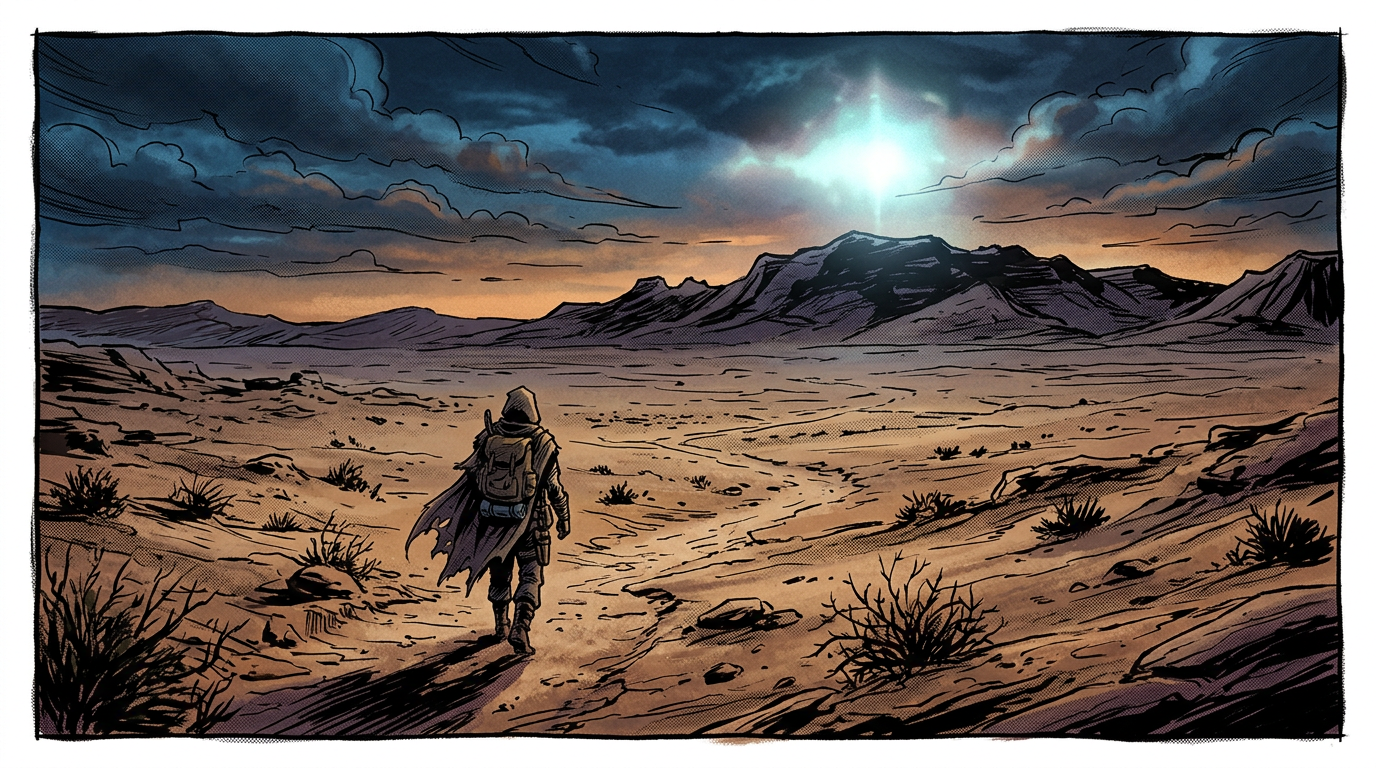
    The prophet Daniel sees a vision that still terrifies readers today. In a dream, he watches the great sea churned by violent winds. From those dark waters rise four monstrous beasts — wild, devouring, and trampling everything in their path (Daniel 7:2-14).This is not just ancient history. It is a picture of what happens inside us when chaos hits.The “great sea” represents our own soul in turmoil. The beasts are the raw, destructive passions that rise up when life feels out of control: crushing fear, raging anger, the desperate need to dominate people or circumstances. When the winds of crisis blow, these inner beasts awaken and threaten to devour our peace.

    But God does not leave us there.

    Right in the middle of the terror comes a clear, supernatural command — the Gospel acclamation we hear today:

    “Stand erect and hold your heads high, because your liberation is near at hand.” (Luke 21:28)

    This is the turning point.

    Our natural instinct when beasts appear is to run or freeze. But the Lord calls us to something higher: a deliberate, Spirit-led posture. To stand erect is to refuse to let fear or chaos define us. It is the moment the will, strengthened by grace, takes its proper place and says, “My identity does not rest on how stable my life feels right now.”

    The beasts look powerful, but they are temporary.

    Daniel’s vision ends with a far greater sight: the Ancient of Days seated on the throne, and “one like a son of man” coming on the clouds to receive an everlasting kingdom (Daniel 7:13-14).

    Jesus deliberately takes this title — Son of Man — for Himself. His Kingdom is not temporary like the beasts. As He says in the Gospel:

    “Heaven and earth will pass away, but my words will never pass away.” (Luke 21:33)

    The chaos is loud. The Word is quiet. But only one of them lasts.

    Look at the Fig Tree

    Jesus gives us a simple image:

    “Consider the fig tree and all the other trees. When their buds burst open, you see for yourselves and know that summer is now near. In the same way, when you see these things happening, know that the Kingdom of God is near.” (Luke 21:29-31)

    Even in the middle of chaos we are meant to look for signs of the Kingdom breaking through — small buds of patience, compassion, trust, or peace where there used to be only fear and anger.So what does “standing erect” actually look like in daily life?

    • Stop feeding the beasts. Limit what stirs up unnecessary fear, comparison, or rage.
    • Anchor yourself in the Word. When the roar gets loud, speak Christ’s promises out loud.
    • Look for the buds. Ask: Where is grace trying to grow in me right now?

    Chaos is painful, but it is often the only place where we finally see our true Crown — the eternal kingship of Christ that the beasts can never touch.

    Stand tall. Your liberation is drawing near.

  • You Are Not Hidden:

    You Are Not Hidden:

    Isaiah and the Lie of Abandonment

    There is a lie that strikes at the deepest part of the human heart: My way is hidden from the Lord, and my right is disregarded by my God (Isaiah 40:27).

    We all know the feeling. Life grows heavy. Circumstances pile up. Prayers seem to echo unanswered. In those moments, the mind quietly rewrites reality: God doesn’t see this. He’s indifferent. I’m carrying it alone. Isaiah 40 confronts that lie with thunderous clarity. The passage does not offer vague comfort; it dismantles the deception with the character of God Himself.

    The God Who Does Not Tire

    Look at who Isaiah says the Lord is: “The everlasting God, the Creator of the ends of the earth. He does not faint or grow weary; his understanding is unsearchable” (40:28).

    This is no distant deity running low on patience. The same God who spoke galaxies into existence never reaches the end of His strength. When your reserves are empty—when you “grow faint” and “fall exhausted” (40:30)—His power remains undiminished. He is not limited by the same exhaustion that cripples us. He sees the full picture even when we cannot see the next step.

    The Promise of Renewal

    The beauty of Isaiah’s words peaks in verses 29–31:

    “He gives power to the faint, and to him who has no might he increases strength. Even youths shall faint and be weary, and young men shall fall exhausted; but they who wait for the Lord shall renew their strength; they shall mount up with wings like eagles; they shall run and not be weary; they shall walk and not faint.”

    Notice the progression. The passage moves from total depletion to supernatural renewal—but the key is in the posture: those who wait for the Lord. This is not passive resignation. Biblical waiting is active trust: fixing your eyes on the One who is never weary while you feel very weary. It is the decision to believe the truth over the lie.

    In the language of story, every hero’s journey includes a threshold where human strength fails. The protagonist reaches the limit of what they can do in their own power. The Christian story diverges here. God does not wait at the far side of the trial with a trophy. He meets you in the middle of it. He strengthens you on the way. He lifts when you cannot stand. He carries when you cannot walk.

    The Lie Exposed

    So the lie is exposed: you are not hidden. You are not abandoned. Your destiny is not overlooked. The God who created the stars (40:26) knows your name, counts your tears, and holds your future. The same hands that never grow tired are the ones that uphold you.

    This is the truth Isaiah demands we remember when the whisper returns. You do not walk unseen. You do not fight alone. The everlasting God walks with you, renews you, and gives you strength that outlasts your own.

    When the feeling of abandonment rises again—and it will—return to Isaiah 40. Read it slowly. Speak it out loud. Let the words rewrite the story your fear is trying to tell. The Lord has not forgotten you. He never will.

    “They who wait for the Lord shall renew their strength.”

    Hold on to that. The eagle does not flap frantically; it rides the wind. So will you, if you fix your hope on the God who never wearies.

  • The Geometry of Grace:

    The Geometry of Grace:

    Why the Yoke is Actually Light

    We’ve all heard the cynical refrain: “Misfortune falls on the good and the bad alike.” We treat life like a chaotic lottery where lightning strikes the saint and the sinner with equal indifference.

    But is that actually true?

    If we look through the lenses of Catholic Exegesis, Neurobiology, and the Hero’s Journey, we discover a startling reality: Grace isn’t just a theological “extra.” It is a fundamental shift in how a human being interacts with reality.

    1. The Suburbs of Heaven

    C.S. Lewis famously suggested that for those who say “Yes” to God, this life is the beginning of Heaven; for those who say “No,” it is the beginning of Hell.

    This isn’t just a poetic thought. It is a description of an internal ecosystem. The Book of Wisdom tells us that those who do good fare well. When you live a life of grace, you are no longer rowing against the current of the universe. You are aligned with the Creator’s design. This alignment creates a “protective shield”—not by magic, but by a radical reordering of your life.

    2. The Biological Advantage of Peace

    Let’s look at the “structure of the brain.” A life of sin—gluttony, drunkenness, aggressive driving, or constant domestic strife—keeps the brain in a state of chronic Amygdala Hijack. This is the “fight or flight” center. When it’s overactive, your body is flooded with cortisol, your immune system weakens, and your peripheral vision literally narrows. You become more “prone to injury” and “susceptible to accidents” because your brain is too cluttered to pay attention.

    A “Real Christian,” however, operates from the Prefrontal Cortex—the seat of peace and discernment. By practicing chastity, fasting, and a clean conscience, you are essentially “fine-tuning” your biological machine.

    • Better Sleep: Because your conscience is clear.
    • Less Sickness: Because your stress levels are lower and your habits are more responsible.
    • Fewer Accidents: Because you are “less in a hurry” and more aware of the people around you.

    3. The Hero’s Risk and the Martyr’s Paradox

    Now, there is one place where the “Safety of Grace” seems to fail: Sacrifice. In the classic Hero’s Journey, the protagonist eventually leaves the “Safe Zone” to face the dragon for the sake of the village. For the Christian, this is the call to be a Martyr or a servant. We are much more willing to take an injury for others.

    But even here, the experience is different. As Brother Lawrence noted, God does not permit a soul totally abandoned to Him to suffer for “any appreciable length of time” without Divine support. When the world sees a catastrophe, the Christian sees a rebirth.

    4. A Different Dimension of Suffering

    When trials do come—and they will—the “Real Christian” isn’t living in the same dimension as the worldling. For those living only for this world, a trial is “sheer hell” because it threatens their only treasure.

    For the person in Grace, suffering is Sacred Alchemy. Following the thought of St. John Paul II, we see that suffering:

    1. Consumes Evil: It burns away the parts of our ego that we haven’t yet surrendered.
    2. Acts as Penance: It helps us understand the true cost of sin—our own and others’.
    3. Opens a Door: It is the “New Jerusalem” mindset, asking not “Why is this happening to me?” but “What is God trying to show me?”

    The Call to Action: Die to the Hurry

    Spiritual transformation isn’t a theory; it’s a practice. If you want to experience this “Light Yoke,” start with the Great Simplification. * Clean your conscience: Go to Confession and clear the mental clutter.

    • Audit your pace: Intentionally move slower this week. Watch how your “luck” changes when you are no longer in a frantic hurry.
    • Fix your eyes: When the next trial hits, ask God for the strength to see it as a “door” rather than a “wall.”

    Edited with assistance from Gemini