They are experiencing Christianity as joy and hope, having thus become lovers of Christ.

Tag: prodigal-son

  • Unpacking the Prodigal Son Story: A Mythical Hero’s Journey

    The Prodigal Son is one of the most beloved parables from Christian tradition, but when examined through the lens of the mythical hero’s journey, it reveals a deeper, universal narrative of transformation, redemption, and reconciliation. This timeless tale offers a rich exploration of personal growth, rebellion, and the cyclical nature of life. In this post, we’ll delve into how the Prodigal Son mirrors the structure of the mythical hero’s journey and what we can learn from his story.

    1. The Call to Adventure: A Desire for Freedom

    In mythological narratives, the hero often begins their journey with a call to adventure — a desire to explore the unknown. The Prodigal Son’s request for his inheritance marks his own “call” to freedom. He wants to leave behind the familiarity of his home and step into a world where he can forge his own path. This moment reflects the universal human desire to break free from constraints and seek independence, much like a hero departing from their original world to pursue a personal quest.

    2. Crossing the Threshold: Venturing into the Unknown

    The son leaves his father’s house and enters the “distant country,” symbolizing the crossing of the threshold into the unknown. It is here that he begins to indulge in a life of excess, squandering his inheritance. This chaotic journey mirrors the hero’s descent into the “wild” or underworld, where they encounter temptations and distractions that often lead them astray. In mythology, heroes face these temptations as part of their transformation, and the Prodigal Son is no different. His descent represents the dangers of excess and unchecked desires.

    3. The Abyss: Confronting the Crisis

    Every hero must face a crisis — the abyss — a moment of profound despair and self-reflection. For the Prodigal Son, this moment occurs when famine strikes and he finds himself feeding pigs, longing for their food. This marks his lowest point, symbolizing a metaphorical “death” — the hero’s confrontation with their mistakes and the consequences of their actions. The “famine” represents life’s harsh realities and the price one pays for straying too far from balance and wisdom.

    4. The Return: Transformation and Rebirth

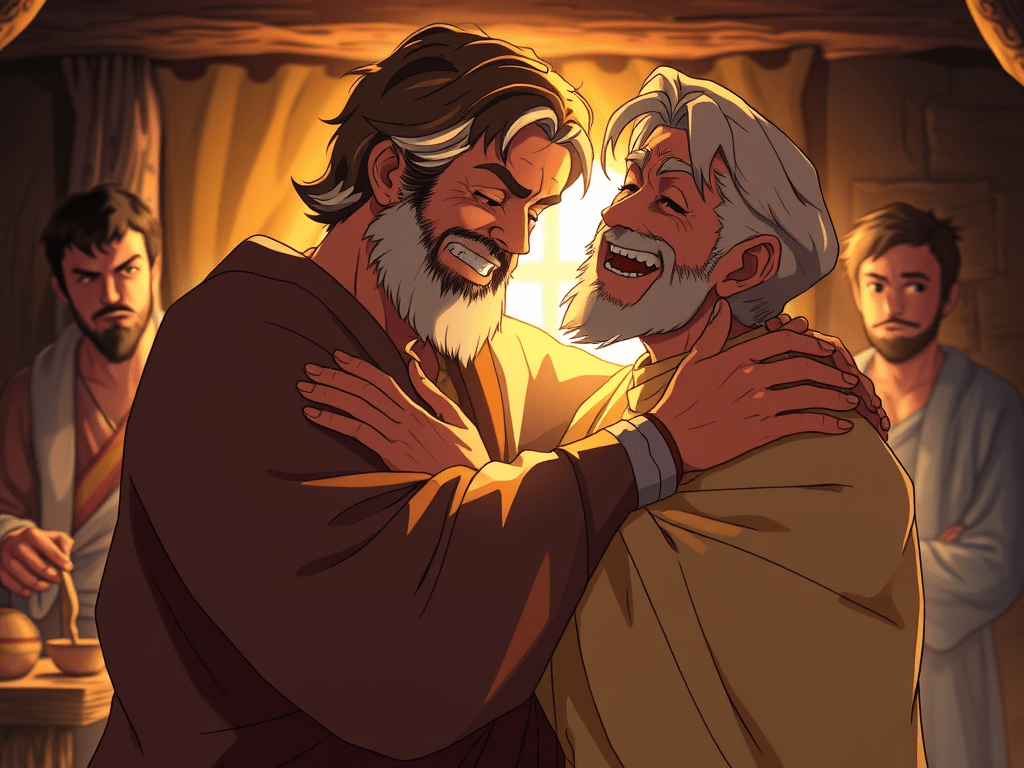
    In many myths, the hero returns home after their trials, but they are forever changed. Similarly, the Prodigal Son’s decision to return home represents a moment of transformation. His journey back is one of repentance and self-awareness, symbolizing a rebirth. When he arrives, his father greets him with open arms, demonstrating that redemption and reconciliation are possible, even after great mistakes.

    5. The Hero’s Reward: Celebration and Integration

    After the son’s return, he is celebrated by his father, who restores him to his rightful place. This is the reward phase of the hero’s journey, where the hero integrates the wisdom they’ve gained into their previous life. For the Prodigal Son, this celebration includes gifts such as a robe, ring, and sandals — signs of his full reintegration into the family. In myth, the hero often returns with newfound wisdom, and the Prodigal Son’s return symbolizes the potential for growth and healing, no matter how lost or estranged one might feel.

    6. The Shadow: Conflict with the Elder Brother

    In many myths, the hero’s return disrupts the status quo, often sparking tension with those who remained behind. The elder brother’s resentment toward the Prodigal Son reflects this mythical conflict. The elder son represents the “shadow” — a figure resistant to change, loyal to the old ways, and unwilling to embrace transformation. His anger symbolizes the internal and external conflicts that arise when old paradigms are challenged, and growth or redemption occurs.

    7. Rebirth: Death and Resurrection

    The narrative concludes with a powerful statement by the father: “This son of mine was dead and is alive again; he was lost and is found.” This moment echoes the cyclical nature of death and resurrection that is central to many mythic stories. The Prodigal Son’s “death” represents his metaphorical fall, and his return symbolizes a form of resurrection — a fresh start rooted in humility and wisdom. The cycle of life, death, and rebirth is essential to the hero’s journey, illustrating that transformation often requires loss and renewal.

    8. The Theme of Repentance and Redemption

    At its core, the Prodigal Son story embodies the theme of repentance and redemption. In many myths, the hero returns after making mistakes, and their journey is celebrated because they have learned from their trials. The father’s willingness to forgive, rather than punish, the Prodigal Son challenges the notion that heroism is about perfection. Sometimes, the hero is celebrated not for their unwavering goodness but for their capacity to learn from their errors and return transformed.

    Conclusion: Lessons from the Prodigal Son

    The Prodigal Son is more than just a biblical tale — it is a powerful reflection of the hero’s journey. Through his story, we learn about transformation, the importance of self-awareness, and the possibility of redemption, no matter how far we’ve strayed. By examining the Prodigal Son through the lens of mythology, we can see that the challenges of life — the mistakes, the temptations, the crises — are all part of the journey toward self-discovery and reconciliation.

    Whether you’re exploring the parable for personal reflection or analyzing it from a mythical perspective, the Prodigal Son’s journey offers timeless wisdom. Embrace your journey, accept the lessons that come with both failure and triumph, and remember that redemption is always within reach.

    Written in collaboration with ChatGPT (OpenAI, 2025).
  • The Parable of the Prodigal Son: A Preference for the Repentant Son Over the Loyal Brother

    The Parable of the Prodigal Son: A Preference for the Repentant Son Over the Loyal Brother

    The Parable of the Prodigal Son is one of the most well-known biblical stories. While often interpreted as a lesson on forgiveness, there’s a deeper, subversive message embedded in the narrative. The story emphasizes the redemption of the repentant son over the loyalty of the older brother, challenging us to reflect on the nature of grace, transformation, and true faith.

    Let’s break down why this story shows more favor to the repentant son than the dutiful older brother.

    1. The Repentant Son’s Journey

    The Prodigal Son embarks on a journey of transformation. He leaves home, squanders his inheritance, and experiences deep suffering. But the key moment in the story is when he “comes to his senses,” realizing that his life has gone astray. Returning home isn’t just about apologizing—it’s about a profound change of heart.

    His journey isn’t just physical; it’s deeply moral and spiritual. Without experiencing loss and humility, the son wouldn’t have gained the wisdom necessary to understand what truly matters. His repentance is not merely saying “sorry”; it’s taking full responsibility and seeking reconciliation.

    2. The Older Brother’s Stagnation

    In contrast, the older brother represents the opposite of transformation. He has remained “loyal” and “dutiful,” yet he lacks the deeper compassion and self-awareness that the younger son gains through his fall. His loyalty is tied to a transactional understanding of his relationship with his father. He believes that following the rules entitles him to rewards.

    However, when he sees his brother return, he becomes bitter and resentful. His jealousy reveals his inability to comprehend the true nature of forgiveness and grace. While he believes that loyalty should be rewarded, he struggles to accept the father’s generosity toward the repentant son. This exposes the flaw in his view of faithfulness: it’s not just about staying loyal; it’s about embracing grace, forgiveness, and love.

    3. The Father’s Preference for the Repentant Son

    The father’s actions in the story speak volumes. He doesn’t just forgive the younger son—he goes out of his way to restore him to his rightful place in the family. The father’s joy and celebration of the son’s return show that he values transformation over mere loyalty. To him, the younger son’s repentance signifies a deeper, more meaningful change.

    The older brother, on the other hand, cannot understand why his brother is being celebrated. His view of loyalty lacks grace, focusing solely on merit. The father’s actions reveal a profound truth: that genuine transformation and repentance are more valuable than blind obedience or duty.

    4. The Parable’s Subversive Message

    What makes the Prodigal Son so powerful is how it subverts conventional expectations. The older brother, who has done everything right, is not the one the father celebrates. Instead, it is the one who has made mistakes, strayed, and then returned with genuine repentance.

    This aligns with a deeper spiritual principle often emphasized in Christian teachings: God values repentance and the willingness to transform oneself over mere outward adherence to rules or social norms. The story challenges the idea that it’s enough to simply “do your duty” or “stay loyal.” True faith requires openness to growth, change, and grace.

    5. The Call to Radical Grace

    The parable points to a radical message: true grace and forgiveness are not about rewarding those who follow the rules but about welcoming the lost, the broken, and the repentant. The father’s unconditional love for the Prodigal Son serves as a model of divine love—extending forgiveness even to those who have fallen farthest, as long as they return with a sincere heart.

    This challenges conventional ideas of justice based on merit and points to a more inclusive form of love. The older brother’s sense of entitlement contrasts sharply with the father’s generosity, showing that grace operates outside systems of merit and deservingness.

    6. The Lesson for the Faithful

    There’s a deeper challenge here for the “faithful” or “loyal” figures in the story, such as the older brother (who represents the “righteous” or those who follow the rules). The story teaches that loyalty and obedience don’t automatically entitle you to special treatment. Instead, the lesson is about embracing the joy of redemption and the value of grace.

    The older son’s bitterness reveals a misunderstanding of true loyalty. Loyalty isn’t about comparison or competition; it’s about love, compassion, and the willingness to rejoice in the redemption of others. The parable emphasizes that doing the right thing is important, but it must be coupled with a generous, forgiving heart.

    Conclusion: The Preference for the Repentant Son

    The Prodigal Son’s story clearly favors the repentant son over the older brother. It places a higher value on transformation, humility, and the willingness to embrace grace over mere fidelity or rigid adherence to rules. The father’s response teaches us a profound lesson about the nature of divine love and forgiveness, encouraging us to look beyond our assumptions about justice, loyalty, and merit.

    The older brother’s jealousy and anger reflect the common human tendency to measure worth based on performance. But the parable calls us to embrace a more radical, compassionate vision—a vision where even the most flawed and broken can be redeemed, and their return is celebrated, not condemned.

    Yes, the story of the Prodigal Son does show a preference for the repentant son—and in doing so, it calls attention to the importance of grace over judgment and transformation over stagnation.

    Written in collaboration with ChatGPT (OpenAI, 2025).