They are experiencing Christianity as joy and hope, having thus become lovers of Christ.

Tag: god

  • 🔥 Can a Few Good People Save a City?

    Reflections on Sodom and Gomorrah

    Reading: Genesis 18:20–32

    This Sunday’s (July 27 2025) first reading tells the story of Abraham praying for mercy on behalf of the cities of Sodom and Gomorrah. God tells Abraham that the cities have become so full of sin that judgment is coming. But Abraham dares to ask:

    “Will You really sweep away the righteous with the wicked? What if there are 50 innocent people? Or 40? Or 30? Or 10?”

    And God says, again and again:

    “If I find just 10 innocent people, I will not destroy the city.”

    That line stopped me.

    God was willing to spare the entire city if just ten innocent people were found. That shows us something really powerful:


    🙏 The Good Can Hold Back Judgment

    This story tells us that a few good people—those who try to live justly and walk with God—can make a difference for everyone. Abraham’s prayer shows us that our choices matter not only for ourselves, but for our whole community.

    Even in a sinful society, God looks for the faithful, and He listens to their prayers. Sometimes, just a small number of people following God can hold back a much bigger collapse.


    💔 But There Weren’t Ten

    Despite Abraham’s prayer, the cities were destroyed. (Genesis 19:1–25) Why? Because not even ten righteous people could be found. Instead, God rescued Lot and his family, the only ones who hadn’t given in to the evil around them.

    God didn’t ignore Abraham. He did what He said He would do. He showed mercy—but He removed the innocent first, and then let judgment fall.


    🏃‍♂️ A Warning for the Righteous Too

    This part of the story carries a warning:

    Sometimes, even the good must leave, because their presence is no longer enough to save a place that is collapsing. Or, if they stay too long, they might be hurt, or slowly drawn into the same sins.

    Being faithful is no guarantee that life will be easy. But it does mean that God sees you, cares for you, and will act on your behalf—just like He did with Lot.


    🔁 The Tytler Cycle and Our Culture

    There’s an old idea called the Tytler Cycle, which says that societies go through repeating stages:

    Faith → Courage → Liberty → Abundance → Complacency → Apathy → Dependence → Bondage

    This lines up with the story of Sodom and Gomorrah. When people forget God and live only for themselves, things start to fall apart. But if even a small group of people keep the faith, there’s still hope.


    🧭 What Does This Mean for Us?

    This story isn’t just about ancient cities—it’s about us. Here are some questions we might ask ourselves:

    • Am I one of the “ten”? Do I live in a way that brings mercy to my community?
    • Do I pray for my city? Like Abraham, am I asking God to spare and help the people around me?

    Am I awake to what’s going on? Am I willing to act, speak up, or leave a bad situation if God calls me to?


    💡 Final Thought

    God is more merciful than we can imagine. He listens to prayers. He searches for the faithful. He saves. But He also warns.

    This story reminds us that even one person trying to live rightly matters. And when there are ten, or twenty, or more—whole families, parishes, or communities—choosing to follow Christ in the middle of a confused world, they can be the very reason God still holds back destruction.

    So… maybe the question isn’t what’s wrong with the world, but:

    “Am I doing my part to be one of the ten?”


    🙏 Thanks for reading!
    If this reflection made you think, please leave a comment below — even just a word or two!
    👍 If you found it meaningful, click “like” and share it with a friend who needs encouragement.
    📬 And if you’d like to receive more simple, thoughtful reflections like this in your inbox, subscribe to the blog!

    Let’s keep the conversation going and help each other be faithful.

    Written with assistance from ChatGPT

  • Is Hell Still in the Bible?

    Understanding Modern Catholic Translations and Why It Matters

    Q: Why doesn’t the word “Hell” appear in modern Catholic Bibles like the NABRE?

    You’re not imagining it. In the New American Bible Revised Edition (NABRE), the word “Hell” rarely — if ever — appears. This has caused confusion among faithful Catholics who are used to older translations like the Douay-Rheims or hearing homilies about Hell as a real place of punishment.

    So what changed?

    It’s not the doctrine — it’s the translation. Scholars decided to preserve the original words used in the Bible:

    Original TermLanguageMeaning
    SheolHebrewThe grave / abode of the dead (neutral)
    HadesGreekThe Greek underworld (similar to Sheol)
    GehennaGreekA place of fiery judgment — used by Jesus

    These words are now translated more literally instead of using “Hell” as a catch-all. But that doesn’t mean the Church denies the existence of Hell.


    Q: So is there still a Hell?

    Yes. The Catholic Church absolutely affirms Hell as:

    “The state of definitive self-exclusion from communion with God and the blessed.”
    Catechism of the Catholic Church, §1033

    It is not just a metaphor or ancient idea. It’s the final, eternal consequence of dying in unrepented mortal sin.


    Q: Why would translators avoid the word “Hell” if it’s real?

    Because over the centuries, the word “Hell” took on very specific imagery and connotations — often shaped more by culture than Scripture. By using original words like “Gehenna,” translators aim to:

    • Reflect the nuance in the biblical text
    • Avoid oversimplification
    • Encourage deeper catechesis and understanding

    But here’s the problem:

    Most lay Catholics have no idea what “Gehenna” means.


    Q: Does this cause confusion?

    Absolutely. When the word “Hell” disappears, many assume the Church is backing off from the doctrine. This confusion is compounded by:

    • Homilies that never mention judgment or sin
    • Liturgy and hymns stripped of sacrifice or spiritual warfare
    • A growing trend toward universalism (the idea that everyone goes to Heaven)

    Q: So what does the Church teach about the afterlife?

    Traditionally, Catholicism affirms:

    1. Heaven – Eternal union with God for those who die in His friendship.
    2. Purgatory – Temporary purification for those on their way to Heaven.
    3. Hell – Eternal separation from God for those who freely reject Him.

    Before Christ’s resurrection, even the righteous dead went to Sheol — a holding place, not Heaven. That’s why we say in the Apostles’ Creed:

    “He descended into Hell” — meaning the abode of the dead, not the damned.

    After His resurrection, Heaven was opened — and now judgment is final.


    Q: Why does it matter if we talk about Hell?

    Because without Hell, morality becomes optional.

    • If there’s no eternal consequence, why repent?
    • If everyone goes to Heaven, why choose holiness?
    • If God never judges, why did Christ die?

    “Do not fear those who kill the body… fear him who can destroy both soul and body in Gehenna.” — Matthew 10:28


    Q: What’s behind the move away from talking about Hell?

    Let’s be honest:

    • “Hell” makes people uncomfortable.
    • Modern theology often trades truth for sentiment.
    • Cultural pressure values inclusivity over conversion.

    But:

    Real love warns.

    God is love — and because He loves us, He warns us. Jesus spoke of Hell more than anyone else in Scripture. Not to scare us pointlessly — but to wake us up.


    ✅ Layperson Summary:

    • Is Hell in the Bible? Yes, but often under original terms like “Gehenna.”
    • Does the Church still teach Hell? Yes, as an eternal state of self-exclusion from God.
    • Is it just a metaphor? No. It’s a real and final consequence.
    • Why avoid it? Some translators aim for accuracy, but clarity suffers.
    • Why it matters: Without Hell, we lose the urgency of repentance and the meaning of salvation.

    What You Can Do:

    • Read Scripture with traditional commentary (e.g., the Catena Aurea)
    • Use catechisms and older missals to understand Church teaching
    • Teach your children and friends the full truth — not a softened version
    • Speak up in your parish — charitably but firmly — when the doctrine is blurred

    Because the God who is Love… is also the God who warns.

  •  Why Does Pope Benedict Connect New Testament Love with Old Testament Commandments?

    Understanding the continuity of love in salvation history through the lens of Deus Caritas Est

    In Deus Caritas Est, Pope Benedict XVI teaches that Christian love isn’t something radically new—it grows from the soil of Israel’s covenant. By connecting the New Testament emphasis on love with Old Testament commandments, he roots Christian charity in the very heart of divine revelation. His point is not to discard the old, but to show how Christ fulfills it with new depth and clarity.

    Continuity of the Covenant

    From the beginning of his encyclical, Pope Benedict makes this continuity clear:

    “The Christian faith, while retaining the core of Israel’s faith, gives it new depth and breadth.” (Deus Caritas Est §1)

    He quotes the great Shema of Israel:

    “Hear, O Israel: The Lord our God is one Lord; and you shall love the Lord your God with all your heart…” (Deuteronomy 6:4–5)

    Love of God, then, was never absent from the faith of Israel—it was central. What Jesus brings is not a break from the past, but its true fulfillment.

    Jesus Fulfills the Law in Love

    Jesus joins this vertical command to another, found in Leviticus:

    “You shall love your neighbor as yourself.” (Leviticus 19:18)

    In the Gospel of Mark, He unites the two into one supreme law of love:

    “There is no other commandment greater than these.” (Mark 12:29–31)

    Pope Benedict highlights this to show that Jesus didn’t abolish the commandments, but revealed their full meaning. Love, properly understood, is the essence of the Law.

    From Obligation to Response

    Why do we love? Because “God has first loved us.” (1 John 4:10)
    This shifts everything. Love is no longer a heavy demand—it’s a response. Benedict writes that when love begins in God’s gift, the “command” to love is transformed into an invitation to relationship.

    Thus, keeping the commandments becomes a matter not of fear or duty, but of joy. Love of God leads naturally to love of neighbor.

    A Two-Fold Orientation: Vertical and Horizontal

    By presenting these two commands as one, Jesus shows that Christian love must always move in two directions:

    • Vertical – Toward God in worship and devotion
    • Horizontal – Toward neighbor in service and charity

    Pope Benedict stresses that these cannot be separated. True love of God leads to care for others, and real love for others flows from communion with God.

  • What Does “God Loved Us First” Really Imply About How We Should Respond?

    Understanding our response to God’s initiative of love in Deus Caritas Est

    Pope Benedict XVI, drawing from 1 John 4:19—“We love because he first loved us”—teaches that Christian life begins not with obligation, but with a gift already received. Deus Caritas Est emphasizes that the initiative always belongs to God. This simple truth changes how we see love, discipleship, and mission: not as burdens we must carry to earn God’s favor, but as responses to a love that came before we even asked for it.

    1. Our Response Is Rooted in Gratitude, Not Obligation

    If God loved us first, our love isn’t about earning approval—it’s about responding with thanksgiving.

    “Gratitude over guilt”: Love becomes a joyful act, not a duty pressed by fear.
    “Freedom to love”: Knowing we are fully accepted frees us to forgive, serve, and give without fear of failure or rejection.

    2. Trust Before Understanding

    God’s love often reaches us before we understand it. That means faith begins not with full comprehension but with trust.

    “Leap of faith”: As St. Paul says, nothing can separate us from the love of God (Romans 8:38–39), even when life is confusing or painful.
    “Perseverance in trials”: Because “while we were still sinners Christ died for us” (Romans 5:8), we know His love doesn’t waver in our weakness.

    3. Imitation of Divine Initiative

    If God made the first move, so must we—especially in a world where love often waits to be earned.

    “Be the first mover”: Take the first step in kindness, reconciliation, and service.
    “Mercy and forgiveness”: We love not because others deserve it, but because we ourselves have received undeserved love.

    4. Mission and Witness

    Pope Benedict reminds us that love is never private. Our response to God’s love becomes public through action.

    “Proclamation through love”: Our quiet sacrifices and small acts of care preach the Gospel more clearly than words alone.
    “Communal dimension”: In the parish, “loving first” means reaching out to newcomers, showing compassion to the overlooked, and making space for everyone at the table.


    Follow Up Question:

    Can you share an example of when someone loved you “first”—unexpectedly or unconditionally—and how that changed the way you related to them afterward? How might we imitate that in our parish community?

  • When Conscience Deceives:

    How to Tell If It’s God, You, or the Enemy

    Q: Is it really possible for the devil to influence our thoughts—even through something as holy as our conscience?

    A: Yes, and faithful people are often the most targeted. Our conscience is a sacred inner compass. But like any human faculty, it can be manipulated if we’re spiritually or emotionally vulnerable. The devil, called “the accuser,” specializes in twisting good things subtly—turning inner promptings of guilt or responsibility into weapons of shame and despair.


    Q: What does it look like when the enemy manipulates the conscience?

    A: It often sounds like guilt, but it brings hopelessness. It can even feel like humility, but it erodes your dignity. For example:

    • “You’re a failure as a father.”
    • “God is disappointed in you.”
    • “You’re a burden, and people would be better off without you.”

    These lies mimic the voice of conscience. But instead of calling you back to God, they isolate you. Instead of inviting you to repentance, they drag you toward despair.


    Q: If God’s voice comes to us as a thought, how can we possibly tell it apart from our own mind—or worse, from temptation?

    A: That’s the heart of the matter—and a very deep insight. As thinkers like Jordan Peterson note, we experience everything internally. Even if God speaks to you, it will feel like a thought—unless you’re visited by an angel, and even then, it gets processed in your mind.

    So discernment isn’t about waiting for a “different kind” of voice. It’s about noticing the effect of the thought:

    • Does it bring peace, conviction, clarity, or humility?
    • Or does it create confusion, fear, hopelessness, or shame?

    The voice of God convicts to restore. It calls you back, gives you hope, and tells you that change is possible.
    The voice of the enemy accuses to destroy. It makes you want to give up, hide, or hate yourself.

    This is why daily examination, prayer, and spiritual guidance are so important. Without reflection and community, you may mistake a subtle lie for divine direction.


    Q: Why is this more dangerous when someone is alone or isolated?

    A: Isolation creates an echo chamber in the mind. Without truth spoken from others—friends, mentors, spiritual directors—even lies can begin to sound reasonable. We weren’t meant to discern alone. Even the saints needed help.


    Q: Have other faithful people experienced this? Or am I just spiritually weak?

    A: You’re not weak—you’re human. Saints like Ignatius of Loyola, John of the Cross, and even modern spiritual leaders have described this kind of battle. What matters most isn’t whether you’re attacked—it’s whether you bring it into the light. God honors that courage.


    Final Reflection:

    If God speaks to you, it will sound like a thought—but not all thoughts that feel “spiritual” are from God. That’s why discernment is not optional in the life of faith. Learn to recognize what leads to truth and love, and what leads to fear and despair. God speaks peace. The enemy speaks poison. Your job is to learn the difference—and speak that truth to others when they forget.

    Written in collaboration with ChatGPT

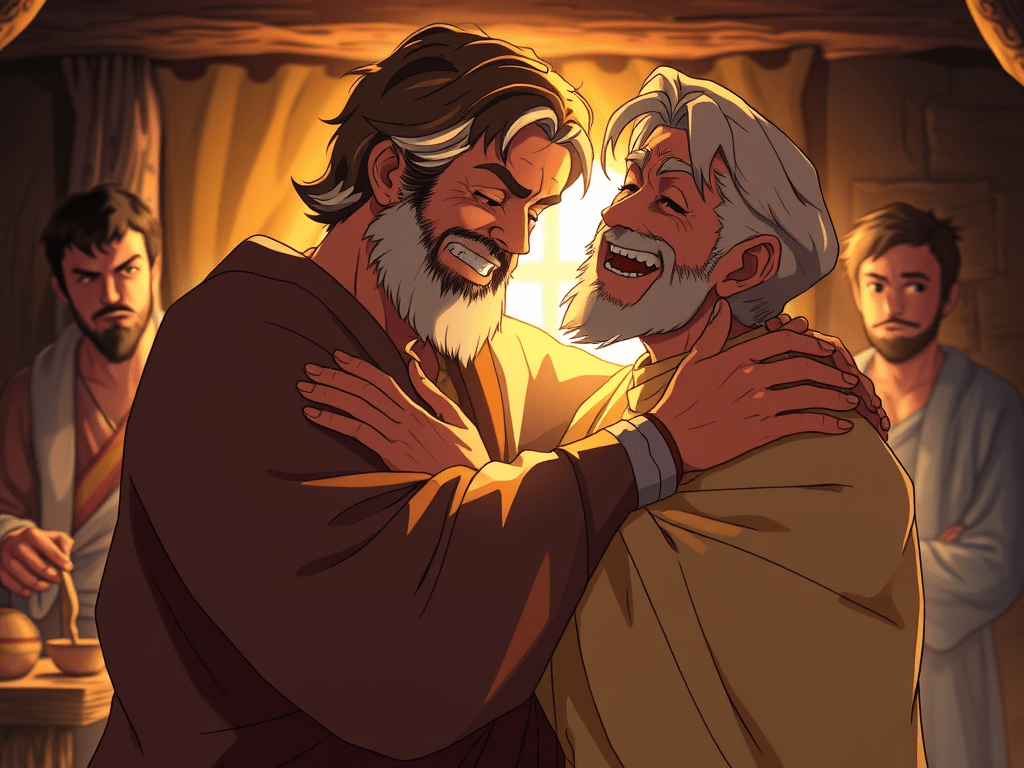
  • The Parable of the Prodigal Son: A Preference for the Repentant Son Over the Loyal Brother

    The Parable of the Prodigal Son: A Preference for the Repentant Son Over the Loyal Brother

    The Parable of the Prodigal Son is one of the most well-known biblical stories. While often interpreted as a lesson on forgiveness, there’s a deeper, subversive message embedded in the narrative. The story emphasizes the redemption of the repentant son over the loyalty of the older brother, challenging us to reflect on the nature of grace, transformation, and true faith.

    Let’s break down why this story shows more favor to the repentant son than the dutiful older brother.

    1. The Repentant Son’s Journey

    The Prodigal Son embarks on a journey of transformation. He leaves home, squanders his inheritance, and experiences deep suffering. But the key moment in the story is when he “comes to his senses,” realizing that his life has gone astray. Returning home isn’t just about apologizing—it’s about a profound change of heart.

    His journey isn’t just physical; it’s deeply moral and spiritual. Without experiencing loss and humility, the son wouldn’t have gained the wisdom necessary to understand what truly matters. His repentance is not merely saying “sorry”; it’s taking full responsibility and seeking reconciliation.

    2. The Older Brother’s Stagnation

    In contrast, the older brother represents the opposite of transformation. He has remained “loyal” and “dutiful,” yet he lacks the deeper compassion and self-awareness that the younger son gains through his fall. His loyalty is tied to a transactional understanding of his relationship with his father. He believes that following the rules entitles him to rewards.

    However, when he sees his brother return, he becomes bitter and resentful. His jealousy reveals his inability to comprehend the true nature of forgiveness and grace. While he believes that loyalty should be rewarded, he struggles to accept the father’s generosity toward the repentant son. This exposes the flaw in his view of faithfulness: it’s not just about staying loyal; it’s about embracing grace, forgiveness, and love.

    3. The Father’s Preference for the Repentant Son

    The father’s actions in the story speak volumes. He doesn’t just forgive the younger son—he goes out of his way to restore him to his rightful place in the family. The father’s joy and celebration of the son’s return show that he values transformation over mere loyalty. To him, the younger son’s repentance signifies a deeper, more meaningful change.

    The older brother, on the other hand, cannot understand why his brother is being celebrated. His view of loyalty lacks grace, focusing solely on merit. The father’s actions reveal a profound truth: that genuine transformation and repentance are more valuable than blind obedience or duty.

    4. The Parable’s Subversive Message

    What makes the Prodigal Son so powerful is how it subverts conventional expectations. The older brother, who has done everything right, is not the one the father celebrates. Instead, it is the one who has made mistakes, strayed, and then returned with genuine repentance.

    This aligns with a deeper spiritual principle often emphasized in Christian teachings: God values repentance and the willingness to transform oneself over mere outward adherence to rules or social norms. The story challenges the idea that it’s enough to simply “do your duty” or “stay loyal.” True faith requires openness to growth, change, and grace.

    5. The Call to Radical Grace

    The parable points to a radical message: true grace and forgiveness are not about rewarding those who follow the rules but about welcoming the lost, the broken, and the repentant. The father’s unconditional love for the Prodigal Son serves as a model of divine love—extending forgiveness even to those who have fallen farthest, as long as they return with a sincere heart.

    This challenges conventional ideas of justice based on merit and points to a more inclusive form of love. The older brother’s sense of entitlement contrasts sharply with the father’s generosity, showing that grace operates outside systems of merit and deservingness.

    6. The Lesson for the Faithful

    There’s a deeper challenge here for the “faithful” or “loyal” figures in the story, such as the older brother (who represents the “righteous” or those who follow the rules). The story teaches that loyalty and obedience don’t automatically entitle you to special treatment. Instead, the lesson is about embracing the joy of redemption and the value of grace.

    The older son’s bitterness reveals a misunderstanding of true loyalty. Loyalty isn’t about comparison or competition; it’s about love, compassion, and the willingness to rejoice in the redemption of others. The parable emphasizes that doing the right thing is important, but it must be coupled with a generous, forgiving heart.

    Conclusion: The Preference for the Repentant Son

    The Prodigal Son’s story clearly favors the repentant son over the older brother. It places a higher value on transformation, humility, and the willingness to embrace grace over mere fidelity or rigid adherence to rules. The father’s response teaches us a profound lesson about the nature of divine love and forgiveness, encouraging us to look beyond our assumptions about justice, loyalty, and merit.

    The older brother’s jealousy and anger reflect the common human tendency to measure worth based on performance. But the parable calls us to embrace a more radical, compassionate vision—a vision where even the most flawed and broken can be redeemed, and their return is celebrated, not condemned.

    Yes, the story of the Prodigal Son does show a preference for the repentant son—and in doing so, it calls attention to the importance of grace over judgment and transformation over stagnation.

    Written in collaboration with ChatGPT (OpenAI, 2025).
  • The Christian’s Heroic Journey: Ancient Myths and the Call to Faith

    The Christian’s Heroic Journey: Ancient Myths and the Call to Faith

    The Forgotten Heroic Role of Every Christian: Reclaiming the Lost Heroism of Faith

    Throughout history, myths and ancient stories have conveyed profound spiritual truths, shaping civilizations and guiding individuals through the complexities of life. However, in modern times, these narratives have been largely forgotten or dismissed as mere fiction. Within the Christian tradition, this loss has led to a misunderstanding of the faith, where holiness is often seen as passive or reserved for a select few saints. In reality, the Christian life itself is meant to be a heroic journey, one that every believer is called to undertake. The saints were not meant to be distant, unattainable figures, but models of the struggle that every Christian must engage in.

    This misunderstanding has resulted in a faith that is often reduced to adherence to doctrine and ritual, rather than a transformative path of meaning and purpose. The Catholic faith is not simply a system of moral rules, but a call to spiritual adventure, deeply embedded in the human experience and reflected in the structure of ancient myths. To reclaim this understanding, we must look to the archetypal patterns found in these stories, patterns that point us to the true heroic journey—the journey toward God.

    The Cost of Staying Passive: Apathy: The Slow Death of the Soul

    Many Christians feel disconnected from God, not because He is distant, but because they have settled for a passive faith. Ask yourself: Are you truly satisfied with where you are? A faith that lacks challenge quickly becomes stagnant, leading to frustration and even despair. Every great story—both in Scripture and in life—shows that growth only happens through struggle. The cost of remaining passive is not peace, but spiritual decay.

    The Rewards of the Heroic Path: Faith as the Ultimate Adventure

    Faith is not meant to be mere obligation—it is an adventure. What if the life you dream of is waiting for you on the other side of this journey? The saints were not born different from us; they were ordinary people who decided to engage fully with their faith. By stepping into the unknown and trusting God, they found a fulfillment that nothing else could provide. Transformation is not just about reaching heaven—it is about living fully now.

    The Illusion of Comfort: False Security: Trading Purpose for Passivity

    Many avoid effort because they believe they are choosing comfort. But are you really comfortable? Or are you just avoiding difficulty while quietly suffering from lack of purpose? The world offers distractions, but these distractions cannot replace true meaning. Choosing the path of faith may seem harder at first, but it brings a real and lasting fulfillment that worldly comfort can never provide.

    Myths, Meaning, and the Spiritual Path: Ancient Stories as Roadmaps to God

    As Jordan Peterson explains in Maps of Meaning, myths serve as psychological and spiritual maps that help individuals navigate the chaos of existence. These narratives depict the struggle between order and chaos, good and evil, suffering and redemption. In many ways, these themes mirror the Christian story. The hero of myth is often one who steps out of comfort and into the unknown, faces trials, undergoes transformation, and returns with newfound wisdom. This journey is reflected in the life of Christ, who enters into human suffering, conquers sin and death, and calls His followers to do the same.

    Unlike secular myths that leave the hero’s victory as an open-ended possibility, the Christian story presents the final and true archetype in Christ. He is the fulfillment of all previous heroic patterns, and His life serves as the ultimate guide for believers. Yet, His journey is not merely to be admired from a distance—it is to be lived out by every Christian. Baptism initiates this journey, and the sacramental life provides the structure and means for transformation. Each believer is called to carry the cross, to descend into suffering and darkness, and to emerge renewed in grace, ultimately becoming co-heirs with Christ in the Kingdom.

    The Call to Something Greater: Hearing the Call: Will You Answer?

    God does not call the qualified—He qualifies the called. Throughout Scripture, we see how He chose reluctant, flawed individuals and led them to greatness. Consider Moses, who doubted his ability, or Peter, who denied Christ—yet both became leaders of the faith. What if God is calling you now, but you are too afraid or too distracted to hear? Every hero must first answer the call, and ignoring it does not make it disappear.

    The Risk of Missing Out: The Regret of an Unlived Faith

    If you refuse the call, life will still happen to you—but you will not be shaping it. Many fear failure, but the real danger is regret. The worst thing is not making mistakes; the worst thing is looking back and realizing you never truly lived out your faith. If you do not step forward, you risk never experiencing the depth and richness that a life fully committed to God can bring.

    The Institutional Church and Its Role in Preserving the Heroic Path: The Church: A Fortress or a Battlefield?

    The Catholic Church, in its role as the guardian of truth, has historically been cautious of movements that threaten to distort or dilute doctrine. While this caution is necessary, it has also contributed to a perception of faith as static rather than dynamic. The institutional structure of the Church should not be seen as an obstacle to personal transformation but as the very framework within which the heroic journey unfolds. Tradition, doctrine, and sacramental life do not stifle spiritual adventure; they provide the path and safeguards necessary for true growth.

    The challenge for modern Catholics is to reclaim this heroic calling within the proper structure of the faith. The saints were not passive figures who merely followed rules; they were spiritual warriors who embraced the struggle and emerged transformed. Every Christian is meant to do the same. The hero’s journey is not an optional path—it is the essence of Christian life. To live the faith fully is to embrace the adventure of holiness, to fight against sin and despair, and to participate in the divine narrative that leads to ultimate redemption.

    In reclaiming this understanding, the faithful will not only deepen their own spiritual lives but also revitalize the Church itself. The world does not need passive adherents to a religious system—it needs heroes willing to live out the truth, fully engaged in the battle for meaning, virtue, and ultimate salvation.

    Written in collaboration with ChatGPT (OpenAI, 2025).