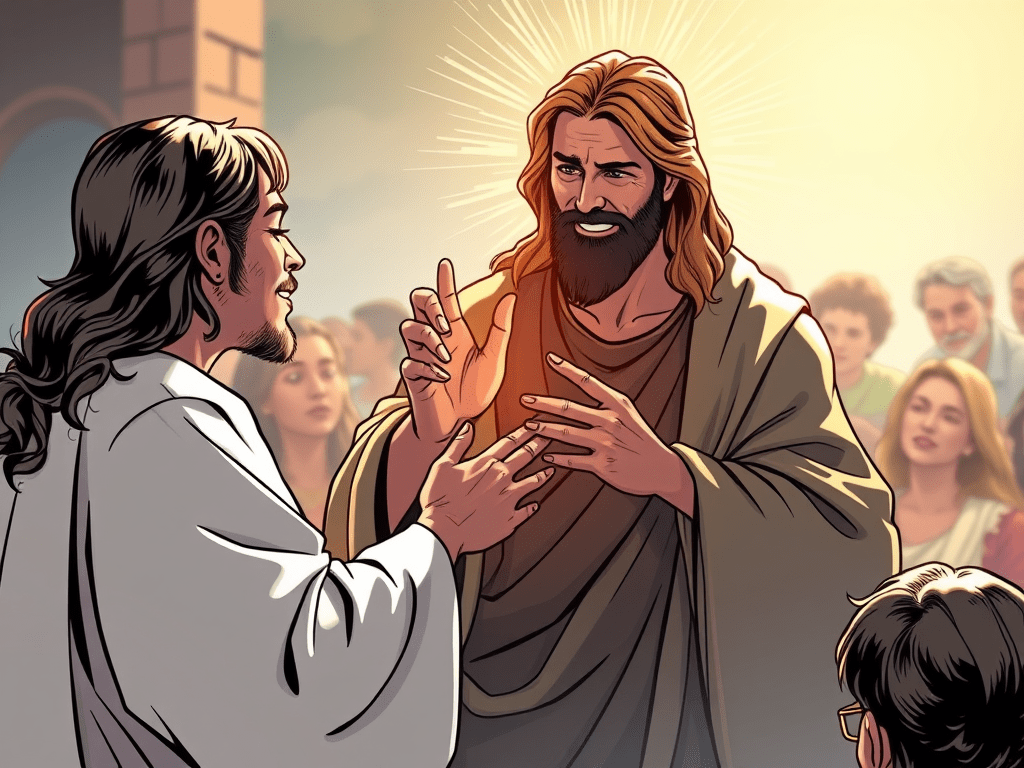
They are experiencing Christianity as joy and hope, having thus become lovers of Christ.

Tag: church

  • 🌍 The Open Table and the Open Road: Why the Feast Demands the Mission

    🌍 The Open Table and the Open Road: Why the Feast Demands the Mission

    Lessons from Isaiah, Matthew, and St. Paul on True Abundance

    Readings for Wednesday, December 3rd 2025: feria: Isaiah (25:6-10), Matthew (15:29-37); St Francis Xavier memorial: 1 Corinthians (9:16-23); Mark (16:15-20)


    I. The Scarcity Mindset vs. The Sacred Feast

    The Advent season drives us toward the ultimate hope, which Isaiah (25:6-10) describes as the Sacred Feast: a divine banquet on the mountain where the mourning veil is removed, and Death is destroyed for ever.

    The miracle in Matthew (15:29-37)—where Jesus feeds the four thousand—is a prefigurement of this eternal abundance. The crowds ate their fill, and the leftovers—the overflow of grace—filled seven baskets.

    Yet, immediately before the miracle, we hear the disciples’ classic reaction to need: scarcity. “Where could we get enough bread in this deserted place?”

    This is the voice of the scarcity mindset, the Amygdala screaming for survival and retreat

    . It focuses on the magnitude of the problem and the limits of our own resources. Jesus’ question is the antidote: “How many loaves have you?” He shifts the focus from the limits of the deserted place to the limitless power of the Provider.


    II. From Overflow to Obligation (The Hero’s Return)

    The overflow—those seven baskets full—is the crucial link to the Missionary Feast. Why does God give us more than enough? Because grace is not meant for storage; it is fuel for the mission.

    Saint Paul, whose memorial we honor today, understood this better than anyone. He writes in 1 Corinthians (9:16-23) that the Gospel is a duty laid upon him: “I should be punished if I did not preach it!”

    In the Hero’s Journey, the Hero receives the Elixir (the Feast/Grace) and must overcome the Refusal of the Return—the temptation to keep the treasure for himself

    . Paul reverses this, making himself “the slave of everyone” to share the blessings. His true reward is offering the Good News free, matching Christ’s costless abundance with his own costless service.


    III. The Signs That Accompany the Word

    The Gospel of Mark (16:15-20) provides the climax, connecting the Feast (the grace received) to the power needed for the road:

    “Go out to the whole world… These are the signs that will be associated with believers: in my name they will cast out devils; they will lay their hands on the sick, who will recover.”

    The healing of the lame, crippled, and blind in the Matthew reading is the tangible sign that accompanies the Word. The grace you receive at the altar is the power to continue this healing mission. The Mission is not just sharing words; it is sharing the supernatural power that destroys sickness, shame, and spiritual bondage.

    IV. Call to Action: Release the Overflow

    This Advent, the call is to live immediately from the overflow, transforming your inner abundance into outward action.

    Your challenge is to practice Mission-Minded Living:

    1. Dismantle Scarcity: Identify one area (time, money, emotional energy) where you are hoarding resources out of fear. Replace the paralyzing thought, “Where could we get enough?” with the faithful command, “How many loaves do I have?” and trust Christ to multiply it.
    2. Make Yourself a Slave (in Love): Following Paul’s example, embrace one small, inconvenient act of service or evangelization this week. Give your time or talent freely, mirroring the abundance you received at the Feast.
    3. Go with the Signs: Approach your daily life knowing the power that destroyed Death rests upon you. Look for opportunities to share the overflow—a word of encouragement, a prayer for a coworker, a simple act of mercy—trusting that the signs of Christ accompany your obedient Word.

    We have been fed. Now, let us share the boundless banquet with the world.

    Developed with assistance from Gemini AI

  • Building a Welcoming Parish: A Call to Action for the Knights

    How Knights of Columbus Can Strengthen Parish Community Through Outreach

    A strong parish is more than just a place of worship—it’s a spiritual home. Yet too often, new parishioners go unnoticed, never truly connecting with the faith community. As Knights of Columbus, we have a unique opportunity to change this by creating a more welcoming and engaged parish environment.

    The Problem: A Disconnected Parish

    Currently, our parish’s welcoming process is limited. Once new members are added to the collection envelope mailing list, there is little follow-up. Even our parish business director rarely sees their faces. Many new parishioners attend Mass but struggle to feel like they truly belong.

    As Knights, we are called to serve. By taking an active role in welcoming others, we can foster a sense of belonging and deepen the faith experience for all.

    A Vision for Parish Connection

    Imagine if every parishioner were part of a small group—similar to our Lenten study groups—but based on neighborhoods. New members would automatically be connected to a group near them, ensuring they find fellowship from the start. As groups grow, they would naturally divide, maintaining strong, personal connections.

    While the Church cannot share personal information without permission, there are still many ways we, as Knights, can integrate new members into the community.

    What We Can Do as Knights

    1. Be More Intentional in Greeting Others

    • Welcome parishioners at the church doors before and after Mass.
    • Engage in conversations at the donuts and coffee area after Mass.
    • Ask, “How long have you been part of the parish?” If they are new, introduce them to others.

    2. Help New Parishioners Connect

    • If someone has been a parishioner for over a year, ask if they’d be willing to help welcome and get to know new members.
    • Gather basic location information (such as neighborhood) to connect parishioners with nearby Catholic neighbors.
    • Encourage active members to invite newcomers into existing groups or ministries.

    3. Introduce New Members to Others

    • If a parishioner has been in the church for less than a year, personally introduce them to several people at the same Mass.
    • Make an effort to engage with them regularly—it takes about eight interactions with the between a person and the new parishioner over several months before he/she feels truly connected.
    • Learn about their work, hobbies, and background to foster genuine relationships.
    • When the time is right, ask if they’d like to meet other parishioners from their neighborhood and help facilitate those introductions.

    Next Steps

    • Identify Knights willing to take an active role in greeting and introducing parishioners.
    • Develop a simple system to track and connect new members to others in their area.
    • Work alongside parish leadership to enhance the overall welcoming strategy.

    Conclusion: A Parish Where Everyone Belongs

    By taking these small but meaningful steps, the Knights of Columbus can be the driving force behind a more connected and engaged parish. Welcoming new members is not just an act of kindness—it is an act of evangelization that strengthens the entire Church. When people feel seen, heard, and valued, they are more likely to deepen their faith and become active members of the community.

    Let’s step forward in our mission as Knights and make our parish a true spiritual home for all.

    Written in collaboration with ChatGPT (OpenAI, 2025).