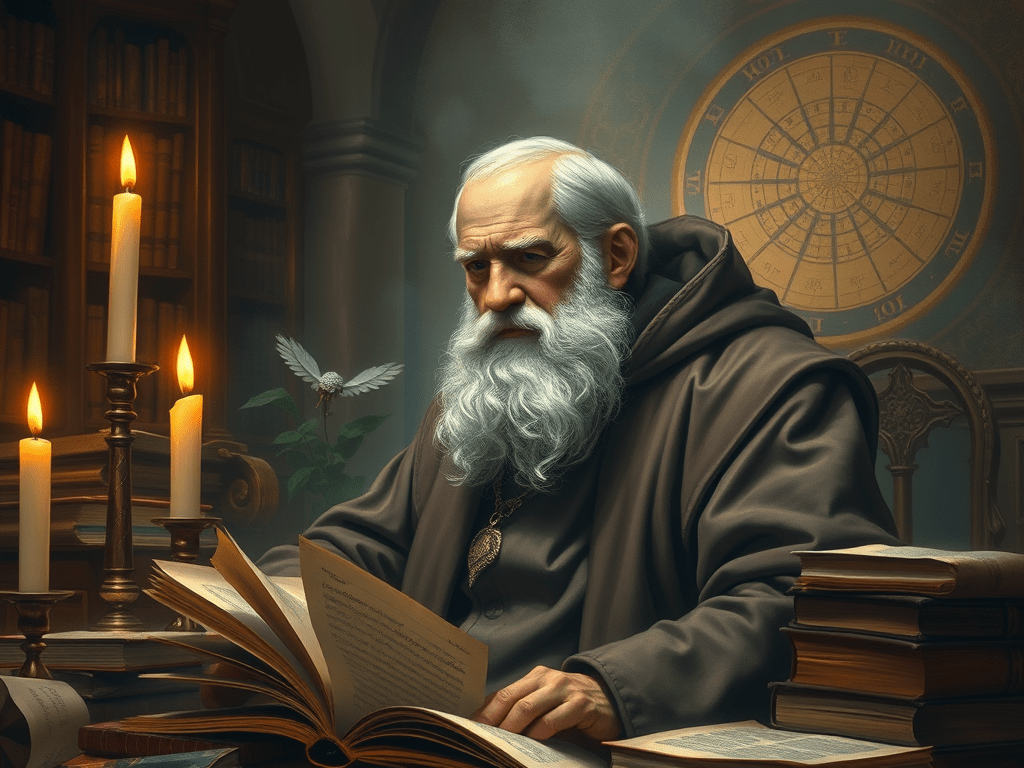
They are experiencing Christianity as joy and hope, having thus become lovers of Christ.

Tag: christianity

  • Discovering Your Heroic Vocation

    Recognizing the call that sets your life on a meaningful adventure

    Introduction: The Call to Adventure

    Every life has a calling. Not every vocation leads to priesthood or consecrated life. C.S. Lewis reminds us that there are infinitely many good vocations, each as different from one another as good is from evil. Some callings are familiar: raising a family, serving the poor, leading a community, or creating art that inspires. Others are unique, waiting quietly for a person to step forward.

    In the language of the Hero’s Journey, the first step of any adventure is the call. It may come as restlessness, a sense of purpose, or an invitation to serve. Recognizing this call is the beginning of a life fully aligned with God and with your gifts.


    The Heroic Vocational Questions

    To help discern your calling, consider these reflective questions. They are not a checklist, but a framework for discovery:

    1. Where do I feel most alive when serving or creating?
    2. What challenges stir courage in me rather than fear?
    3. Which relationships or mentors draw out the best in me?
    4. What activity makes me lose track of time while benefiting others?
    5. What do I keep returning to, even when it’s difficult or uncomfortable?
    6. How would I want my life to be remembered if I gave it fully to this path?
    7. What sacrifice would I be willing to make for the good that matters most to me?
    8. How does this calling connect with the greater good, the community, or God’s plan?

    These questions guide a person toward self-knowledge, courage, and clarity—the essential tools for responding to any vocation.


    Reflection and Discernment

    Answering these questions requires honest reflection, prayer, and openness to God’s guidance. It may take weeks or months to see patterns or clarity emerge. Journaling, talking with a trusted mentor, or spending time in prayerful solitude can help you hear the call more clearly.

    Remember: vocation is a process, not a single answer. Your understanding of your calling may grow or shift over time. The key is to remain attentive to the stirrings in your heart and to align your life with God’s will.


    Practical Next Steps

    Once you have a sense of your calling, take practical steps to test and nurture it:

    • Volunteer or intern in areas related to your perceived vocation.
    • Seek out mentors or communities that live out what you feel drawn to.
    • Learn actively: read, train, or practice skills that support your calling.
    • Experiment with small projects or commitments to see how they resonate.

    These steps allow your calling to reveal itself in action, confirming whether it truly aligns with your gifts and God’s plan.


    Conclusion

    Every vocation is heroic in its own way. Whether it is priesthood, marriage, art, leadership, or service, answering your call is stepping into a life of purpose, courage, and joy.

    Start by paying attention to the stirrings in your heart. Ask the reflective questions, test your path, and trust God’s guidance. Your heroic journey begins with the first step: saying yes to the call.

    Developed with assistance from ChatGPT-5

  • From christian to Christian: The Heart of Vocations

    Vocations start with knowing Christ — the decisive question every Catholic must face

    Introduction

    In our previous blogs, we examined priestly vocations first through statistics, then through seven questions from Catholic to consecrated vocation. But even those questions assume something deeper: a man must already know Christ to respond faithfully. Without that encounter, the questions remain unanswered, the call unnoticed.

    This is where Cardinal Joseph Ratzinger (Pope Benedict XVI) offers a decisive lens for understanding vocations and Christian life itself. He asks:

    Have you experienced an event or person which gives life a new horizon, and a decisive direction? Do you experience it as joy and hope? Are you inwardly seized by Christianity, and have you become a lover of Christ?

    This is the question behind all vocations. Many Catholic men do not pursue the priesthood, not because of celibacy or rules, but because they have never fully experienced Christ in this way.


    The Core Reality

    A vocation is not primarily about a career path, a calling to serve a group, or a set of obligations. It is about responding to a personal encounter with Christ.

    • If a man has not experienced this decisive horizon in his life, celibacy will always seem like an obstacle.
    • If a man does not trust God with his life, obedience to a religious community will feel impossible.
    • If a man does not recognize the presence of Christ in others, service will seem burdensome.

    In other words, the foundation of all vocations is being seized by Christ Himself. All the statistical analyses, discernment questions, and organizational structures build on this first encounter. Without it, the rest is form without life.


    Creating Environments for Encounter

    This insight also shows what the Church can do to support vocations: create spaces and experiences where people can meet Christ personally. This is not just about instruction, programs, or prayer for vocations — it is about real-life encounters, mentorship, and communities where faith comes alive.

    As I have often reflected: when I pray for more workers in the harvest, God often shows me what I can do to move things forward. We cannot simply hope for miracles; we can build environments that foster encounter, trust, and spiritual growth.


    Conclusion

    The question for vocations — and for Christian living — is not primarily about celibacy, obedience, or even statistics. It is about Christ taking hold of a person’s life.

    Without that encounter, no numbers, programs, or rules will generate vocations. With it, even one man saying “yes” can change countless lives.

    Vocations begin at the heart, and the heart begins with Christ.

    Developed with assistance from ChatGPT-5

  • Seven Questions from Catholic to Consecrated Vocation

    From possibility to discernment — a practical guide for those considering priesthood or consecrated life

    Introduction: From Coin Toss to Questions

    In our last reflection, we looked at priestly vocations through the lens of statistics. With one diocesan priest for every 3,000 Catholic men, vocations today can seem almost miraculous — like flipping twelve coins and getting heads every time.

    But what if we replaced those twelve coins with seven questions? Questions that, if answered honestly and faithfully, could help a man discern whether he is called to a consecrated vocation. This approach moves from mere probability to spiritual discernment, from abstract numbers to personal reflection.


    The Seven Questions from Catholic to Consecrated Vocation

    1. Grace

    • Are you being honest with yourself?
    • Are you committed to putting God’s will first?
    • Do you trust God’s providence for your future?
    • Are you aware that those who give all for Christ will bear much fruit and be rewarded with joy and peace?

    2. Vocation Fit

    • Is there an organization or charism that complements your perceived vocation or interests?
    • Could you see yourself participating fully and happily in that community?

    3. Trust

    • Are you comfortable that the group is faithful to Church teaching, transparent, and well-governed?
    • Can you entrust your future obedience to this group with confidence?

    4. Celibacy

    • Are you willing to accept celibacy as a sign of trust and commitment to God?
    • Do you recognize the benefits of consecrated celibacy over marriage within this vocation?
    • Could your vocation be fulfilled outside a celibate life?
    • Would marriage prevent you from living this vocation fully?
    • Do you believe that, by God’s grace, a person can sacrifice personal benefit for God’s plan?

    5. Service

    • Do you understand the importance of the presence of consecrated religious for the well-being of families, the Church, and the salvation of souls?
    • Is the vocational need significant enough to justify the sacrifices required?
    • Are you aware that Christ is present in each person you will serve?

    6. Compatibility

    • Will consecration to this group allow you to achieve your broader vocation?
    • Will the group allow flexibility as your vocation evolves with your faith?

    7. Timing

    • Do you believe God is calling you now, or might the call come at a later time?

    Reflection

    Most of the stumbling blocks I’ve observed are not about rules or regulations, but trust in God. Many men hesitate to surrender personal freedom — especially sexuality — because they do not truly know God or experience His providence in their lives.

    In reality, this is the same reason many do not fully live as Christians in the first place. Cardinal Ratzinger phrased it poignantly:

    Have you experienced an event or person which gives life a new horizon, and a decisive direction? Do you experience it as joy and hope? Are you inwardly seized by Christianity, and have you become a lover of Christ?

    Vocations grow from a foundation of encounter with Christ. Without that, no set of questions, rules, or statistics can bear fruit.


    Conclusion

    By replacing the coin tosses with these seven questions, we can move from seeing vocations as statistical miracles to seeing them as discernible possibilities. But the first and most important step is always the same: knowing Christ and trusting Him with your life.

    Developed with assistance from ChatGPT-5

  • Vocations by the Numbers:

    Why Priestly Life Looks Like a Miracle

    About fifteen years ago, I began to investigate the state of vocations in the Church. What I found was sobering. At that time, in my own diocese, there was about one diocesan priest for every 3,000 Catholic men.

    To an engineer like me, those numbers were staggering. If something happens only once in 3,000 tries, statisticians don’t call it normal — they call it an anomaly, an outlier, or even an error. The positive spin we use in the Church is “miracle.”

    But think of what that means: if vocations really were chosen at random, it would take the equivalent of tossing a coin twelve times and having it come up heads every time before a man became a priest. If that actually happened, most of us would laugh, say it was a bum toss, and start over.


    What if Priestly Vocations Were Realistic?

    Just for the sake of discussion, I asked myself: what if one priestly vocation came from every 100 men? That’s still not a majority, but it’s at least in the realm of possibility.

    In statistical terms, that would be like tossing seven coins and having them all land heads — odds of about 1 in 128. Far more likely than 1 in 3,000.

    If we applied this across a parish or diocese, the numbers look very different:

    • Assume people live about 83 years, or roughly 1,000 months.
    • That means people are born and die at about the same rate: one born, one die, per 1,000 people each month.
    • If a priest’s ministry spans half his life, then at any given time there whould be 1 priest for every 200 men.
    • With half the Church being women, that would mean 1 priest for every 400 Catholics.
    • There would be every year 1 new priest for every 16,000 Catholics.

    Take a parish of 2,000 families — say 5,2000 parishioners. By this ratio, we should have 12 to 13 priests in that one parish. And it would produce roughly 1 new priest vocation every 3. years. (16,000 / 5,000)
    Take my diocese, with about 1.6 million Catholics. By this measure, we should have 4,000 priests. And we should have about 100 men becoming new priests every year.

    The reality, of course, is nowhere near that.


    A Sobering Comparison

    We treat marriage very differently. Even with falling rates, still around half of people marry. When it drops, we call it a tragedy.

    But imagine if marriage happened at the same rate as priesthood — once in 3,000. Would we even call it a “vocation,” or just a statistical accident?

    That is the dilemma with vocations today. By the numbers, the priesthood no longer looks like a reasonable life option for Catholic men. It looks like winning the lottery.

    And yet, the Church depends on it.


    To be continued: In the next reflection, I’ll share how I asked myself: what if we replaced the seven coin tosses with seven questions? If a man could answer “yes” to all seven, maybe he should seriously consider a consecrated vocation.

  • 8 Questions on the Road to Christ

    From seeking the truth to being seized by Christ

    On my journey of reflection, I came across a simple yet profound set of questions often used to guide a person from unbelief to faith. These eight steps move from basic honesty with oneself to the heart of Christianity:

    1. Are you being honest with yourself?
    2. Do you seek the truth?
    3. Is there some kind of God? (atheism vs. theism) — 5/6 of the world believes in some kind of god.
    4. Is it one God or many? (monotheism vs. polytheism) — about half of the world believes in one God.
    5. Is all God, or is He present but separate? (pantheism vs. Creator).
    6. Is God morally good, or is He indifferent to good and evil?
    7. Did God simply wind up the world, or is He present in history?
    8. Is God one person or three? Is Jesus His Son? One-third of the world is Christian.

    Each of these questions acts as a step on the “road to Christ.” They push us to examine what we believe, and why. Yet, even after answering all eight in favor of Christianity, there is still a deeper question that cannot be ignored.

    Joseph Cardinal Ratzinger (later Pope Benedict XVI) expressed it this way:

    Have you experienced an event or person which gives life a new horizon, and a decisive direction? Do you experience it as joy and hope? Are you inwardly seized by Christianity, and have you become a lover of Christ?

    That final question makes all the difference. It cuts to the heart: how many who call themselves “christian” (with a small c) have truly become Christian (with a capital C) in this deeper sense?

    The journey is not only about intellectual assent but about encounter, transformation, and love. Without that, the “road to Christ” remains unfinished.

  • Take Up Your Cross:

    The Hero’s Anthem of Discipleship

    At Mass today, the congregation sang a hymn that almost reads like a hero’s anthem:

    “Take up thy cross,” the Savior said,
    “if thou wouldst my disciple be;
    deny thyself, the world forsake,
    and humbly follow after Me.”

    “Take up thy cross, let not its weight
    fill thy weak spirit with alarm;
    His strength shall bear thy spirit up,
    and brace thy heart, and nerve thine arm.”

    “Take up thy cross, nor heed the shame,
    nor let thy foolish pride rebel;
    thy Lord for thee the cross endured,
    to save thy soul from death and hell.”

    “Take up thy cross, and follow Christ,
    nor think till death to lay it down;
    for only they who bear the cross
    may hope to wear the glorious crown.”

    At first glance, it is a call to discipleship, a reminder to endure suffering, and a promise of eternal reward. But the hymn also mirrors the archetypal Hero’s Journey:

    • The Call to Adventure: The Savior invites each disciple to leave comfort behind, deny selfish desires, and step into a path of transformation.
    • Supernatural Aid: Divine strength sustains the believer, just as mythic heroes receive guidance and power from mentors or gods.
    • The Road of Trials: Enduring shame, temptation, and inner resistance is the crucible that refines courage, humility, and faith.
    • The Ultimate Boon: The crown at the journey’s end is victory over death and union with God—eternal life as the hero’s reward.
    • Return to the World: Though the cross is carried daily, the disciple’s journey inspires others, becoming a witness of hope and courage in the ordinary world.

    In essence, the hymn frames discipleship as a heroic quest. Each cross we bear is both trial and triumph, each act of faith a step along the path of transformation. It reminds us that true heroism is not the absence of suffering, but the courage to endure, the humility to trust, and the hope that, in the end, life’s ultimate reward is already glimpsed in faith.

    The lyrics are by: Everest, Charles William, M.A

    Written with assistance from ChatGPT-5

  • Freedom of Religion, Truth, and the Search for Eternity

    Why freedom demands responsibility in faith

    We live in an age where freedom of religion is widely affirmed. At its core, this means that every person has the right to believe as they choose. No one should be forced into faith, nor punished for following their conscience.

    But that freedom also brings a serious responsibility. If adults are free to choose, then each of us should be intentional about our choice. Why would anyone remain in a religion they believe is not the best path for them? A thoughtful person should seek out the truth, weigh what is offered, and decide what is truly worth staking their life on.

    As Catholics, we believe Jesus’ words: “I am the way, the truth, and the life. No one comes to the Father except through me” (John 14:6). For us, Heaven is where Christ is. To someone outside the faith, however, that may not sound appealing. If their idea of heaven is life without Jesus, then by definition, their “heaven” would actually be part of what Christians call hell.

    This doesn’t mean we condemn others. In fact, freedom of religion cuts both ways. If I claim Christ as the only way, my neighbor has just as much right to claim otherwise. What we don’t have the right to do is force conversion or resort to violence in the name of truth. Our call is different: to witness, to invite, to live a life that reflects the joy of knowing Christ.

    And this is where Pope Benedict XVI’s insight becomes urgent. In Light of the World (2010), he reflects on what happens when people reject God’s eternity:

    “Man strives for eternal joy; he would like pleasure in the extreme, would like what is eternal. But when there is no God, it is not granted to him and it cannot be. Then he himself must now create something that is fictitious, a false eternity… A craving for happiness has developed that cannot content itself with things as they are. The destructive processes at work in that are extraordinary and are born from the arrogance, the boredom, and the false freedom of the Western world.”

    Drugs, sex tourism, consumerism—Benedict calls these “false eternities,” counterfeit paradises that destroy families, enslave nations, and wound the dignity of entire peoples. They promise joy, but deliver despair.

    The alternative is not complicated. It is Christ. In Him, we taste eternity even now: peace that lasts, joy that cannot be taken away, love that gives life. Freedom of religion allows each person to choose—but only Christ offers a freedom that endures beyond this world.

    So what do we do as Christians?

    • Hold fast to the truth, without arrogance.
    • Respect others’ freedom, without compromise.
    • Live in such a way that others glimpse Heaven through us.

    Freedom of religion gives us the right to believe as we will. But the Gospel gives us the reason to believe as we should.

    Developed with assistance from ChatGPT-5

    Follow-up Reflection:
    Freedom of Religion and the Courage to Listen – Respectful sharing strengthens faith, not fear.

  • Wrestling With Ideas:

    Wrestling With Ideas:

    The Church, Orthodoxy, and the Spirit of the Age

    The Catholic Church has always carried a dual responsibility: to guard the deposit of faith and to protect the faithful from error. This task, though divinely entrusted, is carried out by human beings. And like every human institution, the Church is not immune to the influence of surrounding cultures, philosophies, and political theories.

    That tension is felt most keenly when the Church seems to “experiment” with new ways of speaking, teaching, or practicing the faith. At times, these efforts are seen as an attempt to incorporate temporal or even ideological ideas — the kind that history shows do not last. The question, then, is how to distinguish between legitimate development and dangerous dilution.

    One way modern thought often frames progress is through the lens of “thesis–antithesis–synthesis.” First articulated by Hegel and later adapted by Marx, this model suggests that truth advances by the clash of opposing ideas, resolved in a new synthesis. While this might apply in politics, economics, or philosophy, it becomes dangerous when applied to divine revelation.

    God’s truth is not simply another “thesis” waiting to be refined by the latest cultural antithesis. It is the anchor. To treat it otherwise risks diluting eternal truth with passing ideologies.

    Yet history also shows that false ideas, however seductive, tend to collapse under their own weight. They rise, attract attention, and then falter. In their wake, the Church often emerges with a clearer understanding of why such ideas fail. The cost, however, is real: confusion among the faithful, weakened trust, and even generations turning away.

    And still, God allows this wrestling. He permits both the Church and individuals to struggle with competing voices. In the end, truth endures. Consider St. Faustina, St. Bernadette, and St Juan Diego with Our Lady of Guadalupe. Each faced skepticism or outright rejection from Church leaders of their time. Yet their authentic messages bore fruit, purified by trial, and confirmed by their endurance.

    Perhaps this is the deeper lesson: God uses even tension, error, and conflict as a refining fire. What is temporal passes away; what is eternal remains. And in that promise we find hope — for the gates of hell shall not prevail.

    For Catholics today, the task is not to despair when the Church seems to flirt with every new “synthesis.” The task is to hold fast to Christ, to the tradition handed down, and to the lived witness of the saints. Orthodoxy is not fragile; it does not need to reinvent itself in each generation. It needs only to be lived, courageously and faithfully, in every age.

    Developed with assistance from ChatGPT-5

  • Seen by Angels:

    Living Beyond the Judgment of Men

    We live in a culture that often tells us to measure our worth by the crowd. Social approval, likes, recognition, and applause are treated as the highest rewards. But if we stop and think about it, this is a very poor exchange. Why should the noblest part of our nature — our spiritual life — be subjected to the judgment of those who neither see nor understand it? Why should the holiness that comes from God be measured by those who walk the broad road of sin?

    The flesh cannot judge the spirit. The sinner cannot measure the elect of God. Yet so often, instead of looking upward to God for approval, we look downward to men for validation. When we do this, we dishonor ourselves and cheapen the very excellence of our calling.

    Faith opens our eyes to a higher audience. The apostle Paul reminds us that it is not only the world who sees us — we are also “seen by angels” (1 Timothy 3:16). These heavenly beings, who are far stronger and purer than us, watch our lives with interest. They are not spectators who jeer or mock but companions who minister, encourage, and serve.

    Paul even goes further: God has chosen to display His wisdom to the heavenly realms through the Church itself (Ephesians 3:10). When we live faithfully, our actions ripple beyond the visible world. They become testimonies to powers and principalities, signs of God’s glory unfolding through His people.

    This changes everything. When we were baptized, we were not only united to Christ but brought into a hidden fellowship — “an innumerable company of angels” (Hebrews 12:22). We share in their hidden life, their worship, and their service. Like them, our lives are often hidden, unseen by the world. But just as they are present to God, so too are we.

    That’s why Paul exhorted Timothy not just to obey in view of God, but also in the sight of the angels (1 Timothy 5:21). Imagine how different our lives would be if we truly believed this. Even in our most private deeds, even in our most carefully guarded solitude, we are not alone. We are witnessed by heaven.

    This awareness is not meant to make us fearful but to give us dignity. The world may mock, ignore, or misunderstand, but our lives are valuable in the sight of God and His holy angels. We are never abandoned, and we are never unseen.

    So, the next time you feel the pull to lower yourself to the judgment of men, remember this: you are seen by angels. Live for the audience of heaven, not the applause of earth.


    👉 Reflection Question for Readers:
    How might your daily life change if you remembered that every choice, even the smallest, was witnessed by God and His angels?

    John Henry Newman, The World’s Benefactors, Parochial and Plain Sermons, Vol. 2, Sermon 1. Read it online

    Developed with assistance from ChatGPT-5

  • When the Church Faces Crisis:

    How Truth Endures Through the Ages

    Every age of the Church has faced storms. At times the threats came from outside — persecution, ridicule, or hostile powers. Other times, the threats rose from within — confusion, corruption, false teaching. In those moments, it has often seemed as though the very foundations of faith were shaking. Yet again and again, God has used such crises not only to purify His Church but also to raise up saints who held fast to the truth.

    The Arian Crisis

    In the 4th century, much of the Church was swept away by the Arian heresy, which denied the full divinity of Christ. Bishops, emperors, and even entire regions sided with this distortion of the Gospel. Ordinary Christians found themselves wondering if the faith had been lost. Yet in that dark moment, figures like St. Athanasius stood firm, even at the cost of exile and persecution. Through their fidelity, the true doctrine of Christ was preserved, and the Church eventually emerged stronger, with the Nicene Creed as a lasting testament to truth.

    The Reformation

    In the 16th century, the Church faced one of its greatest upheavals: the Protestant Reformation. Corruption and abuses within the hierarchy had already shaken confidence in the institution. When Luther and others rose up in protest, their grievances quickly grew into theological revolts that shattered Christian unity in the West. Millions were swept into schism, and faith in the Church as a visible sign of unity seemed broken. Yet even in this turmoil, saints like St. Ignatius of Loyola, St. Teresa of Ávila, and St. Charles Borromeo rose up. They called the Church not to abandon her foundations, but to reform by returning to holiness, clarity of doctrine, and fidelity to Christ. Their witness helped bring about the Counter-Reformation, a renewal that revitalized Catholic life and mission for centuries.

    The Modernist Crisis

    Fast forward to the late 19th and early 20th centuries, when Modernism threatened the heart of Catholic thought. It claimed to “update” Christianity by reducing it to psychology, sociology, and human opinion, stripping away the mystery of divine revelation. Pope St. Pius X saw this as “the synthesis of all heresies,” and his strong response preserved the faith against being dissolved into mere philosophy. Out of this struggle emerged renewed clarity on the relationship between faith and reason, paving the way for later theological developments that were both faithful and fruitful.

    What This Means for Us Today

    Looking back, one thing is clear: whenever the Church has faced crisis, some have fallen away. The faith of many proved shallow or dependent on the approval of the age. Yet at the same time, crises have always forged saints — men and women who stood firm, who refused compromise, and who became living lights for future generations.

    We should not be surprised if our own time feels like such a crisis. The Church wrestles with new pressures: secular ideologies, internal confusion, and a temptation to water down truth in the name of relevance. Some may lose their way. But God is not defeated. He is, even now, raising up saints.

    The question for us is: Will we be among those who fall away, or among those who stand firm? History shows that when the storm passes, it is always those who clung to Christ — simply, humbly, and faithfully — who carried the Church through.

    Developed with assistance from ChatGPT-5