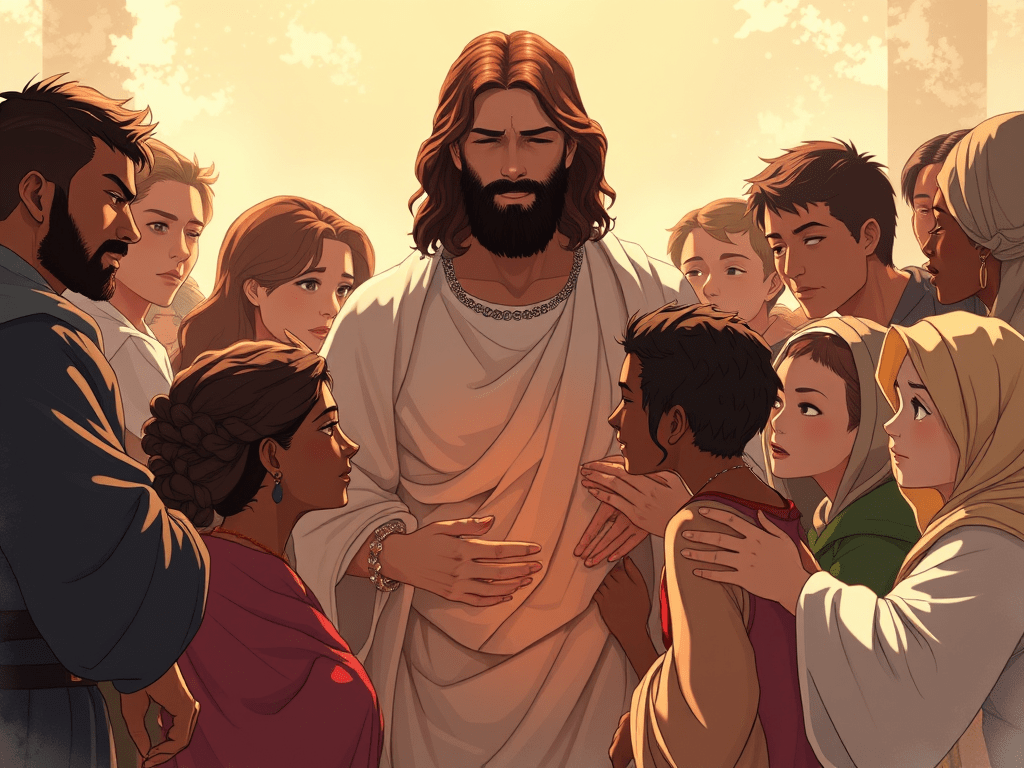
They are experiencing Christianity as joy and hope, having thus become lovers of Christ.

Tag: Catholic Life

  • The Holy Paradox: Why Choosing Christ Doesn’t Make You “Better”

    The Holy Paradox: Why Choosing Christ Doesn’t Make You “Better”

    Moving from the Ego’s “Us vs. Them” to the Radical Humility of the Father’s Eyes.

    The Subtle Poison of Religious Pride

    When we decide to give our lives to Christ, we cross a threshold. It feels like a victory—and in many ways, it is. But right behind that victory lurks a subtle, spiritual poison. We begin to look at the world through a lens of “us” and “them.” We start to wonder: Am I better than they are?

    The short, jarring answer is: No.

    In the economy of Grace, there is no “better.” There is only the called, the seeking, and the found.

    The Myth of the Self-Made Saint

    We like to think our “Yes” to God is a personal achievement. We treat it like a trophy we earned. But Catholic Exegesis and the history of the Saints tell a different story.

    It is God who provides the environment. It is God who provides the attitude. It is God who guides the choice. You didn’t invent the air you breathe; you simply finally decided to stop holding your breath. Even the initiative to seek Him is a grace He provided.

    Key Insight: All that is good in us comes from Him. All that is evil in us is simply that which has not yet died.

    Beyond the “Sheep and Goats” Mentality

    Our brains are wired to categorize, to judge, and to rank. But to live a life of grace is to override those biological shortcuts and adopt The Father’s Eyes.

    When we look at someone “trapped by sin” or “downtrodden,” we are seeing only the surface. We have no idea what is happening in the deep recesses of their heart. Consider these three truths:

    1. The Invisible Battle: That person may be fighting a psychological or spiritual slavery you cannot imagine.
    2. The Proximity of Grace: The “worse off” a person appears by our standards, the closer they may be to a total, explosive conversion.
    3. The Elder Brother Trap: Like the brother of the Prodigal Son, we can be “right” on the outside while being miles away from the Father’s heart on the inside.

    Suffering as Sacred Alchemy

    Transformation isn’t just about feeling good; it’s about dying to the self. St. John Paul II once wrote that there is a specific kind of suffering that “burns and consumes evil with the flame of love.” When we see someone struggling, we aren’t called to point a finger. We are called to step into the fire with them.

    Because we have been blessed with grace, we don’t have a higher status—we have a higher responsibility. We are called to suffer personally to help others overcome their shadows. This is the “Hero’s Journey” of the soul: descending into the mess of humanity to bring back the light.

    The Mirror: Fixing Our Eyes

    If you find yourself comparing your holiness to your neighbor’s, you have taken your eyes off the Prize.

    We still have enough of ourselves that needs redemption to keep us busy for several lifetimes. The goal isn’t to be “better” than the person in the pew next to you; it is to be more “dead to yourself” than you were yesterday.

    The Call to Action: Today, look at the person you are most tempted to judge. Instead of a “goat,” see a “lost sheep.” Instead of a “sinner,” see a “prodigal.” Ask for the grace to see them not as they are, but as the Father sees them.

    Developed with assistance from Gemini AI

  • Feeding Bellies, Starving Souls

    Why Charity Alone Is Not Enough

    I once came across a piercing phrase: “Catholic Charities: feeding bellies; starving souls.” It stayed with me because it names a real temptation for Christians in our time: to give generously to the body, while neglecting the soul.

    Of course, corporal works of mercy are essential. Jesus tells us to feed the hungry, clothe the naked, and shelter the homeless. And Catholic institutions do this at a massive scale. But if that is where mercy ends, we have fallen short.

    Physical hunger is serious, but spiritual hunger is eternal. Jesus did not only multiply loaves. He said, “I am the Bread of Life. Whoever comes to Me shall not hunger, and whoever believes in Me shall never thirst” (Jn 6:35).

    If we only fill stomachs without pointing people to Christ, we risk leaving them starved in the most important way. A man with bread in his hand but emptiness in his heart is still in poverty.

    True Christian mercy must hold both together: bread for the body and Bread for the soul. Shelter and forgiveness. Clothing and truth. A warm meal and the promise of eternal life.

    This is the challenge for Christians today. Society has woven corporal works of mercy into its fabric through welfare, charities, and aid programs. But who will take responsibility for the spiritual works of mercy? Who will teach the ignorant, counsel the doubtful, forgive the offender, pray for the living and the dead?

    We cannot outsource those. They belong to us — to the Church, to every disciple of Christ.

    If we want to be true to the Gospel, then our charity cannot stop at the body. It must reach the soul, where Christ Himself longs to dwell.

    Developed with assistance from ChatGPT-5

  • Microsphere Relationships:

    Where Real Belonging Begins

    A number of years ago, I came across an article called the “monkey sphere,” which was built on Robin Dunbar’s research into human social networks. Dunbar suggested that the size of our neocortex places a natural limit on how many people we can truly know and relate to. For humans, he estimated the number is around 150 people — what’s often called Dunbar’s Number.

    But there’s a catch: to sustain that many relationships, you’d need to dedicate around 40% of your weekly time (about 67 hours) to them. That works out to roughly 30 minutes per person, per week.

    This struck me:

    • The people in our microsphere — the ones we average 30 minutes a week with — are those we trust, learn from, and share life with. These are mentoring, collegial, or teamwork relationships where we actually need to learn how to get along.
    • The macrosphere is made up of the many others we know, but more distantly — acquaintances, useful contacts, neighbors.
    • At the center are our nucleus relationships — the people who need at least 30 minutes of our time daily. These include family, closest friends, and of course, God.
    • Being famous is when more people know you than you know them.
    • Being a fan is knowing someone who doesn’t know or care about you. 
    • Being a teacher / instructor / influencer implies the information is flowing out with little or no feedback. 

    It makes me wonder:

    • How many microsphere relationships do we actually sustain today — with family, extended family, coworkers, fellow parishioners, or in hobbies?
    • How many are necessary to feel truly at home in a parish — 5, 10, 20?

    We live in a world where loneliness is widespread, and many people are drowning in macrosphere connections (social media followers, casual contacts) but starving for microsphere ones. We let busyness and distraction push aside the very relationships that would make us feel grounded, known, and supported.


    👉 Reflection Question for Readers:
    What is one microsphere relationship in your life right now that needs more of your attention?

    Edited with assistance from ChatGPT-5