They are experiencing Christianity as joy and hope, having thus become lovers of Christ.

Category: Uncategorized

  • The Fall of the Tyrant: The Timeless Myth of Belshazzar’s Feast

    The Fall of the Tyrant: The Timeless Myth of Belshazzar’s Feast

    The Timeless Myth of Belshazzar’s Feast

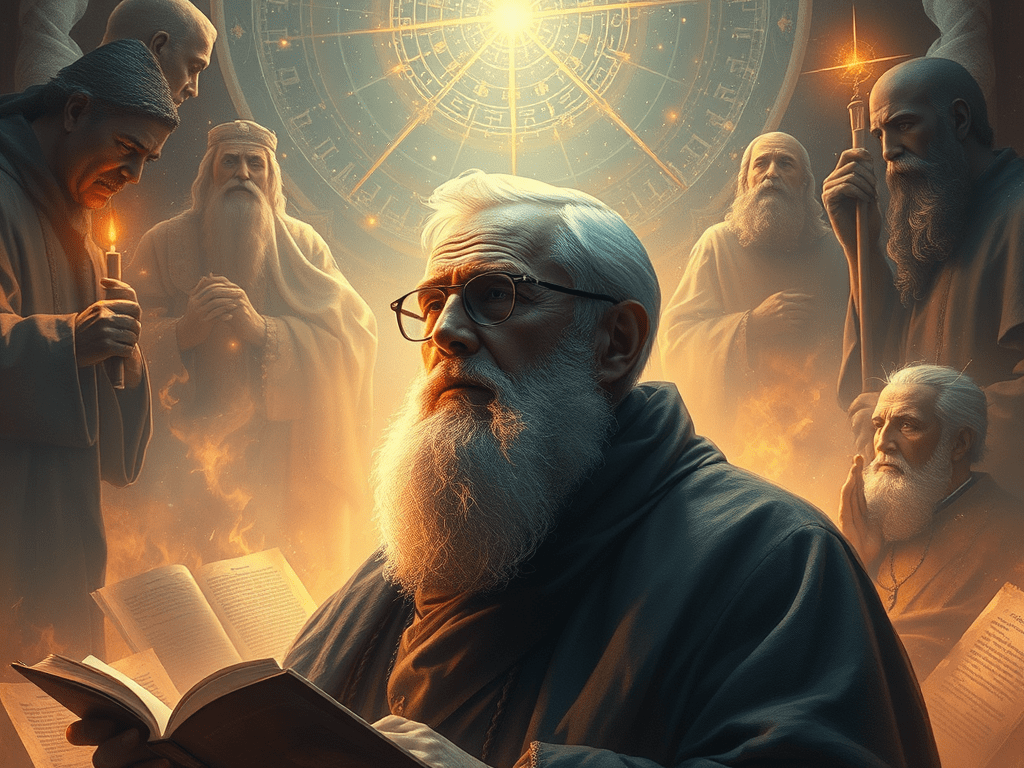
    In the Book of Daniel, chapter 5, we find one of the most dramatic stories in ancient scripture: Belshazzar’s Feast. A lavish banquet turns into a night of terror when a disembodied hand appears and writes mysterious words on the wall. The kingdom falls that very night. But beyond the historical account, this is a profound mythological tale about the inevitable collapse of any power built on arrogance, intoxication, and sacrilege.

    1. Hubris and Sacrilege: The Banquet as Ritual Defiance

    Babylon, in mythic terms, stands as the ultimate “anti-Temple”—a symbol of worldly power that rejects divine order. The banquet isn’t mere excess; it’s a deliberate act of defiance. King Belshazzar commands the sacred vessels looted from the Jerusalem Temple to be brought out. His guests drink wine from them while praising their gods of gold, silver, bronze, iron, wood, and stone.

    This profanation is the core sacrilege: these vessels once held the divine presence. Using them to toast idols is hubris incarnate—the mortal claiming superiority over the sacred. It’s the height of arrogance, performed at the peak of empire.

    2. The Omen: The Hand That Shatters Illusion

    Suddenly, a hand appears, writing on the wall—illuminated, ironically, by the light of the stolen Temple lampstand. The sacred light exposes the profane doom.

    Belshazzar’s reaction is visceral: his face pales, his limbs go slack, his knees knock together. This physical paralysis mirrors his moral collapse—the moment the tyrant’s illusion of invincible power crumbles before a higher force.

    3. The Hero-Interpreter: Daniel’s Uncompromising Stand

    The wise men fail, but Daniel—the exile who refuses to defile himself—is summoned. He deciphers the writing: “Mene, Mene, Tekel, Parsin.”

    Before delivering the verdict, Daniel refuses the king’s rewards: purple robes, gold chains, high office. “Keep your gifts,” he says. His authority comes not from Babylon’s system but from allegiance to the divine. He is untouchable, the true hero bridging chaos and cosmic truth.

    4. The Cosmic Verdict: Weighed on the Scales of Justice

    The words form a threefold judgment:

    • Mene: God has numbered your days; your reign is finite and ended.
    • Tekel: You have been weighed on the scales and found wanting—your character, deeds, and rule insufficient.
    • Parsin: Your kingdom is divided and given to the Medes and Persians.

    That night, Belshazzar is slain, and Babylon falls. The scales of cosmic justice tip irrevocably.

    Echoes in the Cycle of History

    This myth resonates with the ancient observation of civilizational cycles: “Hard times create strong men, strong men create good times, good times create weak men, and weak men create hard times.”

    Belshazzar’s story zooms in on the dangerous transition—good times breeding moral weakness, arrogance, and forgetfulness of limits, inviting sudden collapse. It’s a warning echoed in Greek tragedies (hubris-nemesis), Roman histories, and modern reflections on empires.

    In an age where powers rise and boast at their zenith, the writing on the wall remains a timeless reminder: all human empires are weighed, and those built on sacrilege and pride will be found wanting.

    Content developed with assistance of Gemini AI.

    Blog edited with assistance of Grok AI

  • The Man Who Lived a Myth (And Was Real)

    The Man Who Lived a Myth (And Was Real)

    If someone told you this story as fiction, you’d roll your eyes and say, “Come on, nobody’s life is that tidy.”

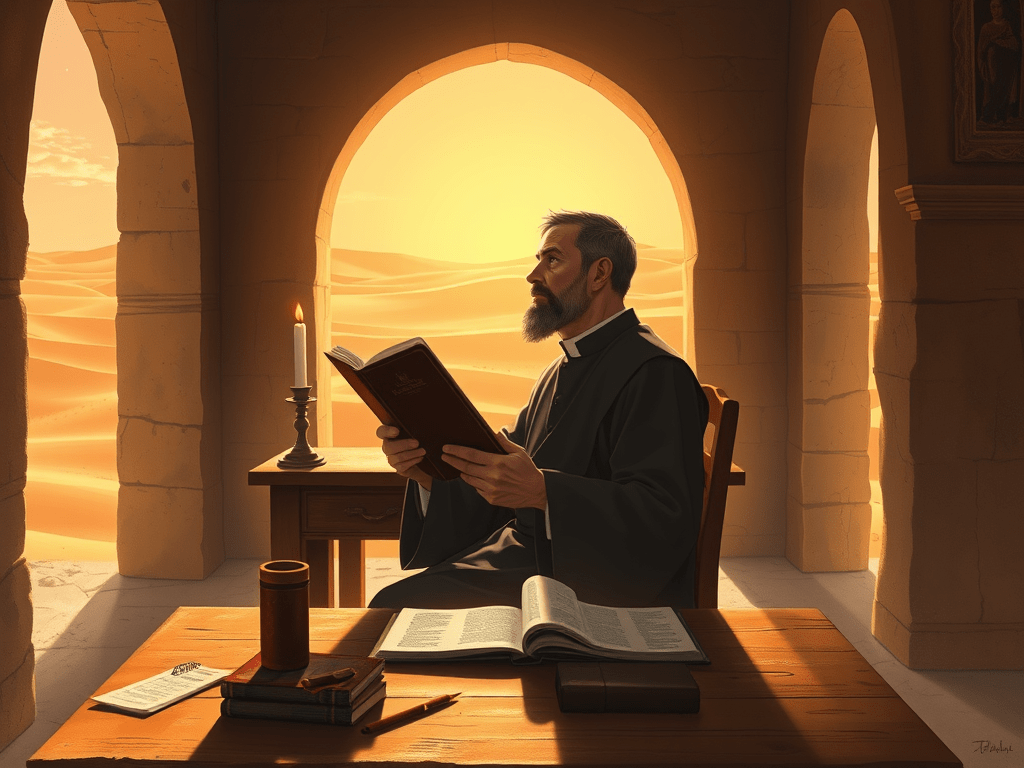
    A boy is born into one of France’s ancient noble families, bloodline reaching back to the Crusades, family motto: Jamais arrière—“Never back.”

    He loses his parents at six, inherits a fortune, and promptly becomes the most spoiled, lazy, and debauched young officer in the French cavalry: expelled from school, famous for orgies and gourmet dinners in the Algerian desert while on duty.

    At twenty-eight, something cracks open inside him. He walks into a Paris church and tells a priest, “I don’t believe in God, but teach me about Him anyway.”

    He gives everything away, joins the strictest monastery he can find, decides even that isn’t poor enough, and leaves.

    He disappears into the Sahara to live closer to the poorest of the poor (the Tuareg nomads whom his own army regards as enemies).

    He builds a tiny hermitage of mud bricks, learns their language, compiles the first real Tuareg-French dictionary while half-starving at 9,000 feet on a frozen plateau.

    He begs to be ordained a priest only so he can celebrate Mass alone in the desert, telling God, “I want to live where no one knows You, so that You are not alone there.”

    On the night of 1 December 1916, bandits come to kidnap him for ransom. A fifteen-year-old boy guarding him panics at the sound of approaching French camel troops and shoots the hermit through the head.

    He dies instantly, face in the sand, apparently a failure: no converts, no community, no one to carry on his vision.

    He is buried in a ditch.

    A century later, in 2022, the Catholic Church declares him a saint.

    Nineteen religious orders and lay communities (Little Brothers of Jesus, Little Sisters of Jesus, and many others) now live all over the world according to the rule he wrote for a brotherhood that never existed while he was alive.

    From prodigal son to desert hermit to forgotten martyr to spiritual father of thousands: his life follows the ancient hero’s journey so perfectly that it feels invented.

    Except it isn’t.

    Every detail is documented, photographed, witnessed.

    Charles de Foucauld (1858–1916) lived a legend, then died in obscurity, and only then did the legend begin to walk on its own.

    Sometimes reality is allowed to be more beautiful than myth.

    Feel free to share.

    (If you want a one-sentence version for social media:

    “Rich playboy → atheist officer → Trappist monk → Sahara hermit → murdered by a scared teenager → canonized saint whose spiritual children now circle the globe. Charles de Foucauld didn’t just live a myth. He lived the whole myth, and it was true.”)

    Further reading
    • Charles de Foucauld’s own letters and spiritual writings are collected in Charles de Foucauld: Essential Writings (Orbis Books, 1999)
    • The best single biography in English remains Jean-Jacques Antier, Charles de Foucauld (Ignatius Press)
    • Pope Francis on Charles: Gaudete et Exsultate §§66–68 (free at vatican.va)
    • Pope Leo XIV’s recent references appear in Dilexi Te (2025), §§42–45

    This reflection was shaped in conversation with Grok (xAI), December 2025.

  • ⚔️ Hammering Swords into Ploughshares:

    ⚔️ Hammering Swords into Ploughshares:

    The Work of Vigilance

    I. The Journey to the Mountain (The Hero’s Call)

    The liturgical year turns today, beginning the season of Advent. Our destination is clear: The Mountain of the Temple of the Lord .

    The prophet Isaiah (2:1-5) gives us a stunning mythological vision: a towering peak, lifted higher than the hills, drawing all the nations—peoples without number—to learn God’s ways. The outcome of this pilgrimage is radical: “They will hammer their swords into ploughshares, their spears into sickles. Nation will not lift sword against nation.”

    This is the ultimate promise of Eternal Peace (Shalom) and the divine resolution to the problem of human violence.

    In terms of the Hero’s Journey, the journey up the mountain is the Call to Adventure—a call to leave the flat, ordinary world of conflict behind and ascend to the height of revelation. The Law (the oracle) goes out from this place, transforming the very tools of destruction (swords) into the tools of production (ploughshares).

    The pilgrimage is not just historical; it is deeply personal. What are the “nations” of conflict within us that must ascend to the peace of Christ?


    II. The Night and the Burglar (Psychology of Complacency)

    Saint Paul tells us in Romans (13:11-14) that “the night is almost over.” This night is not just a chronological time; it is a psychological state of spiritual drowsiness.

    Jesus illustrates this perfectly in the Gospel with two chilling metaphors: Noah’s Day and the Burglar.

    “If the householder had known at what time of the night the burglar would come, he would have stayed awake and would not have allowed anyone to break through the wall of his house.”

    The burglar represents the unforeseen collapse—the judgment, the crisis, or the moment of death. The wall of the house is the boundary of our interior life, our vigilance.

    Psychologically, the danger is not the outside event; it is the “coarsening” of the heart that makes us fail to stay awake. The twin enemies Paul names—drunkenness and the cares of life—are both methods of spiritual dullness:

    1. Drunkenness/Debauchery: Overloading the system with immediate pleasure, dulling the Prefrontal Cortex (our Will and highest reason) and making us incapable of long-term planning.
    2. Cares of Life: Overloading the system with chronic anxiety, perpetually triggering the Amygdala (our fear center).

    Both states keep us trapped in the Ordinary World, focused only on eating and drinking, leaving the walls of our soul unguarded. We mistake temporary comfort for eternal security.

    III. The Armour and the Ploughshare (The Spiritual Transformation)

    The call to action is immediate and profound: “Let us live decently as people do in the daytime: no drunken orgies, no promiscuity… Let your armour be the Lord Jesus Christ.”

    The transformation required to reach Isaiah’s mountain of peace is a dual effort:

    1. The Work of Divesting (Hammering Swords)

    We must actively give up the things we prefer to do under cover of the dark. This is the Refusal of the Return reversed—we refuse to stay comfortable in the darkness.

    The sword is the symbol of aggression, conflict, and self-defense. What are the swords in your heart?

    • The sword of wrangling (constant conflict).
    • The sword of jealousy (internal war against your neighbor).

    We are called to hammer these weapons into ploughshares—tools for tilling the inner soil, for producing the spiritual fruit of patience, charity, and peace. This process requires daily, painful penance and effort.

    2. The Work of Investing (Donning Armour)

    Paul instructs us: “Let your armour be the Lord Jesus Christ.”

    This is the Apotheosis and Return stage of the Advent journey. We don’t defend our walls with our strength; we defend our soul with Christ. We put on the Mind of Christ and the Virtues of Christ.

    When you are tempted to anger (the sword), your armour reminds you to respond with Christ’s peace. When you are tempted to dull your senses (the drunkenness), your armour reminds you that your Master is coming and you must be awake.

    IV. Call to Action: Walking in the Light

    This Advent, the call is simple: Walk in the light of the Lord.

    The mountain of the Temple is waiting. We are not called to build the perfect society right now, but we are called to build the perfect sanctuary in our own heart. We must make our inner Jerusalem ready for the Prince of Peace.

    Your practical commitment this week is to Vigilance.

    • Identify the Burglar: Name one specific area of your life where you have “allowed someone to break through the wall of your house”—where you are dulling your heart. (e.g., excessive scrolling, obsessive worrying, casual gossip).
    • Hammer the Sword: Take one daily tool of conflict (wrangling, jealousy) and consciously begin to turn it into a tool of peace (patience, prayer).
    • Stay Awake: Resolve to spend your time and energy not on the “cares of life,” but on the saving help Christ offers, so that you are prepared to stand ready.

    Let us walk in the light. Let us start hammering our swords.

    Developed with assistance from Gemini AI

  • St. Albert the Great:

    St. Albert the Great:

    The Saint Who Proved Faith and Reason Belong Together

    Today the Church celebrates the feast of St. Albert the Great—a man whose brilliance was so vast that his contemporaries simply called him Magnus, “the Great.” It is rare for history to give such a title to anyone, and even rarer for the Church to agree. But with Albert, both the scholars and the saints found themselves saying the same thing: this man is in a category of his own.

    If you’ve ever wondered what the harmony of faith and science looks like in a single human life, St. Albert is your answer.


    Who Was St. Albert the Great?

    • Born: c. 1200 in Lauingen, Germany
    • Died: November 15, 1280 in Cologne
    • Feast Day: November 15
    • Religious Order: Dominican (Order of Preachers)
    • Titles: Doctor Universalis (Universal Doctor), Doctor of the Church, Patron Saint of Scientists

    Albert was, without exaggeration, one of the greatest minds of the Middle Ages. He mastered philosophy, theology, natural science, and nearly every field of knowledge his world had to offer. And yet, his reputation for humility was as great as his intellect.


    What Made Him So Extraordinary?

    1. A Master of Philosophy and Theology

    Albert is best known as the man who brought Aristotle to the Christian West.
    He wrote massive commentaries on nearly all of Aristotle’s works—physics, metaphysics, ethics, politics, biology, psychology—and in doing so, he shaped the intellectual foundation of Europe.

    But Albert did something even more important:

    He showed that faith and reason are not enemies, but allies.

    This insight became the cornerstone of Christian philosophy and inspired his most famous student, St. Thomas Aquinas, to build the great synthesis of faith and reason that still shapes Catholic thought today.


    2. A Pioneer of Early Science

    Albert is sometimes called a “proto-scientist,” but in truth he was already practicing something very close to the scientific method.

    He observed, measured, classified, and experimented.

    He wrote groundbreaking studies on:

    • botany
    • zoology
    • mineralogy
    • astronomy
    • geography
    • even early chemistry (then called alchemy)

    He personally described plants and animals with surprising accuracy, noted the narcotic effects of certain herbs, and even acknowledged that the Earth is a sphere—centuries before it became common knowledge.

    And while legends say he discovered the philosopher’s stone, Albert himself spent much of his time exposing fraudulent alchemists. He defended only what could be real, tested, and true.


    3. Friar, Teacher, Bishop, and Tireless Preacher

    Albert entered the Dominican Order around 1223, embracing a life of poverty, preaching, and study.

    He taught all across Germany and in Paris, where he became the mentor of the young Thomas Aquinas. He served briefly—and reluctantly—as Bishop of Regensburg, but soon returned to the classroom, where he felt his vocation lay.

    His life was marked by prayer, gentleness, charity, and deep humility.


    Why Was He Made a Saint?

    St. Albert was canonized in 1931—remarkably late, considering he had been venerated for centuries. His canonization was equipollent, meaning the Church formally recognized a devotion that already existed.

    He became a Doctor of the Church the same year.

    He is honored because of:

    • his extraordinary holiness, lived quietly and consistently;
    • his intellectual contributions, which strengthened and defended the faith;
    • his integration of faith and science, preventing a divide that could have shattered Christian culture;
    • the many miracles attributed to him during and after his life.

    In 1931 he was declared the Patron Saint of Scientists, and today remains a model for all who seek the truth through both prayer and study.


    Fun Facts & Medieval Legends

    • Albert once defended the young Thomas Aquinas—mocked as “the Dumb Ox”—saying:
      “You call him a dumb ox? His bellowing will one day echo throughout the world.”
      The prophecy came true.
    • Medieval stories claimed Albert built a talking automaton—an early “robot.”
      While almost certainly legend, it shows how people saw him as a kind of scientific wizard.
    • He defended the right of women to study philosophy and theology—centuries ahead of his time.

    A Saint for Our Age

    St. Albert the Great stands as a powerful answer to a modern question:

    Can a person love God wholeheartedly and still pursue science, reason, and the natural world?

    Albert’s life gives a clear, resounding yes.

    He reminds us that all truth comes from God, and therefore no truth—whether scientific or spiritual—can contradict Him. He is the Church’s great bridge between the worlds of faith and knowledge, contemplation and investigation, theology and the natural sciences.

    On his feast day, we are invited to rediscover that same unity in our own lives.

    St. Albert the Great, pray for us.