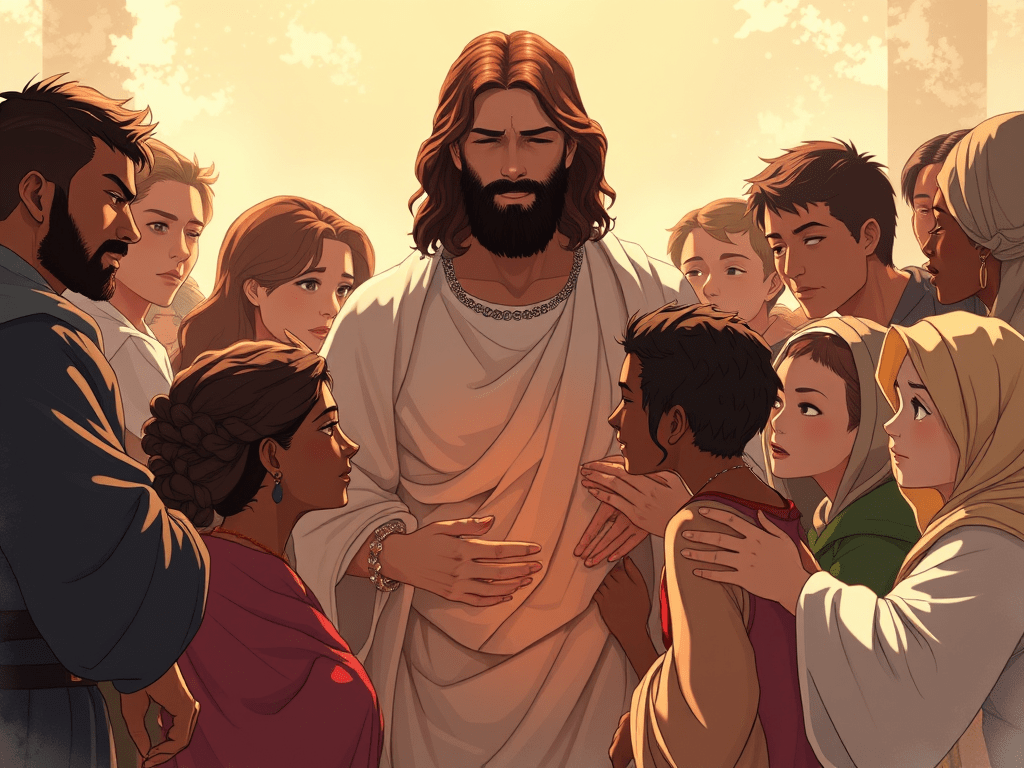
They are experiencing Christianity as joy and hope, having thus become lovers of Christ.

Category: Foundational Encounter

  • The Holy Paradox: Why Choosing Christ Doesn’t Make You “Better”

    The Holy Paradox: Why Choosing Christ Doesn’t Make You “Better”

    Moving from the Ego’s “Us vs. Them” to the Radical Humility of the Father’s Eyes.

    The Subtle Poison of Religious Pride

    When we decide to give our lives to Christ, we cross a threshold. It feels like a victory—and in many ways, it is. But right behind that victory lurks a subtle, spiritual poison. We begin to look at the world through a lens of “us” and “them.” We start to wonder: Am I better than they are?

    The short, jarring answer is: No.

    In the economy of Grace, there is no “better.” There is only the called, the seeking, and the found.

    The Myth of the Self-Made Saint

    We like to think our “Yes” to God is a personal achievement. We treat it like a trophy we earned. But Catholic Exegesis and the history of the Saints tell a different story.

    It is God who provides the environment. It is God who provides the attitude. It is God who guides the choice. You didn’t invent the air you breathe; you simply finally decided to stop holding your breath. Even the initiative to seek Him is a grace He provided.

    Key Insight: All that is good in us comes from Him. All that is evil in us is simply that which has not yet died.

    Beyond the “Sheep and Goats” Mentality

    Our brains are wired to categorize, to judge, and to rank. But to live a life of grace is to override those biological shortcuts and adopt The Father’s Eyes.

    When we look at someone “trapped by sin” or “downtrodden,” we are seeing only the surface. We have no idea what is happening in the deep recesses of their heart. Consider these three truths:

    1. The Invisible Battle: That person may be fighting a psychological or spiritual slavery you cannot imagine.
    2. The Proximity of Grace: The “worse off” a person appears by our standards, the closer they may be to a total, explosive conversion.
    3. The Elder Brother Trap: Like the brother of the Prodigal Son, we can be “right” on the outside while being miles away from the Father’s heart on the inside.

    Suffering as Sacred Alchemy

    Transformation isn’t just about feeling good; it’s about dying to the self. St. John Paul II once wrote that there is a specific kind of suffering that “burns and consumes evil with the flame of love.” When we see someone struggling, we aren’t called to point a finger. We are called to step into the fire with them.

    Because we have been blessed with grace, we don’t have a higher status—we have a higher responsibility. We are called to suffer personally to help others overcome their shadows. This is the “Hero’s Journey” of the soul: descending into the mess of humanity to bring back the light.

    The Mirror: Fixing Our Eyes

    If you find yourself comparing your holiness to your neighbor’s, you have taken your eyes off the Prize.

    We still have enough of ourselves that needs redemption to keep us busy for several lifetimes. The goal isn’t to be “better” than the person in the pew next to you; it is to be more “dead to yourself” than you were yesterday.

    The Call to Action: Today, look at the person you are most tempted to judge. Instead of a “goat,” see a “lost sheep.” Instead of a “sinner,” see a “prodigal.” Ask for the grace to see them not as they are, but as the Father sees them.

    Developed with assistance from Gemini AI
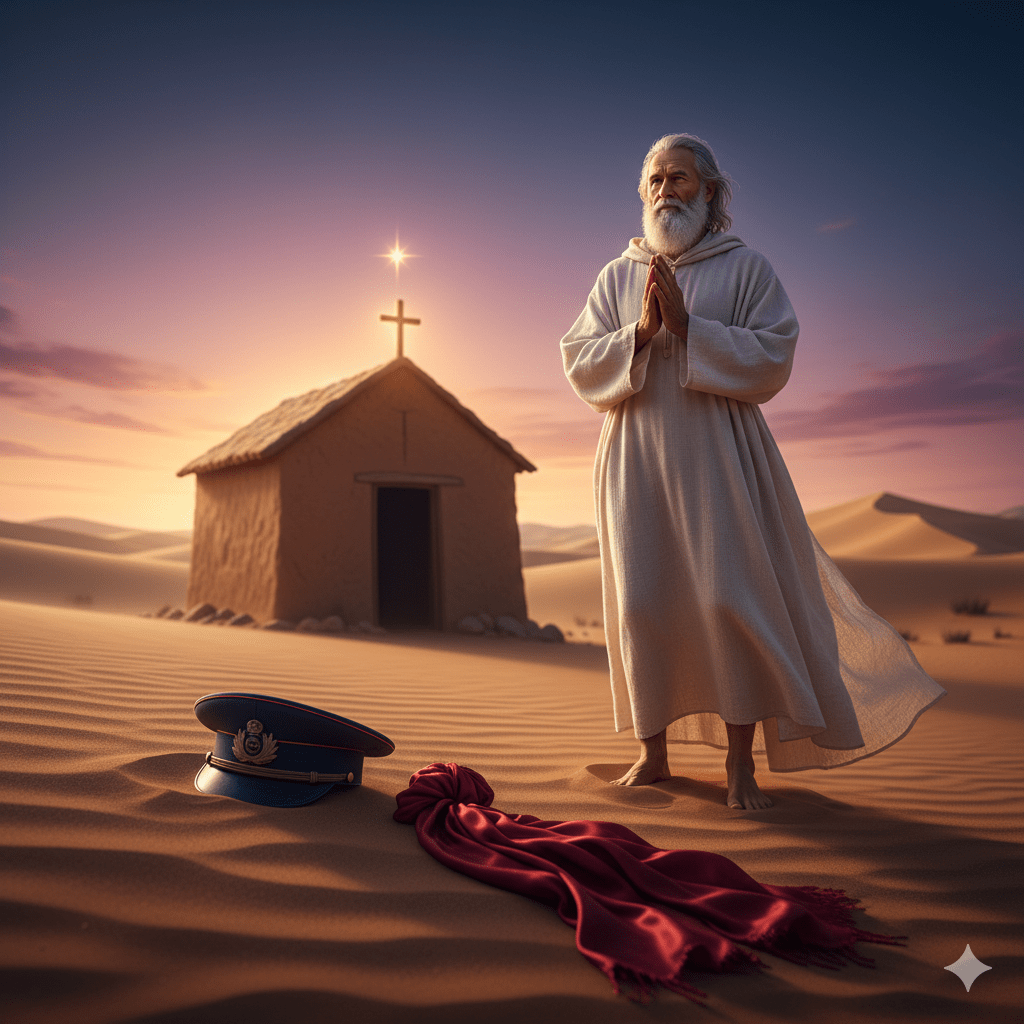
  • The Man Who Lived a Myth (And Was Real)

    The Man Who Lived a Myth (And Was Real)

    If someone told you this story as fiction, you’d roll your eyes and say, “Come on, nobody’s life is that tidy.”

    A boy is born into one of France’s ancient noble families, bloodline reaching back to the Crusades, family motto: Jamais arrière—“Never back.”

    He loses his parents at six, inherits a fortune, and promptly becomes the most spoiled, lazy, and debauched young officer in the French cavalry: expelled from school, famous for orgies and gourmet dinners in the Algerian desert while on duty.

    At twenty-eight, something cracks open inside him. He walks into a Paris church and tells a priest, “I don’t believe in God, but teach me about Him anyway.”

    He gives everything away, joins the strictest monastery he can find, decides even that isn’t poor enough, and leaves.

    He disappears into the Sahara to live closer to the poorest of the poor (the Tuareg nomads whom his own army regards as enemies).

    He builds a tiny hermitage of mud bricks, learns their language, compiles the first real Tuareg-French dictionary while half-starving at 9,000 feet on a frozen plateau.

    He begs to be ordained a priest only so he can celebrate Mass alone in the desert, telling God, “I want to live where no one knows You, so that You are not alone there.”

    On the night of 1 December 1916, bandits come to kidnap him for ransom. A fifteen-year-old boy guarding him panics at the sound of approaching French camel troops and shoots the hermit through the head.

    He dies instantly, face in the sand, apparently a failure: no converts, no community, no one to carry on his vision.

    He is buried in a ditch.

    A century later, in 2022, the Catholic Church declares him a saint.

    Nineteen religious orders and lay communities (Little Brothers of Jesus, Little Sisters of Jesus, and many others) now live all over the world according to the rule he wrote for a brotherhood that never existed while he was alive.

    From prodigal son to desert hermit to forgotten martyr to spiritual father of thousands: his life follows the ancient hero’s journey so perfectly that it feels invented.

    Except it isn’t.

    Every detail is documented, photographed, witnessed.

    Charles de Foucauld (1858–1916) lived a legend, then died in obscurity, and only then did the legend begin to walk on its own.

    Sometimes reality is allowed to be more beautiful than myth.

    Feel free to share.

    (If you want a one-sentence version for social media:

    “Rich playboy → atheist officer → Trappist monk → Sahara hermit → murdered by a scared teenager → canonized saint whose spiritual children now circle the globe. Charles de Foucauld didn’t just live a myth. He lived the whole myth, and it was true.”)

    Further reading
    • Charles de Foucauld’s own letters and spiritual writings are collected in Charles de Foucauld: Essential Writings (Orbis Books, 1999)
    • The best single biography in English remains Jean-Jacques Antier, Charles de Foucauld (Ignatius Press)
    • Pope Francis on Charles: Gaudete et Exsultate §§66–68 (free at vatican.va)
    • Pope Leo XIV’s recent references appear in Dilexi Te (2025), §§42–45

    This reflection was shaped in conversation with Grok (xAI), December 2025.

  • False Eternities and the Monster That Devours Nations

    Pope Benedict’s warning for our age


    “You see, man strives for eternal joy; he would like pleasure in the extreme, would like what is eternal. But when there is no God, it is not granted to him and it cannot be. Then he himself must now create something that is fictitious, a false eternity.” — Pope Benedict XVI

    Every human heart longs for joy without end. We are not satisfied with passing pleasures; we want what lasts forever. Yet when God is removed from the horizon, eternity slips out of reach. The desire does not vanish—it mutates. Man tries to build “false eternities,” counterfeits of heaven that promise happiness but cannot deliver.

    This craving becomes restless, unable to be content with reality. And from this restlessness, Pope Benedict warns, arise destructive forces: arrogance, boredom, and a false idea of freedom. The result is what he calls a “devil’s paradise.”

    Drugs, sex tourism, consumerism—these are not just personal vices. They are entire counterfeit worlds, whole systems that consume lives, families, and nations. Addiction fuels industries that exhaust whole countries. Exploitation of youth and sex tourism ravage generations. Consumerism turns entire societies into slaves of appetite.

    “It is as if an evil monster had its hand on the country,” Benedict says, “corrupting the people, destroying youth, tearing apart families, leading to violence, and endangering the future of entire nations.”

    This is more than a moral warning; it is a prophetic one. False eternities do not remain private—they devour cultures.

    What, then, is the Christian answer? Benedict insists:

    • The eternity man seeks comes only from God.
    • God alone is the first necessity to withstand the afflictions of this time.
    • Christians must not only proclaim this truth, but live it—embodying the eternity we have already begun to taste in Christ.

    This is a sign of our times. It is also our challenge. The choice before us is stark: either false eternities that enslave, or the true eternity that saves. Only in God does our restless desire find its home—and only in Him can nations be healed from the monster that devours them.

    Developed with assistance from ChatGPT-5

  • Freedom of Religion, Truth, and the Search for Eternity

    Why freedom demands responsibility in faith

    We live in an age where freedom of religion is widely affirmed. At its core, this means that every person has the right to believe as they choose. No one should be forced into faith, nor punished for following their conscience.

    But that freedom also brings a serious responsibility. If adults are free to choose, then each of us should be intentional about our choice. Why would anyone remain in a religion they believe is not the best path for them? A thoughtful person should seek out the truth, weigh what is offered, and decide what is truly worth staking their life on.

    As Catholics, we believe Jesus’ words: “I am the way, the truth, and the life. No one comes to the Father except through me” (John 14:6). For us, Heaven is where Christ is. To someone outside the faith, however, that may not sound appealing. If their idea of heaven is life without Jesus, then by definition, their “heaven” would actually be part of what Christians call hell.

    This doesn’t mean we condemn others. In fact, freedom of religion cuts both ways. If I claim Christ as the only way, my neighbor has just as much right to claim otherwise. What we don’t have the right to do is force conversion or resort to violence in the name of truth. Our call is different: to witness, to invite, to live a life that reflects the joy of knowing Christ.

    And this is where Pope Benedict XVI’s insight becomes urgent. In Light of the World (2010), he reflects on what happens when people reject God’s eternity:

    “Man strives for eternal joy; he would like pleasure in the extreme, would like what is eternal. But when there is no God, it is not granted to him and it cannot be. Then he himself must now create something that is fictitious, a false eternity… A craving for happiness has developed that cannot content itself with things as they are. The destructive processes at work in that are extraordinary and are born from the arrogance, the boredom, and the false freedom of the Western world.”

    Drugs, sex tourism, consumerism—Benedict calls these “false eternities,” counterfeit paradises that destroy families, enslave nations, and wound the dignity of entire peoples. They promise joy, but deliver despair.

    The alternative is not complicated. It is Christ. In Him, we taste eternity even now: peace that lasts, joy that cannot be taken away, love that gives life. Freedom of religion allows each person to choose—but only Christ offers a freedom that endures beyond this world.

    So what do we do as Christians?

    • Hold fast to the truth, without arrogance.
    • Respect others’ freedom, without compromise.
    • Live in such a way that others glimpse Heaven through us.

    Freedom of religion gives us the right to believe as we will. But the Gospel gives us the reason to believe as we should.

    Developed with assistance from ChatGPT-5

    Follow-up Reflection:
    Freedom of Religion and the Courage to Listen – Respectful sharing strengthens faith, not fear.

  • 10 RAZĂ•ES PARA BUSCAR JESUS

    Se você realmente conhecesse Jesus, então realmente O amaria. Descubra como Ele pode transformar sua vida e guiá-lo a viver com amor, propósito e alegria em todos os aspectos do seu dia a dia.

    1. Jesus Cristo é a perfeição do homem porque Ele é a perfeição do amor. Se desejamos ser o melhor que podemos ser, devemos aspirar a ser como Cristo. No entanto, não conseguimos alcançar isso por nós mesmos.
    2. Quando convidamos Cristo para nossas vidas, Ele se faz presente em nós e através de nós. Assim, embora sejamos pecadores desesperançados, nos tornamos portadores da perfeição do homem. De fato, não há lugar para orgulho, pois todo o bem que fazemos vem Dele. Não podemos nos apropriar dele.
    3. Através da Sua graça, vencemos o pecado, o sofrimento e a morte. Nossos pecados passados e quaisquer faltas futuras já foram pagos pelo preço da Sua morte e ressurreição. A maioria dos novos pecados pode ser evitada mantendo nossos olhos fixos em Jesus.A dor do sofrimento se transforma em amor pelo sacrifício de Cristo, nosso propósito. O sofrimento só existe nas áreas de nós mesmos às quais ainda nos apegamos. Nas áreas em que morremos para nós mesmos e nos entregamos a Ele, a morte não tem mais poder. Para muitos santos, isso é apenas um passo através de um véu.
    4. Recebemos os olhos e o coração de Cristo. Vemos quanto Cristo ama todos ao nosso redor e percebemos onde eles foram feridos. 
    5. Tudo o que possuímos — habilidade, esforço, motivação, conhecimento — é inútil se não estiver a serviço do amor, de Cristo.
    6. Vivemos em verdadeira alegria, paz e amor. Se estamos realizando o Seu trabalho — o trabalho para o qual fomos criados — será a maior aventura que poderíamos ter (com o melhor final).
    7. Somos lavados em Seu amor. Apreciamos que Jesus nos amou tanto que morreu por nossos pecados. Aquele que morreu por nós nunca nos abandonará. Podemos saber que, quando falamos, Ele nos escuta. Ele sempre nos espera na quietude de nossos corações. Compreendemos que tudo o que nos acontece é Sua bênção. É o melhor que poderia nos acontecer.
    8. Ao deixá-Lo viver através de nós, podemos ser melhores cônjuges, pais, filhos, funcionários, chefes, empresários, vendedores, clientes, colegas, estudantes, professores, amigos e cidadãos. Mostrando respeito, colocando os outros em primeiro lugar, agindo com honestidade, diligência, paciência, perseverança, amor, misericórdia e lealdade, adquirimos o caráter ideal em todas essas áreas.
    9. Mantendo os olhos fixos em Cristo, podemos nos sacrificar para ajudar a vencer o pecado e o sofrimento no mundo à nossa volta. Podemos oferecer a outra face em vez de buscar vingança. Em vez de contribuir para o caos, podemos ser uma fonte de cura. O cristianismo foi a origem do respeito e da dignidade para toda a humanidade, bem como para os animais e o meio ambiente. Essas bases sustentaram grande parte do progresso da civilização desde Cristo. Onde o cristianismo foi eliminado, como nos regimes comunistas, vemos claramente o que o reino do mal traz.

    “…Quanto Ă s misĂ©rias e pecados que ele ouvia diariamente no mundo, ele nĂŁo os repreendia. Pelo contrário, ficava surpreso que nĂŁo houvesse mais, considerando a malĂ­cia da qual os pecadores eram capazes. Por sua parte, ele orava por eles, sabendo que Deus poderia remediar o mal que causaram quando quisesse, e nĂŁo se preocupava mais com isso.” –  —IrmĂŁo Lourenço em Cristo

    1. Podemos ajudar outros a conhecer o amor de Cristo. Serão necessários bilhões de mártires para superar o mal cometido em nome de Cristo. Serão necessários muitos mais mártires vivos para levar Cristo a todas as pessoas sem esperança neste mundo. Se o cristianismo é um encontro pessoal com Cristo, então o Cristo que as pessoas encontram deve ser apresentado através de nós.

    Translated and Edited by ChatGPT-5

  • 10 RAZONES PARA BUSCAR A JESĂšS

    Si Realmente Conocieras a JesĂşs, Entonces Realmente le AmarĂ­as.

    1. Jesucristo es la perfección del hombre, porque Él es la perfección del amor. Si deseamos llegar a ser lo mejor que podemos ser, debemos aspirar a ser como Cristo. Sin embargo, por nosotros mismos no podemos lograrlo.
    2. Cuando invitamos a Cristo a nuestras vidas, Él se hace presente en nosotros y a través de nosotros. Así, aunque somos pecadores sin esperanza, nos convertimos en portadores de la perfección humana. No hay lugar para el orgullo, porque todo lo bueno que hacemos viene de Él. No podemos atribuirnos el mérito.
    3. A través de Su gracia vencemos al pecado, al sufrimiento y a la muerte. Nuestros pecados pasados y cualquier falta futura ya fueron pagados por el precio de Su muerte y Su resurrección . La mayoría de los pecados futuros pueden evitarse si mantenemos nuestros ojos fijos en Jesús.La tortura del sufrimiento se transforma en amor al sacrificio de Cristo, nuestro propósito. El sufrimiento solo persiste en aquellas áreas de nuestra personalidad a las que aún nos aferramos. En aquellas áreas en que hemos muerto a nosotros mismos y nos hemos entregado a Él, la muerte ya no tiene aguijón. Para muchos santos, la muerte fue simplemente atravesar un velo.
    4. Tenemos los ojos y el corazón de Cristo. Vemos cuánto ama Cristo a todos los que nos rodean, y vemos dónde han sido heridos. 
    5. Todo lo mejor que tenemos —habilidad, esfuerzo, motivación y conocimiento— no sirve de nada si no está al servicio de Cristo, que es el Amor.
    6. Vivimos en verdadera alegría, paz y amor. Si estamos haciendo Su obra, la obra para la cual fuimos creados, será la mayor aventura que jamás podríamos tener, con el mejor final. 
    7. Seremos lavados en Su amor. Reconocemos que Jesús nos amó tanto que murió por nuestros pecados. Y Él, que murió por nosotros, nunca nos abandonará. Podemos estar seguros de que cuando hablamos, Él nos escucha. Siempre nos espera en la quietud de nuestros corazones. Comprendemos que todo lo que nos sucede es Su bendición para nosotros; es lo mejor que puede pasarnos.
    8. Dejándolo vivir a través de nosotros, podemos ser mejores esposos, padres, hijos, empleados, jefes, empresarios, vendedores, clientes, compañeros, estudiantes, profesores, amigos y ciudadanos. Mostrando respeto, estando dispuestos a poner a otros primero, con honestidad, diligencia, paciencia, perseverancia, amor, misericordia y lealtad, adquirimos el carácter ideal en todas estas áreas.
    9. Manteniendo los ojos fijos en Cristo, podemos sacrificar para ayudar a vencer el pecado y el sufrimiento en el mundo que nos rodea. Podemos poner la otra mejilla en lugar de buscar venganza. En vez de contribuir al caos, podemos ser una fuente de sanaciĂłn. El cristianismo ha sido el origen del respeto y la dignidad hacia toda la humanidad, asĂ­ como hacia los animales y el medio ambiente. Estas han sido las bases de la mayor parte del avance de la civilizaciĂłn desde Cristo. En las regiones donde el cristianismo ha sido eliminado, como bajo los regĂ­menes comunistas, es claro lo que trae el reino del mal.

    “… en cuanto a las miserias y los pecados que Ă©l escucha todos los dĂ­as en el mundo, estaba tan lejos de preguntarle a ellos, que, al contrario, estaba sorprendido que no hubiera más, teniendo en cuenta la malicia de la que los pecadores eran capaces. Por su parte, el orĂł por ellos, pero sabiendo que Dios puede remediar el daño que hicieron cuando Ă©l quisiera, Ă©l mismo no dio más problemas.” –  Hermano Lorenzo en Cristo

    1. Podemos ayudar a que otros conozcan el amor de Cristo. Tomará un billón de mártires para superar el mal hecho en nombre de Cristo. Y se necesitarán muchos más mártires vivos —aquellos que ofrecen su vida día a día— para llevar a Cristo a todas las personas sin esperanza en este mundo. Si el cristianismo es un encuentro personal con Cristo, el Cristo que las personas encuentren debe presentarse a través de nosotros.