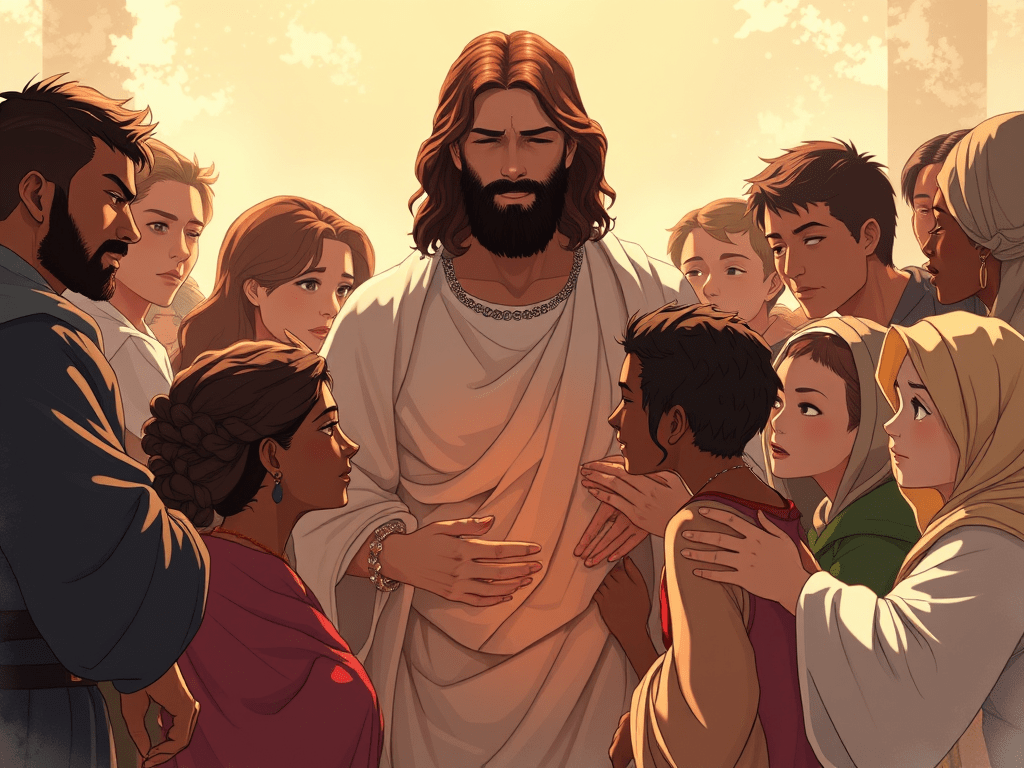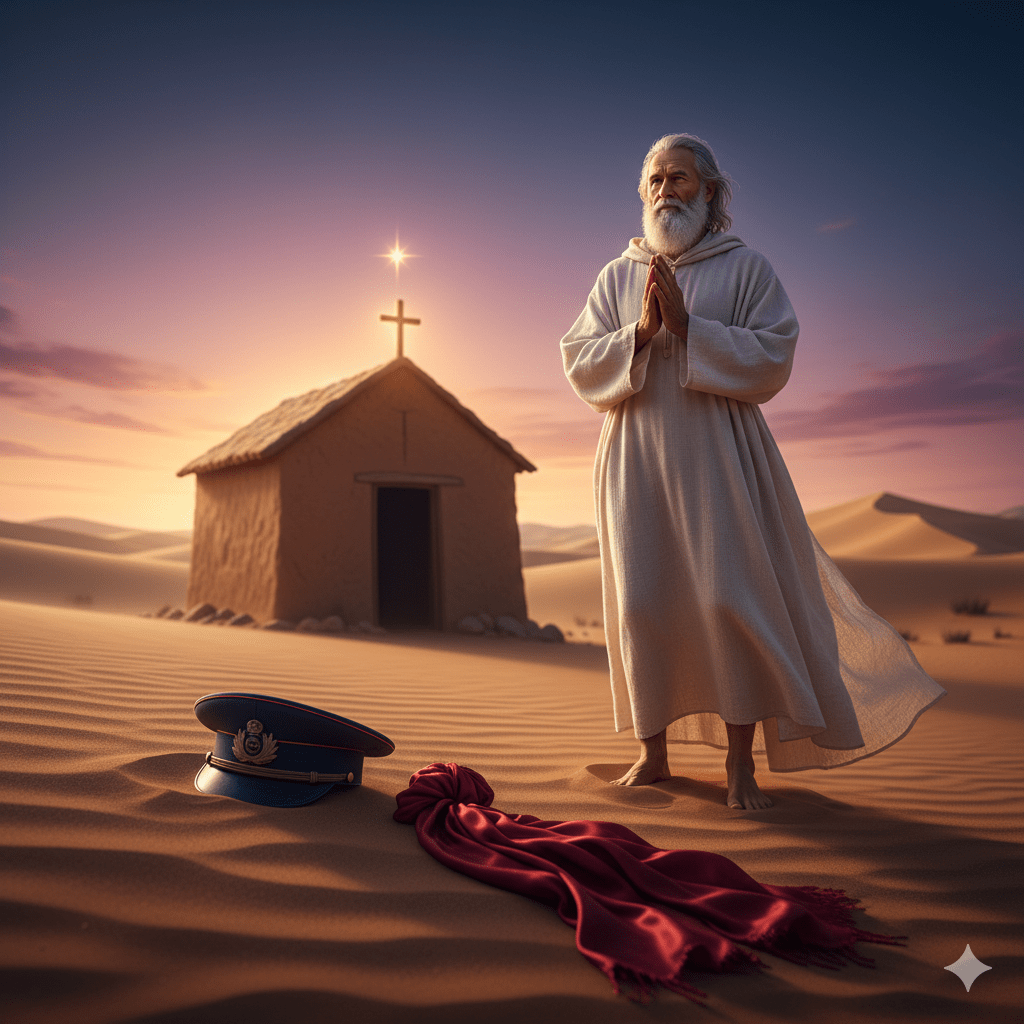
They are experiencing Christianity as joy and hope, having thus become lovers of Christ.

Category: Vocation & Calling

Personal and communal discernment, the nature of Christian purpose, priesthood, and consecrated life.

  • The Holy Paradox: Why Choosing Christ Doesn’t Make You “Better”

    The Holy Paradox: Why Choosing Christ Doesn’t Make You “Better”

    Moving from the Ego’s “Us vs. Them” to the Radical Humility of the Father’s Eyes.

    The Subtle Poison of Religious Pride

    When we decide to give our lives to Christ, we cross a threshold. It feels like a victory—and in many ways, it is. But right behind that victory lurks a subtle, spiritual poison. We begin to look at the world through a lens of “us” and “them.” We start to wonder: Am I better than they are?

    The short, jarring answer is: No.

    In the economy of Grace, there is no “better.” There is only the called, the seeking, and the found.

    The Myth of the Self-Made Saint

    We like to think our “Yes” to God is a personal achievement. We treat it like a trophy we earned. But Catholic Exegesis and the history of the Saints tell a different story.

    It is God who provides the environment. It is God who provides the attitude. It is God who guides the choice. You didn’t invent the air you breathe; you simply finally decided to stop holding your breath. Even the initiative to seek Him is a grace He provided.

    Key Insight: All that is good in us comes from Him. All that is evil in us is simply that which has not yet died.

    Beyond the “Sheep and Goats” Mentality

    Our brains are wired to categorize, to judge, and to rank. But to live a life of grace is to override those biological shortcuts and adopt The Father’s Eyes.

    When we look at someone “trapped by sin” or “downtrodden,” we are seeing only the surface. We have no idea what is happening in the deep recesses of their heart. Consider these three truths:

    1. The Invisible Battle: That person may be fighting a psychological or spiritual slavery you cannot imagine.
    2. The Proximity of Grace: The “worse off” a person appears by our standards, the closer they may be to a total, explosive conversion.
    3. The Elder Brother Trap: Like the brother of the Prodigal Son, we can be “right” on the outside while being miles away from the Father’s heart on the inside.

    Suffering as Sacred Alchemy

    Transformation isn’t just about feeling good; it’s about dying to the self. St. John Paul II once wrote that there is a specific kind of suffering that “burns and consumes evil with the flame of love.” When we see someone struggling, we aren’t called to point a finger. We are called to step into the fire with them.

    Because we have been blessed with grace, we don’t have a higher status—we have a higher responsibility. We are called to suffer personally to help others overcome their shadows. This is the “Hero’s Journey” of the soul: descending into the mess of humanity to bring back the light.

    The Mirror: Fixing Our Eyes

    If you find yourself comparing your holiness to your neighbor’s, you have taken your eyes off the Prize.

    We still have enough of ourselves that needs redemption to keep us busy for several lifetimes. The goal isn’t to be “better” than the person in the pew next to you; it is to be more “dead to yourself” than you were yesterday.

    The Call to Action: Today, look at the person you are most tempted to judge. Instead of a “goat,” see a “lost sheep.” Instead of a “sinner,” see a “prodigal.” Ask for the grace to see them not as they are, but as the Father sees them.

    Developed with assistance from Gemini AI

  • The Man Who Lived a Myth (And Was Real)

    The Man Who Lived a Myth (And Was Real)

    If someone told you this story as fiction, you’d roll your eyes and say, “Come on, nobody’s life is that tidy.”

    A boy is born into one of France’s ancient noble families, bloodline reaching back to the Crusades, family motto: Jamais arrière—“Never back.”

    He loses his parents at six, inherits a fortune, and promptly becomes the most spoiled, lazy, and debauched young officer in the French cavalry: expelled from school, famous for orgies and gourmet dinners in the Algerian desert while on duty.

    At twenty-eight, something cracks open inside him. He walks into a Paris church and tells a priest, “I don’t believe in God, but teach me about Him anyway.”

    He gives everything away, joins the strictest monastery he can find, decides even that isn’t poor enough, and leaves.

    He disappears into the Sahara to live closer to the poorest of the poor (the Tuareg nomads whom his own army regards as enemies).

    He builds a tiny hermitage of mud bricks, learns their language, compiles the first real Tuareg-French dictionary while half-starving at 9,000 feet on a frozen plateau.

    He begs to be ordained a priest only so he can celebrate Mass alone in the desert, telling God, “I want to live where no one knows You, so that You are not alone there.”

    On the night of 1 December 1916, bandits come to kidnap him for ransom. A fifteen-year-old boy guarding him panics at the sound of approaching French camel troops and shoots the hermit through the head.

    He dies instantly, face in the sand, apparently a failure: no converts, no community, no one to carry on his vision.

    He is buried in a ditch.

    A century later, in 2022, the Catholic Church declares him a saint.

    Nineteen religious orders and lay communities (Little Brothers of Jesus, Little Sisters of Jesus, and many others) now live all over the world according to the rule he wrote for a brotherhood that never existed while he was alive.

    From prodigal son to desert hermit to forgotten martyr to spiritual father of thousands: his life follows the ancient hero’s journey so perfectly that it feels invented.

    Except it isn’t.

    Every detail is documented, photographed, witnessed.

    Charles de Foucauld (1858–1916) lived a legend, then died in obscurity, and only then did the legend begin to walk on its own.

    Sometimes reality is allowed to be more beautiful than myth.

    Feel free to share.

    (If you want a one-sentence version for social media:

    “Rich playboy → atheist officer → Trappist monk → Sahara hermit → murdered by a scared teenager → canonized saint whose spiritual children now circle the globe. Charles de Foucauld didn’t just live a myth. He lived the whole myth, and it was true.”)

    Further reading
    • Charles de Foucauld’s own letters and spiritual writings are collected in Charles de Foucauld: Essential Writings (Orbis Books, 1999)
    • The best single biography in English remains Jean-Jacques Antier, Charles de Foucauld (Ignatius Press)
    • Pope Francis on Charles: Gaudete et Exsultate §§66–68 (free at vatican.va)
    • Pope Leo XIV’s recent references appear in Dilexi Te (2025), §§42–45

    This reflection was shaped in conversation with Grok (xAI), December 2025.

  • Capture Your Mary Icon in 5 Minutes

    Capture Your Mary Icon in 5 Minutes

    The Glow

    Every mother cradling her child mirrors Mary with Jesus.

    One framed photo turns that moment into a living icon.


    Windows, Not Portraits

    Icons (Hodegetria, Eleusa) show love, not faces.

    Your hug already does the same.

    Soft light + real clothes = instant sacred vibe.


    4 Micro-Moves

    1. Hold close (left arm works).
    2. Gaze with love—wiggles welcome.
    3. Window light, 5 minutes max.
    4. Blue/red fabric if it feels right.

    Frame the Divine

    Print large. Simple frame.

    Hang where morning eyes land.

    Daily dopamine: “This love is holy.”


    Join the Circle

    Snap yours. Post with #MaryIconMoments. on X!

    Next post: how every culture sees “Mother + Child” as sacred.

  • Why Inner Life and Love Matter More Than Ever

    Why Inner Life and Love Matter More Than Ever

    How faith, purpose, and connection can guide you in a busy, chaotic world

    In today’s world, it can feel like everything is moving too fast. Social media, work, family responsibilities, and constant news cycles make it easy to feel overwhelmed. But what if the secret to thriving isn’t doing more, but living deeper?

    The Church has always faced this challenge. She must bring a message of hope to the world while nurturing her own inner life. And while you don’t need to be religious to take the lesson, the principle is universal: without a strong inner foundation, no mission or goal can truly succeed.

    Here’s the takeaway for modern life:

    1. Know yourself and your purpose. Just as the Church must understand her role, you need to understand yours. What drives you? What do you stand for?
    2. Faith can mean trust. You don’t have to be religious to see the value here. Faith, in a modern sense, is trust in what you know is right, and confidence in your ability to make a difference.
    3. Inner life matters. Reflection, mindfulness, and spiritual practice (whatever that looks like for you) help you stay grounded amid chaos.
    4. Balance action with depth. Doing good in the world—helping others, pursuing meaningful work—is powerful, but it’s more effective when paired with thought, reflection, and integrity.
    5. Beware of extremes. It’s easy to get caught up in outward achievement or personal ego. Both can be empty without inner depth and values to guide them.
    6. Love and connection are essential. Real growth comes when you care about others and invest in relationships. Empathy and compassion create the foundation for lasting impact.
    7. You are loved beyond measure. Whether you see it spiritually or simply as human connection, recognizing that you matter—and that your actions ripple out—gives purpose to everything you do.
    8. Your work matters, but your heart matters more. Success without integrity or care is hollow. Align your actions with values that elevate others.
    9. Small acts, big impact. Even small gestures of kindness or integrity can transform your environment, just as individual faith strengthens the Church.
    10. Hope fuels resilience. Knowing you can make a difference—even amid setbacks—keeps you moving forward, grounded in something larger than yourself.

    In short, thriving isn’t about doing everything; it’s about being rooted. Strong inner life, trust in what’s true, and a commitment to love and connection—these are what let you face today’s challenges with courage and purpose.

    Think of it this way: your life can become like a spark that lights a bigger fire, for yourself and everyone around you. Start small, start intentional, and let your inner strength guide your actions in the world.

    Ref: Pope Paul VI General Audience 25 October 1972

    With development and editing assistance from ChatGPT-5

  • Discovering Your Heroic Vocation

    Recognizing the call that sets your life on a meaningful adventure

    Introduction: The Call to Adventure

    Every life has a calling. Not every vocation leads to priesthood or consecrated life. C.S. Lewis reminds us that there are infinitely many good vocations, each as different from one another as good is from evil. Some callings are familiar: raising a family, serving the poor, leading a community, or creating art that inspires. Others are unique, waiting quietly for a person to step forward.

    In the language of the Hero’s Journey, the first step of any adventure is the call. It may come as restlessness, a sense of purpose, or an invitation to serve. Recognizing this call is the beginning of a life fully aligned with God and with your gifts.


    The Heroic Vocational Questions

    To help discern your calling, consider these reflective questions. They are not a checklist, but a framework for discovery:

    1. Where do I feel most alive when serving or creating?
    2. What challenges stir courage in me rather than fear?
    3. Which relationships or mentors draw out the best in me?
    4. What activity makes me lose track of time while benefiting others?
    5. What do I keep returning to, even when it’s difficult or uncomfortable?
    6. How would I want my life to be remembered if I gave it fully to this path?
    7. What sacrifice would I be willing to make for the good that matters most to me?
    8. How does this calling connect with the greater good, the community, or God’s plan?

    These questions guide a person toward self-knowledge, courage, and clarity—the essential tools for responding to any vocation.


    Reflection and Discernment

    Answering these questions requires honest reflection, prayer, and openness to God’s guidance. It may take weeks or months to see patterns or clarity emerge. Journaling, talking with a trusted mentor, or spending time in prayerful solitude can help you hear the call more clearly.

    Remember: vocation is a process, not a single answer. Your understanding of your calling may grow or shift over time. The key is to remain attentive to the stirrings in your heart and to align your life with God’s will.


    Practical Next Steps

    Once you have a sense of your calling, take practical steps to test and nurture it:

    • Volunteer or intern in areas related to your perceived vocation.
    • Seek out mentors or communities that live out what you feel drawn to.
    • Learn actively: read, train, or practice skills that support your calling.
    • Experiment with small projects or commitments to see how they resonate.

    These steps allow your calling to reveal itself in action, confirming whether it truly aligns with your gifts and God’s plan.


    Conclusion

    Every vocation is heroic in its own way. Whether it is priesthood, marriage, art, leadership, or service, answering your call is stepping into a life of purpose, courage, and joy.

    Start by paying attention to the stirrings in your heart. Ask the reflective questions, test your path, and trust God’s guidance. Your heroic journey begins with the first step: saying yes to the call.

    Developed with assistance from ChatGPT-5

  • From christian to Christian: The Heart of Vocations

    Vocations start with knowing Christ — the decisive question every Catholic must face

    Introduction

    In our previous blogs, we examined priestly vocations first through statistics, then through seven questions from Catholic to consecrated vocation. But even those questions assume something deeper: a man must already know Christ to respond faithfully. Without that encounter, the questions remain unanswered, the call unnoticed.

    This is where Cardinal Joseph Ratzinger (Pope Benedict XVI) offers a decisive lens for understanding vocations and Christian life itself. He asks:

    Have you experienced an event or person which gives life a new horizon, and a decisive direction? Do you experience it as joy and hope? Are you inwardly seized by Christianity, and have you become a lover of Christ?

    This is the question behind all vocations. Many Catholic men do not pursue the priesthood, not because of celibacy or rules, but because they have never fully experienced Christ in this way.


    The Core Reality

    A vocation is not primarily about a career path, a calling to serve a group, or a set of obligations. It is about responding to a personal encounter with Christ.

    • If a man has not experienced this decisive horizon in his life, celibacy will always seem like an obstacle.
    • If a man does not trust God with his life, obedience to a religious community will feel impossible.
    • If a man does not recognize the presence of Christ in others, service will seem burdensome.

    In other words, the foundation of all vocations is being seized by Christ Himself. All the statistical analyses, discernment questions, and organizational structures build on this first encounter. Without it, the rest is form without life.


    Creating Environments for Encounter

    This insight also shows what the Church can do to support vocations: create spaces and experiences where people can meet Christ personally. This is not just about instruction, programs, or prayer for vocations — it is about real-life encounters, mentorship, and communities where faith comes alive.

    As I have often reflected: when I pray for more workers in the harvest, God often shows me what I can do to move things forward. We cannot simply hope for miracles; we can build environments that foster encounter, trust, and spiritual growth.


    Conclusion

    The question for vocations — and for Christian living — is not primarily about celibacy, obedience, or even statistics. It is about Christ taking hold of a person’s life.

    Without that encounter, no numbers, programs, or rules will generate vocations. With it, even one man saying “yes” can change countless lives.

    Vocations begin at the heart, and the heart begins with Christ.

    Developed with assistance from ChatGPT-5

  • Seven Questions from Catholic to Consecrated Vocation

    From possibility to discernment — a practical guide for those considering priesthood or consecrated life

    Introduction: From Coin Toss to Questions

    In our last reflection, we looked at priestly vocations through the lens of statistics. With one diocesan priest for every 3,000 Catholic men, vocations today can seem almost miraculous — like flipping twelve coins and getting heads every time.

    But what if we replaced those twelve coins with seven questions? Questions that, if answered honestly and faithfully, could help a man discern whether he is called to a consecrated vocation. This approach moves from mere probability to spiritual discernment, from abstract numbers to personal reflection.


    The Seven Questions from Catholic to Consecrated Vocation

    1. Grace

    • Are you being honest with yourself?
    • Are you committed to putting God’s will first?
    • Do you trust God’s providence for your future?
    • Are you aware that those who give all for Christ will bear much fruit and be rewarded with joy and peace?

    2. Vocation Fit

    • Is there an organization or charism that complements your perceived vocation or interests?
    • Could you see yourself participating fully and happily in that community?

    3. Trust

    • Are you comfortable that the group is faithful to Church teaching, transparent, and well-governed?
    • Can you entrust your future obedience to this group with confidence?

    4. Celibacy

    • Are you willing to accept celibacy as a sign of trust and commitment to God?
    • Do you recognize the benefits of consecrated celibacy over marriage within this vocation?
    • Could your vocation be fulfilled outside a celibate life?
    • Would marriage prevent you from living this vocation fully?
    • Do you believe that, by God’s grace, a person can sacrifice personal benefit for God’s plan?

    5. Service

    • Do you understand the importance of the presence of consecrated religious for the well-being of families, the Church, and the salvation of souls?
    • Is the vocational need significant enough to justify the sacrifices required?
    • Are you aware that Christ is present in each person you will serve?

    6. Compatibility

    • Will consecration to this group allow you to achieve your broader vocation?
    • Will the group allow flexibility as your vocation evolves with your faith?

    7. Timing

    • Do you believe God is calling you now, or might the call come at a later time?

    Reflection

    Most of the stumbling blocks I’ve observed are not about rules or regulations, but trust in God. Many men hesitate to surrender personal freedom — especially sexuality — because they do not truly know God or experience His providence in their lives.

    In reality, this is the same reason many do not fully live as Christians in the first place. Cardinal Ratzinger phrased it poignantly:

    Have you experienced an event or person which gives life a new horizon, and a decisive direction? Do you experience it as joy and hope? Are you inwardly seized by Christianity, and have you become a lover of Christ?

    Vocations grow from a foundation of encounter with Christ. Without that, no set of questions, rules, or statistics can bear fruit.


    Conclusion

    By replacing the coin tosses with these seven questions, we can move from seeing vocations as statistical miracles to seeing them as discernible possibilities. But the first and most important step is always the same: knowing Christ and trusting Him with your life.

    Developed with assistance from ChatGPT-5

  • Vocations by the Numbers:

    Why Priestly Life Looks Like a Miracle

    About fifteen years ago, I began to investigate the state of vocations in the Church. What I found was sobering. At that time, in my own diocese, there was about one diocesan priest for every 3,000 Catholic men.

    To an engineer like me, those numbers were staggering. If something happens only once in 3,000 tries, statisticians don’t call it normal — they call it an anomaly, an outlier, or even an error. The positive spin we use in the Church is “miracle.”

    But think of what that means: if vocations really were chosen at random, it would take the equivalent of tossing a coin twelve times and having it come up heads every time before a man became a priest. If that actually happened, most of us would laugh, say it was a bum toss, and start over.


    What if Priestly Vocations Were Realistic?

    Just for the sake of discussion, I asked myself: what if one priestly vocation came from every 100 men? That’s still not a majority, but it’s at least in the realm of possibility.

    In statistical terms, that would be like tossing seven coins and having them all land heads — odds of about 1 in 128. Far more likely than 1 in 3,000.

    If we applied this across a parish or diocese, the numbers look very different:

    • Assume people live about 83 years, or roughly 1,000 months.
    • That means people are born and die at about the same rate: one born, one die, per 1,000 people each month.
    • If a priest’s ministry spans half his life, then at any given time there whould be 1 priest for every 200 men.
    • With half the Church being women, that would mean 1 priest for every 400 Catholics.
    • There would be every year 1 new priest for every 16,000 Catholics.

    Take a parish of 2,000 families — say 5,2000 parishioners. By this ratio, we should have 12 to 13 priests in that one parish. And it would produce roughly 1 new priest vocation every 3. years. (16,000 / 5,000)
    Take my diocese, with about 1.6 million Catholics. By this measure, we should have 4,000 priests. And we should have about 100 men becoming new priests every year.

    The reality, of course, is nowhere near that.


    A Sobering Comparison

    We treat marriage very differently. Even with falling rates, still around half of people marry. When it drops, we call it a tragedy.

    But imagine if marriage happened at the same rate as priesthood — once in 3,000. Would we even call it a “vocation,” or just a statistical accident?

    That is the dilemma with vocations today. By the numbers, the priesthood no longer looks like a reasonable life option for Catholic men. It looks like winning the lottery.

    And yet, the Church depends on it.


    To be continued: In the next reflection, I’ll share how I asked myself: what if we replaced the seven coin tosses with seven questions? If a man could answer “yes” to all seven, maybe he should seriously consider a consecrated vocation.

  • 8 Questions on the Road to Christ

    From seeking the truth to being seized by Christ

    On my journey of reflection, I came across a simple yet profound set of questions often used to guide a person from unbelief to faith. These eight steps move from basic honesty with oneself to the heart of Christianity:

    1. Are you being honest with yourself?
    2. Do you seek the truth?
    3. Is there some kind of God? (atheism vs. theism) — 5/6 of the world believes in some kind of god.
    4. Is it one God or many? (monotheism vs. polytheism) — about half of the world believes in one God.
    5. Is all God, or is He present but separate? (pantheism vs. Creator).
    6. Is God morally good, or is He indifferent to good and evil?
    7. Did God simply wind up the world, or is He present in history?
    8. Is God one person or three? Is Jesus His Son? One-third of the world is Christian.

    Each of these questions acts as a step on the “road to Christ.” They push us to examine what we believe, and why. Yet, even after answering all eight in favor of Christianity, there is still a deeper question that cannot be ignored.

    Joseph Cardinal Ratzinger (later Pope Benedict XVI) expressed it this way:

    Have you experienced an event or person which gives life a new horizon, and a decisive direction? Do you experience it as joy and hope? Are you inwardly seized by Christianity, and have you become a lover of Christ?

    That final question makes all the difference. It cuts to the heart: how many who call themselves “christian” (with a small c) have truly become Christian (with a capital C) in this deeper sense?

    The journey is not only about intellectual assent but about encounter, transformation, and love. Without that, the “road to Christ” remains unfinished.