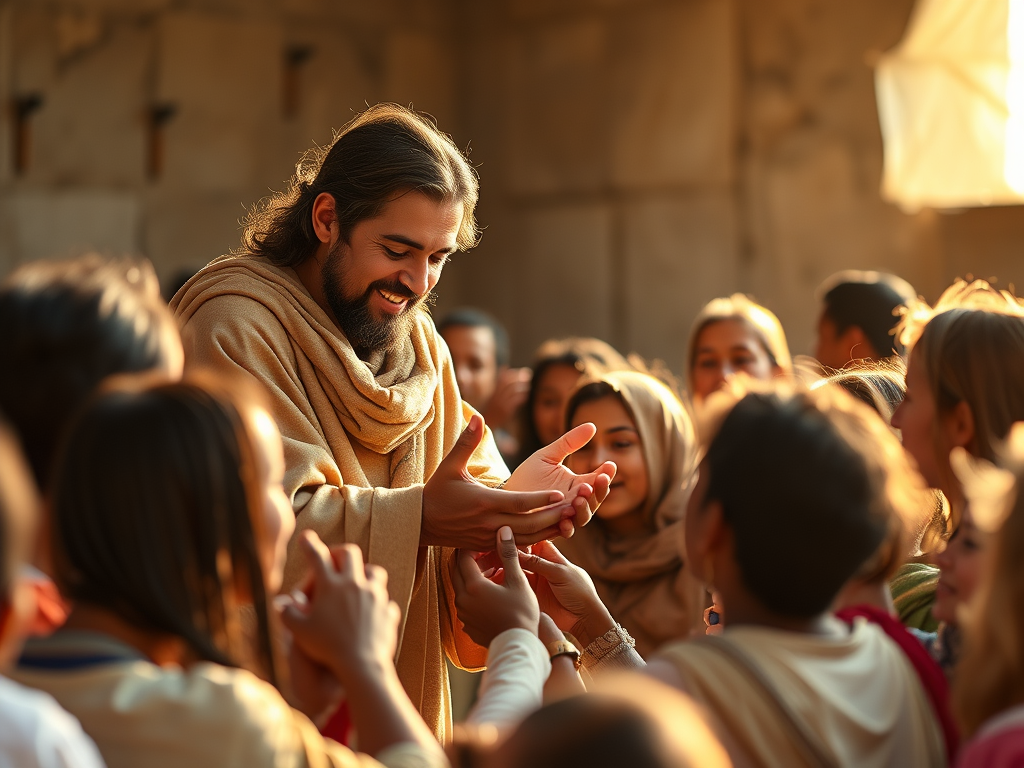
They are experiencing Christianity as joy and hope, having thus become lovers of Christ.

Category: Virtue & Effort

  • One Bead, Three Charity Bombs: Ignite the Third Hail Mary

    One Bead, Three Charity Bombs: Ignite the Third Hail Mary

    You’re at the start of the Rosary.

    First bead → Faith (blank map → step; Host → Him; hard thing → anyway).

    Second bead → Hope (pain → temp; failure → fuel; dead-end → done).

    Third bead rolls in:

    “Hail Mary… increase in us charity…”

    …and your heart quietly files for bankruptcy.

    Not anymore.

    Here are three 30-second love detonators to drop before or during that final Hail Mary.

    Pick one. Pick all. Just make it explode.

    Detonator #1 – WILL THEIR HEAVEN, NOT MY COMFORT

    Charity isn’t warm fuzzies. It’s ruthless goodwill.

    Your move:

    Before the prayer, name the person who makes your skin crawl.

    Picture Jesus dying for THEM too.

    Pray: “I want heaven for them—even if they never say sorry.”

    Detonator #2 – DIE A LITTLE, RIGHT NOW

    Real love always kills part of you so someone else can live more.

    Your move:

    During the Hail Mary, pick one concrete discomfort today (skip the reply, take the blame, send the money, shut up).

    Offer it for that person.

    Whisper: “This tiny death is my love letter.”

    Detonator #3 – BORROW MARY’S HEART (SHE’S LOANING)

    She watched her Son butchered and her heart didn’t shrink—it stretched.

    Your move:

    While the words roll, beg: “Mom, lend me your Immaculate Heart for 30 seconds.”

    Feel it expand.

    Then go love with hers because yours is broke.

    TL;DR (because brain)

    Want their heaven > want my comfort.

    Die small today.

    Borrow Mary’s heart.

    Screenshot this.

    Next time that third bead hits your fingers, drop the love bomb.

    Series complete: Faith ✓ Hope ✓ Love ✓

    Stay dangerous, stay Catholic.

  • Charity Is a Supernatural Virtue

    Today when people hear the word “charity,” they often think of donations, fundraisers, or volunteer work. These are good things, but they only scratch the surface of what charity really is.

    In Christian teaching, charity—caritas—is not simply kindness or generosity. It is a supernatural virtue. Saint Paul places it above even faith and hope:

    “Now abideth faith, hope, charity, these three; but the greatest of these is charity.” (1 Cor 13:13)

    Why is charity the greatest? Because it is not something we generate on our own. It is God’s own love, poured into our hearts by grace, enabling us to love as He loves.

    The Natural Foundation

    Even without revelation, human beings are inclined to goodwill toward others. Aristotle called this eunoia—acting with the good of others, and the common good, in mind. This is a natural virtue, and it is real. We can see it in acts of kindness, civic friendship, and common concern for neighbors and strangers alike.

    Yet, natural virtue is fragile. It can be easily distorted by pride, fear, or selfishness.

    Grace Perfects Nature

    Christ calls us beyond this natural level:

    “Be ye perfect, even as your heavenly Father is perfect.” (Mt 5:48)

    On our own, we cannot attain such perfection. But grace builds on nature and lifts it higher. When God infuses charity into the soul, it transforms natural goodwill into supernatural love. We are empowered to love not only as we would want to be loved, but as Christ Himself loves—freely, fully, and sacrificially.

    The Freedom of Love

    Aristotle observed that no act is virtuous unless it is voluntary. Forced “charity” is no charity at all. The same holds true in the supernatural order: Christian love must be freely chosen. It is a gift of grace, but also a response of the heart.

    That is why true charity is always personal. It is not only about writing a check or supporting a program. It is about opening the heart to God and to others—loving in freedom, with the very love of Christ that has first been given to us.

    Edited with assistance of ChatGPT-5

  • Are You Truly Awake?

    Are You Truly Awake?

    Why Faith Needs Daily Self-Denial

    “Now it is high time to awake out of sleep.” — Romans 13:11

    Many of us go through life half-awake—spiritually asleep without realizing it. We may hear the truth, see God’s work in the world, even attend church—but we live as if it’s all just background noise. We mix reality with imagination, and even brief awakenings fade quickly.

    In earlier times, faith was tested by persecution. Early Christians showed courage and joy in suffering because truth demanded sacrifice. Today, faith is easier to display. Religion is respected, even fashionable. Outward appearances of devotion—family prayer, Bible reading, church attendance—are common.

    But here’s the danger: it’s easy to follow God for the wrong reasons—social approval, habit, convenience—rather than love. True faith often goes against the crowd. The Gospel challenges human nature. Real discipleship isn’t about looking good in public; it’s about living rightly when no one is watching.

    So how do we know our faith is real? Jesus gives the answer: self-denial. “If anyone would come after Me, let him deny himself, take up his cross, and follow Me.” (Mark 8:34) Faith is tested not in heroic moments but in daily choices—small sacrifices, resisting laziness, controlling anger, yielding in minor matters, or doing what’s inconvenient for God’s sake.

    Look at your weakest points—your temptations, habits, and hidden struggles. That’s where your cross is. That’s where your faith is proven. Small, consistent acts of self-denial—fasting, discipline, service—train your heart and strengthen your will for greater challenges.

    Even the best of us fail. That’s why we need constant repentance, Christ’s forgiveness, and the guidance of the Holy Spirit. But if we take obedience seriously, faith becomes alive. We awaken fully, living each day for God, confident in His grace and presence.

    Wake up. Take up your cross daily. Live as if your faith truly matters—and watch your life transform.

    Reference:

    Newman, John Henry. Sermon 5: Self-Denial the Test of Religious Earnestness. Newman Reader — Works of John Henry Newman. National Institute for Newman Studies, 2007.

    Developed with assistance from ChatGPT

  • Praying and Doing

    The Battle We’re Called to Fight

    “You can’t just pray and do nothing. And you can’t just do and forget to pray. Victory requires both.”

    This Sunday, the deacon shared a story that stuck with me. A soldier, preparing for battle, asked a priest:

    “If God already knows the outcome, why do we need to pray? If He wants us to win, we’ll win. And if He wants us to lose, we’ll lose.”

    The priest thought for a moment and asked in return:

    “If the outcome is already determined, why are you putting on your armor and picking up your sword?”

    That hit home.

    Just like the soldier needs armor and a sword to stand a chance in battle, we need the armor of God and the power of prayer to face the spiritual battles in our lives. But it’s not one or the other—it’s both.

    Too often, we fall into one of two traps:

    • We pray, but we don’t act.
    • Or we act, but we forget to pray.

    But true Christian life—true victory—requires both faith and action. We must pray as if everything depends on God… and then go out and live, serve, speak, and love as if everything depends on us.


    A Faith That Moves

    This reminds me of James 2:16:

    “If one of you says to them, ‘Go in peace; keep warm and well fed,’ but does nothing about their physical needs, what good is it?”

    Prayer should move us to action. It draws us closer to God and closer to those He puts in our lives. When we pray for someone, it’s not just words. It’s a moment of deep connection that should stir us to respond.


    The Armor of God Is for Battle

    We don’t wear spiritual armor to sit in the pew and wait for God to fix things. We wear it because we are in a battle.

    • A battle for truth
    • A battle for love
    • A battle for souls
    • A battle for the broken

    Prayer prepares us. But we must still show up—with courage, sacrifice, and love.


    Summary: Pray. Then Go.

    The message is simple:

    • Don’t pray without doing.
    • Don’t do without praying.
    • God doesn’t need our armor or action—but He chooses to work through them.

    When we pray with faith and act with love, we become part of God’s answer to the world’s cries.


    ✍️ Reflect & Respond:

    • Who are you praying for right now?
    • Is there a way God might be asking you to take action for them?
    • Are there battles in your life where you’ve been waiting—but not fighting?

    🔔 Like what you’re reading?

    Subscribe, share, or comment below—and join the journey of living fully alive in Christ.

    Written with assistance from ChatGPT

  • False Mercy: When Help Hurts

    Why some forms of charity can do more harm than good — and how to offer real support instead

    We all want to help. We see someone struggling, and we reach for kindness. We give money, offer shelter, send the care package.

    But sometimes, the very thing we do to help… ends up holding someone back.

    That’s what we mean by false mercy.


    What Is False Mercy?

    False mercy looks like kindness.
    It feels like compassion.
    But in reality, it removes the opportunity for growth.

    It’s the kind of help that:

    • Solves a problem for someone instead of with them
    • Removes consequences that are meant to teach
    • Replaces responsibility with rescue
    • Makes us feel good, but leaves the other person stuck

    When Help Becomes Harm

    Imagine this:

    A young man is floundering. He can’t hold a job. He avoids responsibility.
    His parents step in to pay rent. Then groceries. Then car insurance.

    Now he has no pressure to grow, no urgency to change, and no sense of agency.

    What looked like love became a trap.
    What felt like mercy became a cage.

    This isn’t rare — it’s happening all around us.
    In families. In schools. In churches. In governments.

    And it often starts with good intentions.


    Charity Without Challenge

    Indiscriminate charity — the kind that gives with no structure, no expectation, and no relationship — can do more than waste resources.

    It can:

    • Block transformation
    • Reduce dignity
    • Delay calling
    • Send the message: “You can’t do this on your own.”

    That’s not love.
    That’s quiet sabotage.


    The Call Must Be Answered — Personally

    In every story worth telling, the hero has to choose.

    • The Prodigal Son had to return on his own feet
    • Moses had to leave the wilderness and face Pharaoh
    • You had to go back to school and finish your degree

    The turning point always requires agency.

    And when we step in too hard, too soon, or too often…
    We may be keeping someone from their turning point.


    So How Do We Truly Help?

    We don’t need less compassion — we need wiser compassion.

    Here’s what that can look like:

    • Support with accountability
      → “I believe in you. What are you going to do next?”
    • Help that invites responsibility
      → “I’ll match your effort — not replace it.”
    • Challenge as a form of care
      → “You’re capable of more. I won’t take that from you.”
    • Trust in someone’s potential
      → “I won’t rescue you because I respect you too much.”

    Real Mercy Looks Different

    It doesn’t always feel soft.
    It doesn’t always feel “nice.”

    But it’s the kind of love that leads to real growth, not quiet dependency.

    Because real mercy doesn’t remove the fire.
    It walks beside someone through it — and trusts that they will rise.

  • 🎺 Trouble in River City

    Why America Needs a Hero’s Journey, Not Just a Marching Band

    How The Music Man, myth, and modern comfort expose our spiritual apathy—and what we can do about it

    What if America’s crisis isn’t scarcity—but too much abundance with too little meaning?

    There’s an old quote—often attributed to Alexander Tyler—that outlines the cycle of civilizations. It begins in bondage, rises through faith, courage, and liberty, peaks in abundance, and then falls through complacency, apathy, and dependence, finally returning to bondage. If that cycle rings true, we have to ask: Where is America right now?

    Most signs point to somewhere between abundance → complacency → apathy. And that’s why so few seem interested in growing in faith, taking on responsibility, or answering the call of purpose. We’re not hungry for transformation—because we don’t feel the need.

    But here’s the problem: bondage doesn’t always look like chains.

    Sometimes, it looks like endless entertainment. Like ultra-comfortable lives that make us restless, numb, and detached. In other words, like a pool hall in The Music Man.


    🎱 “Ya got trouble… right here in River City!”

    In Meredith Willson’s The Music Man, Professor Harold Hill warns the town of River City that their boys are sliding into ruin—through the game of pool. Of course, he’s a con man, using fear to sell band instruments. But there’s an ironic twist:

    He’s right.

    The pool hall becomes a symbol of a deeper drift. The boys aren’t just wasting time—they’re losing direction, virtue, and vitality. Hill’s proposal—form a boys’ band—is more than a scam. It accidentally becomes a call to purpose, discipline, and beauty.

    That’s myth in action. Even flawed messengers can stir people toward the Hero’s Journey.


    🧭 Apathy is a disguised form of bondage

    In myth, bondage is always the starting point. Think of Israel in Egypt, Odysseus stranded far from Ithaca, or Luke Skywalker stuck on a desert farm. There’s always something wrong, and the Hero must see it before he can leave it.

    But what if the enemy isn’t external?
    What if it’s spiritual numbness?
    What if our “Egypt” is a dopamine-soaked feed full of shallow pleasures?

    In that case, we’re in bondage—and we don’t even know it.

    That’s why abundance alone won’t save us. It’s not enough to be comfortable—we need to be called. Until people realize they’re stuck, they won’t rise. And that’s where myth, music, and moral imagination can crack open a soul.


    🎺 The Band Must Play

    In the end, The Music Man is a strange but beautiful parable.

    • The boys need something higher to aim at.
    • The town needs to remember what virtue looks like.
    • And even the con man finds redemption when he stops running and chooses to care.

    Today, we don’t need another hustle. We need a band—a higher aim, a moral discipline, and a song to march toward.

    The Hero’s Journey always begins in bondage. But only if we see it. Only if we hear the call.

    So let the music start.

    Written in collaboration with ChatGPT (OpenAI, 2025)

  • Why Civilizations Collapse:

    What Myths Teach Us About the Fall of Democracies

    The Tytler Cycle isn’t just political theory—it’s the story of the soul, told in every great myth.

    “A democracy cannot exist as a permanent form of government. It can only exist until the voters discover that they can vote themselves largesse from the public treasury…”
    —Attributed to Professor Alexander Tytler (1787)

    You’ve probably come across some version of the so-called Tytler Cycle. It claims that all democracies follow a predictable pattern: from freedom to abundance, to complacency, to dependence, and finally back into bondage.

    For some, it’s just a cynical take on politics. But looked at through the lens of myth and archetype, it becomes something much more profound:

    It’s not just the fall of a government.
    It’s the rise and fall of the soul.

    The Cycle Through Mythic Eyes

    Let’s walk through the Tytler Cycle as a moral and spiritual journey—one that appears in countless myths and scriptures across time.


    🔗 Bondage → Spiritual Faith
    This is the beginning of the hero’s story. In myth, this is Egypt before the Exodus, the desert before the call, the dungeon before the sword is drawn. It’s when people suffer under something oppressive—and realize they can’t save themselves.

    Mythic truth: Suffering awakens the soul to something higher.


    🔥 Spiritual Faith → Courage
    Faith gives birth to boldness. This is Moses facing Pharaoh. It’s Odysseus setting sail. It’s the moment someone stops asking “Why is this happening to me?” and starts asking “What must I do?”

    Mythic truth: Faith creates purpose. Purpose demands courage.


    🗽 Courage → Liberty
    Through sacrifice, real freedom is earned. The tyrant falls, the dragon dies, the sea is crossed. Liberty here is not comfort—it’s earned order. It is hard-won.

    Mythic truth: Freedom without cost is not freedom.


    💰 Liberty → Abundance
    With order in place, prosperity grows. Cities rise. Systems thrive. The people enjoy peace. But this stage is where many heroes (and nations) fall asleep.

    Mythic truth: Abundance is not the goal—it’s the test.


    😴 Abundance → Complacency → Apathy
    Now the real decay begins. Warriors become managers. Builders become consumers. The sacred becomes boring. The heroic is replaced with the comfortable.

    Mythic truth: Without struggle, the soul forgets its mission.


    🧷 Apathy → Dependence → Bondage
    In the final stages, people no longer protect what they’ve inherited. They vote for comfort over courage, safety over freedom. The tyrant returns—this time invited.

    Mythic truth: The abandonment of virtue always leads back to slavery.


    The Eternal Message

    This isn’t just about nations. It’s about you.

    We all live through this cycle in miniature.
    When we stop striving, stop sacrificing, and stop remembering the cost of freedom—we fall.
    When we trade meaning for comfort, truth for ease, or courage for conformity—we begin the long slide back into bondage.

    But here’s the good news, written into every myth:The cycle is not inevitable.
    It can be broken—if the hero awakens.

    Developed with assistance of ChatGPT

  •  Is Procrastination Laziness or a Trauma Response?

    Understanding the Path to the Adversary

    You’ve probably heard it said—or told yourself—that procrastination is a sign of laziness. But what if it’s not? What if it’s something much deeper, more human, and more dangerous?

    A viral quote puts it like this:

    “Procrastination is not laziness. It is a trauma response.”

    At first glance, that may sound dramatic. But modern psychology—and ancient wisdom—both affirm the same truth: avoidance often hides fear, and fear often hides trauma.


    Trauma and the Freeze Response

    Trauma doesn’t always look like panic or breakdown. Sometimes it looks like numbness. Stillness. Delay.

    When our nervous system perceives danger, we might fight or flee—but we also might freeze. That’s where procrastination often lives. Not in comfort, but in a kind of paralysis. We avoid the task, not because we’re unmotivated, but because the task feels threatening. Failing might prove we’re unworthy. Succeeding might expose us to expectations we’re afraid to carry.

    So we wait. And wait. And beat ourselves up for waiting.


    Peterson: The Seed of the Adversary is Laziness

    Jordan Peterson often frames this “laziness” in moral and spiritual terms. In Maps of Meaning, he explores how small acts of avoidance can evolve into resentment, and then into outright destruction.

    The person who refuses responsibility becomes bitter. The bitter become vengeful. And eventually, the vengeful become adversaries—not just of others, but of Being itself.

    So what begins as “laziness” is often a refusal to confront suffering. But beneath that refusal is usually pain—unprocessed, unresolved, and growing in the dark.


    The Progression: From Trauma to the Adversary

    Here’s how it unfolds:

    1. Trauma — A betrayal, a failure, or a moment of chaos shakes our sense of order.
    2. Fear — We begin to dread further pain, judgment, or exposure.
    3. Avoidance — Procrastination kicks in, disguised as laziness.
    4. Stagnation — Inaction compounds. Life doesn’t move. Self-contempt grows.
    5. Resentment — We start blaming ourselves, then others, then the world.
    6. Formation of the Adversary — We harden into a posture of defiance or decay, no longer seeking healing—only power, revenge, or numbness.

    This is how the adversary is born: not in grand acts of evil, but in a thousand quiet refusals to face suffering with courage.


    The Hero Responds Differently

    The difference between the hero and the adversary is not that one suffers and the other doesn’t. They both suffer. The difference is what they choose to do with it.

    • The adversary avoids, freezes, and resents.
    • The hero confronts, moves forward, and transforms.

    To break the cycle of procrastination, we must stop condemning ourselves as lazy and start asking deeper questions. Where does this fear come from? What pain am I avoiding? What burden am I afraid to lift?


    Redeeming the Pattern

    If procrastination is a trauma response, then the solution isn’t punishment—it’s healing.

    That healing begins with:

    • Understanding that your inaction may be protective, not passive.
    • Compassion toward yourself as someone doing their best with past pain.
    • Courage to take one small step into the unknown—despite fear.

    You are not lazy. You are a soul that’s been wounded. But you don’t have to become the adversary. You can become the hero instead.

    Developed with assistance from ChatGPT

  • Pope Paul VI Laments Lack of Heroism in our Culture and Our Church

    “We cannot detach ourselves from the dominant thought in the Church during this period of preparation for Easter. It is the thought of penitence, which contrasts with our habits and mentality. We direct all our intentions and efforts toward removing from our lives anything that causes us suffering, pain, discomfort, or inconvenience; we are oriented toward a continuous search for comfort, enjoyment, and amusement; we want to be surrounded by well-being, ease, good health, and luck; everything we do is to reduce effort and fatigue; in the end, we are people who want to enjoy life: a good meal, a good bed, a pleasant walk, an enjoyable show, a good salary… this is the ideal. Hedonism is the common philosophy, the dream of existence for many of our contemporaries. We want everything to be easy, soft, hygienic, rational, perfect around us. Why penitence? Is there really a need to sadden the soul with such a thought? Where does such an unpleasant call come from? Is it not an offense to our modern conception of man?

    This apologetic monologue on “comfort,” as an expression of the ideal way to spend the years of our life, could go on at length, documenting excellent reasoning and even better experiences; but at a certain point, it must stop in the face of no less valid objections: do we want to make our life soft, mediocre? Idle and weak, without the patience and effort of great virtues? Where is the striving, where is the heroism that gives man his true and best stature? Where is the mastery over our laziness and inherent cowardice? And then: how can we arm our spirit in the face of suffering and misfortunes, which life does not spare us? And how can we give love its true and highest measure, which is the gift of self sacrifice? And is not sacrifice, this attitude, by its nature, classified in the great book of penitence?”

    A note should be made about the mention about the true and highest measure of love being self-sacrifice: In reality, the highest measure of love should be selfless sacrifice. That would be totally not taking self into account when loving. In fact, maybe the word sacrifice is already too self-facing.

    GA PPVI 1MAR1972W Penitence: Obligatory and Possible for All