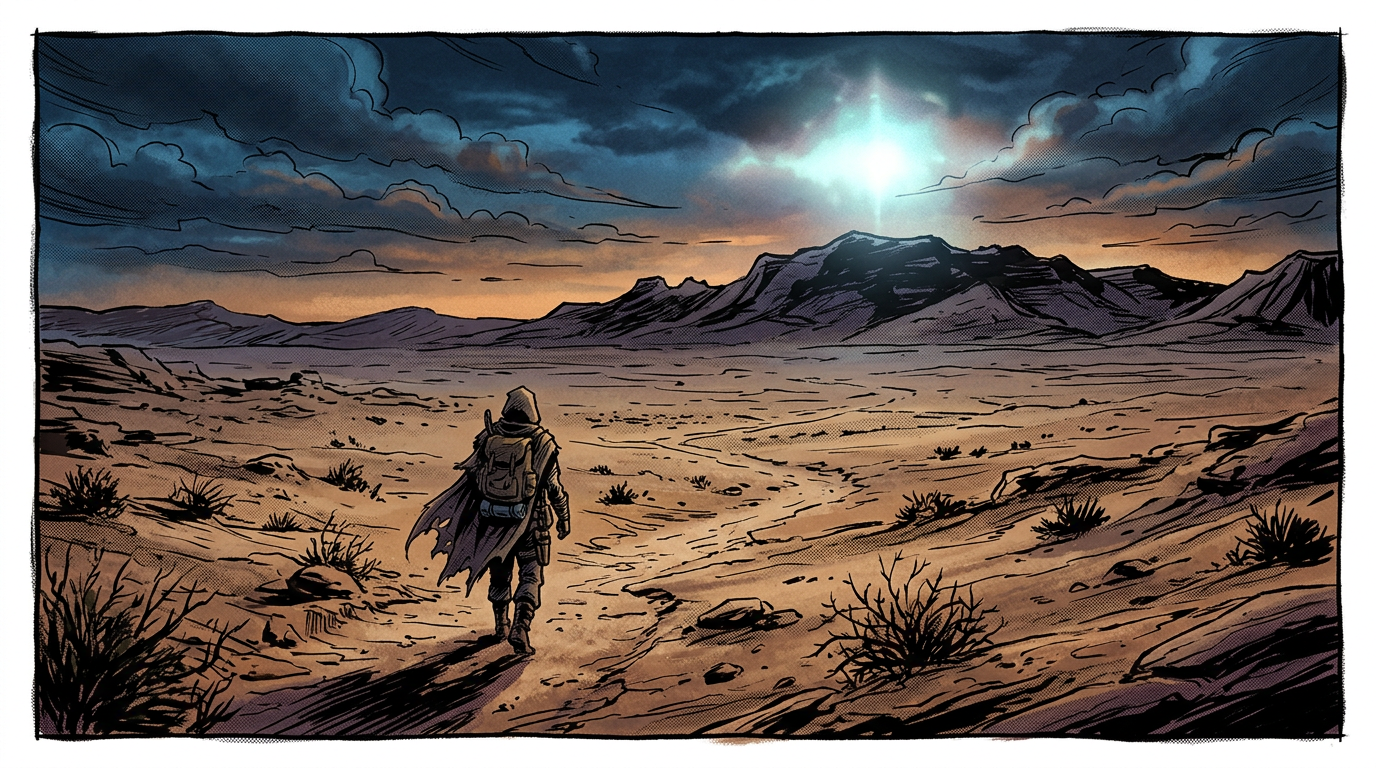
They are experiencing Christianity as joy and hope, having thus become lovers of Christ.

Category: Scripture & Interpretation

  • Groaning for New Creation:

    Groaning for New Creation:

    What Romans 8 Teaches Us About Suffering and Heroism

    A powerful passage from Romans 8 offers a vivid picture of how God brings new life into the world. In it, St. Paul describes creation itself as being in labor—groaning and travailing in pain as it waits for something better to be born.

    Quick Look at the Passage

    Paul writes that “the creation waits with eager longing for the revealing of the sons of God” (Romans 8:19). Right now, the world is broken and full of suffering. It’s like a mother in childbirth: intense, uncomfortable, and full of groans.

    Creation isn’t passively waiting. It’s actively straining toward the moment when God’s people—mature, adopted sons and daughters conformed to Christ—will be fully revealed in glory.

    Believers aren’t spectators either. We “groan inwardly” too (v. 23) as we share in Christ’s sufferings now, so we can share in His glory later. The Christian life, Paul says, is one of co-laboring with God. New creation doesn’t just happen to us. It comes through us—through ordinary people who say yes to responsibility, die to self, and keep going when it hurts.

    The childbirth image is perfect because it’s honest: there is no birth without labor. Comfort that avoids all pain short-circuits the process. Real fruitfulness requires travail.

    Why This Matters for Everyday Heroes

    In times of cultural or personal crisis, old ways pass away and something new struggles to be born. The “heroes” who step forward aren’t the loudest or the most comfortable. They are the ones willing to embrace the groaning:

    • They accept difficulty or marginalization instead of escaping into distraction.
    • They take up responsibility when it would be easier to stay passive.
    • They practice the daily disciplines of dying to self—forgiveness, honesty, service, prayer—so that Christ’s life can come through them.

    This is the hero’s journey in biblical terms: suffering, responsibility, and then new life. Scripture links the two sides tightly. No labor, no birth.

    As one reflection put it:

    “New life does not come without labor. The heroes who step forward are those willing to embrace that suffering and responsibility, dying to self so that the new creation can be born through them.”

    A Simple Invitation

    If you’re feeling the weight of the times—the groans in your own heart or in the world around you—take heart. That discomfort may be the very sign that something good is coming. Don’t numb it or run from it. Offer it to God. Let it form you into the mature son or daughter He’s calling you to be.

    The revealing of the sons of God is worth the labor. Creation itself is counting on it.

  • Dying to Live:

    Dying to Live:

    Marginalization, the Hero’s Journey, and Becoming One with Christ

    Several weeks ago, the Sunday reading spoke of those who are alive in Christ having also died with Christ. I’ve been meditating on this ever since, and it strikes me as literally true in the deepest sense.

    Those who truly identify with Christ have gone through a death to themselves and a rebirth in the Spirit. In their own lives, they have experienced a death to the old self—often painful—followed by an inspiration, an awakening that makes them one with Christ in a real, transformative way.

    Christ died for our sins. Our own death to self is frequently the direct result of our sins, our avoidance, our need for control. In this way, we participate in “paying for our sins”—not as a way to earn salvation, but as the lived reality of union with the One who paid the full price.

    United with Christ in Death and Life

    The New Testament doesn’t present this as a metaphor to admire from a distance. It is a spiritual reality we are invited to enter:

    “I have been crucified with Christ and I no longer live, but Christ lives in me. The life I now live in the body, I live by faith in the Son of God, who loved me and gave himself for me.”
    — Galatians 2:20

    “Or don’t you know that all of us who were baptized into Christ Jesus were baptized into his death? We were therefore buried with him through baptism into death in order that, just as Christ was raised from the dead through the glory of the Father, we too may live a new life.”
    — Romans 6:3-4

    “For you died, and your life is now hidden with Christ in God.”
    — Colossians 3:3

    “Therefore, if anyone is in Christ, the new creation has come: The old has gone, the new is here!”
    — 2 Corinthians 5:17

    We are called to count ourselves “dead to sin but alive to God in Christ Jesus” (Romans 6:11). This is not something we achieve by effort alone; it is something we receive by faith and live out daily.

    Marginalization: The Common Doorway

    Everyone who becomes truly one with Christ has been marginalized in some way—by society, by circumstances, or by the consequences of their own sins.

    Jesus made this abundantly clear:

    “It is not the healthy who need a doctor, but the sick. I have not come to call the righteous, but sinners to repentance.”
    — Luke 5:31-32 (see also Mark 2:17, Matthew 9:13)

    He spent His time with tax collectors, prostitutes, lepers, and outcasts—the people on the margins. The parables of the lost sheep, the lost coin, and the prodigal son all celebrate the joy in heaven over one sinner who repents.

    The ones who start life on the margins often have only one direction to go: upward, toward God. For the rest of us, the death to self usually comes—willingly through surrender or unwillingly through crisis.

    When Society Makes “Hitting Bottom” Difficult

    Our modern society, with its genuine compassion and generous safety nets, often makes it hard for anyone to actually reach the margins or fall completely off the edge. While these supports help many people in real, practical ways, they can also unintentionally prevent the kind of desperation that forces us to confront our need for God.

    Many people live comfortable, respectable lives that never quite bring them to the end of themselves. As a result, the dramatic “come to Jesus” moment that so many saints and ordinary believers describe remains elusive.

    If You Haven’t Had Your “Come to Jesus” Moment Yet

    If you’re reading this and thinking, “I don’t believe I’ve had that moment yet—what can I do?”, then you have already been stirred by grace. The very fact that you’re asking shows the Spirit is at work.

    The next step is honest self-examination: Are you satisfied with your current state? If the answer is no, then the invitation is clear—undertake the hero’s journey. Seek God with all your heart, soul, mind, and strength.

    One of the most powerful examples is the prodigal son. He had to hit rock bottom—feeding pigs, longing for their food—before he “came to his senses” and returned home. His father didn’t wait on the porch; he ran to meet him.

    Basic Training for the Journey

    While on this journey, we need practical disciplines—the “basic training” of the Christian life:

    • Prayer — to grow in humility and dependence on God.
    • Fasting or voluntary sacrifice — to help overcome our passions and disordered desires.
    • Charity (generosity toward others) — to grow in the selfless love of Christ. This means actively looking for the good of the other and taking our eyes off ourselves.

    These three practices—prayer, fasting, and almsgiving—appear throughout Scripture as the classic path of transformation. As we faithfully “fill these water jars,” God does what only He can do: He reveals Himself and turns our ordinary water into wine.

    The Transformation Is Real

    This is not a self-improvement project. It is participation in the death and resurrection of Jesus. The old self dies (sometimes kicking and screaming), and the new creation emerges. Christ lives in us.

    The journey may begin with pain or dissatisfaction, but it ends in freedom, love, and the joy of knowing we are no longer our own.

    If this reflection resonates with you, I invite you to begin—or continue—the journey today. Start small: an honest prayer of surrender, one act of generosity, or a simple fast from something that has too much hold on you.

    God is not waiting for you to be perfect. He is waiting for you to come to the end of yourself—so He can raise you to new life in Him.

    Have you experienced a “death to self” moment in your own life? What practices have helped you most on the journey? I’d love to hear your thoughts in the comments.

  • What About Those Who Lose Faith in Times of Crisis?

    What About Those Who Lose Faith in Times of Crisis?

    When the Shaking Hits Home

    What About Those Who Lose Faith?

    In my last reflection, I wrote about how the Church has endured massive instability — Arianism, the Reformation, Modernism — and how each crisis felt like the very ground was shaking. Yet every time, God raised up saints who preserved and renewed the faith. He has not abandoned His Church.

    But an uncomfortable question remains: what about those who don’t make it through the shaking? What about those who lose their faith?

    Why We Must Care

    Jesus took this seriously. He warned, “Whoever causes one of these little ones who believe in me to sin, it would be better for him to have a great millstone fastened around his neck and to be drowned in the depth of the sea” (Matthew 18:6). Many ordinary Catholics grew up believing the Church was a solid rock. When scandals, confusion, or division appear, they feel betrayed. Some quietly walk away, concluding the whole thing was never true. That is a real tragedy, and we should feel sorrow over every soul that drifts.

    Why Some Faith Collapses

    At the same time, much of today’s faith is built on thin soil. Cultural Catholicism, social habit, or sentimental attachment can look strong in good times but cracks quickly under pressure. This is exactly what Jesus described in the Parable of the Sower: seed that springs up fast on rocky ground, but withers when the sun beats down (Matthew 13:5-6, 20-21).

    The Tension We Carry

    Here is the hard truth we live with:

    • Every soul is infinitely precious to God. He desires none to be lost (cf. 2 Peter 3:9).
    • Yet trial has a purifying purpose. Untested faith rarely grows deep.
    • Many of the greatest saints began with weak, shaky, or even childish faith. What changed them was being forced to wrestle honestly with their doubts, cling to Christ in the darkness, and emerge purified.

    A Sifting for Our Time

    Perhaps God is allowing a sifting. Shallow faith collapses. But others, seeing the cracks, are driven to press closer to Christ and discover what is truly real. History shows this pattern repeatedly: crisis exposes, purifies, and eventually raises up stronger witnesses.

    It is not easy to live in such days. Watching people we love lose faith is painful. But we are not without hope. The same Lord who walked with the disciples through the storm is walking with us. The Rock has not moved.

    The Choice Before Us

    The shaking will reveal what our faith is built upon. Will it drive us away in bitterness or disappointment? Or will it drive us deeper into Jesus Christ — the only foundation that cannot be shaken (cf. Hebrews 12:26-28)?

    Let us pray fervently for those whose faith is wavering. Let us strengthen what remains in ourselves. And let us trust that even now, God is raising up the saints our age so desperately needs.

  • Finding God in the Quiet Corners of Life

    Finding God in the Quiet Corners of Life

    It’s easy to measure our worth by recognition — likes, applause, promotions, or public success. But God’s way is different. True value is rarely seen by the world. It is seen by God alone.

    Throughout Scripture and history, God’s greatest work is often quiet, hidden, and unnoticed.

    Think of Abel, Enoch, and Noah — we know almost nothing about their daily lives, yet God delighted in them. Abraham wandered as a stranger. Moses spent forty silent years as a shepherd. The prophets were rejected and lonely. John the Baptist lived in the desert. And Jesus Himself spent thirty hidden years in a carpenter’s shop in Nazareth.

    This pattern continues. Many of the people who shaped us most — parents, teachers, quiet mentors — are largely forgotten by the world. Saint Augustine owed an enormous debt to his mother Monica, yet how many other faithful mothers and fathers remain unnamed?

    Even the Bible itself was written by many unknown authors. Large portions of the Old Testament and many Psalms came from hidden hands. The same is true of the liturgies we pray, the hymns we sing, and the churches where we worship. God works through the unseen.

    This can be hard for passionate hearts. We want justice now. We want truth to be obvious. But faith teaches us something deeper: we do not need worldly applause to matter.

    Andrew is barely remembered, yet he brought his brother Peter to Christ. Angels serve constantly while remaining mostly invisible. Even God often reveals Himself quietly.

    We are called to live with this awareness. Baptism places us “inside the veil,” where we join the hidden work of the angels. Our private prayers, small acts of charity, and quiet fidelity are always seen — by God and by His messengers.

    In a world obsessed with visibility and fame, this truth is radical:

    The life most pleasing to God is often the one least noticed by men.We are part of a hidden network of grace. Our faithfulness matters more than we can see. And one day, when Christ returns, everything done in secret will be revealed and rewarded.Until then, we can rest in this:

    God sees. God remembers. And that is enough.

  • The Beatitudes’ Radical Reversal:

    The Beatitudes’ Radical Reversal:

    What “Blessed” Really Means

    Jesus turns our idea of success and happiness completely upside down in the Beatitudes (Matthew 5:3-12). In this powerful part of the Sermon on the Mount, He reveals the true meaning of being “blessed” — and it’s not what the world expects.The fortunate ones in God’s Kingdom aren’t the powerful, wealthy, or comfortable. Instead, Jesus declares that the truly blessed are:

    • The poor in spirit — those who know they desperately need God
    • Those who mourn — over sin, suffering, and a broken world
    • The meek, the merciful, the pure in heart, the peacemakers, and those persecuted for doing what is right

    Their reward? “The Kingdom of Heaven belongs to them” — both now and forever.

    The Greek word makarios (often translated “blessed”) means far more than a passing feeling of happiness. It speaks of deep, enviable flourishing that comes from God’s favor.

    A helpful picture comes from Spanish: “Blessed” is more like ser — an essential, permanent state of being. It’s who you are in Christ, not just how you feel in the moment (estar). That’s why the paradoxes make sense: you can be deeply blessed even while mourning, poor in spirit, or persecuted.

    Jesus isn’t promising easy circumstances or constant good moods. He’s revealing a new identity in the Beatitudes: In God’s Kingdom, humility, mercy, and endurance open the door to real, lasting flourishing.

    This is stable divine favor that holds you even when life is hard.

    Which Beatitude challenges you the most right now?

    Which one brings you the most comfort?

  • Why Chaos Is the Only Way to See Your Crown

    Why Chaos Is the Only Way to See Your Crown

    The prophet Daniel sees a vision that still terrifies readers today. In a dream, he watches the great sea churned by violent winds. From those dark waters rise four monstrous beasts — wild, devouring, and trampling everything in their path (Daniel 7:2-14).This is not just ancient history. It is a picture of what happens inside us when chaos hits.The “great sea” represents our own soul in turmoil. The beasts are the raw, destructive passions that rise up when life feels out of control: crushing fear, raging anger, the desperate need to dominate people or circumstances. When the winds of crisis blow, these inner beasts awaken and threaten to devour our peace.

    But God does not leave us there.

    Right in the middle of the terror comes a clear, supernatural command — the Gospel acclamation we hear today:

    “Stand erect and hold your heads high, because your liberation is near at hand.” (Luke 21:28)

    This is the turning point.

    Our natural instinct when beasts appear is to run or freeze. But the Lord calls us to something higher: a deliberate, Spirit-led posture. To stand erect is to refuse to let fear or chaos define us. It is the moment the will, strengthened by grace, takes its proper place and says, “My identity does not rest on how stable my life feels right now.”

    The beasts look powerful, but they are temporary.

    Daniel’s vision ends with a far greater sight: the Ancient of Days seated on the throne, and “one like a son of man” coming on the clouds to receive an everlasting kingdom (Daniel 7:13-14).

    Jesus deliberately takes this title — Son of Man — for Himself. His Kingdom is not temporary like the beasts. As He says in the Gospel:

    “Heaven and earth will pass away, but my words will never pass away.” (Luke 21:33)

    The chaos is loud. The Word is quiet. But only one of them lasts.

    Look at the Fig Tree

    Jesus gives us a simple image:

    “Consider the fig tree and all the other trees. When their buds burst open, you see for yourselves and know that summer is now near. In the same way, when you see these things happening, know that the Kingdom of God is near.” (Luke 21:29-31)

    Even in the middle of chaos we are meant to look for signs of the Kingdom breaking through — small buds of patience, compassion, trust, or peace where there used to be only fear and anger.So what does “standing erect” actually look like in daily life?

    • Stop feeding the beasts. Limit what stirs up unnecessary fear, comparison, or rage.
    • Anchor yourself in the Word. When the roar gets loud, speak Christ’s promises out loud.
    • Look for the buds. Ask: Where is grace trying to grow in me right now?

    Chaos is painful, but it is often the only place where we finally see our true Crown — the eternal kingship of Christ that the beasts can never touch.

    Stand tall. Your liberation is drawing near.

  • Isaiah 40 and the Anatomy of Grace

    Isaiah 40 and the Anatomy of Grace

    One of the most encouraging passages in the Bible is found in Isaiah 40. It ends with this promise: “Those who hope in the Lord will renew their strength. They will soar on wings like eagles; they will run and not grow weary, they will walk and not be faint” (Isaiah 40:31).

    This isn’t just beautiful poetry. It describes a real kind of transformation— spiritual, emotional, and even psychological. It shows what grace actually does in the life of someone who is worn out.

    Think about what happens when we’re overwhelmed. Life gets heavy—work, relationships, worries, bad news—and our minds and bodies shift into survival mode. Breathing gets shallow. Thinking turns catastrophic (“everything is falling apart”). We get tunnel vision, more cynical, and often pull away from people. Isaiah captures this worn-out state in the verse right before: “Even youths grow tired and weary, and young men stumble and fall” (40:30). No one is immune.

    But here’s the turning point. When we put our hope in the Lord—when we choose to trust Him even in the middle of the mess—something different starts to happen. Hope in God interrupts that downward spiral. It opens us up again. We begin to see a longer-term picture instead of just the immediate crisis. Resilience grows. Trust comes back. And we feel drawn toward connection rather than isolation.

    This isn’t a guaranteed quick fix or a replacement for professional help when it’s needed. It’s the lived experience of countless people across the centuries: turning toward God reattunes the heart and mind. Grace gives strength where our own resources have run dry.

    What makes this promise especially powerful is how it differs from the old stories we all know. In ancient myths, the gods would sometimes step in and give a temporary boost to a hero—Zeus helping Perseus, Athena guiding Odysseus. The help was usually for someone already strong, talented, or favored.

    Isaiah flips the script. The true God doesn’t just prop up the powerful. He “gives strength to the weary and increases the power of the weak” (40:29). The real hero in this story isn’t the person who never needs help. It’s the one who admits they’re exhausted and receives strength as a gift.

    That’s the beautiful Christian twist on the classic hero’s journey. The journey doesn’t start with “I have what it takes.” It starts with honest weakness and dependence on God. From that place, real renewal flows.

    If you’re feeling tired, faint, or like you’re stumbling right now, Isaiah 40 is speaking directly to you. Hope in the Lord. Not as a slogan, but as a daily choice to bring your weariness to Him. Strength will come—maybe not all at once, but enough to keep going. Enough to walk without fainting. Enough, sometimes, to rise up and soar.

    That’s the anatomy of grace. Not self-improvement through sheer willpower, but receiving what we could never manufacture on our own.

    One of the most encouraging passages in the Bible is found in Isaiah 40. It ends with this promise: “Those who hope in the Lord will renew their strength. They will soar on wings like eagles; they will run and not grow weary, they will walk and not be faint” (Isaiah 40:31).

    This isn’t just beautiful poetry. It describes a real kind of transformation— spiritual, emotional, and even psychological. It shows what grace actually does in the life of someone who is worn out.

    Think about what happens when we’re overwhelmed. Life gets heavy—work, relationships, worries, bad news—and our minds and bodies shift into survival mode. Breathing gets shallow. Thinking turns catastrophic (“everything is falling apart”). We get tunnel vision, more cynical, and often pull away from people. Isaiah captures this worn-out state in the verse right before: “Even youths grow tired and weary, and young men stumble and fall” (40:30). No one is immune.

    But here’s the turning point. When we put our hope in the Lord—when we choose to trust Him even in the middle of the mess—something different starts to happen. Hope in God interrupts that downward spiral. It opens us up again. We begin to see a longer-term picture instead of just the immediate crisis. Resilience grows. Trust comes back. And we feel drawn toward connection rather than isolation.

    This isn’t a guaranteed quick fix or a replacement for professional help when it’s needed. It’s the lived experience of countless people across the centuries: turning toward God reattunes the heart and mind. Grace gives strength where our own resources have run dry.

    What makes this promise especially powerful is how it differs from the old stories we all know. In ancient myths, the gods would sometimes step in and give a temporary boost to a hero—Zeus helping Perseus, Athena guiding Odysseus. The help was usually for someone already strong, talented, or favored.

    Isaiah flips the script. The true God doesn’t just prop up the powerful. He “gives strength to the weary and increases the power of the weak” (40:29). The real hero in this story isn’t the person who never needs help. It’s the one who admits they’re exhausted and receives strength as a gift.

    That’s the beautiful Christian twist on the classic hero’s journey. The journey doesn’t start with “I have what it takes.” It starts with honest weakness and dependence on God. From that place, real renewal flows.

    If you’re feeling tired, faint, or like you’re stumbling right now, Isaiah 40 is speaking directly to you. Hope in the Lord. Not as a slogan, but as a daily choice to bring your weariness to Him. Strength will come—maybe not all at once, but enough to keep going. Enough to walk without fainting. Enough, sometimes, to rise up and soar.

    That’s the anatomy of grace. Not self-improvement through sheer willpower, but receiving what we could never manufacture on our own.

  • You Are Not Hidden:

    You Are Not Hidden:

    Isaiah and the Lie of Abandonment

    There is a lie that strikes at the deepest part of the human heart: My way is hidden from the Lord, and my right is disregarded by my God (Isaiah 40:27).

    We all know the feeling. Life grows heavy. Circumstances pile up. Prayers seem to echo unanswered. In those moments, the mind quietly rewrites reality: God doesn’t see this. He’s indifferent. I’m carrying it alone. Isaiah 40 confronts that lie with thunderous clarity. The passage does not offer vague comfort; it dismantles the deception with the character of God Himself.

    The God Who Does Not Tire

    Look at who Isaiah says the Lord is: “The everlasting God, the Creator of the ends of the earth. He does not faint or grow weary; his understanding is unsearchable” (40:28).

    This is no distant deity running low on patience. The same God who spoke galaxies into existence never reaches the end of His strength. When your reserves are empty—when you “grow faint” and “fall exhausted” (40:30)—His power remains undiminished. He is not limited by the same exhaustion that cripples us. He sees the full picture even when we cannot see the next step.

    The Promise of Renewal

    The beauty of Isaiah’s words peaks in verses 29–31:

    “He gives power to the faint, and to him who has no might he increases strength. Even youths shall faint and be weary, and young men shall fall exhausted; but they who wait for the Lord shall renew their strength; they shall mount up with wings like eagles; they shall run and not be weary; they shall walk and not faint.”

    Notice the progression. The passage moves from total depletion to supernatural renewal—but the key is in the posture: those who wait for the Lord. This is not passive resignation. Biblical waiting is active trust: fixing your eyes on the One who is never weary while you feel very weary. It is the decision to believe the truth over the lie.

    In the language of story, every hero’s journey includes a threshold where human strength fails. The protagonist reaches the limit of what they can do in their own power. The Christian story diverges here. God does not wait at the far side of the trial with a trophy. He meets you in the middle of it. He strengthens you on the way. He lifts when you cannot stand. He carries when you cannot walk.

    The Lie Exposed

    So the lie is exposed: you are not hidden. You are not abandoned. Your destiny is not overlooked. The God who created the stars (40:26) knows your name, counts your tears, and holds your future. The same hands that never grow tired are the ones that uphold you.

    This is the truth Isaiah demands we remember when the whisper returns. You do not walk unseen. You do not fight alone. The everlasting God walks with you, renews you, and gives you strength that outlasts your own.

    When the feeling of abandonment rises again—and it will—return to Isaiah 40. Read it slowly. Speak it out loud. Let the words rewrite the story your fear is trying to tell. The Lord has not forgotten you. He never will.

    “They who wait for the Lord shall renew their strength.”

    Hold on to that. The eagle does not flap frantically; it rides the wind. So will you, if you fix your hope on the God who never wearies.

  • “My Truth” vs. Opinion vs. Universal Truth:

    A Clear Breakdown

    You’ve heard it everywhere: “That’s my truth.”It sounds humble and respectful, but it quietly does a lot of heavy lifting. Here’s a straightforward breakdown.

    1. What “My Truth” Actually Means

    My truth” is often just a stronger way of saying “In my experience.

    A person’s experience is real and subjective — it genuinely happened to them. But “my truth” goes further: it treats that personal experience and its interpretation as a form of truth that others are expected to affirm and not challenge.

    Example:

    “My truth is that all men are dangerous.” 

    This isn’t just sharing a feeling. It claims moral weight and often treats disagreement as invalidation. 

    It flows from relativism: truth is different for every person.

    2. What an Opinion Actually Is

    An opinion is humbler. It’s simply what you think or believe. It doesn’t demand agreement or protection.

    Examples:

    “In my opinion, pineapple belongs on pizza.”

    “I think Jordan Peterson is overrated.”

    Opinions can be challenged, discussed, or even proven wrong without it becoming personal.

    3. Universal Truth

    Universal truth describes objective reality — especially human nature and how human beings actually thrive. It stands beyond any one person’s experience and points to what works best in the long run for everyone.

    Example:

    “Marriage is a covenant between one man and one woman” (if you hold that as objectively true), or 

    “Regular prayer, fasting, and generosity form mature, integrated people.”

    These truths are discovered, not invented. They reflect how reality and human flourishing actually work, regardless of individual feelings.How They Play Out in Real Life

    • “My truth” often shuts down conversation: “That’s your truth, this is mine.”
    • “My opinion” keeps the door open: “That’s my view — what do you think?”
    • Universal truth invites alignment with reality: “This is how humans are designed to flourish.”

    Why This Matters

    In conversations about faith, morality, philosophy, and the Hero’s Journey, we assume there is a discoverable universal truth grounded in reality, reason, and Scripture. “My truth” language quietly undermines that by turning subjective experience into protected, unchallengeable truth.

    A Simple Test

    Next time someone says “my truth,” ask:

    • Are they describing a real experience? (That deserves to be heard.)
    • Are they claiming their interpretation of that experience is truth itself? (That’s where it slips into relativism.)

    Universal truth stands steady, outside of us. It describes human nature and the path to genuine flourishing — inviting everyone, quietly and equally, to align with it.

  • The Fall of the Tyrant: The Timeless Myth of Belshazzar’s Feast

    The Fall of the Tyrant: The Timeless Myth of Belshazzar’s Feast

    The Timeless Myth of Belshazzar’s Feast

    In the Book of Daniel, chapter 5, we find one of the most dramatic stories in ancient scripture: Belshazzar’s Feast. A lavish banquet turns into a night of terror when a disembodied hand appears and writes mysterious words on the wall. The kingdom falls that very night. But beyond the historical account, this is a profound mythological tale about the inevitable collapse of any power built on arrogance, intoxication, and sacrilege.

    1. Hubris and Sacrilege: The Banquet as Ritual Defiance

    Babylon, in mythic terms, stands as the ultimate “anti-Temple”—a symbol of worldly power that rejects divine order. The banquet isn’t mere excess; it’s a deliberate act of defiance. King Belshazzar commands the sacred vessels looted from the Jerusalem Temple to be brought out. His guests drink wine from them while praising their gods of gold, silver, bronze, iron, wood, and stone.

    This profanation is the core sacrilege: these vessels once held the divine presence. Using them to toast idols is hubris incarnate—the mortal claiming superiority over the sacred. It’s the height of arrogance, performed at the peak of empire.

    2. The Omen: The Hand That Shatters Illusion

    Suddenly, a hand appears, writing on the wall—illuminated, ironically, by the light of the stolen Temple lampstand. The sacred light exposes the profane doom.

    Belshazzar’s reaction is visceral: his face pales, his limbs go slack, his knees knock together. This physical paralysis mirrors his moral collapse—the moment the tyrant’s illusion of invincible power crumbles before a higher force.

    3. The Hero-Interpreter: Daniel’s Uncompromising Stand

    The wise men fail, but Daniel—the exile who refuses to defile himself—is summoned. He deciphers the writing: “Mene, Mene, Tekel, Parsin.”

    Before delivering the verdict, Daniel refuses the king’s rewards: purple robes, gold chains, high office. “Keep your gifts,” he says. His authority comes not from Babylon’s system but from allegiance to the divine. He is untouchable, the true hero bridging chaos and cosmic truth.

    4. The Cosmic Verdict: Weighed on the Scales of Justice

    The words form a threefold judgment:

    • Mene: God has numbered your days; your reign is finite and ended.
    • Tekel: You have been weighed on the scales and found wanting—your character, deeds, and rule insufficient.
    • Parsin: Your kingdom is divided and given to the Medes and Persians.

    That night, Belshazzar is slain, and Babylon falls. The scales of cosmic justice tip irrevocably.

    Echoes in the Cycle of History

    This myth resonates with the ancient observation of civilizational cycles: “Hard times create strong men, strong men create good times, good times create weak men, and weak men create hard times.”

    Belshazzar’s story zooms in on the dangerous transition—good times breeding moral weakness, arrogance, and forgetfulness of limits, inviting sudden collapse. It’s a warning echoed in Greek tragedies (hubris-nemesis), Roman histories, and modern reflections on empires.

    In an age where powers rise and boast at their zenith, the writing on the wall remains a timeless reminder: all human empires are weighed, and those built on sacrilege and pride will be found wanting.

    Content developed with assistance of Gemini AI.

    Blog edited with assistance of Grok AI