They are experiencing Christianity as joy and hope, having thus become lovers of Christ.

Category: Discernment & Conscience

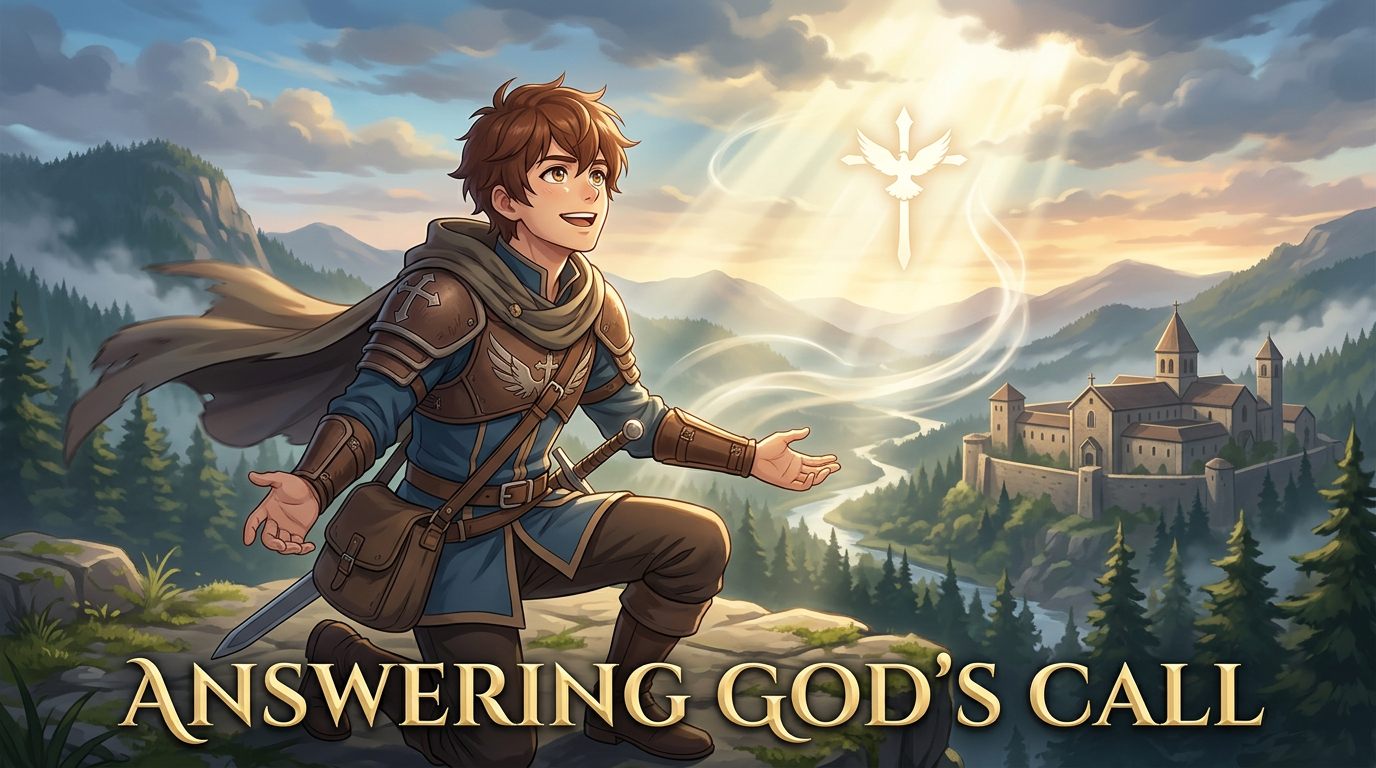
  • Answering the Heroic Call

    Answering the Heroic Call

    Discovering God’s Adventure for Your Life

    Introduction: The Call to Adventure

    Every life has a calling. As C.S. Lewis observed, there are infinitely many good vocations—each as different from one another as good is from evil. Some are well-known: raising a family, serving the poor, building a business with integrity, or creating beauty that lifts the soul. Others are quieter, waiting for someone courageous enough to say “yes.”

    In the language of the Hero’s Journey, every great story begins with a Call. In the Christian life, that call is ultimately from God, inviting us to spend our one life on something that matters.

    What Makes a Vocation Heroic?

    Christian heroism is not about fame or power. It is the willingness to spend yourself—quietly or publicly—for love of God and neighbor. It is the courage to be faithful where you are planted.

    The Heroic Vocational Questions

    Take time with these in prayer:

    • Where do I feel most alive when serving or creating?
    • What injustice or need stirs courage and compassion in me?
    • Which relationships or mentors bring out the best version of me?
    • What work makes me lose track of time while clearly benefiting others?
    • What cause or activity do I keep returning to, even when it’s hard?
    • How would I hope my life is remembered if I gave it fully to this path?
    • What sacrifice would I be willing to make for this good?
    • How does this calling serve the greater good, my community, and God’s Kingdom?

    Reflection and Discernment

    Discernment is rarely a lightning-bolt moment. It is usually a slow unfolding. Journal, pray (especially before the Blessed Sacrament if you’re Catholic), speak with a wise spiritual director or mentor, and be patient. St. Ignatius of Loyola’s rules of discernment or the example of Samuel (“Speak, Lord, your servant is listening”) can be helpful companions.

    Practical Next Steps

    • Volunteer or shadow someone already living a similar vocation.
    • Seek mentors who are further along the path.
    • Invest in formation: courses, books, apprenticeships.
    • Start small—launch a modest project and see what fruit appears.
    • Regularly bring it back to prayer: “Lord, if this is not from You, close the door. If it is, give me the grace to walk through it.”

    Conclusion

    Your vocation—whether priesthood, marriage, consecrated life, creative work, business, or hidden service—is heroic the moment you offer it to God. The adventure begins the instant you respond to the stirrings in your heart.

    Pay attention. Ask the questions. Take the next small step.

    And trust that the One who calls you will also sustain you.

  • When Conscience Feels Like Accusation

    Discerning the Voices in Your Head

    Q: Is it really possible for the devil to influence our thoughts — even through something as holy as our conscience?

    A: Yes, and faithful people should take it seriously. Our conscience is a sacred gift, but it can be manipulated when we’re spiritually or emotionally vulnerable.

    Q: What does it look like?

    A: The enemy, the “accuser,” uses half-truths that sound like conscience but lead to destruction:

    “You’ve failed your family.”

    “God is disappointed in you.”

    “You’re worthless.”

    “Everyone would be better off without you.”These feel like self-awareness but crush instead of heal.

    Q: How do I tell God’s voice from the enemy’s?

    A:

    • God’s voice convicts to restore: “You sinned. Come back to Me. Let’s begin again.”
    • The enemy’s voice accuses to destroy: “You sinned. You’re worthless. God doesn’t want you.”

    God leads to repentance and mercy. The devil leads to shame and isolation.

    Q: Why is this worse when we’re alone?

    A: Isolation turns the mind into an echo chamber. Community, spiritual friendship, confession, and brotherhood bring light and truth.

    Final Reflection:

    Don’t believe every thought that sounds holy. Test the spirit. Bring dark thoughts into the light — in prayer, confession, and trusted community. God shapes us with mercy, never shame. The enemy loses power when exposed.

  • Not All Suffering Is Redemptive

    We hear a lot about how suffering builds character. “Face the dragon.” “Pick up your cross.” “Embrace the struggle.” These ideas can be powerful and true. But we need balance.

    Not all suffering is good. Not every pain leads to growth.

    The Danger of Romanticizing Pain

    It’s easy to turn suffering into something noble and heroic. We love stories of people who overcame huge trials. But if we’re not careful, we start glorifying pain itself. That’s a mistake. Some suffering doesn’t make you stronger. It just breaks you.

    Examples:

    • Pointless cruelty — abuse, torture, or evil done for no reason
    • Chronic illness that slowly drains your life with no clear purpose
    • Deep trauma that leaves lasting fear, wounds, and brokenness

    In these situations, simply saying “just endure it” or “God will use it” can feel cold and even harmful. It can pile guilt on top of the pain.

    What the Bible Actually Shows

    Christianity doesn’t pretend this is simple. The Bible wrestles with the “problem of evil” — why a good God allows terrible suffering. Jesus Himself cried out on the cross, “My God, why have you forsaken me?” He knows real pain.

    Jesus also prayed in the garden, “Father, if it’s possible, let this cup pass from me.” He didn’t chase suffering because He loved pain. He accepted it for a greater purpose.

    When “Loving Struggle” Goes Wrong

    If we start loving hardship for its own sake, it can become self-destructive. Some people stay in bad relationships, refuse needed help, or push themselves until they break — all while calling it “being strong.” That’s not heroic. It’s unwise.

    The Wise Path

    Real wisdom is learning to discern:

    • Which hardships should I face and grow through?
    • Which ones should I resist, reduce, heal from, or walk away from?

    Not every hard thing is a cross God wants you to carry forever.

    The balanced way forward looks like this:

    • Face the dragons you’re truly called to face (your own weaknesses, responsibilities, honest repentance).
    • Seek help and healing for the wounds that are crushing you.
    • Fight evil and injustice where you can.
    • Ask God for wisdom to know the difference.

    Suffering is part of life. Some of it will refine and strengthen us. Some of it will simply hurt — and that’s okay to admit. Even destructive suffering can sometimes lead to growth later, but we can’t assume that will always happen.

    You weren’t made to chase comfort at all costs.

    But you also weren’t made to chase pain at all costs.

    Walk with wisdom. Carry the right cross. Seek healing when you need it. And trust that God meets you in both the battles and the recovery.

  • 🕊️ The Holy Wisdom:

    🕊️ The Holy Wisdom:

    How to Live in the World Where the Wolf and the Lamb Lie Down

    I. The Shoot and the Sevenfold Spirit (The Mythological Order)

    The prophet Isaiah (11:1-10) gives us one of the most sublime visions of the Messianic Age. It begins with the Shoot from the stock of Jesse—the image of radical new life springing from seemingly dead roots. This is the ultimate Anointing, where the seven gifts of the Holy Spirit rest upon the Messiah: wisdom, insight, counsel, power, knowledge, and the fear of the Lord (with the fear of the Lord being his breath, emphasizing reverence).

    This Messianic rule immediately establishes a new cosmic order. It is an end to the primal chaos and conflict that has defined the world since the Fall.

    The imagery—the wolf lives with the lamb, the calf and lion feed together, the infant plays over the cobra’s hole—is pure Mythological Parallel. It evokes the Golden Age or Paradise Restored. . This is the reversal of the natural order of predation and fear. The country is not secured by armies, but by knowledge of the Lord.

    The key insight for us is that this peace is not merely external, but internal: it is the perfect integration of our own conflicting natures.


    II. The Internal Wolf and Lamb (Psychology of Integration)

    We all house the wolf and the lamb. We carry the panther (our wild, unchecked appetites) and the kid (our innocent, vulnerable soul).

    Psychologically, the division in Isaiah’s vision reflects the constant civil war within the human heart:

    • The Wolf/Lion: Represents the passions and the instinctual self—the power of the limbic system and the amygdala—that seek to consume, dominate, and survive at any cost.
    • The Lamb/Calf: Represents the vulnerable, gentle, and receptive spiritual self—the capacity for peace and trust.

    When we are disordered, the wolf preys upon the lamb. Our fear consumes our peace; our lust devours our innocence.

    The Messianic promise is that the Spirit of the Lord (which integrates the powers of wisdom and counsel with knowledge and fear) rests on the leader who reorders this inner landscape. The “little boy” who leads them is the pure Will, guided by Wisdom, that shepherds the powerful animal instincts without destroying them. The lion doesn’t disappear; it learns to eat straw like the ox.

    III. The Wisdom of Children (The Hero’s Revelation)

    How do we gain this integration? The Gospel provides the counterintuitive method.

    Luke 10:21-24 shows Jesus, filled with joy, praising the Father for “hiding these things from the learned and the clever and revealing them to mere children.”

    This is the great Inversion of Wisdom. It is the prerequisite for the Hero’s Revelation. The knowledge that brings true peace is not attained through academic complexity or ego-driven cleverness. It is revealed through humility and simplicity—the state of the “child.”

    • The “learned and the clever” rely on the strength of the Prefrontal Cortex for independent reasoning, often fueling the prideful “wolf” of the ego.
    • “Mere children” rely on trust and direct reception. They are open to the gift of the Spirit (the fear of the Lord—holy reverence) that unlocks true knowledge.

    Only through the eyes of a child can we see the chaos of our inner zoo and accept the reordering delivered by Christ’s Word. Only by becoming small and humble can the Spirit rest fully upon us.

    IV. Call to Action: Practicing the Reordering

    The goal of this Advent is to let the Spirit of the Lord settle upon us, creating that inner sanctuary where no creature does harm.

    Your call to spiritual transformation this week is to practice the Reordering of the Heart:

    1. Identify the Predator: Name the “wolf” in your heart. What is the one instinct (fear, anger, cynicism, lust) that consistently preys upon your peace (the “lamb”)?
    2. Invite the Shepherd: Don’t try to kill the wolf with brute force (that just creates more violence). Instead, invite the Spirit of the Lord into that conflict. When the urge to consume or strike arises, pause and ask for the Spirit of Counsel and Wisdom to lead that wild instinct, turning its energy toward a productive task (like the lion eating straw).
    3. Embrace the Child’s Vision: Seek to simplify your mind. Spend time in quiet prayer not trying to figure out God, but simply receiving Him. Like the Centurion we discussed, surrender the need to be clever. Only in the humility of the child is the fullness of the Lord’s knowledge revealed.

    Let us be the humble remnant, purified and ordered, on whom the Spirit rests, making our hearts glorious and ready for the King.

    Developed with assistance of Gemini AI

  • ⚔️ Hammering Swords into Ploughshares:

    ⚔️ Hammering Swords into Ploughshares:

    The Work of Vigilance

    I. The Journey to the Mountain (The Hero’s Call)

    The liturgical year turns today, beginning the season of Advent. Our destination is clear: The Mountain of the Temple of the Lord .

    The prophet Isaiah (2:1-5) gives us a stunning mythological vision: a towering peak, lifted higher than the hills, drawing all the nations—peoples without number—to learn God’s ways. The outcome of this pilgrimage is radical: “They will hammer their swords into ploughshares, their spears into sickles. Nation will not lift sword against nation.”

    This is the ultimate promise of Eternal Peace (Shalom) and the divine resolution to the problem of human violence.

    In terms of the Hero’s Journey, the journey up the mountain is the Call to Adventure—a call to leave the flat, ordinary world of conflict behind and ascend to the height of revelation. The Law (the oracle) goes out from this place, transforming the very tools of destruction (swords) into the tools of production (ploughshares).

    The pilgrimage is not just historical; it is deeply personal. What are the “nations” of conflict within us that must ascend to the peace of Christ?


    II. The Night and the Burglar (Psychology of Complacency)

    Saint Paul tells us in Romans (13:11-14) that “the night is almost over.” This night is not just a chronological time; it is a psychological state of spiritual drowsiness.

    Jesus illustrates this perfectly in the Gospel with two chilling metaphors: Noah’s Day and the Burglar.

    “If the householder had known at what time of the night the burglar would come, he would have stayed awake and would not have allowed anyone to break through the wall of his house.”

    The burglar represents the unforeseen collapse—the judgment, the crisis, or the moment of death. The wall of the house is the boundary of our interior life, our vigilance.

    Psychologically, the danger is not the outside event; it is the “coarsening” of the heart that makes us fail to stay awake. The twin enemies Paul names—drunkenness and the cares of life—are both methods of spiritual dullness:

    1. Drunkenness/Debauchery: Overloading the system with immediate pleasure, dulling the Prefrontal Cortex (our Will and highest reason) and making us incapable of long-term planning.
    2. Cares of Life: Overloading the system with chronic anxiety, perpetually triggering the Amygdala (our fear center).

    Both states keep us trapped in the Ordinary World, focused only on eating and drinking, leaving the walls of our soul unguarded. We mistake temporary comfort for eternal security.

    III. The Armour and the Ploughshare (The Spiritual Transformation)

    The call to action is immediate and profound: “Let us live decently as people do in the daytime: no drunken orgies, no promiscuity… Let your armour be the Lord Jesus Christ.”

    The transformation required to reach Isaiah’s mountain of peace is a dual effort:

    1. The Work of Divesting (Hammering Swords)

    We must actively give up the things we prefer to do under cover of the dark. This is the Refusal of the Return reversed—we refuse to stay comfortable in the darkness.

    The sword is the symbol of aggression, conflict, and self-defense. What are the swords in your heart?

    • The sword of wrangling (constant conflict).
    • The sword of jealousy (internal war against your neighbor).

    We are called to hammer these weapons into ploughshares—tools for tilling the inner soil, for producing the spiritual fruit of patience, charity, and peace. This process requires daily, painful penance and effort.

    2. The Work of Investing (Donning Armour)

    Paul instructs us: “Let your armour be the Lord Jesus Christ.”

    This is the Apotheosis and Return stage of the Advent journey. We don’t defend our walls with our strength; we defend our soul with Christ. We put on the Mind of Christ and the Virtues of Christ.

    When you are tempted to anger (the sword), your armour reminds you to respond with Christ’s peace. When you are tempted to dull your senses (the drunkenness), your armour reminds you that your Master is coming and you must be awake.

    IV. Call to Action: Walking in the Light

    This Advent, the call is simple: Walk in the light of the Lord.

    The mountain of the Temple is waiting. We are not called to build the perfect society right now, but we are called to build the perfect sanctuary in our own heart. We must make our inner Jerusalem ready for the Prince of Peace.

    Your practical commitment this week is to Vigilance.

    • Identify the Burglar: Name one specific area of your life where you have “allowed someone to break through the wall of your house”—where you are dulling your heart. (e.g., excessive scrolling, obsessive worrying, casual gossip).
    • Hammer the Sword: Take one daily tool of conflict (wrangling, jealousy) and consciously begin to turn it into a tool of peace (patience, prayer).
    • Stay Awake: Resolve to spend your time and energy not on the “cares of life,” but on the saving help Christ offers, so that you are prepared to stand ready.

    Let us walk in the light. Let us start hammering our swords.

    Developed with assistance from Gemini AI

  • “Wake Up and Walk in the Light: Advent and the Great Human Awakening”

    “Wake Up and Walk in the Light: Advent and the Great Human Awakening”

    A 10–15 minute Advent reflection

    Isaiah 2:1-5; Psalm 121(122):1-2,4-5,6-9; Romans 13:11-14; Matthew 24:37-44

    Today is the First Sunday of Advent—the beginning of the Church’s year.
    And the very first word the Church gives us is: Wake up.

    Not “be cozy.”
    Not “ease into the holidays.”
    But Wake up.
    Be alert. Open your eyes.
    Something is coming.
    Someone is coming.

    And the way Scripture tells the story today, this awakening is not optional.
    It is the difference between remaining asleep in the old world—or stepping into the new creation God desires for us.


    1. Isaiah’s Mountain: The Call of the Hero at Dawn

    The prophet Isaiah begins with a vision of the “days to come.”
    He sees Mount Zion—the Temple mountain—lifted above all other mountains.
    Nations stream toward it.
    People without number ascend the hill saying:

    “Come, let us go up to the mountain of the Lord… that he may teach us his ways.”

    This is the biblical version of the call to adventure—the moment in every great myth when humans are summoned upward, summoned out of the ordinary world and toward a divine encounter.

    The mountain is a universal symbol in myth:

    • Mount Olympus for the Greeks
    • Mount Meru in Hindu cosmology
    • Sinai for Moses
    • Tabor for Christ

    The mountain always represents the highest meaning, the place where heaven and earth meet, where God reveals Himself, and where human beings are changed.

    Isaiah’s point is clear:
    Humanity’s future is not down in the valley of violence, distraction, and conflict.
    Our future is an ascent.
    A pilgrimage.
    A transformation.

    Psychologically, this ascent points to the integration of the self—the movement from fragmentation to unity, from instinct-driven living (the lower brain layers) toward a life governed by truth, conscience, and grace (the highest faculties).

    Isaiah describes the result of this ascent:

    “They shall beat their swords into ploughshares.”

    This is transformation—not by force, but by teaching, by truth, by hearing God.
    The weapons of self-destruction become the tools of cultivation.
    What once harmed now heals.

    This is what happens when a person climbs the mountain of the Lord.


    2. “I Rejoiced When I Heard Them Say”: The Joy of a Heart That Is Waking Up

    The psalm today echoes the upward movement:

    “I rejoiced when I heard them say: ‘Let us go to God’s house.’”

    This is the joy of someone who has heard the call.
    Someone whose feet are already on the path.
    Someone who has realized:
    My home is not here. My destiny is above.

    Psychologically, this is the movement from numbness to desire.
    From apathy to longing.
    From spiritual sleep to spiritual hunger.

    St. Augustine described it as the “weight of love” lifting the soul upward.

    Every Hero’s Journey begins—not with skill or strength—but with desire, the dawning awareness that “There must be more.”

    Advent awakens that desire.


    3. St. Paul: “Wake Up Now” — The Battle Between Night and Day

    Then St. Paul tells us plainly:

    “You know the time.
    The night is almost over.
    The day is at hand.
    Wake up now.”

    Paul speaks here like a drill sergeant of the soul.
    He knows we like comfort.
    We like the dark because our weaknesses hide there.
    But Paul says:

    “Give up the things done under cover of darkness…
    and put on the armor of light.”

    This is spiritual psychology at its sharpest.

    The “night” represents:

    • impulsivity
    • old habits
    • addictions
    • self-deception
    • sin we have learned to tolerate

    The “day” represents:

    • clarity
    • responsibility
    • moral courage
    • virtue
    • the renewing power of Jesus Christ

    Paul says:
    Do not wait until you feel ready. Light never begins with readiness.
    It begins with decision.

    Mythologically, this is the moment when the hero must leave home.
    Leave comfort.
    Leave childishness.
    The doorway to the adventure is dawn—and dawn always interrupts our sleep.


    4. Jesus in the Gospel: The Flood Comes to the Spiritually Asleep

    Now Christ speaks the hardest words of the day:

    “As in the days of Noah, so will it be at the coming of the Son of Man.”

    People were living as if nothing mattered:

    • eating
    • drinking
    • marrying
    • working

    None of these are evil.
    The problem is not the activities—it is the unconsciousness with which people lived.

    They were asleep inside their own lives.

    The Flood did not simply wash away bodies—it washed away illusions.
    It revealed who was awake and who was not.

    Then Jesus gives His teaching with startling urgency:

    “Stay awake…
    Stand ready…
    The Son of Man is coming at an hour you do not expect.”

    This is not meant to frighten us—it is meant to awaken us.

    Jesus is not warning about the end of the world;
    He is warning about the end of your illusions.
    The end of self-deception.
    The end of sleepwalking through life.

    In psychological terms, Jesus is calling us to conscious living—to a life where we no longer hide behind distraction, addiction, work, or noise.


    5. The Hero’s Journey of Advent

    Advent is the beginning of the Church’s New Year, but it is also the beginning of your own Hero’s Journey.

    The pattern is always the same:

    1. The Call — “Come, let us go up to the mountain of the Lord.”
    2. The Awakening — “I rejoiced when I heard them say…”
    3. The Separation — “The night is almost over… put on the armor of light.”
    4. The Testing — “Stay awake, for you do not know the hour…”
    5. The Transformation — Christ born in the soul, illuminating everything.
    6. The Return — A transformed life that brings peace and grace to others.

    Mythologies echo this pattern because they echo the deepest truth of the human spirit:
    We were made for ascent.
    We were made for God.


    6. A Call to Action: How to Begin Your Advent Awakening

    Here is the practical challenge of the Gospel:

    1. Identify where you are asleep.

    Where have you allowed routine, distraction, or sin to dull your conscience?
    What parts of your life run on autopilot?

    2. Begin one concrete act of awakening.

    • Set a real prayer time.
    • Go to Confession.
    • Fast from a comfort that keeps you numb.
    • Read Scripture daily.
    • Reconcile with someone.

    3. Put on the armor of light.

    Don’t wait to “feel holy.”
    Act first.
    The feelings follow.

    4. Live today as if the Lord is near—because He is.

    Advent is not pretend.
    It is training.
    It is rehearsal for the real coming of Christ—
    in death,
    in judgment,
    in the Eucharist,
    in grace,
    in the quiet call of conscience.

    5. Make this Advent your turning point.

    Advent is not about nostalgia.
    It is about awakening.

    Christ does not want to catch you off guard.
    He wants to find you alive.


    7. Conclusion: Walk in the Light of the Lord

    Isaiah ends his vision with a simple command:

    “O house of Jacob, come—
    let us walk in the light of the Lord.”

    This is the entire Gospel in one sentence.

    Walk.
    Move.
    Begin.
    Awaken.
    Step toward the mountain.
    Let the Lord teach you His ways.
    Let His light pierce your darkness.
    Let Christ become your armor.

    And when the Son of Man comes—today, tomorrow, or at the end of your life—may He find you wide awake, standing ready, rejoicing to enter the house of the Lord.

    Amen.

    Developed with assistance from ChatGPT-5
  • Quiet Heart, Loud Faith: Three Sparks to Renew the Church

    Quiet Heart, Loud Faith: Three Sparks to Renew the Church

    Faith in the Noise

    World spins fast—tech, truth, opinions shift.

    Noise everywhere. Easy to lose what matters.

    • Church mission? Never needed calm.
    • Starts with faith—deep in the heart.

    Silence often anchors quietly.

    One breath of quiet = your next spark?


    Depth Over Activity

    Church today? Not more programs. Not louder voices.

    Needs depth—people who pray, meet God in silence.

    • Live the Gospel first.
    • Faith isn’t meetings or debates.
    • Comes from grace—God loved us first, fully.

    Let love move you daily.

    One quiet moment = instant recharge.


    Renewal & Shine

    Remember that love? Faith becomes a lens.

    See God in work, people, hidden places.

    • Church renews through awakened hearts—not new plans.
    • Christ: “Take courage; I overcame.”
    • Hope in Him, not results.

    Restless world? Still radiant.

    You’re the light—ready to glow?

  • Can the Devil Twist Our Conscience?

    Q: Is it really possible for the devil to influence our thoughts—even through something as holy as our conscience?

    A: Yes, and it’s something faithful people should take seriously. Our conscience is a sacred gift—it’s that inner voice that helps us discern right from wrong, that stirs when we sin, and that gently urges us toward repentance and virtue. But even this good gift can be manipulated if we’re spiritually or emotionally vulnerable.


    Q: What does it look like when the enemy manipulates the conscience?

    A: It often sounds like guilt or self-awareness—but it’s distorted. The devil is the “accuser,” and he specializes in using half-truths to attack us. The most dangerous lies are the ones that sound almost true. For example:

    • “You’ve failed your family.”
    • “God is disappointed in you.”
    • “You’re a burden.”
    • “Real men don’t ask for help.”
    • “Everyone would be better off without you.”

    These statements can feel like the voice of conscience. But they don’t lead to healing or change—they crush the soul and isolate the heart.


    Q: So how do I tell the difference between God’s voice and the devil’s accusations?

    A: The voice of God convicts to restore. It leads to repentance, healing, and deeper trust in His mercy. The voice of the enemy accuses to destroy. It leads to shame, self-hatred, and isolation.

    Here’s a basic way to tell:

    • God’s voice: “You sinned. Come back to Me. Let’s begin again.”
    • The enemy’s voice: “You sinned. You’re worthless. God doesn’t want you.”

    Q: Why is this more dangerous when someone is alone or isolated?

    A: When we’re alone, we don’t have people around us to speak truth, to counter the lies we’re hearing internally. That isolation becomes an echo chamber, where false guilt and spiritual shame can grow louder and more convincing. Community, spiritual friendship, and confession all help bring light into those shadows.


    Q: Have other faithful people experienced this? Or am I just weak?

    A: You’re not alone. Many devout believers—saints included—have faced these kinds of deceptive thoughts. But because it feels “unspiritual” or shameful, we often keep quiet. Recognizing this dynamic is not weakness—it’s wisdom. You’re beginning to see that the real spiritual battle often happens inside the heart and mind.


    Final Reflection:

    Don’t believe every thought that sounds holy. Test the spirit behind it. God doesn’t use shame to shape you—He uses mercy and truth. The enemy wants to twist even your best intentions. But when you bring those thoughts to the light—in prayer, in confession, in brotherhood—they lose their power.

    Written in collaboration with ChatGPT

  • When Conscience Deceives:

    How to Tell If It’s God, You, or the Enemy

    Q: Is it really possible for the devil to influence our thoughts—even through something as holy as our conscience?

    A: Yes, and faithful people are often the most targeted. Our conscience is a sacred inner compass. But like any human faculty, it can be manipulated if we’re spiritually or emotionally vulnerable. The devil, called “the accuser,” specializes in twisting good things subtly—turning inner promptings of guilt or responsibility into weapons of shame and despair.


    Q: What does it look like when the enemy manipulates the conscience?

    A: It often sounds like guilt, but it brings hopelessness. It can even feel like humility, but it erodes your dignity. For example:

    • “You’re a failure as a father.”
    • “God is disappointed in you.”
    • “You’re a burden, and people would be better off without you.”

    These lies mimic the voice of conscience. But instead of calling you back to God, they isolate you. Instead of inviting you to repentance, they drag you toward despair.


    Q: If God’s voice comes to us as a thought, how can we possibly tell it apart from our own mind—or worse, from temptation?

    A: That’s the heart of the matter—and a very deep insight. As thinkers like Jordan Peterson note, we experience everything internally. Even if God speaks to you, it will feel like a thought—unless you’re visited by an angel, and even then, it gets processed in your mind.

    So discernment isn’t about waiting for a “different kind” of voice. It’s about noticing the effect of the thought:

    • Does it bring peace, conviction, clarity, or humility?
    • Or does it create confusion, fear, hopelessness, or shame?

    The voice of God convicts to restore. It calls you back, gives you hope, and tells you that change is possible.
    The voice of the enemy accuses to destroy. It makes you want to give up, hide, or hate yourself.

    This is why daily examination, prayer, and spiritual guidance are so important. Without reflection and community, you may mistake a subtle lie for divine direction.


    Q: Why is this more dangerous when someone is alone or isolated?

    A: Isolation creates an echo chamber in the mind. Without truth spoken from others—friends, mentors, spiritual directors—even lies can begin to sound reasonable. We weren’t meant to discern alone. Even the saints needed help.


    Q: Have other faithful people experienced this? Or am I just spiritually weak?

    A: You’re not weak—you’re human. Saints like Ignatius of Loyola, John of the Cross, and even modern spiritual leaders have described this kind of battle. What matters most isn’t whether you’re attacked—it’s whether you bring it into the light. God honors that courage.


    Final Reflection:

    If God speaks to you, it will sound like a thought—but not all thoughts that feel “spiritual” are from God. That’s why discernment is not optional in the life of faith. Learn to recognize what leads to truth and love, and what leads to fear and despair. God speaks peace. The enemy speaks poison. Your job is to learn the difference—and speak that truth to others when they forget.

    Written in collaboration with ChatGPT

  • Does God Speak Through Our Thoughts?

    Learning to Discern the Voice Within
    A Thought That Changes Everything

    I recently had a realization while reading Jordan Peterson that stopped me in my tracks: if God were to speak to me… how would I even know?

    The answer is both simple and deeply unsettling: it would have to be a thought. Unless God sends an angel in visible form (which He rarely does), His voice would arrive the same way every other voice in my head does—internally, silently, as a thought.

    This means something important:
    We can’t tell the difference between a thought from God, a thought from ourselves, or even a deceptive thought from the enemy… unless we learn how to discern.


    The Still, Small Voice… and the Subtle Lie

    This insight isn’t new to the spiritual tradition. Christians throughout the centuries have said that the mind is a battleground. It’s the place where grace and temptation both try to stake their claim.

    As Peterson highlights, the challenge is not hearing God, but testing what we hear. And this is echoed by C.S. Lewis in The Screwtape Letters, where he shows how the devil doesn’t usually show up with fire and pitchforks. No, he whispers subtle half-truths that sound:

    • logical,
    • moral,
    • even noble—
      but in the end, they isolate us from truth, from others, and from God.

    Clarity or Confusion? How to Test a Thought

    Since God speaks through our inner world, we need to ask not just what the thought is, but what it leads to.

    🔹 God’s voice brings clarity, conviction, peace, and hope.
    🔹 The enemy’s voice brings confusion, shame, accusation, and isolation.

    This is the core of Christian discernment. In a world full of noise—and a heart full of emotions—only time in Scripture, prayer, spiritual direction, and community can help us learn the difference.


    Why This Is Especially Dangerous When We’re Alone

    If someone is alone, exhausted, burdened, or isolated, the inner voices can grow louder and more convincing. In those moments, even a lie whispered in the dark can feel like the truth.

    This is why the Church emphasizes community, sacrament, and prayer. We’re not meant to walk the spiritual life alone. Even saints had spiritual directors and companions to help them test the voices they heard.


    Wrestling with Sacred Things

    If you’re wrestling with this—wondering where a thought came from, asking whether it was God or something else—you’re not spiritually weak. You’re on sacred ground.
    Discerning the difference isn’t easy. It’s the work of a lifetime. But it begins with this kind of honesty and reflection.

    So next time a “holy-sounding” thought enters your mind, ask:

    • Does this draw me toward God and others—or away?
    • Does it bring peace or despair?
    • Does it reflect what I know of Jesus?

    God’s voice restores. The enemy’s voice accuses.
    Our job is to learn to recognize the difference—and help others do the same.

    Written in collaboration with ChatGPT