They are experiencing Christianity as joy and hope, having thus become lovers of Christ.

Category: Character & Identity

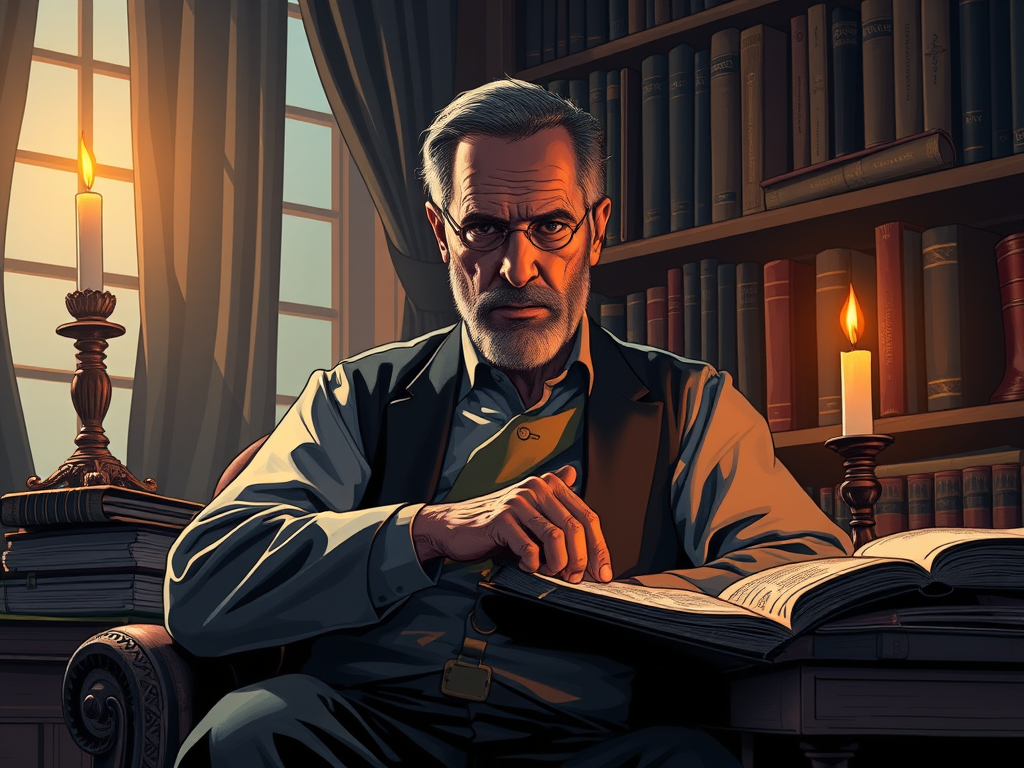
  • When the Accuser Attacks Your Conscience:

    Telling God’s Voice from the Enemy’s Lies

    In our recent reflections on hearing God—exploring how ancient figures like Abraham encountered divine voices and how we, in modern life, learn to recognize sacred nudges through conscience, Scripture, and circumstance—we touched on the delicate art of discernment. Today, we confront a sobering reality in that same inner arena: the possibility that the enemy can distort even something as holy as our conscience.

    Q: Is it really possible for the devil to influence our thoughts—even through something as holy as our conscience?

    A: Yes, and faithful believers should take this seriously, without descending into fear or paranoia. Our conscience is a precious gift from God—a built-in moral compass that alerts us to sin, stirs genuine repentance, and gently draws us toward virtue and holiness. Think of it as that quiet inner voice echoing the Holy Spirit’s conviction.

    Yet, like any good gift, it can be twisted when we’re spiritually, emotionally, or mentally vulnerable—through trauma, isolation, exhaustion, or unaddressed wounds. The devil, Scripture tells us, is “the accuser of our brothers and sisters” (Revelation 12:10), who prowls like a roaring lion (1 Peter 5:8). He specializes in half-truths that sound almost holy but lead to destruction rather than restoration.

    This echoes what we’ve seen in stories like the Akedah: not every inner prompting is from God, and not every voice of “guilt” serves His purposes. Discernment matters deeply.

    Q: What does it look like when the enemy manipulates the conscience?

    A: It often masquerades as self-awareness or conviction—but it’s distorted into crushing accusation. The enemy uses vague, relentless guilt that isolates and paralyzes rather than heals.

    Common examples include thoughts like:

    • “You’ve failed your family again.”
    • “God is so disappointed in you.”
    • “You’re a burden to everyone around you.”
    • “Real Christians (or real men/women) wouldn’t struggle like this.”
    • “Everyone would be better off without you.”

    These can feel like the voice of conscience, especially if they contain a kernel of truth about past mistakes. But notice the fruit: they don’t lead to repentant action, renewed trust in God’s mercy, or freedom. Instead, they breed shame, self-hatred, despair, and withdrawal. This is the accuser at work—twisting truth into a weapon.

    A.W. Tozer, whose writings we’ve discussed for their call to radical holiness and interior depth, warned against superficial religion that never costs anything. The enemy’s version of “conscience” does the opposite: it demands endless, impossible perfection while offering no path to grace.

    Q: So how do I tell the difference between God’s voice and the devil’s accusations?

    A: Pay attention to the fruit and the direction.

    • God’s voice convicts to restore. It is specific, gentle yet firm, and always points toward repentance, healing, and deeper relationship with Him. It says something like: “You sinned in this area. Come back to Me. My mercy is greater. Let’s begin again in truth and grace.” It aligns with Scripture’s full witness and leads to freedom and renewed obedience.
    • The enemy’s voice accuses to destroy. It is often vague, overwhelming, and final. It says: “You sinned. You’re worthless. God could never want someone like you.” It keeps the focus on your failure rather than on Christ’s finished work and leaves you spiraling in shame.

    As many faithful teachers note, godly conviction identifies the problem and immediately offers the solution in Jesus. Satanic accusation fixates on the problem to keep you stuck. This discernment is part of the same inner attentiveness we explored in reimagining the Akedah—learning to test whether a prompting leads to courageous trust or to fearful isolation.

    Q: Why is this more dangerous when someone is alone or isolated?

    A: Isolation turns the mind into an echo chamber. Without the voices of trusted community, Scripture, or wise counsel to speak objective truth, distorted thoughts grow louder and more convincing. False guilt and spiritual shame thrive in the dark.

    This is why community, spiritual friendship, regular confession, and accountability are lifelines. Bringing hidden thoughts into the light—through prayer, honest conversation, or the sacrament of reconciliation—disarms them. As we’ve seen in discussions of bridging traditions and pursuing real holiness (like Tozer’s urgent call), we were never meant to fight these battles entirely alone. The body of Christ helps us test the spirits (1 John 4:1).

    Q: Have other faithful people experienced this? Or am I just weak?

    A: You are far from alone—and experiencing this doesn’t make you weak; it makes you human in a fallen world. Many devout believers, including saints, have wrestled with scrupulosity or accusatory thoughts that masquerade as holy conviction.

    Saints like Ignatius of Loyola, Alphonsus Liguori, and Thérèse of Lisieux battled intense scrupulosity—obsessive guilt over minor or imagined sins that tormented their consciences. They learned to obey wise counsel, cling to God’s mercy, and refuse to let shame define them. Even Tozer’s emphasis on transcendent holiness came from a deep awareness of sin’s weight, yet he always pointed back to awe-filled encounter with a merciful God rather than self-loathing.

    Recognizing the battle in your mind is wisdom, not weakness. It’s part of spiritual growth and the interior transformation we’ve been reflecting on.

    Final Reflection:

    Don’t believe every thought that parades as holy or conscientious. Test the spirit behind it (1 John 4:1). God shapes us with mercy and truth, not shame. The enemy loves to twist even our best intentions and the very gift of conscience into a tool of isolation and despair.

    Bring those accusing thoughts into the light—in honest prayer, confession, trusted community, or the pages of Scripture. There they lose their power. Remember: there is no condemnation for those in Christ Jesus (Romans 8:1). His conviction always lifts us toward freedom and deeper trust.

    If this resonates with your own inner battles, you’re not alone. What “accusing voice” have you noticed lately, and how might you test it this week? I’d love to hear your thoughts in the comments as we continue growing in discernment together.
  • When Inaction Is a Wound:

    Restoring Curiosity After Trauma

    Not Laziness—But Woundedness

    When Jordan Peterson warns against “moral laziness,” he isn’t simply wagging a finger at the unmotivated. He’s pointing to a deeper tragedy: the collapse of curiosity, responsibility, and courage after someone has suffered.

    We often label people as lazy when they don’t act, don’t grow, don’t take responsibility. But what if that inaction is not due to weakness, but to pain?

    What if “laziness” is just the visible surface of a soul in retreat?

    The Collapse of Curiosity

    Curiosity is what drives us to explore the unknown. It’s the fuel of courage, learning, and transformation. But trauma teaches the opposite lesson:

    • That the unknown is dangerous.
    • That risk leads to pain.
    • That effort ends in failure.

    So the traumatized person stops reaching. Stops trying. Stops hoping.

    What we call “moral laziness” is often a survival instinct—an attempt to avoid more wounding by refusing to step forward. But over time, this self-protection becomes self-destruction.

    The Adversary: A Reaction to Pain

    Peterson often connects moral laziness to the formation of the adversary—the one who resents, who destroys, who hates existence itself. But this adversary is not born evil.

    They are formed through suffering that was never healed:

    • Betrayal that was never understood.
    • Chaos that was never ordered.
    • Responsibility that felt too heavy to bear.

    Over time, the protective shield of “doing nothing” hardens into a philosophy of nihilism, or a hunger for control and vengeance. The adversary grows, not from ambition, but from despair.

    The Moral Capacity Remains

    And yet—the potential for goodness remains.

    Even in deep avoidance, moral capacity still flickers:

    • The desire for meaning has not fully died.
    • The hunger for love and truth still echoes.
    • The will to be better still whispers beneath the silence.

    This is why healing matters—not just emotionally, but morally. Because healing reawakens the capacity to engage the world as it is. It restores the courage to act. In Christian terms, it is the slow recovery of the image of God in us—an image that trauma can obscure but never erase.

    Healing Restores Curiosity

    When the wound is seen, when the fear is named, when the soul is gently drawn out of hiding—curiosity returns.

    • The heart opens to new questions.
    • The eyes see beauty again.
    • The will to participate in life is rekindled.

    This is how the hero rises: not by avoiding pain, but by moving through it with support, grace, and growing strength. Christ Himself is the wounded Healer who meets us in our retreat and calls us forward again.

    From Paralysis to Purpose

    If you’re stuck in procrastination or inaction, you’re not defective. You may simply be protecting yourself from a world that once felt too dangerous.

    But healing is possible.

    And as healing takes root, curiosity revives, responsibility feels lighter, and the heroic path becomes visible again. You were not made for paralysis. You were made for meaning.

    A few gentle next steps can help:

    • Name the wound honestly before God and, if possible, a trusted person.
    • Take one small act of responsibility today—something modest that reintroduces movement.
    • Ask for the grace to become curious again, even in small ways.

    The Lord does not despise the bruised reed. He restores it, so that it can once more lean toward the light.

  • Embracing Life’s Precious Moments:

    A Gentle Reminder

    Life moves fast. Between work, screens, errands, and endless to-do lists, it’s easy to forget one simple truth: our time here is limited.

    Divorce attorney and hospice volunteer James Sexton has spent time with people at the end of their lives. After those conversations, he noticed a powerful pattern. The dying rarely talk about their cars, bank accounts, or achievements. They talk about the people they loved—the hugs, the laughter, the quiet conversations, and even the hard moments shared with family and friends. Everything else fades away.

    Society constantly distracts us from this reality. Ads, social media, and busy schedules push us to chase more stuff, more status, more “success.” But if we truly remembered that our days are numbered, we might slow down and focus on what really lasts: connection.

    There is a finite number of times you will kiss your spouse, hug your child, or say “I love you” to someone who matters. You don’t know the exact number. That finiteness is what makes each moment so precious.

    This truth is not meant to produce fear. It is meant to produce freedom—and, for those who follow Christ, a deeper attentiveness to the people God has placed in our lives. Jesus summed up the whole law in two commands: love God and love your neighbor. The limited number of days we are given makes those loves urgent and concrete.

    Simple Ways to Live This Truth Today

    • Be present. Put the phone down during dinner or bedtime stories. Look into their eyes. Really listen.
    • Say the words. Don’t wait for the perfect moment to tell someone you appreciate them. Say it now.
    • Choose connection over stuff. A walk together or a heartfelt conversation often means more than another purchase.
    • Forgive and cherish. Life is too short for holding grudges. Make room for love instead.

    When we remember that time is a gift, we stop wasting it on things that do not matter. We begin investing in the relationships that carry eternal weight.

    Today is a good day to begin. Hug a little longer. Call that friend. Tell your family how much they mean to you. These small choices add up to a life marked by warmth, meaning, and fewer regrets—one that reflects the love of Christ.

    What’s one small thing you can do today to cherish the people around you?
    Your future self, and the people you love, will thank you.

    Inspired by reflections from James Sexton (in conversation with Tom Bilyeu) and the original post here

  • When Conscience Feels Like Accusation

    Discerning the Voices in Your Head

    Q: Is it really possible for the devil to influence our thoughts — even through something as holy as our conscience?

    A: Yes, and faithful people should take it seriously. Our conscience is a sacred gift, but it can be manipulated when we’re spiritually or emotionally vulnerable.

    Q: What does it look like?

    A: The enemy, the “accuser,” uses half-truths that sound like conscience but lead to destruction:

    “You’ve failed your family.”

    “God is disappointed in you.”

    “You’re worthless.”

    “Everyone would be better off without you.”These feel like self-awareness but crush instead of heal.

    Q: How do I tell God’s voice from the enemy’s?

    A:

    • God’s voice convicts to restore: “You sinned. Come back to Me. Let’s begin again.”
    • The enemy’s voice accuses to destroy: “You sinned. You’re worthless. God doesn’t want you.”

    God leads to repentance and mercy. The devil leads to shame and isolation.

    Q: Why is this worse when we’re alone?

    A: Isolation turns the mind into an echo chamber. Community, spiritual friendship, confession, and brotherhood bring light and truth.

    Final Reflection:

    Don’t believe every thought that sounds holy. Test the spirit. Bring dark thoughts into the light — in prayer, confession, and trusted community. God shapes us with mercy, never shame. The enemy loses power when exposed.

  • The Irony of “My Truth”: 

    Standing on a Foundation You’re Trying to Tear Down

    Have you noticed how often people say “That’s my truth”?

    It sounds personal and respectful. But there’s a big irony hiding behind it.

    Many who loudly claim “my truth” are at the same time criticizing or rejecting the very traditions and ideas that make it possible for them to say it safely and publicly.

    What Makes “My Truth” Possible?

    The freedom to declare your own personal truth — without being punished by the government, attacked by a mob, or shut down — didn’t just appear out of nowhere. It grew from a long civilizational “map” built over centuries:

    • Ancient Greek love of reason and open debate
    • Roman ideas of law and order
    • Judeo-Christian beliefs in human dignity and conscience
    • Enlightenment values like individual rights, free speech, and science

    These traditions created universities, free platforms, legal protections, and societies that value open discussion. They treat truth as something we can discover and share — not just whatever each person feels.

    In other words, the ability to push “my truth” depends on a foundation of reason, rights, and tolerance that came from Western civilization. Yet many of the loudest voices call that same foundation oppressive, colonial, patriarchal, or outdated.

    It’s like sitting on a strong tree branch while sawing it off at the same time.

    How Common Is This Way of Thinking?

    Surveys show it’s very widespread, especially in the United States.

    Recent research from the American Worldview Inventory 2025 (from Arizona Christian University) found that about two out of three American adults (around 66%) reject or seriously doubt the idea of absolute moral truth. This includes many people who call themselves Christians — for example, 69% of Catholics in the study.

    Older polls from Barna have shown similar patterns for years: a large majority say moral truth depends on the person and the situation, not on any fixed standard.

    At the same time, traditional pillars that once held society together — things like patriotism, religion, having children, and shared cultural values — have become less important to many Americans over the past 25–30 years.

    Why Does This Matter?

    When everything becomes “my truth,” shared reality starts to break down.

    If all truths are equally valid personal feelings, then there’s no solid ground to debate ideas, correct mistakes, or build trust. Civilization grows through evidence, testing claims, and honest conversation — not by treating every feeling as untouchable.

    The irony is clear: the people most free to express “my truth” (in open, tolerant societies) are often the least thankful for the foundation that gives them that freedom.

    This isn’t about wishing for a perfect past. Every civilization has flaws, and healthy self-critique is actually one of the strengths of the Western tradition. The real issue is consistency. You can’t keep enjoying the fruits of a tree while actively trying to kill its roots.

    Real progress and healthy debate need a shared map — a common understanding of truth, reason, and human dignity. When we deny that map while standing on it, we risk weakening the ground for everyone.

    What do you think?

    Have you seen this tension in conversations or culture around you? Drop your thoughts below.

  • “My Truth” vs. Opinion vs. Universal Truth:

    A Clear Breakdown

    You’ve heard it everywhere: “That’s my truth.”It sounds humble and respectful, but it quietly does a lot of heavy lifting. Here’s a straightforward breakdown.

    1. What “My Truth” Actually Means

    My truth” is often just a stronger way of saying “In my experience.

    A person’s experience is real and subjective — it genuinely happened to them. But “my truth” goes further: it treats that personal experience and its interpretation as a form of truth that others are expected to affirm and not challenge.

    Example:

    “My truth is that all men are dangerous.” 

    This isn’t just sharing a feeling. It claims moral weight and often treats disagreement as invalidation. 

    It flows from relativism: truth is different for every person.

    2. What an Opinion Actually Is

    An opinion is humbler. It’s simply what you think or believe. It doesn’t demand agreement or protection.

    Examples:

    “In my opinion, pineapple belongs on pizza.”

    “I think Jordan Peterson is overrated.”

    Opinions can be challenged, discussed, or even proven wrong without it becoming personal.

    3. Universal Truth

    Universal truth describes objective reality — especially human nature and how human beings actually thrive. It stands beyond any one person’s experience and points to what works best in the long run for everyone.

    Example:

    “Marriage is a covenant between one man and one woman” (if you hold that as objectively true), or 

    “Regular prayer, fasting, and generosity form mature, integrated people.”

    These truths are discovered, not invented. They reflect how reality and human flourishing actually work, regardless of individual feelings.How They Play Out in Real Life

    • “My truth” often shuts down conversation: “That’s your truth, this is mine.”
    • “My opinion” keeps the door open: “That’s my view — what do you think?”
    • Universal truth invites alignment with reality: “This is how humans are designed to flourish.”

    Why This Matters

    In conversations about faith, morality, philosophy, and the Hero’s Journey, we assume there is a discoverable universal truth grounded in reality, reason, and Scripture. “My truth” language quietly undermines that by turning subjective experience into protected, unchallengeable truth.

    A Simple Test

    Next time someone says “my truth,” ask:

    • Are they describing a real experience? (That deserves to be heard.)
    • Are they claiming their interpretation of that experience is truth itself? (That’s where it slips into relativism.)

    Universal truth stands steady, outside of us. It describes human nature and the path to genuine flourishing — inviting everyone, quietly and equally, to align with it.

  • A.W. Tozer’s Hidden Struggle:

    A.W. Tozer’s Hidden Struggle:

    The Prophet’s Family and the Price of Divine Calling 

    A.W. Tozer is revered as a spiritual giant, but behind the sermons and books was a man whose calling exacted a heavy toll on his loved ones. Married with seven children (six sons and one daughter), Tozer lived with an intensity that mirrored a monk’s devotion. His interior life was all-consuming, focused on God above all else. But that focus created emotional distance, especially for his wife, Ada.

    After Tozer’s death, Ada remarried and reportedly said, “Aiden loved Jesus Christ, but Leonard Odam (her new husband) loves me.” Ouch. It’s a raw admission that highlights the tension: Tozer’s prophetic vocation—marked by radical devotion—clashed with the demands of marriage. He wasn’t absent for selfish reasons like career ambition or escapism; his “absence” was poured into prayer, writing, and ministry that has inspired millions.

    This raises a thorny question: Should some men with such a deep calling avoid marriage altogether, or at least delay it until they’ve wrestled with their spiritual identity? In Protestant circles, marriage is often seen as a badge of maturity, but Tozer’s story suggests otherwise. It’s a reminder that not every path to holiness fits neatly into family life.

    Drawing from the Hero’s Journey archetype (think Joseph Campbell), the hero often remains single during the quest—marriage comes after transformation, as a crowning achievement. Tozer’s life illustrates the risk of flipping that script: early marriage can stabilize a man before he’s faced his true call, leading to strain or midlife reckonings.

    Tozer wasn’t a neglectful husband by worldly standards—many men are “absent” due to jobs, poverty, or distractions. But his was a holy absence, aimed at eternal good. Still, the cost was real, and it challenges us: How do we balance divine pursuit with human relationships? If you’re navigating a similar tension, Tozer’s biography is a must-read. It’s not a cautionary tale of failure, but of the tragic beauty in following God at all costs.

    Share your thoughts: Have you seen calling clash with family in your life or others’?

    Developed with assistance from Grok and Gemini

  • The Holy Paradox: Why Choosing Christ Doesn’t Make You “Better”

    The Holy Paradox: Why Choosing Christ Doesn’t Make You “Better”

    Moving from the Ego’s “Us vs. Them” to the Radical Humility of the Father’s Eyes.

    The Subtle Poison of Religious Pride

    When we decide to give our lives to Christ, we cross a threshold. It feels like a victory—and in many ways, it is. But right behind that victory lurks a subtle, spiritual poison. We begin to look at the world through a lens of “us” and “them.” We start to wonder: Am I better than they are?

    The short, jarring answer is: No.

    In the economy of Grace, there is no “better.” There is only the called, the seeking, and the found.

    The Myth of the Self-Made Saint

    We like to think our “Yes” to God is a personal achievement. We treat it like a trophy we earned. But Catholic Exegesis and the history of the Saints tell a different story.

    It is God who provides the environment. It is God who provides the attitude. It is God who guides the choice. You didn’t invent the air you breathe; you simply finally decided to stop holding your breath. Even the initiative to seek Him is a grace He provided.

    Key Insight: All that is good in us comes from Him. All that is evil in us is simply that which has not yet died.

    Beyond the “Sheep and Goats” Mentality

    Our brains are wired to categorize, to judge, and to rank. But to live a life of grace is to override those biological shortcuts and adopt The Father’s Eyes.

    When we look at someone “trapped by sin” or “downtrodden,” we are seeing only the surface. We have no idea what is happening in the deep recesses of their heart. Consider these three truths:

    1. The Invisible Battle: That person may be fighting a psychological or spiritual slavery you cannot imagine.
    2. The Proximity of Grace: The “worse off” a person appears by our standards, the closer they may be to a total, explosive conversion.
    3. The Elder Brother Trap: Like the brother of the Prodigal Son, we can be “right” on the outside while being miles away from the Father’s heart on the inside.

    Suffering as Sacred Alchemy

    Transformation isn’t just about feeling good; it’s about dying to the self. St. John Paul II once wrote that there is a specific kind of suffering that “burns and consumes evil with the flame of love.” When we see someone struggling, we aren’t called to point a finger. We are called to step into the fire with them.

    Because we have been blessed with grace, we don’t have a higher status—we have a higher responsibility. We are called to suffer personally to help others overcome their shadows. This is the “Hero’s Journey” of the soul: descending into the mess of humanity to bring back the light.

    The Mirror: Fixing Our Eyes

    If you find yourself comparing your holiness to your neighbor’s, you have taken your eyes off the Prize.

    We still have enough of ourselves that needs redemption to keep us busy for several lifetimes. The goal isn’t to be “better” than the person in the pew next to you; it is to be more “dead to yourself” than you were yesterday.

    The Call to Action: Today, look at the person you are most tempted to judge. Instead of a “goat,” see a “lost sheep.” Instead of a “sinner,” see a “prodigal.” Ask for the grace to see them not as they are, but as the Father sees them.

    Developed with assistance from Gemini AI

  • 🕊️ The Holy Wisdom:

    🕊️ The Holy Wisdom:

    How to Live in the World Where the Wolf and the Lamb Lie Down

    I. The Shoot and the Sevenfold Spirit (The Mythological Order)

    The prophet Isaiah (11:1-10) gives us one of the most sublime visions of the Messianic Age. It begins with the Shoot from the stock of Jesse—the image of radical new life springing from seemingly dead roots. This is the ultimate Anointing, where the seven gifts of the Holy Spirit rest upon the Messiah: wisdom, insight, counsel, power, knowledge, and the fear of the Lord (with the fear of the Lord being his breath, emphasizing reverence).

    This Messianic rule immediately establishes a new cosmic order. It is an end to the primal chaos and conflict that has defined the world since the Fall.

    The imagery—the wolf lives with the lamb, the calf and lion feed together, the infant plays over the cobra’s hole—is pure Mythological Parallel. It evokes the Golden Age or Paradise Restored. . This is the reversal of the natural order of predation and fear. The country is not secured by armies, but by knowledge of the Lord.

    The key insight for us is that this peace is not merely external, but internal: it is the perfect integration of our own conflicting natures.


    II. The Internal Wolf and Lamb (Psychology of Integration)

    We all house the wolf and the lamb. We carry the panther (our wild, unchecked appetites) and the kid (our innocent, vulnerable soul).

    Psychologically, the division in Isaiah’s vision reflects the constant civil war within the human heart:

    • The Wolf/Lion: Represents the passions and the instinctual self—the power of the limbic system and the amygdala—that seek to consume, dominate, and survive at any cost.
    • The Lamb/Calf: Represents the vulnerable, gentle, and receptive spiritual self—the capacity for peace and trust.

    When we are disordered, the wolf preys upon the lamb. Our fear consumes our peace; our lust devours our innocence.

    The Messianic promise is that the Spirit of the Lord (which integrates the powers of wisdom and counsel with knowledge and fear) rests on the leader who reorders this inner landscape. The “little boy” who leads them is the pure Will, guided by Wisdom, that shepherds the powerful animal instincts without destroying them. The lion doesn’t disappear; it learns to eat straw like the ox.

    III. The Wisdom of Children (The Hero’s Revelation)

    How do we gain this integration? The Gospel provides the counterintuitive method.

    Luke 10:21-24 shows Jesus, filled with joy, praising the Father for “hiding these things from the learned and the clever and revealing them to mere children.”

    This is the great Inversion of Wisdom. It is the prerequisite for the Hero’s Revelation. The knowledge that brings true peace is not attained through academic complexity or ego-driven cleverness. It is revealed through humility and simplicity—the state of the “child.”

    • The “learned and the clever” rely on the strength of the Prefrontal Cortex for independent reasoning, often fueling the prideful “wolf” of the ego.
    • “Mere children” rely on trust and direct reception. They are open to the gift of the Spirit (the fear of the Lord—holy reverence) that unlocks true knowledge.

    Only through the eyes of a child can we see the chaos of our inner zoo and accept the reordering delivered by Christ’s Word. Only by becoming small and humble can the Spirit rest fully upon us.

    IV. Call to Action: Practicing the Reordering

    The goal of this Advent is to let the Spirit of the Lord settle upon us, creating that inner sanctuary where no creature does harm.

    Your call to spiritual transformation this week is to practice the Reordering of the Heart:

    1. Identify the Predator: Name the “wolf” in your heart. What is the one instinct (fear, anger, cynicism, lust) that consistently preys upon your peace (the “lamb”)?
    2. Invite the Shepherd: Don’t try to kill the wolf with brute force (that just creates more violence). Instead, invite the Spirit of the Lord into that conflict. When the urge to consume or strike arises, pause and ask for the Spirit of Counsel and Wisdom to lead that wild instinct, turning its energy toward a productive task (like the lion eating straw).
    3. Embrace the Child’s Vision: Seek to simplify your mind. Spend time in quiet prayer not trying to figure out God, but simply receiving Him. Like the Centurion we discussed, surrender the need to be clever. Only in the humility of the child is the fullness of the Lord’s knowledge revealed.

    Let us be the humble remnant, purified and ordered, on whom the Spirit rests, making our hearts glorious and ready for the King.

    Developed with assistance of Gemini AI

  • “Wake Up and Walk in the Light: Advent and the Great Human Awakening”

    “Wake Up and Walk in the Light: Advent and the Great Human Awakening”

    A 10–15 minute Advent reflection

    Isaiah 2:1-5; Psalm 121(122):1-2,4-5,6-9; Romans 13:11-14; Matthew 24:37-44

    Today is the First Sunday of Advent—the beginning of the Church’s year.
    And the very first word the Church gives us is: Wake up.

    Not “be cozy.”
    Not “ease into the holidays.”
    But Wake up.
    Be alert. Open your eyes.
    Something is coming.
    Someone is coming.

    And the way Scripture tells the story today, this awakening is not optional.
    It is the difference between remaining asleep in the old world—or stepping into the new creation God desires for us.


    1. Isaiah’s Mountain: The Call of the Hero at Dawn

    The prophet Isaiah begins with a vision of the “days to come.”
    He sees Mount Zion—the Temple mountain—lifted above all other mountains.
    Nations stream toward it.
    People without number ascend the hill saying:

    “Come, let us go up to the mountain of the Lord… that he may teach us his ways.”

    This is the biblical version of the call to adventure—the moment in every great myth when humans are summoned upward, summoned out of the ordinary world and toward a divine encounter.

    The mountain is a universal symbol in myth:

    • Mount Olympus for the Greeks
    • Mount Meru in Hindu cosmology
    • Sinai for Moses
    • Tabor for Christ

    The mountain always represents the highest meaning, the place where heaven and earth meet, where God reveals Himself, and where human beings are changed.

    Isaiah’s point is clear:
    Humanity’s future is not down in the valley of violence, distraction, and conflict.
    Our future is an ascent.
    A pilgrimage.
    A transformation.

    Psychologically, this ascent points to the integration of the self—the movement from fragmentation to unity, from instinct-driven living (the lower brain layers) toward a life governed by truth, conscience, and grace (the highest faculties).

    Isaiah describes the result of this ascent:

    “They shall beat their swords into ploughshares.”

    This is transformation—not by force, but by teaching, by truth, by hearing God.
    The weapons of self-destruction become the tools of cultivation.
    What once harmed now heals.

    This is what happens when a person climbs the mountain of the Lord.


    2. “I Rejoiced When I Heard Them Say”: The Joy of a Heart That Is Waking Up

    The psalm today echoes the upward movement:

    “I rejoiced when I heard them say: ‘Let us go to God’s house.’”

    This is the joy of someone who has heard the call.
    Someone whose feet are already on the path.
    Someone who has realized:
    My home is not here. My destiny is above.

    Psychologically, this is the movement from numbness to desire.
    From apathy to longing.
    From spiritual sleep to spiritual hunger.

    St. Augustine described it as the “weight of love” lifting the soul upward.

    Every Hero’s Journey begins—not with skill or strength—but with desire, the dawning awareness that “There must be more.”

    Advent awakens that desire.


    3. St. Paul: “Wake Up Now” — The Battle Between Night and Day

    Then St. Paul tells us plainly:

    “You know the time.
    The night is almost over.
    The day is at hand.
    Wake up now.”

    Paul speaks here like a drill sergeant of the soul.
    He knows we like comfort.
    We like the dark because our weaknesses hide there.
    But Paul says:

    “Give up the things done under cover of darkness…
    and put on the armor of light.”

    This is spiritual psychology at its sharpest.

    The “night” represents:

    • impulsivity
    • old habits
    • addictions
    • self-deception
    • sin we have learned to tolerate

    The “day” represents:

    • clarity
    • responsibility
    • moral courage
    • virtue
    • the renewing power of Jesus Christ

    Paul says:
    Do not wait until you feel ready. Light never begins with readiness.
    It begins with decision.

    Mythologically, this is the moment when the hero must leave home.
    Leave comfort.
    Leave childishness.
    The doorway to the adventure is dawn—and dawn always interrupts our sleep.


    4. Jesus in the Gospel: The Flood Comes to the Spiritually Asleep

    Now Christ speaks the hardest words of the day:

    “As in the days of Noah, so will it be at the coming of the Son of Man.”

    People were living as if nothing mattered:

    • eating
    • drinking
    • marrying
    • working

    None of these are evil.
    The problem is not the activities—it is the unconsciousness with which people lived.

    They were asleep inside their own lives.

    The Flood did not simply wash away bodies—it washed away illusions.
    It revealed who was awake and who was not.

    Then Jesus gives His teaching with startling urgency:

    “Stay awake…
    Stand ready…
    The Son of Man is coming at an hour you do not expect.”

    This is not meant to frighten us—it is meant to awaken us.

    Jesus is not warning about the end of the world;
    He is warning about the end of your illusions.
    The end of self-deception.
    The end of sleepwalking through life.

    In psychological terms, Jesus is calling us to conscious living—to a life where we no longer hide behind distraction, addiction, work, or noise.


    5. The Hero’s Journey of Advent

    Advent is the beginning of the Church’s New Year, but it is also the beginning of your own Hero’s Journey.

    The pattern is always the same:

    1. The Call — “Come, let us go up to the mountain of the Lord.”
    2. The Awakening — “I rejoiced when I heard them say…”
    3. The Separation — “The night is almost over… put on the armor of light.”
    4. The Testing — “Stay awake, for you do not know the hour…”
    5. The Transformation — Christ born in the soul, illuminating everything.
    6. The Return — A transformed life that brings peace and grace to others.

    Mythologies echo this pattern because they echo the deepest truth of the human spirit:
    We were made for ascent.
    We were made for God.


    6. A Call to Action: How to Begin Your Advent Awakening

    Here is the practical challenge of the Gospel:

    1. Identify where you are asleep.

    Where have you allowed routine, distraction, or sin to dull your conscience?
    What parts of your life run on autopilot?

    2. Begin one concrete act of awakening.

    • Set a real prayer time.
    • Go to Confession.
    • Fast from a comfort that keeps you numb.
    • Read Scripture daily.
    • Reconcile with someone.

    3. Put on the armor of light.

    Don’t wait to “feel holy.”
    Act first.
    The feelings follow.

    4. Live today as if the Lord is near—because He is.

    Advent is not pretend.
    It is training.
    It is rehearsal for the real coming of Christ—
    in death,
    in judgment,
    in the Eucharist,
    in grace,
    in the quiet call of conscience.

    5. Make this Advent your turning point.

    Advent is not about nostalgia.
    It is about awakening.

    Christ does not want to catch you off guard.
    He wants to find you alive.


    7. Conclusion: Walk in the Light of the Lord

    Isaiah ends his vision with a simple command:

    “O house of Jacob, come—
    let us walk in the light of the Lord.”

    This is the entire Gospel in one sentence.

    Walk.
    Move.
    Begin.
    Awaken.
    Step toward the mountain.
    Let the Lord teach you His ways.
    Let His light pierce your darkness.
    Let Christ become your armor.

    And when the Son of Man comes—today, tomorrow, or at the end of your life—may He find you wide awake, standing ready, rejoicing to enter the house of the Lord.

    Amen.

    Developed with assistance from ChatGPT-5