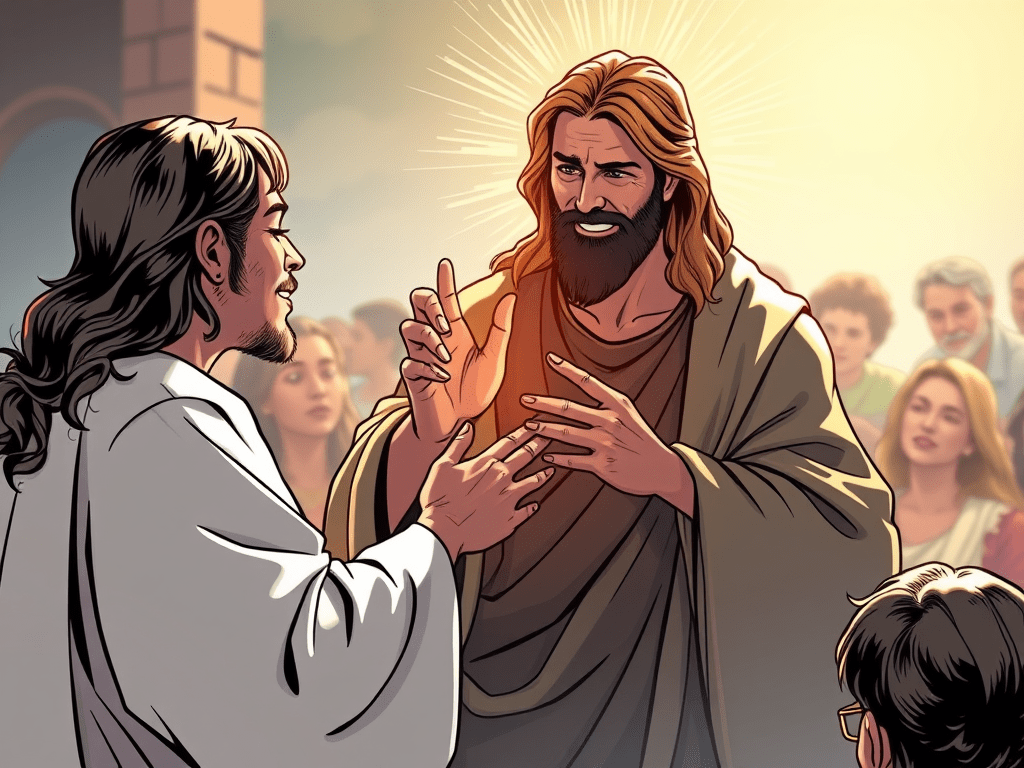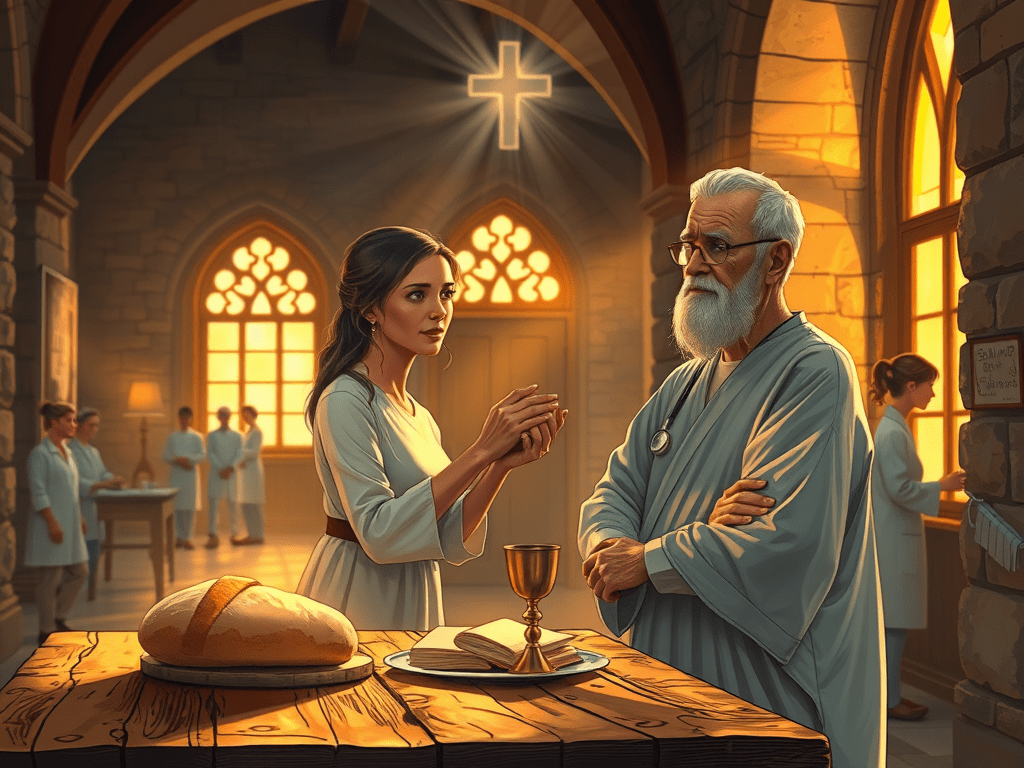
They are experiencing Christianity as joy and hope, having thus become lovers of Christ.

Category: Evangelism & Catechesis

  • 🌍 The Open Table and the Open Road: Why the Feast Demands the Mission

    🌍 The Open Table and the Open Road: Why the Feast Demands the Mission

    Lessons from Isaiah, Matthew, and St. Paul on True Abundance

    Readings for Wednesday, December 3rd 2025: feria: Isaiah (25:6-10), Matthew (15:29-37); St Francis Xavier memorial: 1 Corinthians (9:16-23); Mark (16:15-20)


    I. The Scarcity Mindset vs. The Sacred Feast

    The Advent season drives us toward the ultimate hope, which Isaiah (25:6-10) describes as the Sacred Feast: a divine banquet on the mountain where the mourning veil is removed, and Death is destroyed for ever.

    The miracle in Matthew (15:29-37)—where Jesus feeds the four thousand—is a prefigurement of this eternal abundance. The crowds ate their fill, and the leftovers—the overflow of grace—filled seven baskets.

    Yet, immediately before the miracle, we hear the disciples’ classic reaction to need: scarcity. “Where could we get enough bread in this deserted place?”

    This is the voice of the scarcity mindset, the Amygdala screaming for survival and retreat

    . It focuses on the magnitude of the problem and the limits of our own resources. Jesus’ question is the antidote: “How many loaves have you?” He shifts the focus from the limits of the deserted place to the limitless power of the Provider.


    II. From Overflow to Obligation (The Hero’s Return)

    The overflow—those seven baskets full—is the crucial link to the Missionary Feast. Why does God give us more than enough? Because grace is not meant for storage; it is fuel for the mission.

    Saint Paul, whose memorial we honor today, understood this better than anyone. He writes in 1 Corinthians (9:16-23) that the Gospel is a duty laid upon him: “I should be punished if I did not preach it!”

    In the Hero’s Journey, the Hero receives the Elixir (the Feast/Grace) and must overcome the Refusal of the Return—the temptation to keep the treasure for himself

    . Paul reverses this, making himself “the slave of everyone” to share the blessings. His true reward is offering the Good News free, matching Christ’s costless abundance with his own costless service.


    III. The Signs That Accompany the Word

    The Gospel of Mark (16:15-20) provides the climax, connecting the Feast (the grace received) to the power needed for the road:

    “Go out to the whole world… These are the signs that will be associated with believers: in my name they will cast out devils; they will lay their hands on the sick, who will recover.”

    The healing of the lame, crippled, and blind in the Matthew reading is the tangible sign that accompanies the Word. The grace you receive at the altar is the power to continue this healing mission. The Mission is not just sharing words; it is sharing the supernatural power that destroys sickness, shame, and spiritual bondage.

    IV. Call to Action: Release the Overflow

    This Advent, the call is to live immediately from the overflow, transforming your inner abundance into outward action.

    Your challenge is to practice Mission-Minded Living:

    1. Dismantle Scarcity: Identify one area (time, money, emotional energy) where you are hoarding resources out of fear. Replace the paralyzing thought, “Where could we get enough?” with the faithful command, “How many loaves do I have?” and trust Christ to multiply it.
    2. Make Yourself a Slave (in Love): Following Paul’s example, embrace one small, inconvenient act of service or evangelization this week. Give your time or talent freely, mirroring the abundance you received at the Feast.
    3. Go with the Signs: Approach your daily life knowing the power that destroyed Death rests upon you. Look for opportunities to share the overflow—a word of encouragement, a prayer for a coworker, a simple act of mercy—trusting that the signs of Christ accompany your obedient Word.

    We have been fed. Now, let us share the boundless banquet with the world.

    Developed with assistance from Gemini AI

  • A Word If Spoken

    I’ve carried this meditation for a while.

    I believe that for every person, there is a word—a message—that, if spoken, would cause them to freely and joyfully choose faith and to live for Christ.

    Everyone I’ve ever known who serves Christ with sincerity has heard this word. Maybe not in the same form, not the same message or tone, but they’ve received a word that reached the core of their heart. Something called them—not by force, but with the unmistakable pull of truth and love.

    And because I believe Jesus came that all might be saved, I also believe such a word exists for every person. A message capable of lighting up the heart.

    The only problem?
    I don’t know what that word is.


    The Work-Around

    So here’s what I try instead.

    I tell people: I know there’s a word that, if you heard it, would make you want to seek God with everything in you. I don’t know the word itself. But I’m asking you to assume that maybe it has not yet been spoken to you. 

    And if that’s true, then the most logical response is to begin seeking. Listening. Asking.

    Because if you can believe that at some point the door will be opened, … now it’s just a matter of stepping through.


    What This Says About Grace and Free Will

    This meditation walks a fine line between two deep truths of the faith:

    • That God desires all to be saved (1 Timothy 2:4),
    • And that faith comes by hearing (Romans 10:17).

    Why This Matters to Me

    This belief gives me two things:

    • Hope: That no one is beyond the reach of grace.
    • Humility: That I don’t have to be the one to say the perfect thing. I just have to point toward the Word, however I can.

    In some cases, I believe people are simply too “high up”—too successful, too secure, too self-assured—to look up. They haven’t been brought low enough to feel the need for God. But if they become curious now,… perhaps it will prevent that fall. Or prepare them for it.

    How About You?

    Have you ever had a moment where something clicked—a word, a thought, a memory—that stirred something deeper in you?

    Or maybe you’re still waiting for your word to be spoken?I’d love to hear your reflections, questions, or stories.

    You can leave a comment below. I’d love to hear your reflections, questions, or stories.

    Written with assistance from ChatGPT