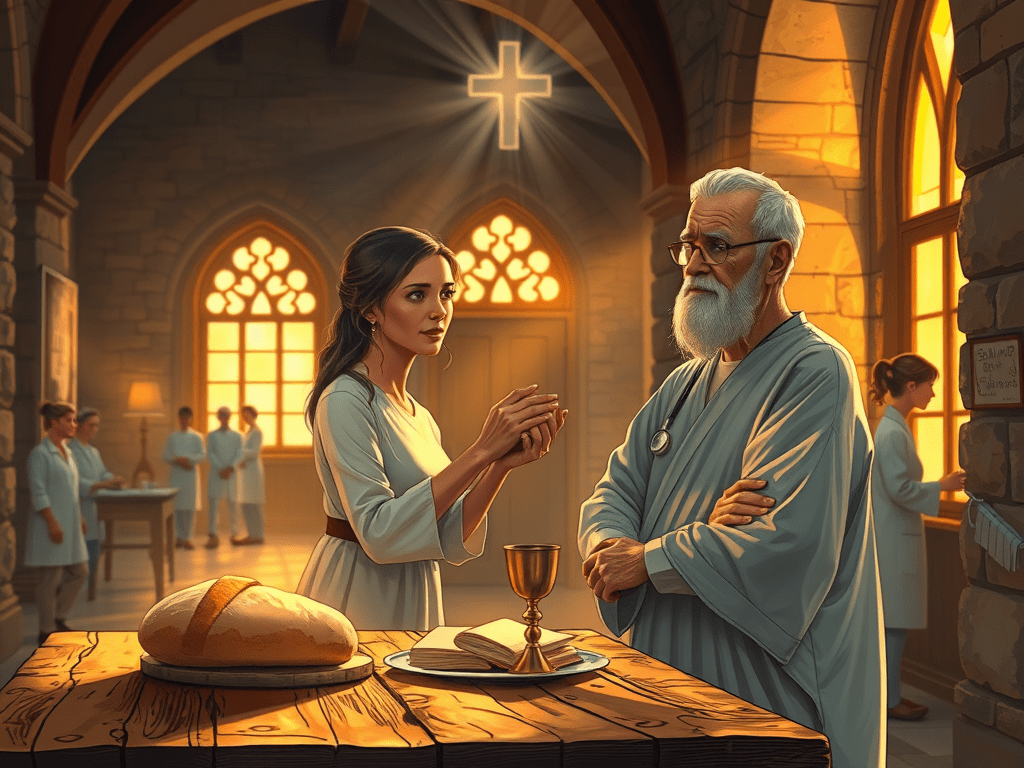
They are experiencing Christianity as joy and hope, having thus become lovers of Christ.

Category: Mercy & Mission

The corporal and spiritual works of mercy, charity vs. institutional aid, and holistic Christian service.

  • The Geometry of Grace:

    The Geometry of Grace:

    Why the Yoke is Actually Light

    We’ve all heard the cynical refrain: “Misfortune falls on the good and the bad alike.” We treat life like a chaotic lottery where lightning strikes the saint and the sinner with equal indifference.

    But is that actually true?

    If we look through the lenses of Catholic Exegesis, Neurobiology, and the Hero’s Journey, we discover a startling reality: Grace isn’t just a theological “extra.” It is a fundamental shift in how a human being interacts with reality.

    1. The Suburbs of Heaven

    C.S. Lewis famously suggested that for those who say “Yes” to God, this life is the beginning of Heaven; for those who say “No,” it is the beginning of Hell.

    This isn’t just a poetic thought. It is a description of an internal ecosystem. The Book of Wisdom tells us that those who do good fare well. When you live a life of grace, you are no longer rowing against the current of the universe. You are aligned with the Creator’s design. This alignment creates a “protective shield”—not by magic, but by a radical reordering of your life.

    2. The Biological Advantage of Peace

    Let’s look at the “structure of the brain.” A life of sin—gluttony, drunkenness, aggressive driving, or constant domestic strife—keeps the brain in a state of chronic Amygdala Hijack. This is the “fight or flight” center. When it’s overactive, your body is flooded with cortisol, your immune system weakens, and your peripheral vision literally narrows. You become more “prone to injury” and “susceptible to accidents” because your brain is too cluttered to pay attention.

    A “Real Christian,” however, operates from the Prefrontal Cortex—the seat of peace and discernment. By practicing chastity, fasting, and a clean conscience, you are essentially “fine-tuning” your biological machine.

    • Better Sleep: Because your conscience is clear.
    • Less Sickness: Because your stress levels are lower and your habits are more responsible.
    • Fewer Accidents: Because you are “less in a hurry” and more aware of the people around you.

    3. The Hero’s Risk and the Martyr’s Paradox

    Now, there is one place where the “Safety of Grace” seems to fail: Sacrifice. In the classic Hero’s Journey, the protagonist eventually leaves the “Safe Zone” to face the dragon for the sake of the village. For the Christian, this is the call to be a Martyr or a servant. We are much more willing to take an injury for others.

    But even here, the experience is different. As Brother Lawrence noted, God does not permit a soul totally abandoned to Him to suffer for “any appreciable length of time” without Divine support. When the world sees a catastrophe, the Christian sees a rebirth.

    4. A Different Dimension of Suffering

    When trials do come—and they will—the “Real Christian” isn’t living in the same dimension as the worldling. For those living only for this world, a trial is “sheer hell” because it threatens their only treasure.

    For the person in Grace, suffering is Sacred Alchemy. Following the thought of St. John Paul II, we see that suffering:

    1. Consumes Evil: It burns away the parts of our ego that we haven’t yet surrendered.
    2. Acts as Penance: It helps us understand the true cost of sin—our own and others’.
    3. Opens a Door: It is the “New Jerusalem” mindset, asking not “Why is this happening to me?” but “What is God trying to show me?”

    The Call to Action: Die to the Hurry

    Spiritual transformation isn’t a theory; it’s a practice. If you want to experience this “Light Yoke,” start with the Great Simplification. * Clean your conscience: Go to Confession and clear the mental clutter.

    • Audit your pace: Intentionally move slower this week. Watch how your “luck” changes when you are no longer in a frantic hurry.
    • Fix your eyes: When the next trial hits, ask God for the strength to see it as a “door” rather than a “wall.”

    Edited with assistance from Gemini
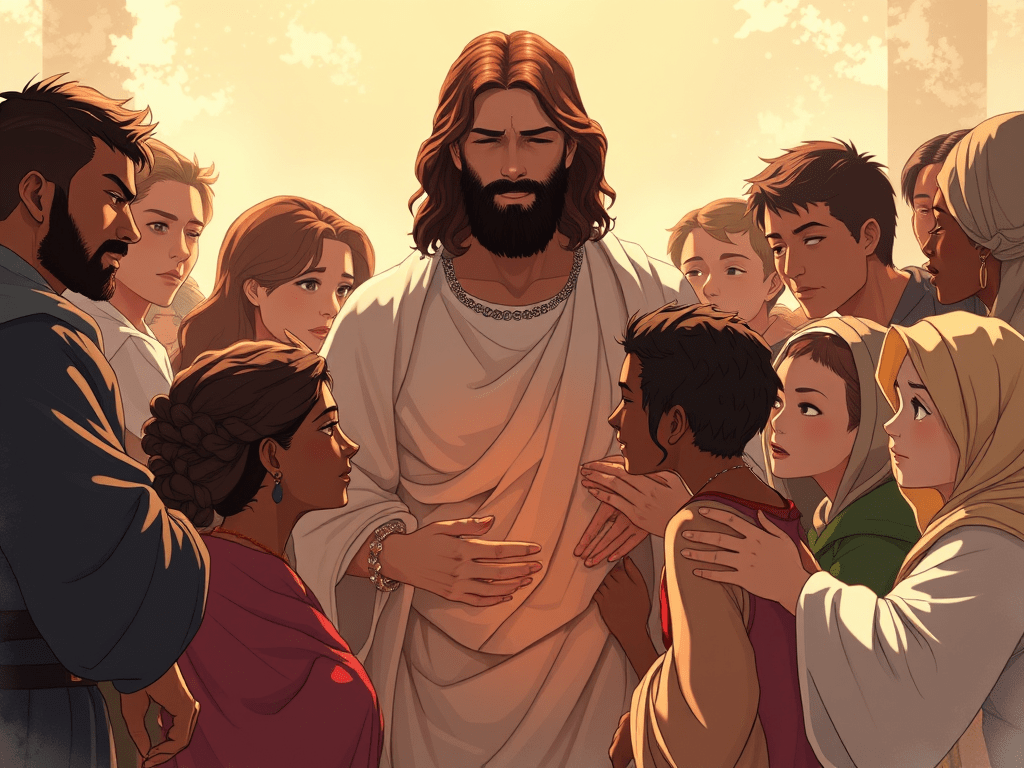
  • The Holy Paradox: Why Choosing Christ Doesn’t Make You “Better”

    The Holy Paradox: Why Choosing Christ Doesn’t Make You “Better”

    Moving from the Ego’s “Us vs. Them” to the Radical Humility of the Father’s Eyes.

    The Subtle Poison of Religious Pride

    When we decide to give our lives to Christ, we cross a threshold. It feels like a victory—and in many ways, it is. But right behind that victory lurks a subtle, spiritual poison. We begin to look at the world through a lens of “us” and “them.” We start to wonder: Am I better than they are?

    The short, jarring answer is: No.

    In the economy of Grace, there is no “better.” There is only the called, the seeking, and the found.

    The Myth of the Self-Made Saint

    We like to think our “Yes” to God is a personal achievement. We treat it like a trophy we earned. But Catholic Exegesis and the history of the Saints tell a different story.

    It is God who provides the environment. It is God who provides the attitude. It is God who guides the choice. You didn’t invent the air you breathe; you simply finally decided to stop holding your breath. Even the initiative to seek Him is a grace He provided.

    Key Insight: All that is good in us comes from Him. All that is evil in us is simply that which has not yet died.

    Beyond the “Sheep and Goats” Mentality

    Our brains are wired to categorize, to judge, and to rank. But to live a life of grace is to override those biological shortcuts and adopt The Father’s Eyes.

    When we look at someone “trapped by sin” or “downtrodden,” we are seeing only the surface. We have no idea what is happening in the deep recesses of their heart. Consider these three truths:

    1. The Invisible Battle: That person may be fighting a psychological or spiritual slavery you cannot imagine.
    2. The Proximity of Grace: The “worse off” a person appears by our standards, the closer they may be to a total, explosive conversion.
    3. The Elder Brother Trap: Like the brother of the Prodigal Son, we can be “right” on the outside while being miles away from the Father’s heart on the inside.

    Suffering as Sacred Alchemy

    Transformation isn’t just about feeling good; it’s about dying to the self. St. John Paul II once wrote that there is a specific kind of suffering that “burns and consumes evil with the flame of love.” When we see someone struggling, we aren’t called to point a finger. We are called to step into the fire with them.

    Because we have been blessed with grace, we don’t have a higher status—we have a higher responsibility. We are called to suffer personally to help others overcome their shadows. This is the “Hero’s Journey” of the soul: descending into the mess of humanity to bring back the light.

    The Mirror: Fixing Our Eyes

    If you find yourself comparing your holiness to your neighbor’s, you have taken your eyes off the Prize.

    We still have enough of ourselves that needs redemption to keep us busy for several lifetimes. The goal isn’t to be “better” than the person in the pew next to you; it is to be more “dead to yourself” than you were yesterday.

    The Call to Action: Today, look at the person you are most tempted to judge. Instead of a “goat,” see a “lost sheep.” Instead of a “sinner,” see a “prodigal.” Ask for the grace to see them not as they are, but as the Father sees them.

    Developed with assistance from Gemini AI

  • The Prefrontal Battle: How Your Brain is Wired for Heroism (Daniel 1 & Mark 12)

    The Prefrontal Battle: How Your Brain is Wired for Heroism (Daniel 1 & Mark 12)

    What if the greatest moral and spiritual battles we face aren’t huge, public crises, but small, private decisions made in a quiet moment? We often look for epic, cinematic faith, but the truth is that spiritual transformation is profoundly neurobiological. It happens inside the three pounds of tissue between your ears.

    Ancient scripture isn’t just about history or ritual; it provides a stunningly accurate blueprint for how our minds function—and malfunction. We see, time and again, moments where two distinct forces within us clash: the primal urge for comfort and the higher calling toward long-term destiny.

    These moments are not unique to ancient prophets or martyrs. They are the Prefrontal Battle that you fight every day. By exploring the quiet discipline of Daniel and the radical sacrifice of the poor widow, we can see that building a heroic life is literally a matter of rewiring your brain through small, consistent acts of will.

    I. The Neuroscience of Discipline

    Our minds are governed by a powerful dual system. Understanding it is the key to spiritual freedom.

    A. The Two Brain Systems

    1. The Limbic System (The Survivalist): This is the brain’s ancient core. It is preoccupied with safety, comfort, instant gratification, and immediate risk assessment. Its mantra is: Survival, Right Now. It is brilliant at keeping you alive, but terrible at achieving your highest potential, as it fears any change, discipline, or risk
    2. The Prefrontal Cortex (PFC) (The Hero): This is the most recently evolved part of the brain, located right behind your forehead. It is the seat of willpower, moral reasoning, long-term planning, and impulse control. The PFC is what allows you to choose a future reward over immediate comfort. Its function is to say “No” to the limbic system’s demands when they conflict with your highest values.

    B. The Case Study: Daniel’s Quiet Victory

    In the Book of Daniel, we encounter a young man exiled to Babylon—the ultimate environment designed for comfort, luxury, and spiritual assimilation. The king provided the Hebrew youth with a daily ration of rich food and wine from his own table. This was not a punishment; it was a profound privilege, a fast track to approval, safety, and integration into the highest social class.

    To the Limbic System (The Survivalist), this was a dream scenario: high-calorie food, social acceptance, and guaranteed protection. The impulse was clear: take the easy path.

    But Daniel’s response was a masterclass in Prefrontal Cortex control:

    Daniel resolved not to defile himself with the king’s food and wine (Daniel 1:8).

    This was a quiet but firm decision of the will. His choice was not about the quality of the food; it was about integrity—choosing his long-term covenant and identity over immediate comfort. He used his PFC to override the powerful, instinctive demands for ease and assimilation.

    He was not asked to fight a dragon or cross a sea; he was asked to choose vegetables and water over the king’s bounty. The mythological lesson here is that great destinies are formed through small, repeatable acts of discipline.

    C. The Scientific Principle: Holiness is Habit

    The story reveals the direct reward of this PFC control: After ten days, Daniel and his companions looked “healthier and better nourished” than those who ate the king’s food (Daniel 1:15).

    This result is a spiritual reality, but it is also a powerful metaphor for Neuroplasticity. Every time Daniel chose his higher value (his faith) over his primal urge (rich food), he reinforced a new neural pathway. Every decision strengthened his PFC control over his Limbic System.

    • Holiness is Habit: Spiritual growth is not about a one-time heroic feat, but about consistent, small decisions that literally rewire the brain. You strengthen what you repeatedly use. Choosing integrity over comfort, even in the smallest things, is the process of building the neurobiological architecture required for heroism.

    II. The Neuroscience of Sacrifice

    Now, we move from the discipline of refusal to the ultimate test of the PFC: Sacrifice.

    A. The Brain Hates Sacrifice

    The Limbic System views sacrifice as illogical and terrifying. Its primary directive is to hoard resources and minimize risk. The brain views giving away resources—especially those necessary for survival—as an existential threat. This fear is a powerful inhibitor of true faith and generosity.

    B. The Case Study: The Widow’s Radical Override

    Jesus was watching the wealthy drop large, impressive amounts of money into the temple treasury. These were acts of generosity, but they were measured and safe—they gave from their “abundance” (Mark 12:41-44). Their Limbic System remained perfectly comfortable.

    Then He saw her: a poor widow who put in only two small copper coins.

    Jesus declared that this smallest gift was the greatest one. Why? Because:

    “She, from her poverty, has put in all she had to live on.”

    This act is the ultimate PFC override. She overcame her most fundamental, primal survival instinct—the fear of hunger, homelessness, and death—and entrusted her future to God. She chose Trust (PFC) over Self-Preservation (Limbic System). She demonstrated that faith and love cannot be lived from a place of certainty.

    III. Conclusion: The Logic of Love

    The Prefrontal Battle is not an isolated spiritual struggle; it is the fundamental process by which we align ourselves with the highest reality.

    The highest principle that justifies the PFC’s battle is Love.

    • For Daniel, the PFC choice was motivated by Love for God’s Covenant (identity) over the love of comfort.
    • For the Widow, the PFC choice was motivated by radical Love and Trust in God over the love of self-preservation.

    The Limbic System calculates safety; it fears loss, and it hoards resources. But the highest function of human consciousness, driven by the PFC, is to pursue a value—a higher love—that transcends immediate survival.

    This is why ancient scripture, confirmed by modern neurobiology, teaches us that the path to transformation is paved with deliberate, courageous choices:

    • You cannot live a life of true faith or love from a place of safety and certainty.
    • Every time you choose a higher moral truth over your brain’s instinctual demand for comfort, you are literally rewiring your consciousness.

    The heroic journey starts not with a grand announcement, but with a quiet, firm decision of the will.

    The Question is: What is your PFC fighting for today?

    Ask yourself: What small discipline is God asking of you today? Is it refusing the “king’s rich food” (a destructive habit or easy lie), or is it surrendering your last “two coins” (a fear, a calculation, or a piece of control)? The power to choose is in your PFC, and the logic of that choice is always love.

    Developed with assistance from Gemini AI

  • 🌍 The Open Table and the Open Road: Why the Feast Demands the Mission

    🌍 The Open Table and the Open Road: Why the Feast Demands the Mission

    Lessons from Isaiah, Matthew, and St. Paul on True Abundance

    Readings for Wednesday, December 3rd 2025: feria: Isaiah (25:6-10), Matthew (15:29-37); St Francis Xavier memorial: 1 Corinthians (9:16-23); Mark (16:15-20)


    I. The Scarcity Mindset vs. The Sacred Feast

    The Advent season drives us toward the ultimate hope, which Isaiah (25:6-10) describes as the Sacred Feast: a divine banquet on the mountain where the mourning veil is removed, and Death is destroyed for ever.

    The miracle in Matthew (15:29-37)—where Jesus feeds the four thousand—is a prefigurement of this eternal abundance. The crowds ate their fill, and the leftovers—the overflow of grace—filled seven baskets.

    Yet, immediately before the miracle, we hear the disciples’ classic reaction to need: scarcity. “Where could we get enough bread in this deserted place?”

    This is the voice of the scarcity mindset, the Amygdala screaming for survival and retreat

    . It focuses on the magnitude of the problem and the limits of our own resources. Jesus’ question is the antidote: “How many loaves have you?” He shifts the focus from the limits of the deserted place to the limitless power of the Provider.


    II. From Overflow to Obligation (The Hero’s Return)

    The overflow—those seven baskets full—is the crucial link to the Missionary Feast. Why does God give us more than enough? Because grace is not meant for storage; it is fuel for the mission.

    Saint Paul, whose memorial we honor today, understood this better than anyone. He writes in 1 Corinthians (9:16-23) that the Gospel is a duty laid upon him: “I should be punished if I did not preach it!”

    In the Hero’s Journey, the Hero receives the Elixir (the Feast/Grace) and must overcome the Refusal of the Return—the temptation to keep the treasure for himself

    . Paul reverses this, making himself “the slave of everyone” to share the blessings. His true reward is offering the Good News free, matching Christ’s costless abundance with his own costless service.


    III. The Signs That Accompany the Word

    The Gospel of Mark (16:15-20) provides the climax, connecting the Feast (the grace received) to the power needed for the road:

    “Go out to the whole world… These are the signs that will be associated with believers: in my name they will cast out devils; they will lay their hands on the sick, who will recover.”

    The healing of the lame, crippled, and blind in the Matthew reading is the tangible sign that accompanies the Word. The grace you receive at the altar is the power to continue this healing mission. The Mission is not just sharing words; it is sharing the supernatural power that destroys sickness, shame, and spiritual bondage.

    IV. Call to Action: Release the Overflow

    This Advent, the call is to live immediately from the overflow, transforming your inner abundance into outward action.

    Your challenge is to practice Mission-Minded Living:

    1. Dismantle Scarcity: Identify one area (time, money, emotional energy) where you are hoarding resources out of fear. Replace the paralyzing thought, “Where could we get enough?” with the faithful command, “How many loaves do I have?” and trust Christ to multiply it.
    2. Make Yourself a Slave (in Love): Following Paul’s example, embrace one small, inconvenient act of service or evangelization this week. Give your time or talent freely, mirroring the abundance you received at the Feast.
    3. Go with the Signs: Approach your daily life knowing the power that destroyed Death rests upon you. Look for opportunities to share the overflow—a word of encouragement, a prayer for a coworker, a simple act of mercy—trusting that the signs of Christ accompany your obedient Word.

    We have been fed. Now, let us share the boundless banquet with the world.

    Developed with assistance from Gemini AI

  • The Forgotten Works of Mercy

    The Spiritual Works of Mercy We Neglect

    When most people think of the works of mercy, they picture food pantries, homeless shelters, hospitals, or clothing drives. And rightly so — these are the corporal works of mercy, the ways we meet Christ in the hungry, the sick, and the poor.

    But the Church also teaches about another set of works, just as essential, and perhaps even harder to live out: the spiritual works of mercy.

    They are seven in number:

    1. To instruct the ignorant
    2. To counsel the doubtful
    3. To admonish sinners
    4. To bear wrongs patiently
    5. To forgive offenses willingly
    6. To comfort the afflicted
    7. To pray for the living and the dead

    How often do you hear these preached from the pulpit, or listed on a parish flyer? Not very often. And yet, these are the works that strike at the root of human misery.

    They demand courage. It is easier to hand someone a sandwich than to tell them, in love, that they are living in sin. It is easier to donate a coat than to forgive a deep betrayal. It is easier to write a check than to bear wrongs patiently, without bitterness.

    The spiritual works of mercy cut straight to the heart of discipleship. They require that we share in Christ’s own patience, His own forgiveness, His own willingness to carry the cross of others.

    If Western society has built structures to handle much of the corporal work — food banks, hospitals, relief agencies — then Christians are left with an even greater responsibility. We must be the ones who feed souls.

    This does not mean abandoning corporal charity. Rather, it means bringing mercy to its fullness: bread and truth, clothing and forgiveness, shelter and prayer.

    The forgotten works of mercy are not optional. They are the lifeblood of Christian witness. And in a world starving for meaning, they may be the most urgent mission field of all.

    Developed with assistance from ChatGPT-5

  • Feeding Bellies, Starving Souls

    Why Charity Alone Is Not Enough

    I once came across a piercing phrase: “Catholic Charities: feeding bellies; starving souls.” It stayed with me because it names a real temptation for Christians in our time: to give generously to the body, while neglecting the soul.

    Of course, corporal works of mercy are essential. Jesus tells us to feed the hungry, clothe the naked, and shelter the homeless. And Catholic institutions do this at a massive scale. But if that is where mercy ends, we have fallen short.

    Physical hunger is serious, but spiritual hunger is eternal. Jesus did not only multiply loaves. He said, “I am the Bread of Life. Whoever comes to Me shall not hunger, and whoever believes in Me shall never thirst” (Jn 6:35).

    If we only fill stomachs without pointing people to Christ, we risk leaving them starved in the most important way. A man with bread in his hand but emptiness in his heart is still in poverty.

    True Christian mercy must hold both together: bread for the body and Bread for the soul. Shelter and forgiveness. Clothing and truth. A warm meal and the promise of eternal life.

    This is the challenge for Christians today. Society has woven corporal works of mercy into its fabric through welfare, charities, and aid programs. But who will take responsibility for the spiritual works of mercy? Who will teach the ignorant, counsel the doubtful, forgive the offender, pray for the living and the dead?

    We cannot outsource those. They belong to us — to the Church, to every disciple of Christ.

    If we want to be true to the Gospel, then our charity cannot stop at the body. It must reach the soul, where Christ Himself longs to dwell.

    Developed with assistance from ChatGPT-5

  • Beyond Bread Alone:

    The Forgotten Works of Mercy

    In the first blog, we saw how the corporal works of mercy have become part of the very fabric of Western society. Food banks, hospitals, charities, and even government programs echo Christ’s command to feed, clothe, and shelter those in need. That is a powerful legacy of Christianity.

    But mercy is not only about the body. It is also about the soul.

    The Church has always taught about the spiritual works of mercy:

    • Instruct the ignorant
    • Counsel the doubtful
    • Admonish the sinner
    • Bear wrongs patiently
    • Forgive offenses willingly
    • Comfort the afflicted
    • Pray for the living and the dead

    Unlike their corporal counterparts, these spiritual works are not easily institutionalized. A government cannot legislate forgiveness. A nonprofit cannot substitute for patient endurance. No program can replace prayer.

    And yet, it may be precisely these works that our world needs most today.

    In many places, hunger for truth is deeper than hunger for bread. Loneliness wounds more people than sickness. A culture of anger and resentment cries out for forgiveness and patience. In a world full of noise, people are starving for real counsel, comfort, and prayer.

    The danger is that Christians become content with mercy limited to the material. We may feed bodies but leave souls untouched. We may shelter people but never welcome them into communion with Christ. True mercy must be both corporal and spiritual — not either/or but both/and.

    Jesus Himself reminds us: “Man does not live by bread alone, but by every word that comes from the mouth of God” (Mt 4:4). To give bread without the Word is to give half a meal.

    So here is the challenge: if society is already carrying forward the physical dimension of mercy (often thanks to its Christian roots), then perhaps the unique responsibility of Christians today is to restore the spiritual works of mercy to their rightful place.

    This is not about abandoning corporal works — far from it. It is about remembering that real love, Christian love, reaches deeper than the body. It touches the heart, the soul, the eternal destiny of the person in front of us.

    In the next blog, we will look at practical ways to integrate both: how Christians can care for bodies and souls, ensuring that mercy is whole and holy.

    Developed with assistance from ChatGPT-5

  • Have We Outsourced the Works of Mercy?

    In the Gospels, Jesus gave His followers the command to live out the corporal works of mercy: feed the hungry, give drink to the thirsty, clothe the naked, welcome the stranger, visit the sick and the prisoner, and bury the dead. These simple, concrete acts of love are how Christians have always revealed Christ to the world.

    Over centuries, these works became so deeply woven into Western society that many people today hardly notice their Christian origin. Hospitals, food pantries, shelters, charities, and even government welfare programs all reflect the lasting influence of the Gospel. In many ways, the corporal works of mercy are part of the very fabric of our culture.

    That is good news. But it also raises an important question: have we outsourced mercy to institutions?

    Think about it. In modern society, there is almost always a program, charity, or government office ready to provide physical care. This is not bad — in fact, it is evidence of Christianity’s leavening effect on culture. Yet when mercy is reduced to only social services, something essential is lost.

    Christians are not called simply to hand off good works to others. We are called to bring Christ Himself into every act of mercy. Feeding the hungry is not complete without offering the Bread of Life. Giving shelter is not full without welcoming someone into genuine human community. Visiting the sick is not just about treatment but about hope and prayer.

    If we only address the body while leaving the soul untouched, mercy becomes incomplete. As one observer put it, some Catholic charities risk “feeding bellies while starving souls.”

    So, while society may continue the corporal works in their material form, Christians are still uniquely responsible for the deeper task: to ensure that mercy reaches both body and soul.

    This series will explore that balance — beginning with the works of mercy everyone knows, and moving toward the often-forgotten spiritual works of mercy. Together, they reveal a vision of Christian love that cannot be replaced by any program or policy.

    Developed with assistance from ChatGPT-5

  • Freedom of Religion and the Courage to Listen

    Respectful Sharing Strengthens Faith, not Fear.

    Freedom of religion means more than just the right to believe privately. It also implies that no one should be offended simply because someone shares their faith. After all, whenever people talk with us—about life, health, politics, or anything else—they are really sharing what they believe. Religion is no different.

    If you are firm in your faith, hearing another perspective should only strengthen your own conviction. If you are not firm, it may reveal that you are still searching. But violence or hostility toward another’s witness usually signals insecurity, not strength.

    Of course, freedom also requires respect. If someone is badgering you or distracting you from your purpose, it is fair to set boundaries. And this works both ways. If you share your faith with someone and they show no interest beyond a simple conversation, move on. It may not be for them—or it may not yet be their time. Pushing too hard can close the very door you hope will one day open.

    True freedom of religion is not silence, but respectful exchange. It gives room for each heart to seek truth in peace.

    Developed with assistance from ChatGPT-5

    Follow-up Reflection:
    Freedom of Religion, Truth, and the Search for Eternity – Why freedom demands responsibility in faith.