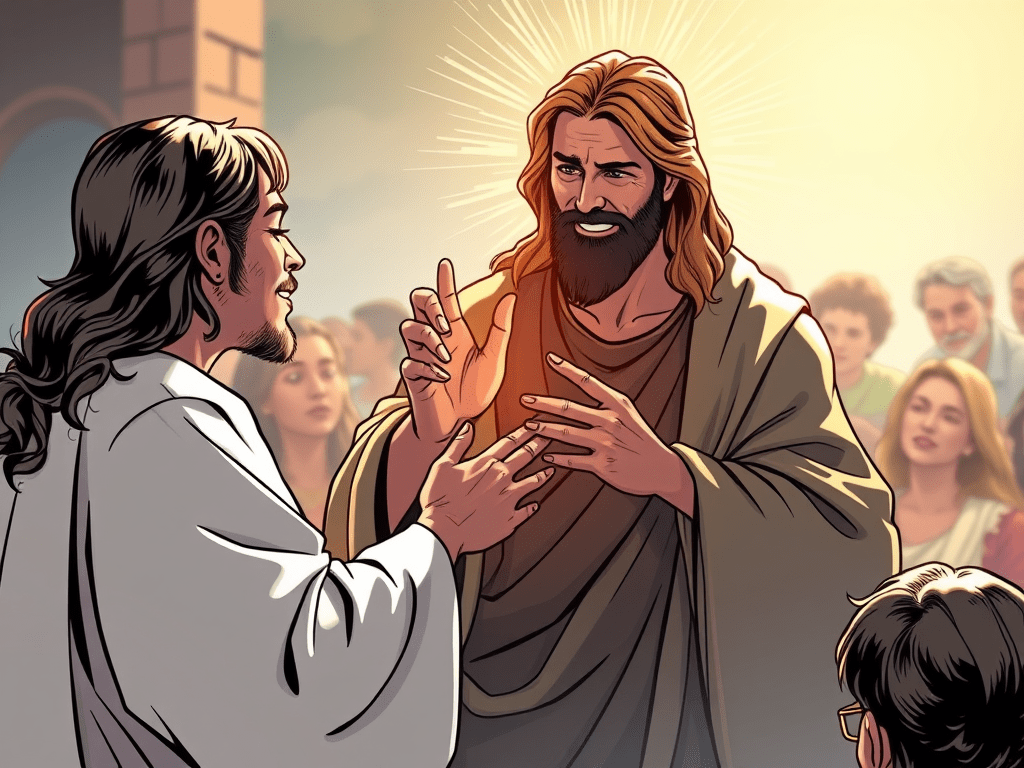
They are experiencing Christianity as joy and hope, having thus become lovers of Christ.

Category: Sacramental & Prayer Life

  • 🌍 The Open Table and the Open Road: Why the Feast Demands the Mission

    🌍 The Open Table and the Open Road: Why the Feast Demands the Mission

    Lessons from Isaiah, Matthew, and St. Paul on True Abundance

    Readings for Wednesday, December 3rd 2025: feria: Isaiah (25:6-10), Matthew (15:29-37); St Francis Xavier memorial: 1 Corinthians (9:16-23); Mark (16:15-20)


    I. The Scarcity Mindset vs. The Sacred Feast

    The Advent season drives us toward the ultimate hope, which Isaiah (25:6-10) describes as the Sacred Feast: a divine banquet on the mountain where the mourning veil is removed, and Death is destroyed for ever.

    The miracle in Matthew (15:29-37)—where Jesus feeds the four thousand—is a prefigurement of this eternal abundance. The crowds ate their fill, and the leftovers—the overflow of grace—filled seven baskets.

    Yet, immediately before the miracle, we hear the disciples’ classic reaction to need: scarcity. “Where could we get enough bread in this deserted place?”

    This is the voice of the scarcity mindset, the Amygdala screaming for survival and retreat

    . It focuses on the magnitude of the problem and the limits of our own resources. Jesus’ question is the antidote: “How many loaves have you?” He shifts the focus from the limits of the deserted place to the limitless power of the Provider.


    II. From Overflow to Obligation (The Hero’s Return)

    The overflow—those seven baskets full—is the crucial link to the Missionary Feast. Why does God give us more than enough? Because grace is not meant for storage; it is fuel for the mission.

    Saint Paul, whose memorial we honor today, understood this better than anyone. He writes in 1 Corinthians (9:16-23) that the Gospel is a duty laid upon him: “I should be punished if I did not preach it!”

    In the Hero’s Journey, the Hero receives the Elixir (the Feast/Grace) and must overcome the Refusal of the Return—the temptation to keep the treasure for himself

    . Paul reverses this, making himself “the slave of everyone” to share the blessings. His true reward is offering the Good News free, matching Christ’s costless abundance with his own costless service.


    III. The Signs That Accompany the Word

    The Gospel of Mark (16:15-20) provides the climax, connecting the Feast (the grace received) to the power needed for the road:

    “Go out to the whole world… These are the signs that will be associated with believers: in my name they will cast out devils; they will lay their hands on the sick, who will recover.”

    The healing of the lame, crippled, and blind in the Matthew reading is the tangible sign that accompanies the Word. The grace you receive at the altar is the power to continue this healing mission. The Mission is not just sharing words; it is sharing the supernatural power that destroys sickness, shame, and spiritual bondage.

    IV. Call to Action: Release the Overflow

    This Advent, the call is to live immediately from the overflow, transforming your inner abundance into outward action.

    Your challenge is to practice Mission-Minded Living:

    1. Dismantle Scarcity: Identify one area (time, money, emotional energy) where you are hoarding resources out of fear. Replace the paralyzing thought, “Where could we get enough?” with the faithful command, “How many loaves do I have?” and trust Christ to multiply it.
    2. Make Yourself a Slave (in Love): Following Paul’s example, embrace one small, inconvenient act of service or evangelization this week. Give your time or talent freely, mirroring the abundance you received at the Feast.
    3. Go with the Signs: Approach your daily life knowing the power that destroyed Death rests upon you. Look for opportunities to share the overflow—a word of encouragement, a prayer for a coworker, a simple act of mercy—trusting that the signs of Christ accompany your obedient Word.

    We have been fed. Now, let us share the boundless banquet with the world.

    Developed with assistance from Gemini AI
  • One Bead, Three Charity Bombs: Ignite the Third Hail Mary

    One Bead, Three Charity Bombs: Ignite the Third Hail Mary

    You’re at the start of the Rosary.

    First bead → Faith (blank map → step; Host → Him; hard thing → anyway).

    Second bead → Hope (pain → temp; failure → fuel; dead-end → done).

    Third bead rolls in:

    “Hail Mary… increase in us charity…”

    …and your heart quietly files for bankruptcy.

    Not anymore.

    Here are three 30-second love detonators to drop before or during that final Hail Mary.

    Pick one. Pick all. Just make it explode.

    Detonator #1 – WILL THEIR HEAVEN, NOT MY COMFORT

    Charity isn’t warm fuzzies. It’s ruthless goodwill.

    Your move:

    Before the prayer, name the person who makes your skin crawl.

    Picture Jesus dying for THEM too.

    Pray: “I want heaven for them—even if they never say sorry.”

    Detonator #2 – DIE A LITTLE, RIGHT NOW

    Real love always kills part of you so someone else can live more.

    Your move:

    During the Hail Mary, pick one concrete discomfort today (skip the reply, take the blame, send the money, shut up).

    Offer it for that person.

    Whisper: “This tiny death is my love letter.”

    Detonator #3 – BORROW MARY’S HEART (SHE’S LOANING)

    She watched her Son butchered and her heart didn’t shrink—it stretched.

    Your move:

    While the words roll, beg: “Mom, lend me your Immaculate Heart for 30 seconds.”

    Feel it expand.

    Then go love with hers because yours is broke.

    TL;DR (because brain)

    Want their heaven > want my comfort.

    Die small today.

    Borrow Mary’s heart.

    Screenshot this.

    Next time that third bead hits your fingers, drop the love bomb.

    Series complete: Faith ✓ Hope ✓ Love ✓

    Stay dangerous, stay Catholic.

  • Quiet Heart, Loud Faith: Three Sparks to Renew the Church

    Quiet Heart, Loud Faith: Three Sparks to Renew the Church

    Faith in the Noise

    World spins fast—tech, truth, opinions shift.

    Noise everywhere. Easy to lose what matters.

    • Church mission? Never needed calm.
    • Starts with faith—deep in the heart.

    Silence often anchors quietly.

    One breath of quiet = your next spark?


    Depth Over Activity

    Church today? Not more programs. Not louder voices.

    Needs depth—people who pray, meet God in silence.

    • Live the Gospel first.
    • Faith isn’t meetings or debates.
    • Comes from grace—God loved us first, fully.

    Let love move you daily.

    One quiet moment = instant recharge.


    Renewal & Shine

    Remember that love? Faith becomes a lens.

    See God in work, people, hidden places.

    • Church renews through awakened hearts—not new plans.
    • Christ: “Take courage; I overcame.”
    • Hope in Him, not results.

    Restless world? Still radiant.

    You’re the light—ready to glow?

  • One Bead, Three Hope Bombs: Ignite the Second Hail Mary

    One Bead, Three Hope Bombs: Ignite the Second Hail Mary

    You’re at the start of the Rosary.

    First bead: “increase in us faith.”

    (If you missed it, we lit that fuse yesterday: blank map → step; Host → Him; hard thing → anyway.) One Bead, 3 Faith Bombs:

    Now the second bead rolls in:

    “Hail Mary… increase in us hope…”

    …and your mind blanks again.

    No more.

    Here are three 30-second mental detonators to drop before or during that single Hail Mary.

    Pick one. Pick all. Just make it explode.


    Detonator #1 – ANCHOR YOUR HEART IN HEAVEN

    Scene: Every cross you carry is a temp rental.

    Heaven is the forever address.

    Your move:

    Before the prayer starts, picture your heaviest pain nailed to the Cross—then vanishing at the empty tomb.

    “I bank on eternity, not the invoice.”


    Detonator #2 – GOD RECYCLES FAILURES INTO GLORY

    Fact: Your worst faceplant is raw material.

    Joseph: sold → pit → prison → palace.

    Your move:

    During the Hail Mary, hand God one specific failure.

    Whisper: “Turn this trash into throne.”

    (Pro tip: He’s the ultimate up-cycler.)


    Detonator #3 – RESURRECTION ALREADY CASHED THE CHECK

    Fact: Christ rose. Death lost. Hope won.

    Your move:

    Name one dead-end staring you down today.

    Lock eyes on the Risen One while the words roll.

    “I rest in the victory lap already run.”


    TL;DR (because scroll)

    Pain → temp.

    Failure → fuel.

    Dead-end → done.

    Screenshot this.

    Next time that second bead hits your fingers, light the fuse.

    Love bead dropping soon—stay locked in, stay Catholic.

  • One Bead, Three Faith Bombs: Ignite the First Hail Mary

    One Bead, Three Faith Bombs: Ignite the First Hail Mary


    You’re at the start of the Rosary.

    The first bead rolls under your thumb.

    “Hail Mary… increase in us faith…”

    …and your mind blanks.

    No more.

    Here are three 30-second mental detonators to drop before or during that single Hail Mary.

    Pick one. Pick all. Just make it explode.


    Detonator #1 – TRUST THE UNSEEN PROMISE

    Scene: Abraham, 75, no map, no preview.

    God: “Pack up. I’ll show the land… later.”

    Abe: “Let’s go.”

    Your move:

    Before the prayer starts, picture your unknown road.

    That nudge you’re dodging?

    Step onto the dirt.

    “I trust the Giver, not the preview.”


    Detonator #2 – JESUS IS LITERALLY HERE

    Fact: The Eucharist isn’t symbolic.

    It’s Body, Blood, Soul, Divinity.

    Storm-calmer → 1-inch host.

    Your move:

    During the Hail Mary, zoom in on the tabernacle.

    Whisper: “You’re in there. I believe—even if feelings bail.”

    (Pro tip: imagine the Host glowing like it holds the universe. It does.)


    Detonator #3 – FAITH IS A VERB ON MUTE

    Feelings: “This is trash.”

    Circumstances: “Quit.”

    Faith: “Still moving.”

    Your move:

    Name one hard act for today—forgive, pray, show up.

    Lock it in as the words roll.

    “I obey when everything screams stop.”


    TL;DR (because scroll)

    1. Blank map → step.
    2. Host → Him.
    3. Hard thing → anyway.

    Screenshot this.

    Next time that first bead hits your fingers, light the fuse.Hope bead dropping soon—stay locked in, stay Catholic.

  • Praying and Doing

    The Battle We’re Called to Fight

    “You can’t just pray and do nothing. And you can’t just do and forget to pray. Victory requires both.”

    This Sunday, the deacon shared a story that stuck with me. A soldier, preparing for battle, asked a priest:

    “If God already knows the outcome, why do we need to pray? If He wants us to win, we’ll win. And if He wants us to lose, we’ll lose.”

    The priest thought for a moment and asked in return:

    “If the outcome is already determined, why are you putting on your armor and picking up your sword?”

    That hit home.

    Just like the soldier needs armor and a sword to stand a chance in battle, we need the armor of God and the power of prayer to face the spiritual battles in our lives. But it’s not one or the other—it’s both.

    Too often, we fall into one of two traps:

    • We pray, but we don’t act.
    • Or we act, but we forget to pray.

    But true Christian life—true victory—requires both faith and action. We must pray as if everything depends on God… and then go out and live, serve, speak, and love as if everything depends on us.


    A Faith That Moves

    This reminds me of James 2:16:

    “If one of you says to them, ‘Go in peace; keep warm and well fed,’ but does nothing about their physical needs, what good is it?”

    Prayer should move us to action. It draws us closer to God and closer to those He puts in our lives. When we pray for someone, it’s not just words. It’s a moment of deep connection that should stir us to respond.


    The Armor of God Is for Battle

    We don’t wear spiritual armor to sit in the pew and wait for God to fix things. We wear it because we are in a battle.

    • A battle for truth
    • A battle for love
    • A battle for souls
    • A battle for the broken

    Prayer prepares us. But we must still show up—with courage, sacrifice, and love.


    Summary: Pray. Then Go.

    The message is simple:

    • Don’t pray without doing.
    • Don’t do without praying.
    • God doesn’t need our armor or action—but He chooses to work through them.

    When we pray with faith and act with love, we become part of God’s answer to the world’s cries.


    ✍️ Reflect & Respond:

    • Who are you praying for right now?
    • Is there a way God might be asking you to take action for them?
    • Are there battles in your life where you’ve been waiting—but not fighting?

    🔔 Like what you’re reading?

    Subscribe, share, or comment below—and join the journey of living fully alive in Christ.

    Written with assistance from ChatGPT

  •  Why John 3:16 Still Matters

    (and How to Hear It Anew)

    Q4: “Why does John 3:16 matter so much—haven’t we heard it so often that it loses meaning?”

    Answer:

    John 3:16 may be the most familiar verse in all of Scripture, but that familiarity can dull its impact. When we pause to truly reflect on what it says, we uncover the entire Gospel in one line—a line that reveals who God is, what He does, and how we are called to respond.

    1. The Gospel in One Sentence

    • God’s Initiative:
      The verse doesn’t begin with our effort. It begins with God’s love. “God so loved the world…” means He made the first move. His love is not reactive—it’s freely given.
    • The Gift of His Son:
      Love isn’t just a feeling here—it’s action. God gave His only Son. That’s not poetry; it’s the painful reality of the Cross, where divine love bore real suffering to save us.
    • Belief That Brings Life:
      Believing in Jesus means entrusting ourselves to Him. The result? Not just avoidance of perishing, but the gift of eternal life—a transformed life starting now.

    This is why the early Church, the Reformers, and modern evangelists have all held this verse so dearly. It’s a compact version of the entire Christian message.

    2. The Danger of Over-Familiarity

    • We Hear Without Listening:
      We’ve seen John 3:16 on signs, T-shirts, and bumper stickers. It becomes background noise—true, but unengaging.
    • We Lose the Weight of It:
      The words are simple, but their meaning is not. This verse speaks of cosmic love and costly redemption—things we shouldn’t glide past.
    • It No Longer Moves Us:
      Familiarity can harden the heart. But the Word of God isn’t meant to be skimmed. It’s meant to pierce, comfort, and renew.

    3. Ways to Hear It Anew

    • Reimagine the Scene:
      Imagine being at the foot of the Cross or standing before the empty tomb. What does it mean for God to give His Son there?
    • Personalize It:
      Insert your name into the verse: “For God so loved [Your Name]…” That’s not self-centered—it’s the point. God’s love is deeply personal.
    • Use Lectio Divina:
      Slowly read John 3:16 four times, focusing each time on a different word or phrase—like “loved,” “gave,” or “eternal.” What stirs in your spirit?
    • Share It Anew:
      Try telling a friend why John 3:16 matters to you today. Giving voice to Scripture helps break the dullness of repetition.

    4. Biblical and Historical Echoes

    • Early Church:
      Used John 3:16 as a summary creed for new Christians, especially at baptisms.
    • Reformation Era:
      Luther and Calvin frequently returned to this verse to emphasize grace and faith, countering legalism and works-based salvation.
    • Modern Witness:
      This verse still appears in hymns, testimonies, and public evangelism—not because it’s cliché, but because it’s central.

    Discussion Prompt:
    When you hear John 3:16 today, which word or phrase jumps out at you? Why? How might focusing on just that one part reshape how you see God’s love for you?

    Composed and edited with assistance from ChatGPT

    Related Posts:

    “Deus Caritas Est” Summary Sections 1 thru 8

    What Does It Mean to Truly Meet Jesus?

    Why Does Christianity Feel Like It’s All About Rules?

    How Do I Know If I’ve Truly Encountered God’s Love?

  • Daily Bread and the Water of Life: How Jordan Peterson Illuminates the Christian Path

    How Jordan Peterson Illuminates the Christian Path

    Understanding the Difference Between the Strength to Endure and the Power to Be Transformed

    Bread and Water — Not So Simple After All

    Jordan Peterson often reflects on symbolic language from scripture, and two of the most powerful symbols he invokes are:

    • “Our daily bread” from the Lord’s Prayer
    • The “Water of Life” from mythology and scripture

    At first glance, these might seem like simple metaphors for sustenance. But in Peterson’s interpretation — and in Christian tradition — they point to two very different kinds of spiritual need:

    One is about surviving today. The other is about being remade forever.


    1. “Our Daily Bread”: The Strength to Endure

    In the Lord’s Prayer, we ask God:

    “Give us this day our daily bread.”

    Peterson emphasizes the humility and psychological realism in this request. It is not a prayer for abundance, power, or escape. It’s a prayer for just enough:

    • Enough order to hold chaos at bay
    • Enough meaning to face suffering without resentment
    • Enough strength to carry today’s cross

    This bread is the daily discipline of responsibility, gratitude, and humility. It reminds us:

    You don’t need everything at once. You need just what helps you be who you must be — today.


    2. The “Water of Life”: The Power to Be Transformed

    In contrast, Peterson’s “Water of Life” carries a different weight. It is:

    • A symbol of transformative knowledge
    • The treasure of the Hero’s Journey
    • The result of a voluntary descent into chaos and suffering

    Whereas bread helps you endure, the Water of Life changes you. In Christian imagery, this aligns closely with baptism:

    • You descend into the water — chaos, death, the unknown
    • You rise from the water — renewed, alive, and joined to Christ

    This water is not safe. It destroys the old self. But it brings the gift of new life — and that’s exactly what makes it sacred.


    3. How the Two Symbols Work Together

    SymbolDaily BreadWater of Life
    Scriptural SourceThe Lord’s Prayer (Matthew 6:11)John 4:14, Revelation 22, Baptism imagery
    PurposeSustains through sufferingTransforms through death and rebirth
    Peterson’s ViewStrength to live rightly todayGift of truth found in chaos and return
    Emotional ToneTrust, humility, perseveranceCourage, surrender, sacrifice

    Both are vital. One is ongoing sustenance. The other is a moment of resurrection.

    In the Christian life, you need both:

    • Bread, to endure your mission.
    • Water, to be reborn into it.

    4. Fulfilled in Christ

    The deepest insight, for Christians, is this:

    Jesus gives both.

    • He is the Bread of Life — broken and given to us daily in the Eucharist
    • He is the Living Water — poured out in baptism, and offered to the woman at the well

    Christ meets our daily needs and transforms our eternal destiny.


    Conclusion: The Hero’s Journey Needs Both

    Jordan Peterson’s insight into these symbols helps modern seekers rediscover the depth of Christian tradition. We need the daily bread to walk the hard road. We need the water of life to become new people.

    The Church has always offered both — and Christ is the source of each.


    Want more?
    Explore how other symbols in scripture reflect the Hero’s Journey and point toward Christ. Sign up below or read our reflections on baptism, myth, and meaning in the Christian life.

  • What Does It Mean to Truly Meet Jesus?

    Exploring the Transformative Journey from Knowing About Jesus to Experiencing a Personal Relationship with Him

    Understanding the Difference

    In today’s digital age, information about Jesus is readily accessible. Many are familiar with His teachings, miracles, and life events. However, there’s a profound difference between knowing about Jesus and truly meeting Him.

    Intellectual Knowledge vs. Personal Relationship

    • Intellectual Knowledge: Involves understanding facts about Jesus—His birth, teachings, and crucifixion. It’s akin to reading a biography.
    • Personal Relationship: Entails a heartfelt connection, where one experiences Jesus as a living presence in daily life. It’s like conversing with a close friend, sharing joys, fears, and aspirations.

    The Dynamics of a Personal Encounter

    Mutual Communication

    A genuine relationship with Jesus is interactive. Through prayer, we speak to Him; through Scripture and inner promptings, He speaks to us. This two-way communication fosters a deeper bond.

    Transformative Impact

    Meeting Jesus isn’t a passive experience. It reshapes our desires, priorities, and actions. Just as spending time with a compassionate friend can inspire kindness, encountering Jesus motivates us to embody His love and teachings.

    Tangible Presence

    For many, Jesus’ presence is felt tangibly—during worship, in the sacraments, or amidst life’s challenges. These moments affirm that He is not just a historical figure but an active participant in our lives.

    Historical Perspectives on Personal Encounters

    • Early Christians: Testified to the risen Christ appearing to them, emphasizing a direct and personal experience.
    • Desert Fathers (4th Century): Sought solitude to deepen their relationship with Christ, often referring to Him as their constant companion.
    • Medieval Mystics: Figures like St. Julian of Norwich described vivid visions of Christ, emphasizing personal devotion over mere doctrinal understanding.
    • Modern Movements: Emphasize that every believer can experience a personal relationship with Jesus, not just theologians or clergy.

    Reflect and Share

    Have you ever felt Jesus’ presence in a profound way? Perhaps during a quiet moment, in prayer, or amidst a challenging situation? Reflect on that experience and consider sharing it with others.

    With Editing Assistance from ChatGPT

  • “Deus Caritas Est” Summary Sections 1 thru 8

    Exploring the Depths of Christian Love: From Eros to Agape

    Pope Benedict XVI’s Deus Caritas Est explores the nature of love, distinguishing between eros and agape, and emphasizes that true Christian love integrates both. It calls believers to experience God’s love personally and express it through selfless actions toward others.

    DCE 01 Christianity is centered on love—God’s love for us and our love for Him and others. Being Christian isn’t just about rules or ideas, but about meeting Jesus, who changes our lives. God’s love calls us to love in return, not just because we’re told to, but because He loved us first. This message is especially important in a world that sometimes misuses God’s name. The Pope writes this letter to explain God’s love and how we should live it out, both by understanding it deeply and by showing love to others through action.

    DCE 02 God’s love is very important, but the word “love” is used in many different ways today. It can mean many things—like love for family, country, work, or romantic love. Romantic love between a man and a woman often seems like the strongest kind. The section asks whether all these different kinds of love are really the same, or just share the same name.

    DCE 03 The ancient Greeks called the powerful and unplanned attraction between man and woman eros. But the Bible, especially the New Testament, rarely uses this word. Instead, it emphasizes agape—a love that gives, serves, and sacrifices for others. Christianity does not reject eros, but seeks to purify and guide it so it leads to true love and happiness, not selfish desire or misuse of the body.

    In ancient cultures, eros was seen as a divine force that could take over a person like madness. This idea often led to harmful practices, such as temple prostitution. The Old Testament rejected these false forms of love, not because love is bad, but because this version of eros dehumanized people and separated love from true dignity.

    True love must include both body and soul. Human beings are not just spirit or just flesh—we are both. Love matures when body and soul are united in purpose and respect. Christianity has sometimes been wrongly accused of rejecting the body, but the modern world’s way of treating the body as just a tool for pleasure also dishonors it. Christian love sees the body as a sacred part of the whole person.

    The Song of Songs in the Old Testament shows how love can grow. At first, love is uncertain and selfish (dodim), but over time it becomes more selfless and committed (ahabà or agape). Mature love seeks the good of the other, not just personal pleasure. It wants to last forever and include all parts of life.

    Christianity teaches that love must be both giving (agape) and receiving (eros). If love is only about giving, it dries up. If it is only about taking, it becomes selfish. Real love includes both. Jesus is the model of perfect love: He gives completely, and through Him, we receive God’s love. The ladder in Jacob’s dream (angels going up and down) shows how love moves both ways—seeking God and sharing His love with others.

    In the end, love is one reality with different sides. Christianity does not oppose human love, but completes and purifies it. It brings out love’s deepest meaning by showing us who God is and what it means to be truly human.

    This is a summary of Deus Caritas Est sections 1 thru 8 by Pope Benedict XVI, given on 25 December 2005. This summary was created by ChatGPT and is intended to be an abbreviated version of the document, for those who do not have time to read the original. 

    This is not an official translation.

    The original is located at Deus caritas est (December 25, 2005) | BENEDICT XVI 

    Related Posts:

    How Do I Know If I’ve Truly Encountered God’s Love?

    What Does It Mean to Truly Meet Jesus?

    Why Does Christianity Feel Like It’s All About Rules?

     Why John 3:16 Still Matters