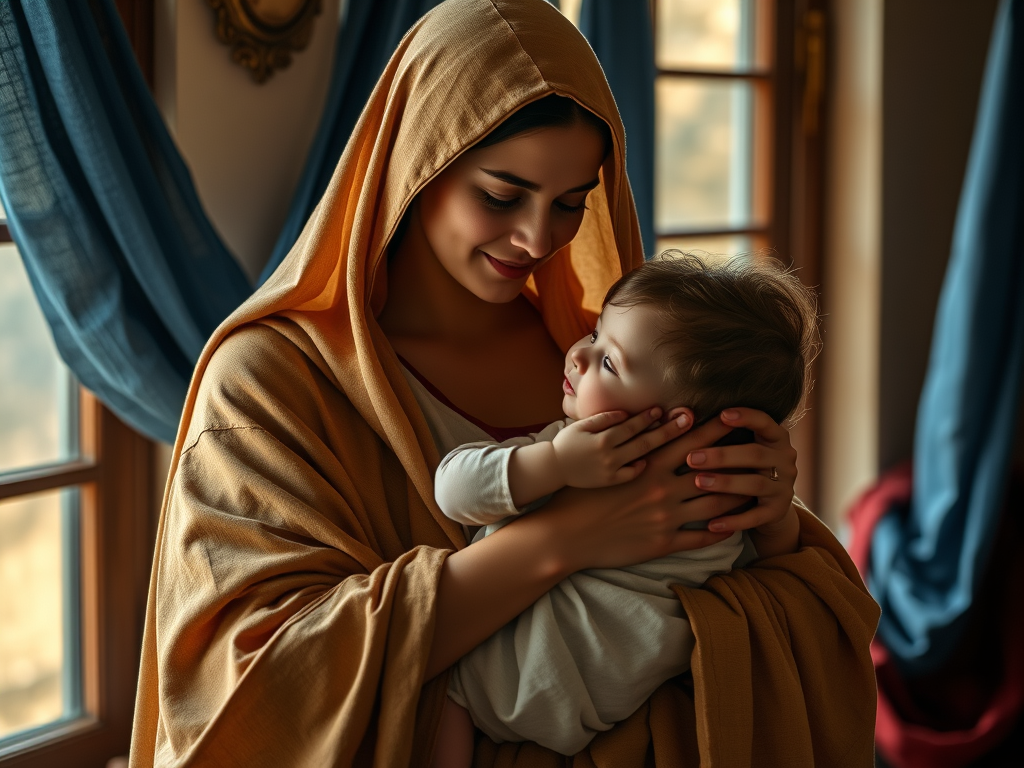
They are experiencing Christianity as joy and hope, having thus become lovers of Christ.

Category: The Heart and Embodied Wisdom

The spiritual life is not just intellectual—it flows from what we love and how we live in the body.

  • Why Seeking God Is the Ultimate Bet for Human Flourishing

    What if the path to peace, resilience, and a truly thriving life isn’t some modern self-help hack, but the ancient call to seek God? What if our brains, our psyches, and even the timeless myths we’ve told for millennia all point to the same blueprint—and seeking God aligns perfectly with it?

    In my reflections on faith (inspired by the Beatitudes and thinkers like Dietrich Bonhoeffer), I’ve noticed something striking: the “model” for spiritual thriving—humility, self-denial, grace-first dependence—mirrors how we’re psychologically wired and mythically designed to flourish. It’s not arbitrary religion; it’s cooperating with reality. And like Blaise Pascal’s famous wager, betting on God isn’t a blind leap—it’s a rational choice with infinite upside.

    The Brain’s Blueprint: Wired for Asceticism and Grace

    Neuroscience shows our brains are built for delayed gratification, humility, and mindfulness—exactly the practices at the heart of seeking God.

    • Executive control and resilience: The prefrontal cortex (PFC) regulates impulses, plans long-term, and overrides short-term desires. Ascetic disciplines like fasting, prayer, or simplicity (e.g., “poor in spirit” from the Beatitudes) strengthen this PFC-limbic balance. Studies on delayed gratification (like the marshmallow test) link it to better mental health, lower anxiety, and higher achievement. Gratitude practices—thanking God for grace—reduce stress hormones and boost well-being.
    • Humility and inner peace: Humility counters rumination and ego-focus, which fuel depression. Mindfulness in contemplation (abiding in God’s presence) regulates the default-mode network, fostering calm and meaning. Seeking God isn’t masochism; it’s training the brain for sustained joy over fleeting highs.

    These aren’t coincidences. Our design screams: forgo immediate comforts for deeper rewards. Seeking God—through relationship, surrender, and discipline—activates this wiring, leading to peace that “surpasses understanding” (Philippians 4:7).

    Myths Echo the Same Path: The Hero’s Journey to Flourishing

    Ancient myths across cultures (Greek, Hindu, Indigenous) tell the same story: heroes renounce comfort, face trials, descend into the unknown, and emerge transformed with wisdom for themselves and their community. Joseph Campbell’s Hero’s Journey isn’t fiction—it’s a psychological map for growth.

    • Ascetic elements (wilderness solitude, fasting, ego-death) parallel spiritual practices: die to self (Bonhoeffer’s “come and die”), receive grace (the boon), bear fruit (return renewed).
    • Christianity fulfills this: Christ the ultimate Hero completes the journey for us; we participate through costly grace—humility opens the Kingdom, mercy flows as fruit.

    Myths show: thriving requires surrender and trial. Seeking God isn’t anti-human; it’s the mythic path to peace, stripped of illusion.

    A Modern Wager: Why Bet on God?

    Blaise Pascal’s Wager argues: If God exists, seeking Him yields infinite gain (eternal life); if not, finite loss (some earthly comforts). But our discussion adds layers—seeking God aligns with how we’re built to flourish now, not just eternally.

    • Infinite upside: If true, grace transforms you into someone humble, resilient, merciful—bearing fruit in peace, purpose, relationships. Brain science and myths confirm: this path works.
    • Finite downside: If false, you still gain psychological benefits—better self-control, gratitude, delayed gratification—from “ascetic” habits. No real loss; potential huge win.

    In a world chasing quick fixes (social media dopamine, consumerism), seeking God is the smart bet. It’s not gambling against reason—it’s cooperating with your design for a life of true flourishing.

    Start small: Acknowledge your spiritual poverty. Seek the Kingdom first (Matthew 6:33). Let grace do the rest.

    What holds you back from this wager? Or what fruit have you seen from seeking God? Share in the comments.

    Developed with assistance from GROK AI.
  • Human Nature:

    The Unchanging Hardware Inside Us All

    I recently had a deep chat with Grok that stuck with me. It felt like cracking open a big puzzle about why we humans act the way we do — and why old traditions still matter in our crazy modern world.

    Let me share the whole idea with you in plain words, like we’re just talking over coffee. At the heart of it is this simple truth: human nature doesn’t change. Our brains, feelings, and bodies are the same “hardware” that our ancestors had tens of thousands of years ago. We still crave status, love being part of a small group, reach for sweet or fatty food when it’s around, and handle short bursts of stress better than endless worry. Evolution wired us this way for life in the wild — not for smartphones and 24-hour news.

    Faith, myths, brain science, and even AI all point to the same thing: they show what happens when we run this old hardware in new environments.

    Myths warn us — break the deep rules and you crash (think hubris leading to a big fall, or betrayal tearing a tribe apart).

    Brain science measures the damage — too much loneliness spikes stress hormones, endless scrolling messes up our reward system.

    AI, trained on every story, book, and post humans ever made, simply spots the repeating patterns: some choices lead to happiness across every culture and time; others lead to misery.

    So where does tradition fit in?

    It’s the “software” — the living code we keep updating.Tradition isn’t some dusty old rulebook. It’s a bunch of smart patches built over generations through trial and error. It helps our fixed human nature deal with a changing world. Some patches work great and get copied because they bring peace, stronger families, or better health. Some are mistakes that only worked in one place or time and now slow us down. Slowly, culture sorts it out: good ideas spread, bad ones fade.

    That’s why traditions evolve, even if it feels slow compared to phones getting new updates every year. Look at history: Indigenous groups on the plains grabbed horses when they arrived and wove them into hunting, travel, and status — same old human drives, just smarter tools. Immigrants tweak family recipes with new ingredients but keep the heart of connection and identity alive.

    Here’s what makes this view so powerful: it connects everything. Myths tell the story. Brain science explains the wiring. AI holds up a fast mirror so we can see the patterns clearly. Together they help us spot two things:

    • Traditions that protect us from chaos (like rituals that give structure when life feels wild).
    • Places where modern life breaks us — our sweet tooth meets junk food, our need for close friends meets lonely cities and algorithms, our threat radar meets endless abstract worries.

    The result? Some traditions need a trim or a tweak. Others are “antifragile” — they actually get stronger when life gets hard. Think of Stoic ideas that line up with modern therapy, or community rhythms that keep our minds steady. AI doesn’t rewrite human nature. It just speeds up the feedback loop. It lets us test ideas faster: “When groups do X, Y happens 92% of the time.” We can keep the good old code and refactor the buggy parts for today’s world. Coming from an engineering mindset, this clicks perfectly. Tradition is like compiled experience — a low-pass filter that cuts out the noisy fads of the moment and keeps the deep signals that help us survive long-term. The risk comes when change happens too fast. Our cultural “patches” can’t keep up, and suddenly the old hardware starts flailing. That’s exactly what we see today with social media, hyper-processed food, and anonymous city life.Good traditions are the necessary friction in life.

    They give us constraints that force us to grow stronger. In my earlier piece “The Bridge That Doesn’t Help,” I talked about how removing all friction stops real growth. This Grok conversation made me see tradition in the same light: it’s the bridge that does help — because it makes us do the hard work of becoming better humans.

    So here’s the big question I’m left with: Are today’s efforts to tear down or “deconstruct” every old tradition really progress? Or are we just trying to smooth out the very friction that builds character and keeps our unchanging human spirit from spinning out of control?

    What do you think? Is tradition the wise old software we should maintain and gently update — or something we can safely delete in the name of “freedom”?

    Drop your thoughts below. I’d love to hear them.

  • Hidden Heroes:

    How the Unknown Shapes Our World

    Human progress, both spiritual and practical, often unfolds in ways we never notice. We tend to look for recognition, applause, and fame, assuming that value is measured by the eyes of the crowd. Yet the truth, whether in faith or society, is far richer: the most transformative work often comes from those who remain hidden.

    The Saints and the Hidden Workers of God

    Cardinal Newman reminds us that God’s providence works quietly. Saints, angels, and faithful servants often operate without recognition. Abel, Noah, Moses, and the prophets were largely unknown to their contemporaries, yet they were beloved of God and critical to His plan. Even Christ Himself spent thirty years hidden in Nazareth.

    The principle continues in history. Many Christians owe their faith to mothers, teachers, or mentors whose names are lost to time. Countless acts of holiness shape society, unseen, like the hidden roots of a tree that nourishes its branches. Similarly, Scripture and Church traditions bear the imprint of unknown authors, composers, and builders, whose work has guided humanity for generations. The impact is real, even if their names are forgotten.

    The Modern Parallel: Inventors, Salespeople, and Entrepreneurs

    We can see the same dynamic in modern innovation. Inventors and engineers create new knowledge, technology, or tools. Yet these creators often lack the skills—or the inclination—to bring their work to the broader world. Enter the salesperson: the person who sees the value, communicates it, and persuades others to adopt it. Then come the entrepreneurs and business leaders, who scale the invention, providing the resources and infrastructure needed for it to become universally useful.

    Without this network—hidden genius, skilled communicators, and organizational support—many innovations would remain isolated, never touching society. And the inventor’s name, like many saints and spiritual guides, might never be celebrated. Every new invention also becomes the foundation for further discoveries, creating a chain of hidden contributions that shapes the future.

    Reframing the Hero: From Discoverer to Connector

    When we study the hero’s journey, we often assume the hero is the one who discovers the treasure. But consider this: the hero is not always the person who first extracts knowledge from the unknown. That role belongs to the inventor, the shaman, or the unseen sage—the obscure individual who wrestles with chaos and uncertainty to create something of value.

    The hero is the one who interacts with this hidden figure, understands the value of what has been uncovered, and brings it back to society. In myth, the dragon hoards treasure, and the hero must confront it to retrieve the prize. In real life, the “dragon” can be obscurity, complexity, or the difficulty of translating raw knowledge into something usable. The hero faces these challenges, carrying the treasure—whether knowledge, wisdom, or technology—back to the people.

    In this sense, the hero bridges the gap between hidden genius and society, enabling progress, inspiration, and transformation. The hero may not have invented the treasure, but without their courage, vision, and action, the discovery would remain buried. Just as angels and hidden saints influence history quietly, the hero ensures that society can benefit from the work of those who remain unknown.

    Seeing the Hidden Threads of History

    Whether in faith or in society, history is woven from countless hidden contributions. The bones and tools of ancient humans in Africa show us that our civilization depends on wisdom carried back from the unknown, even when we do not know the individuals. Inventions, ideas, acts of courage, and spiritual insights all ripple forward, often unnoticed.

    Newman’s spiritual lesson and the modern story of innovation converge here: the world is shaped by the hidden, the faithful, and the unseen, and the hero plays a critical role in translating these hidden gifts into something that can bless all of humanity.

    We are all part of this network. In small ways or large, each of us can act as the hero—recognizing the hidden treasures around us, nurturing them, and sharing them so they reach their full potential. Our private deeds, our acts of faith, our quiet labor—all matter far more than we realize.


    Reflection Questions:

    1. Who are the hidden “saints” or innovators in your life whose work you benefit from daily?
    2. Where in your life could you act as the hero, connecting hidden knowledge or resources to others?

    How does recognizing unseen contributions change the way you measure success or value?

    Meta Summary (SEO-ready):
    From hidden saints to forgotten inventors, society thrives on unseen contributions. Discover how heroes, both mythological and modern, bridge the gap between obscurity and impact, making hidden knowledge and wisdom accessible to all.

    SEO Keywords: hero’s journey, hidden heroes, unseen contributions, inventors, innovation, Christian saints, angels, spiritual growth, knowledge from the unknown

  • One Bead, Three Charity Bombs: Ignite the Third Hail Mary

    One Bead, Three Charity Bombs: Ignite the Third Hail Mary

    You’re at the start of the Rosary.

    First bead → Faith (blank map → step; Host → Him; hard thing → anyway).

    Second bead → Hope (pain → temp; failure → fuel; dead-end → done).

    Third bead rolls in:

    “Hail Mary… increase in us charity…”

    …and your heart quietly files for bankruptcy.

    Not anymore.

    Here are three 30-second love detonators to drop before or during that final Hail Mary.

    Pick one. Pick all. Just make it explode.

    Detonator #1 – WILL THEIR HEAVEN, NOT MY COMFORT

    Charity isn’t warm fuzzies. It’s ruthless goodwill.

    Your move:

    Before the prayer, name the person who makes your skin crawl.

    Picture Jesus dying for THEM too.

    Pray: “I want heaven for them—even if they never say sorry.”

    Detonator #2 – DIE A LITTLE, RIGHT NOW

    Real love always kills part of you so someone else can live more.

    Your move:

    During the Hail Mary, pick one concrete discomfort today (skip the reply, take the blame, send the money, shut up).

    Offer it for that person.

    Whisper: “This tiny death is my love letter.”

    Detonator #3 – BORROW MARY’S HEART (SHE’S LOANING)

    She watched her Son butchered and her heart didn’t shrink—it stretched.

    Your move:

    While the words roll, beg: “Mom, lend me your Immaculate Heart for 30 seconds.”

    Feel it expand.

    Then go love with hers because yours is broke.

    TL;DR (because brain)

    Want their heaven > want my comfort.

    Die small today.

    Borrow Mary’s heart.

    Screenshot this.

    Next time that third bead hits your fingers, drop the love bomb.

    Series complete: Faith ✓ Hope ✓ Love ✓

    Stay dangerous, stay Catholic.

  • Quiet Heart, Loud Faith: Three Sparks to Renew the Church

    Quiet Heart, Loud Faith: Three Sparks to Renew the Church

    Faith in the Noise

    World spins fast—tech, truth, opinions shift.

    Noise everywhere. Easy to lose what matters.

    • Church mission? Never needed calm.
    • Starts with faith—deep in the heart.

    Silence often anchors quietly.

    One breath of quiet = your next spark?


    Depth Over Activity

    Church today? Not more programs. Not louder voices.

    Needs depth—people who pray, meet God in silence.

    • Live the Gospel first.
    • Faith isn’t meetings or debates.
    • Comes from grace—God loved us first, fully.

    Let love move you daily.

    One quiet moment = instant recharge.


    Renewal & Shine

    Remember that love? Faith becomes a lens.

    See God in work, people, hidden places.

    • Church renews through awakened hearts—not new plans.
    • Christ: “Take courage; I overcame.”
    • Hope in Him, not results.

    Restless world? Still radiant.

    You’re the light—ready to glow?

  • One Bead, Three Hope Bombs: Ignite the Second Hail Mary

    One Bead, Three Hope Bombs: Ignite the Second Hail Mary

    You’re at the start of the Rosary.

    First bead: “increase in us faith.”

    (If you missed it, we lit that fuse yesterday: blank map → step; Host → Him; hard thing → anyway.) One Bead, 3 Faith Bombs:

    Now the second bead rolls in:

    “Hail Mary… increase in us hope…”

    …and your mind blanks again.

    No more.

    Here are three 30-second mental detonators to drop before or during that single Hail Mary.

    Pick one. Pick all. Just make it explode.


    Detonator #1 – ANCHOR YOUR HEART IN HEAVEN

    Scene: Every cross you carry is a temp rental.

    Heaven is the forever address.

    Your move:

    Before the prayer starts, picture your heaviest pain nailed to the Cross—then vanishing at the empty tomb.

    “I bank on eternity, not the invoice.”


    Detonator #2 – GOD RECYCLES FAILURES INTO GLORY

    Fact: Your worst faceplant is raw material.

    Joseph: sold → pit → prison → palace.

    Your move:

    During the Hail Mary, hand God one specific failure.

    Whisper: “Turn this trash into throne.”

    (Pro tip: He’s the ultimate up-cycler.)


    Detonator #3 – RESURRECTION ALREADY CASHED THE CHECK

    Fact: Christ rose. Death lost. Hope won.

    Your move:

    Name one dead-end staring you down today.

    Lock eyes on the Risen One while the words roll.

    “I rest in the victory lap already run.”


    TL;DR (because scroll)

    Pain → temp.

    Failure → fuel.

    Dead-end → done.

    Screenshot this.

    Next time that second bead hits your fingers, light the fuse.

    Love bead dropping soon—stay locked in, stay Catholic.

  • One Bead, Three Faith Bombs: Ignite the First Hail Mary

    One Bead, Three Faith Bombs: Ignite the First Hail Mary


    You’re at the start of the Rosary.

    The first bead rolls under your thumb.

    “Hail Mary… increase in us faith…”

    …and your mind blanks.

    No more.

    Here are three 30-second mental detonators to drop before or during that single Hail Mary.

    Pick one. Pick all. Just make it explode.


    Detonator #1 – TRUST THE UNSEEN PROMISE

    Scene: Abraham, 75, no map, no preview.

    God: “Pack up. I’ll show the land… later.”

    Abe: “Let’s go.”

    Your move:

    Before the prayer starts, picture your unknown road.

    That nudge you’re dodging?

    Step onto the dirt.

    “I trust the Giver, not the preview.”


    Detonator #2 – JESUS IS LITERALLY HERE

    Fact: The Eucharist isn’t symbolic.

    It’s Body, Blood, Soul, Divinity.

    Storm-calmer → 1-inch host.

    Your move:

    During the Hail Mary, zoom in on the tabernacle.

    Whisper: “You’re in there. I believe—even if feelings bail.”

    (Pro tip: imagine the Host glowing like it holds the universe. It does.)


    Detonator #3 – FAITH IS A VERB ON MUTE

    Feelings: “This is trash.”

    Circumstances: “Quit.”

    Faith: “Still moving.”

    Your move:

    Name one hard act for today—forgive, pray, show up.

    Lock it in as the words roll.

    “I obey when everything screams stop.”


    TL;DR (because scroll)

    1. Blank map → step.
    2. Host → Him.
    3. Hard thing → anyway.

    Screenshot this.

    Next time that first bead hits your fingers, light the fuse.Hope bead dropping soon—stay locked in, stay Catholic.

  • Capture Your Mary Icon in 5 Minutes

    Capture Your Mary Icon in 5 Minutes

    The Glow

    Every mother cradling her child mirrors Mary with Jesus.

    One framed photo turns that moment into a living icon.


    Windows, Not Portraits

    Icons (Hodegetria, Eleusa) show love, not faces.

    Your hug already does the same.

    Soft light + real clothes = instant sacred vibe.


    4 Micro-Moves

    1. Hold close (left arm works).
    2. Gaze with love—wiggles welcome.
    3. Window light, 5 minutes max.
    4. Blue/red fabric if it feels right.

    Frame the Divine

    Print large. Simple frame.

    Hang where morning eyes land.

    Daily dopamine: “This love is holy.”


    Join the Circle

    Snap yours. Post with #MaryIconMoments. on X!

    Next post: how every culture sees “Mother + Child” as sacred.

  • Why Inner Life and Love Matter More Than Ever

    Why Inner Life and Love Matter More Than Ever

    How faith, purpose, and connection can guide you in a busy, chaotic world

    In today’s world, it can feel like everything is moving too fast. Social media, work, family responsibilities, and constant news cycles make it easy to feel overwhelmed. But what if the secret to thriving isn’t doing more, but living deeper?

    The Church has always faced this challenge. She must bring a message of hope to the world while nurturing her own inner life. And while you don’t need to be religious to take the lesson, the principle is universal: without a strong inner foundation, no mission or goal can truly succeed.

    Here’s the takeaway for modern life:

    1. Know yourself and your purpose. Just as the Church must understand her role, you need to understand yours. What drives you? What do you stand for?
    2. Faith can mean trust. You don’t have to be religious to see the value here. Faith, in a modern sense, is trust in what you know is right, and confidence in your ability to make a difference.
    3. Inner life matters. Reflection, mindfulness, and spiritual practice (whatever that looks like for you) help you stay grounded amid chaos.
    4. Balance action with depth. Doing good in the world—helping others, pursuing meaningful work—is powerful, but it’s more effective when paired with thought, reflection, and integrity.
    5. Beware of extremes. It’s easy to get caught up in outward achievement or personal ego. Both can be empty without inner depth and values to guide them.
    6. Love and connection are essential. Real growth comes when you care about others and invest in relationships. Empathy and compassion create the foundation for lasting impact.
    7. You are loved beyond measure. Whether you see it spiritually or simply as human connection, recognizing that you matter—and that your actions ripple out—gives purpose to everything you do.
    8. Your work matters, but your heart matters more. Success without integrity or care is hollow. Align your actions with values that elevate others.
    9. Small acts, big impact. Even small gestures of kindness or integrity can transform your environment, just as individual faith strengthens the Church.
    10. Hope fuels resilience. Knowing you can make a difference—even amid setbacks—keeps you moving forward, grounded in something larger than yourself.

    In short, thriving isn’t about doing everything; it’s about being rooted. Strong inner life, trust in what’s true, and a commitment to love and connection—these are what let you face today’s challenges with courage and purpose.

    Think of it this way: your life can become like a spark that lights a bigger fire, for yourself and everyone around you. Start small, start intentional, and let your inner strength guide your actions in the world.

    Ref: Pope Paul VI General Audience 25 October 1972

    With development and editing assistance from ChatGPT-5

  • Feelings: The Language of the Heart

    Can it be said that feelings are the language of the heart?

    Yes—profoundly so. That simple phrase holds both poetic beauty and psychological truth.


    💓 What Does It Mean to Say Feelings Are the Heart’s Language?

    When we speak of the heart, we’re not referring to the physical organ, but to the symbolic and experiential core of a person—the place of love, longing, fear, joy, guilt, awe, and sorrow.

    Feelings are how the heart speaks—
    not in logic or language, but in sensations, impulses, intuitions, and inner movements.

    Where the mind thinks, the heart feels. Often, the heart feels first—and the mind only later catches up.


    🔔 The Role of Feelings

    Feelings are not irrational noise. They have a function—multiple functions, in fact. They are:

    • Signals – Feelings tell us something is happening, internally or externally.
    • Motivators – They move us to act: to connect, to flee, to speak, to stay silent.
    • Truth-carriers – Even when irrational, they’re honest about what’s stirring inside.

    Think of some common examples:

    • Fear says: “There’s danger or uncertainty here.”
    • Joy says: “This is good and life-giving.”
    • Guilt says: “You’ve violated something important.”
    • Longing says: “Something meaningful is missing.”

    These aren’t just psychological reactions—they are existential messages, rooted in our deepest values and experiences.


    ⚖️ But Feelings Are Not the Whole Story

    While feelings express the truth of the heart, they do not always point to objective truth—or moral clarity.

    They can misfire. They can be shaped by wounds, habits, or fears. As Jordan Peterson puts it:

    “Feelings are real, but not necessarily reliable.”

    They are like a compass that always points somewhere—but might need recalibration.

    That’s why wisdom requires:

    • Listening to feelings (not suppressing them),
    • But also interpreting them,
    • And discerning whether they are rightly ordered or distorted.

    🛠️ Formation: Teaching the Heart to Speak More Truly

    Yes—feelings are the language of the heart. But just as any language can be muddled or misused, so too can the speech of the heart be confused—especially if the heart has been wounded, neglected, or misformed.

    Growth in maturity means learning not just to hear your heart—but to help it speak truthfully.

    This happens through:

    • Experience and reflection
    • Good formation and habits
    • Spiritual disciplines
    • Healthy relationships
    • Grace and love

    We don’t reject our feelings—but we train our hearts, much like we train our minds.


    🧭 Final Thought: Listening and Leading

    Feelings are not enemies of truth—but they are not always guides to it either. They are the heart’s native speech—powerful, honest, and essential. But like any language, it takes practice to understand what is truly being said.

    So listen deeply. Let your heart speak.
    And then—with wisdom, love, and grace—teach it to speak even more clearly.

    Developed with assistance from ChatGPT