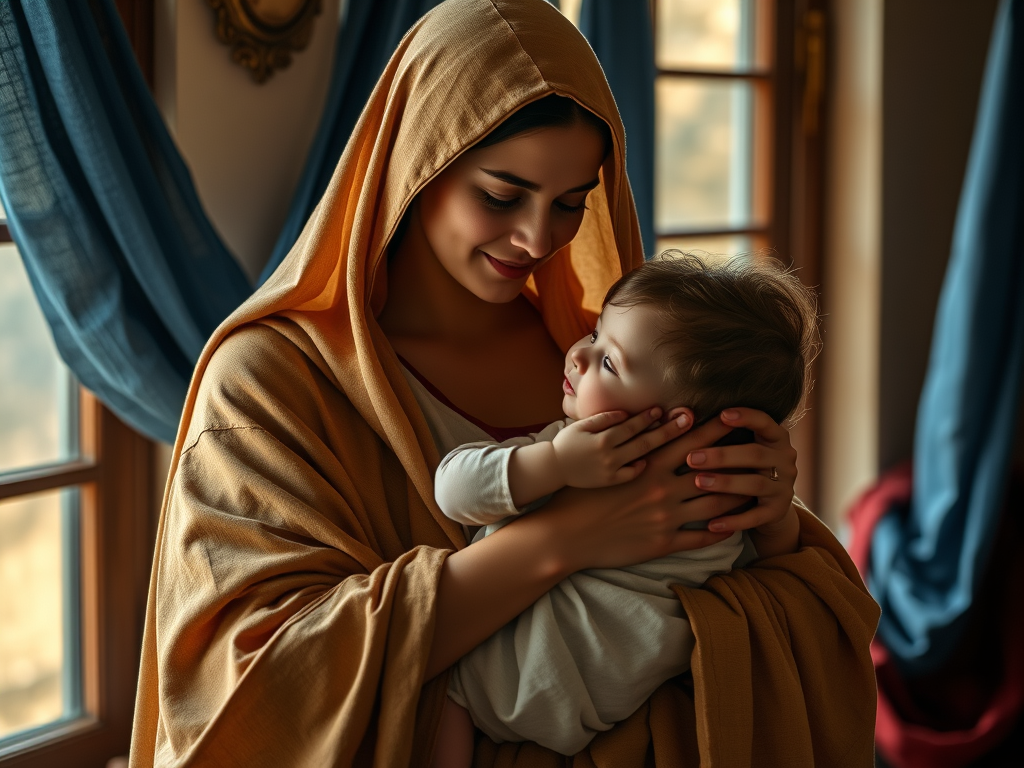
They are experiencing Christianity as joy and hope, having thus become lovers of Christ.

Category: Flourishing and the Christian Life

How virtue, love, and transformation lead to true human flourishing.

  • Why Seeking God Is the Ultimate Bet for Human Flourishing

    What if the path to peace, resilience, and a truly thriving life isn’t some modern self-help hack, but the ancient call to seek God? What if our brains, our psyches, and even the timeless myths we’ve told for millennia all point to the same blueprint—and seeking God aligns perfectly with it?

    In my reflections on faith (inspired by the Beatitudes and thinkers like Dietrich Bonhoeffer), I’ve noticed something striking: the “model” for spiritual thriving—humility, self-denial, grace-first dependence—mirrors how we’re psychologically wired and mythically designed to flourish. It’s not arbitrary religion; it’s cooperating with reality. And like Blaise Pascal’s famous wager, betting on God isn’t a blind leap—it’s a rational choice with infinite upside.

    The Brain’s Blueprint: Wired for Asceticism and Grace

    Neuroscience shows our brains are built for delayed gratification, humility, and mindfulness—exactly the practices at the heart of seeking God.

    • Executive control and resilience: The prefrontal cortex (PFC) regulates impulses, plans long-term, and overrides short-term desires. Ascetic disciplines like fasting, prayer, or simplicity (e.g., “poor in spirit” from the Beatitudes) strengthen this PFC-limbic balance. Studies on delayed gratification (like the marshmallow test) link it to better mental health, lower anxiety, and higher achievement. Gratitude practices—thanking God for grace—reduce stress hormones and boost well-being.
    • Humility and inner peace: Humility counters rumination and ego-focus, which fuel depression. Mindfulness in contemplation (abiding in God’s presence) regulates the default-mode network, fostering calm and meaning. Seeking God isn’t masochism; it’s training the brain for sustained joy over fleeting highs.

    These aren’t coincidences. Our design screams: forgo immediate comforts for deeper rewards. Seeking God—through relationship, surrender, and discipline—activates this wiring, leading to peace that “surpasses understanding” (Philippians 4:7).

    Myths Echo the Same Path: The Hero’s Journey to Flourishing

    Ancient myths across cultures (Greek, Hindu, Indigenous) tell the same story: heroes renounce comfort, face trials, descend into the unknown, and emerge transformed with wisdom for themselves and their community. Joseph Campbell’s Hero’s Journey isn’t fiction—it’s a psychological map for growth.

    • Ascetic elements (wilderness solitude, fasting, ego-death) parallel spiritual practices: die to self (Bonhoeffer’s “come and die”), receive grace (the boon), bear fruit (return renewed).
    • Christianity fulfills this: Christ the ultimate Hero completes the journey for us; we participate through costly grace—humility opens the Kingdom, mercy flows as fruit.

    Myths show: thriving requires surrender and trial. Seeking God isn’t anti-human; it’s the mythic path to peace, stripped of illusion.

    A Modern Wager: Why Bet on God?

    Blaise Pascal’s Wager argues: If God exists, seeking Him yields infinite gain (eternal life); if not, finite loss (some earthly comforts). But our discussion adds layers—seeking God aligns with how we’re built to flourish now, not just eternally.

    • Infinite upside: If true, grace transforms you into someone humble, resilient, merciful—bearing fruit in peace, purpose, relationships. Brain science and myths confirm: this path works.
    • Finite downside: If false, you still gain psychological benefits—better self-control, gratitude, delayed gratification—from “ascetic” habits. No real loss; potential huge win.

    In a world chasing quick fixes (social media dopamine, consumerism), seeking God is the smart bet. It’s not gambling against reason—it’s cooperating with your design for a life of true flourishing.

    Start small: Acknowledge your spiritual poverty. Seek the Kingdom first (Matthew 6:33). Let grace do the rest.

    What holds you back from this wager? Or what fruit have you seen from seeking God? Share in the comments.

    Developed with assistance from GROK AI.

  • Capture Your Mary Icon in 5 Minutes

    Capture Your Mary Icon in 5 Minutes

    The Glow

    Every mother cradling her child mirrors Mary with Jesus.

    One framed photo turns that moment into a living icon.


    Windows, Not Portraits

    Icons (Hodegetria, Eleusa) show love, not faces.

    Your hug already does the same.

    Soft light + real clothes = instant sacred vibe.


    4 Micro-Moves

    1. Hold close (left arm works).
    2. Gaze with love—wiggles welcome.
    3. Window light, 5 minutes max.
    4. Blue/red fabric if it feels right.

    Frame the Divine

    Print large. Simple frame.

    Hang where morning eyes land.

    Daily dopamine: “This love is holy.”


    Join the Circle

    Snap yours. Post with #MaryIconMoments. on X!

    Next post: how every culture sees “Mother + Child” as sacred.

  • Why Inner Life and Love Matter More Than Ever

    Why Inner Life and Love Matter More Than Ever

    How faith, purpose, and connection can guide you in a busy, chaotic world

    In today’s world, it can feel like everything is moving too fast. Social media, work, family responsibilities, and constant news cycles make it easy to feel overwhelmed. But what if the secret to thriving isn’t doing more, but living deeper?

    The Church has always faced this challenge. She must bring a message of hope to the world while nurturing her own inner life. And while you don’t need to be religious to take the lesson, the principle is universal: without a strong inner foundation, no mission or goal can truly succeed.

    Here’s the takeaway for modern life:

    1. Know yourself and your purpose. Just as the Church must understand her role, you need to understand yours. What drives you? What do you stand for?
    2. Faith can mean trust. You don’t have to be religious to see the value here. Faith, in a modern sense, is trust in what you know is right, and confidence in your ability to make a difference.
    3. Inner life matters. Reflection, mindfulness, and spiritual practice (whatever that looks like for you) help you stay grounded amid chaos.
    4. Balance action with depth. Doing good in the world—helping others, pursuing meaningful work—is powerful, but it’s more effective when paired with thought, reflection, and integrity.
    5. Beware of extremes. It’s easy to get caught up in outward achievement or personal ego. Both can be empty without inner depth and values to guide them.
    6. Love and connection are essential. Real growth comes when you care about others and invest in relationships. Empathy and compassion create the foundation for lasting impact.
    7. You are loved beyond measure. Whether you see it spiritually or simply as human connection, recognizing that you matter—and that your actions ripple out—gives purpose to everything you do.
    8. Your work matters, but your heart matters more. Success without integrity or care is hollow. Align your actions with values that elevate others.
    9. Small acts, big impact. Even small gestures of kindness or integrity can transform your environment, just as individual faith strengthens the Church.
    10. Hope fuels resilience. Knowing you can make a difference—even amid setbacks—keeps you moving forward, grounded in something larger than yourself.

    In short, thriving isn’t about doing everything; it’s about being rooted. Strong inner life, trust in what’s true, and a commitment to love and connection—these are what let you face today’s challenges with courage and purpose.

    Think of it this way: your life can become like a spark that lights a bigger fire, for yourself and everyone around you. Start small, start intentional, and let your inner strength guide your actions in the world.

    Ref: Pope Paul VI General Audience 25 October 1972

    With development and editing assistance from ChatGPT-5

  • Fill the Jars:

    Our Part in Christ’s Miracles

    The story of the Wedding at Cana in Galilee is familiar to many: Mary, the mother of Jesus, notices a problem—“They have no wine”—and brings it to her Son. Jesus responds, “Woman, how does your concern affect me? My hour has not yet come.” Yet Mary’s reply to the servants is simple and profound: “Do whatever he tells you.”

    The miracle itself hinges on a simple instruction: Jesus tells the servants, “Fill the jars with water.” And they do, to the brim. Only then does Christ transform the water into wine—wine far superior to what had been prepared for the celebration.

    This story gives us a powerful lesson about our own spiritual life. Like the empty jars, Christ cannot work in our lives unless we first take the initiative to fill them:

    • Turning our hearts toward Him.
    • Seeking to love Him with all our heart, soul, mind, and strength.
    • Trusting and hoping in His promise, even before we see the outcome.

    The servants’ action—filling the jars—was not the miracle itself, but it was a necessary part. Our obedience, hope, and effort cooperate with God’s grace. The “wine” Christ gives us, the fruit of His blessing, is always far superior to anything we could produce on our own.

    Mary’s guidance, “Do whatever he tells you,” remains timeless. She shows us that responding faithfully to God’s direction, even in small and practical ways, opens the door for His glory to be revealed in our lives.

    When we fill our jars, we make room for Christ’s miraculous work—and the joy and abundance He offers is beyond what we could imagine.

    Edited with assistance of ChatGPT-5

  • Charity Is a Supernatural Virtue

    Today when people hear the word “charity,” they often think of donations, fundraisers, or volunteer work. These are good things, but they only scratch the surface of what charity really is.

    In Christian teaching, charity—caritas—is not simply kindness or generosity. It is a supernatural virtue. Saint Paul places it above even faith and hope:

    “Now abideth faith, hope, charity, these three; but the greatest of these is charity.” (1 Cor 13:13)

    Why is charity the greatest? Because it is not something we generate on our own. It is God’s own love, poured into our hearts by grace, enabling us to love as He loves.

    The Natural Foundation

    Even without revelation, human beings are inclined to goodwill toward others. Aristotle called this eunoia—acting with the good of others, and the common good, in mind. This is a natural virtue, and it is real. We can see it in acts of kindness, civic friendship, and common concern for neighbors and strangers alike.

    Yet, natural virtue is fragile. It can be easily distorted by pride, fear, or selfishness.

    Grace Perfects Nature

    Christ calls us beyond this natural level:

    “Be ye perfect, even as your heavenly Father is perfect.” (Mt 5:48)

    On our own, we cannot attain such perfection. But grace builds on nature and lifts it higher. When God infuses charity into the soul, it transforms natural goodwill into supernatural love. We are empowered to love not only as we would want to be loved, but as Christ Himself loves—freely, fully, and sacrificially.

    The Freedom of Love

    Aristotle observed that no act is virtuous unless it is voluntary. Forced “charity” is no charity at all. The same holds true in the supernatural order: Christian love must be freely chosen. It is a gift of grace, but also a response of the heart.

    That is why true charity is always personal. It is not only about writing a check or supporting a program. It is about opening the heart to God and to others—loving in freedom, with the very love of Christ that has first been given to us.

    Edited with assistance of ChatGPT-5

  • Feeding Bellies, Starving Souls

    Why Charity Alone Is Not Enough

    I once came across a piercing phrase: “Catholic Charities: feeding bellies; starving souls.” It stayed with me because it names a real temptation for Christians in our time: to give generously to the body, while neglecting the soul.

    Of course, corporal works of mercy are essential. Jesus tells us to feed the hungry, clothe the naked, and shelter the homeless. And Catholic institutions do this at a massive scale. But if that is where mercy ends, we have fallen short.

    Physical hunger is serious, but spiritual hunger is eternal. Jesus did not only multiply loaves. He said, “I am the Bread of Life. Whoever comes to Me shall not hunger, and whoever believes in Me shall never thirst” (Jn 6:35).

    If we only fill stomachs without pointing people to Christ, we risk leaving them starved in the most important way. A man with bread in his hand but emptiness in his heart is still in poverty.

    True Christian mercy must hold both together: bread for the body and Bread for the soul. Shelter and forgiveness. Clothing and truth. A warm meal and the promise of eternal life.

    This is the challenge for Christians today. Society has woven corporal works of mercy into its fabric through welfare, charities, and aid programs. But who will take responsibility for the spiritual works of mercy? Who will teach the ignorant, counsel the doubtful, forgive the offender, pray for the living and the dead?

    We cannot outsource those. They belong to us — to the Church, to every disciple of Christ.

    If we want to be true to the Gospel, then our charity cannot stop at the body. It must reach the soul, where Christ Himself longs to dwell.

    Developed with assistance from ChatGPT-5

  • Beyond Bread Alone:

    The Forgotten Works of Mercy

    In the first blog, we saw how the corporal works of mercy have become part of the very fabric of Western society. Food banks, hospitals, charities, and even government programs echo Christ’s command to feed, clothe, and shelter those in need. That is a powerful legacy of Christianity.

    But mercy is not only about the body. It is also about the soul.

    The Church has always taught about the spiritual works of mercy:

    • Instruct the ignorant
    • Counsel the doubtful
    • Admonish the sinner
    • Bear wrongs patiently
    • Forgive offenses willingly
    • Comfort the afflicted
    • Pray for the living and the dead

    Unlike their corporal counterparts, these spiritual works are not easily institutionalized. A government cannot legislate forgiveness. A nonprofit cannot substitute for patient endurance. No program can replace prayer.

    And yet, it may be precisely these works that our world needs most today.

    In many places, hunger for truth is deeper than hunger for bread. Loneliness wounds more people than sickness. A culture of anger and resentment cries out for forgiveness and patience. In a world full of noise, people are starving for real counsel, comfort, and prayer.

    The danger is that Christians become content with mercy limited to the material. We may feed bodies but leave souls untouched. We may shelter people but never welcome them into communion with Christ. True mercy must be both corporal and spiritual — not either/or but both/and.

    Jesus Himself reminds us: “Man does not live by bread alone, but by every word that comes from the mouth of God” (Mt 4:4). To give bread without the Word is to give half a meal.

    So here is the challenge: if society is already carrying forward the physical dimension of mercy (often thanks to its Christian roots), then perhaps the unique responsibility of Christians today is to restore the spiritual works of mercy to their rightful place.

    This is not about abandoning corporal works — far from it. It is about remembering that real love, Christian love, reaches deeper than the body. It touches the heart, the soul, the eternal destiny of the person in front of us.

    In the next blog, we will look at practical ways to integrate both: how Christians can care for bodies and souls, ensuring that mercy is whole and holy.

    Developed with assistance from ChatGPT-5

  • Have We Outsourced the Works of Mercy?

    In the Gospels, Jesus gave His followers the command to live out the corporal works of mercy: feed the hungry, give drink to the thirsty, clothe the naked, welcome the stranger, visit the sick and the prisoner, and bury the dead. These simple, concrete acts of love are how Christians have always revealed Christ to the world.

    Over centuries, these works became so deeply woven into Western society that many people today hardly notice their Christian origin. Hospitals, food pantries, shelters, charities, and even government welfare programs all reflect the lasting influence of the Gospel. In many ways, the corporal works of mercy are part of the very fabric of our culture.

    That is good news. But it also raises an important question: have we outsourced mercy to institutions?

    Think about it. In modern society, there is almost always a program, charity, or government office ready to provide physical care. This is not bad — in fact, it is evidence of Christianity’s leavening effect on culture. Yet when mercy is reduced to only social services, something essential is lost.

    Christians are not called simply to hand off good works to others. We are called to bring Christ Himself into every act of mercy. Feeding the hungry is not complete without offering the Bread of Life. Giving shelter is not full without welcoming someone into genuine human community. Visiting the sick is not just about treatment but about hope and prayer.

    If we only address the body while leaving the soul untouched, mercy becomes incomplete. As one observer put it, some Catholic charities risk “feeding bellies while starving souls.”

    So, while society may continue the corporal works in their material form, Christians are still uniquely responsible for the deeper task: to ensure that mercy reaches both body and soul.

    This series will explore that balance — beginning with the works of mercy everyone knows, and moving toward the often-forgotten spiritual works of mercy. Together, they reveal a vision of Christian love that cannot be replaced by any program or policy.

    Developed with assistance from ChatGPT-5

  • The Best Version of Yourself—or Something Greater?

    I first heard the phrase “the best version of yourself” on a business trip to Singapore. Later I heard Matthew Kelly use it, and I wondered—who said it first? Did he pick it up somewhere, or did others pick it up from him?

    Either way, whenever I hear it, I start asking questions. How many versions of myself are there supposed to be? It almost sounds like we’re meant to carry around a closet of personalities. “Today I’ll be Mr. Jekyll. Tomorrow I’ll be the thief. On Sunday I’ll put on my Christian self.” If that’s the case, then which one is the authentic self? And if I have to choose my “best” version, what does that say about all the rest?

    Maybe I’m on version 2.8 of my “best self” today—but what about 2.9, or 3.0? What if the best I can muster still isn’t very good? Do I just keep patching and upgrading like faulty software? Or will people ask, “Is that really your best version, or are you holding something back?”

    The more I hear this phrase, the more I think it misses the point. It makes “the best version of yourself” sound like something you accomplish on your own. But the truth is different: the best version of me is nothing compared to letting Christ live through me.

    And strangely enough, the more I put others first, the more “myself” I become. When I serve, I am surrounded by love and goodwill that multiplies my life far beyond what I could build alone. My “best version” is not about polishing up a private identity—it’s about creating the best version of my service, the best version of my vocation.

    So maybe the question isn’t, What’s the best version of yourself? but Who lives in you? Who do you belong to? Because if it’s just me, the best I can do is never enough. But if it’s Christ—then there is no limit.


    Epilogue: Where Did the Phrase Come From?

    The phrase “the best version of yourself” has become popular in motivational and self-help circles, but it has been especially tied to the work of Matthew Kelly, the Catholic author and speaker. Kelly made it a central theme in his books and talks, and for many people, the phrase is now inseparable from his message of spiritual renewal.

    That said, the idea itself isn’t unique to him. The broader self-improvement world has long promoted similar concepts about unlocking your potential, achieving your highest goals, or striving to become your “best self.”

    But here is the caution: when this phrase is left vague or purely self-focused, it can become just another slogan. It risks making people restless, always chasing after some imagined “best” that never arrives.

    Which brings us back to the Christian answer. The “best version” of you is not something you design or manufacture—it is what happens when Christ lives in you. Left to ourselves, we are always chasing. With Him, we are finally becoming.

    Developed with assistance from ChatGPT-5