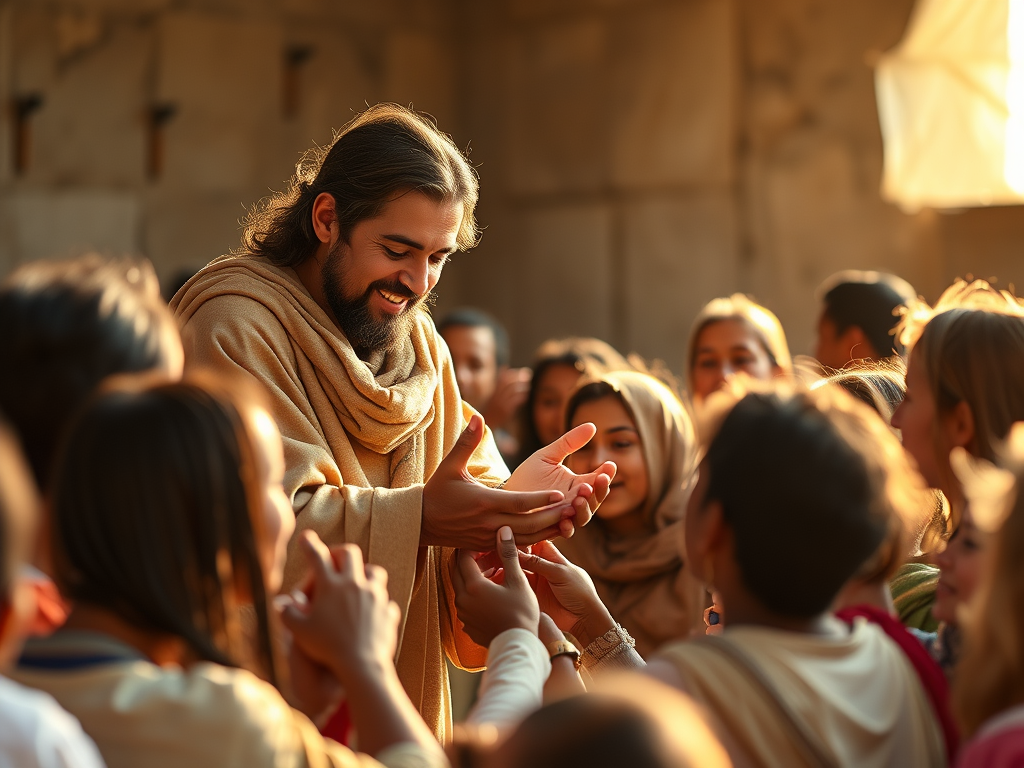
They are experiencing Christianity as joy and hope, having thus become lovers of Christ.

Author: seizedbychrist

  • When the Lions Roar:

    When the Lions Roar:

    A Story Older Than Babylon

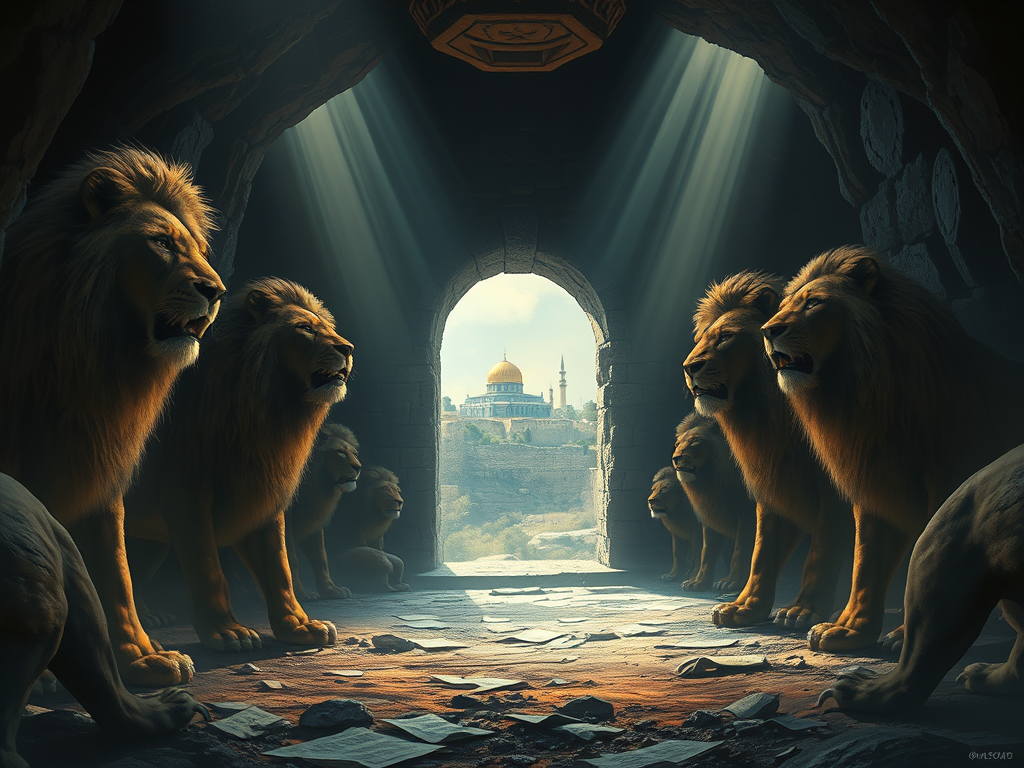
    I used to think the story of Daniel in the lions’ den was a children’s tale—flannelgraph heroes, cartoon lions, happy ending. Then I grew up and discovered the lions have grown up too. They have new names now: anxiety, pornography, rage, cancer, divorce papers, a child who no longer speaks your name, a culture that laughs at prayer. The den is real. The stone over the mouth of the pit is heavy. And the decree, signed by a thousand invisible kings, still cannot be revoked.

    But the Church, in her ancient wisdom, keeps putting this reading in front of us right when we need it most. And every time she does, she is telling us the oldest and truest story humanity has ever been told.

    Joseph Campbell spent his life mapping it. Hollywood makes billions retelling it. Jesus lived it perfectly. It has a name: the Hero’s Journey. And right now, whether you asked for it or not, you are on it.

    Stage 1: The World Out of Balance

    Every adventure begins with a wound in reality.

    In Babylon it was an idolatrous decree: “For thirty days, no one may pray to any god or human except the king.” The ego had crowned itself God.

    In today’s Gospel, Jesus speaks of Jerusalem surrounded by armies, the holy city trampled, cosmic powers shaken. The sacred center collapses.

    Sound familiar?

    Our world signs the same decree every day: “Thou shalt not pray. Thou shalt not be still. Thou shalt scroll, produce, perform, numb, repeat.”

    We feel the armies at the gates. We hear the lions pacing.

    Stage 2: The Belly of the Whale

    Then comes the moment every hero dreads: the night-sea journey, the descent into the place where human power ends.

    A stone is rolled over the mouth of the pit. Darkness. Silence. The smell of wild beasts.

    Modern neuroscience has a clinical name for it: the moment the amygdala hijacks the brain and the prefrontal cortex—the part that plans, hopes, prays—goes offline. Fight, flight, freeze. The lions roar.

    And yet Daniel prays. Three times a day, even in the den.

    Contemplative prayer, researchers now tell us, does something wild: it thickens the very prefrontal regions that fear tries to shut down. Faith literally rewires courage into the brain.

    Stage 3: The Supernatural Aid

    In the deepest dark, a Presence arrives.

    “My God sent his angel and shut the lions’ jaws.”

    The same angel who will calm a storm on Galilee.

    The same Presence who will breathe on trembling apostles: “Peace be with you.”

    Grace does not always remove the trial. Grace enters it. The lions are still there. But they fast today.

    Stage 4: The Return with the Boon

    Morning comes. The stone is still sealed, yet Daniel walks out without a scratch.

    King Darius—pagan, powerful, sleepless with anguish—writes to every nation under heaven:

    “The God of Daniel is the living God… He saves and rescues… Let all tremble and fear before Him.”

    The hero never returns for applause. The hero returns carrying a gift the world is dying for: living proof that something is stronger than death.

    The Gospel’s Astonishing Twist

    Re-read Luke 21 with this story in your bones and you will never hear it the same way again.

    Jesus is not predicting doom for doom’s sake. He is describing the identical pattern:

    • Armies at the gates
    • Cosmic distress, people “dying of fear”
    • And then: “They will see the Son of Man coming… When these things begin to take place, stand erect and lift up your heads, because your liberation is drawing near.”

    Stand erect.

    That is not a survival tip. That is resurrection posture.

    Your Den, Your Angel, Your Witness

    You are in the den right now.

    The lions have your scent. The stone is heavy.

    But the same God who sent His angel to a Jewish exile in Babylon has not changed His strategy.

    So here is the only spiritual formation plan that has ever worked:

    Tonight, set a timer for three minutes.

    Get on your knees (or sit if the body protests).

    Name the lions out loud. Speak the fear.

    Then pray one Our Father slower than you have ever prayed it in your life.

    Feel the amygdala roar. Keep praying anyway.

    That is the precise moment the angel shuts the lions’ mouths.

    Do it tomorrow. And the next day. Thirty days if necessary.

    Because the spiritual life is not a technique to feel better.

    It is a death and resurrection that rewires your brain, reorders your desires, and turns you into a walking sign that the God of Daniel still “saves, sets free, and works signs and wonders in heaven and on earth.”

    When the culture collapses, when the diagnosis comes, when the child walks away, when the sun and moon go dark—do not cower.

    Stand erect. Lift up your head.

    The world is waiting for someone who has come out of the den unharmed to tell them the terrifying, glorious truth:

    There is a living God.

    And He is stronger than the lions.

    Your liberation is drawing near.

    And through you, someone else’s just might be too.

    Developed with assistance from Grok AI

  • ⚖️ Weighed and Found Wanting: The Fatal Mistake of Hubris

    ⚖️ Weighed and Found Wanting: The Fatal Mistake of Hubris

    Why Your Greatest Gifts Can Become Your Greatest Danger

    The story of King Belshazzar is the story of every person who has ever looked at their talents, their success, or their good fortune and thought, “This is mine. I earned it. I control it.”

    It’s the story of Hubris—that fatal, self-centered mistake that comes before the fall. Our readings today (Daniel 5 and Luke 21) show us the anatomy of this spiritual disease and reveal the only cure: active, enduring faithfulness.


    1. The Party and the Problem: The Banality of Blasphemy

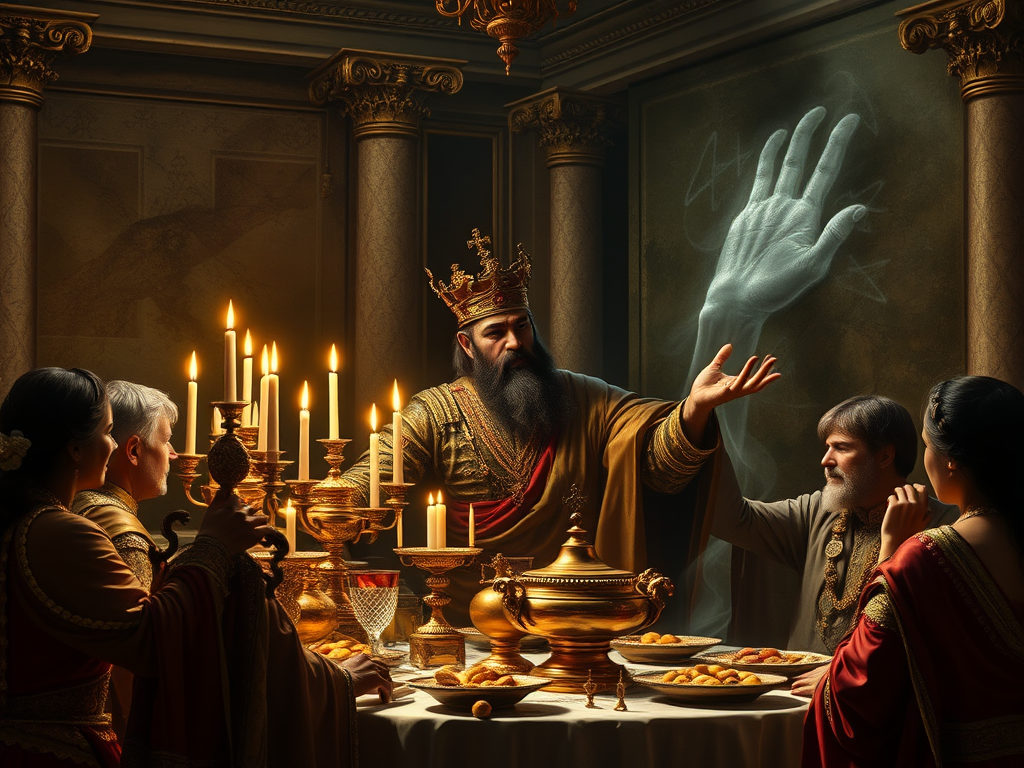
    King Belshazzar, in our first reading, throws a magnificent, drunken banquet. His act of blasphemy is not a simple mistake; it’s a defiant spectacle. He demands the holy gold and silver vessels looted from the Temple in Jerusalem be brought out and used for a pagan party.

    This is the spiritual state of radical entitlement. Belshazzar treats the holy (gifts from God) as merely a trophy for his own ego.

    The Psychology of Entitlement

    This is what happens when the Adversary’s whisper takes root: it convinces us that our talents, our wealth, and our relationships are entirely our own doing, meant solely for self-gratification.

    But at the height of his pride, the visible world breaks down: “Suddenly the fingers of a human hand appeared, and began to write on the plaster of the palace wall.”

    The writing is the ultimate accounting of a life lived without reference to the sacred:

    • Mene: Your power has been measured and ended.
    • Tekel: You have been weighed in the balance and found wanting.
    • Parsin: Your kingdom has been divided and lost.

    Belshazzar failed because he refused to glorify the God who held his breath and all his fortunes in his hands. His life, measured against the standard of the sacred, collapsed.


    2. The Hero’s Forge: The Necessity of Endurance

    If Belshazzar’s downfall is the consequence of Hubris and Pride, the Gospel (Luke 21) provides the antidote: Endurance and Trust.

    Jesus tells His disciples not of palaces, but of persecution, betrayal, and even death. This is the moment in the Hero’s Journey where the hero is stripped bare, entering the chaotic belly of the whale where all external support is lost.

    In the face of this absolute chaos, Jesus gives two counter-intuitive commands:

    1. Don’t Prepare Your Defence: Jesus commands us to relinquish the primal urge to control the narrative. Our brain, our ego, wants to be prepared, to argue, to win the court case. But He says, “I myself shall give you an eloquence and a wisdom…” We are called to suppress our own iron strength and rely on the Holy Spirit’s divine wisdom.
    2. Endure: The ultimate secret to salvation is revealed: “Your endurance will win you your lives.” Endurance is not passive survival. It is the active, faithful confrontation with suffering—a sustained posture of obedience that forges character and secures the soul.

    3. The Call to Live with Consecration

    We are called to move past the judgment of the decadent palace and into the endurance of the faithful disciple.

    A. Examine Your Holy Vessels

    Where are you taking the consecrated gifts God gave you—your time, your talents, your intelligence, your relationships—and treating them as merely trophies for your own consumption?

    • Do you use your intelligence to build yourself up, rather than to serve the Truth?
    • Do you treat your days off simply as hours for personal indulgence, rather than a chance to glorify God and love others?

    All we have is a consecrated vessel, a gift from God. The shift begins when we recognize this truth and use our gifts for their intended, holy purpose.

    B. Stay Awake in the Chaos

    The Gospel Acclamation instructs us: “Stay awake, praying at all times for the strength to stand with confidence before the Son of Man.”

    The courage to endure is won in the small battles:

    • In the willingness to suffer a slight and not seek immediate revenge.
    • In the resolve to remain faithful to your commitments when they become boring.
    • In the continuous choice to seek God’s wisdom instead of relying on your own prepared script.

    Do not be afraid of the chaos. It is merely the process by which God measures our foundations. Let us stand with confidence, relying not on our own power, but on the wisdom and eloquence of Christ, so that when our lives are weighed, we may be found faithful.


    Discussion Prompt:

    What is one “holy vessel” (a gift, talent, or resource) in your life that you have been treating like a “trophy” for your own pride or indulgence? What is one concrete action you can take this week to reconsecrate it to God’s purpose?

    Share your commitment below.

    Developed with assistance from Gemini AI, ChatGPT-5 and GROK 4.1

  • The Stone That Became a Mountain

    The Stone That Became a Mountain

    A Reflection for Tuesday, November 25, 2025 Based on Daniel 2:31-45; Daniel 3:57-61; and Luke 21:5-11

    (Originally delivered as a 12-minute talk – now expanded for anyone who wants to sit with it longer)

    I’ve never met King Nebuchadnezzar, but some nights I wake up in a cold sweat feeling exactly like him.

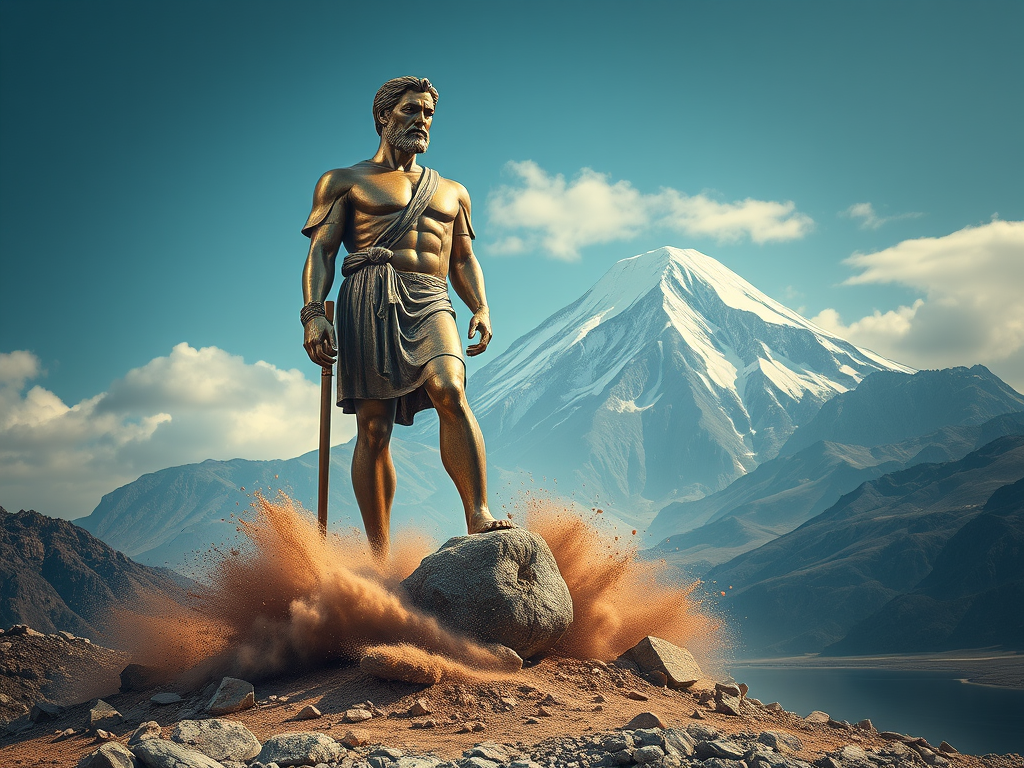
    You know the dream: a dazzling statue rises in front of you—head of gold, chest of silver, belly of bronze, legs of iron, and feet made of iron mixed with crumbling clay. It is magnificent, terrifying, and (you are secretly proud) it looks a lot like the empire you’ve spent your whole life building. Then, out of nowhere, a stone “untouched by human hand” rockets across the void, smashes the feet, and the entire thing explodes into powder. The wind scatters the dust, and the stone keeps growing until it becomes a mountain that fills the whole earth.

    Daniel, barely more than a teenager and a foreign prisoner, looks the most powerful man on the planet in the eye and says: “That stone is God’s Kingdom. Everything you trust will be ground to chaff. Only the Kingdom will last forever.”

    Two and a half millennia later, that dream still haunts us because it is no longer just about Babylon. It is about the statues we keep erecting inside our own skulls.

    Your Brain Is the Statue

    Neuroscience has accidentally given us one of the best commentaries on Daniel 2 ever written.

    • The golden head = the prefrontal cortex: language, long-term planning, morality, the part of you that wants to build something glorious and eternal.
    • The silver arms and chest = the limbic system: love, belonging, tribal identity, emotion.
    • The bronze belly = the older reward circuits: pleasure, ambition, appetite, status.
    • The iron legs = the brainstem and motor strips: raw survival, dominance, fight-or-flight.
    • The feet of iron and clay = the fragile, perpetually uneasy handshake between our ancient reptile brain and our fragile modern consciousness. Strong enough to run a civilization, brittle enough to shatter the first time life hits it wrong.

    Every war, every addiction, every mid-life crisis, every doom-scrolling spiral begins when the lower floors start dictating terms to the upper ones.

    The Universal Story

    Joseph Campbell spent his life showing that every culture tells the same story:

    Ordinary world → Call to adventure → Refusal → Mentor appears → Crossing the threshold → Ordeal and death → Seizing the treasure → Return to give it away.

    Translate the characters:

    Daniel is the mentor who will not bow.

    Jesus is the Stone cut without hands—the true Hero who descends into the realm of death and rises again.

    And you and I? We are the ones being summoned out of the collapsing statue into the growing mountain.

    When the Temple Comes Down

    In today’s Gospel people are gawking at the Jerusalem Temple—literally the most impressive religious building the ancient world had ever seen. Jesus looks at them and says, in effect, “Enjoy the view while it lasts. Not one stone will be left on another.”

    He is not being cruel. He is being honest. Every human temple, every human empire, every human self built only with human hands will one day stand on feet of clay.

    But notice what he says next: “When you hear of wars and insurrections, do not be terrified… Nation will rise against nation… There will be great earthquakes…” These are not the end. They are the birth pangs.

    In mythology, the false world has to shatter before the real story can begin.

    In psychology, the ego has to crack open before genuine integration can happen.

    In salvation history, the Stone has to strike.

    The Catholic Reading in One Sentence

    The Stone is Christ.

    The Mountain is the Church, born from the rock struck on Calvary and from the side of Christ on the Cross.

    And the dream is being fulfilled right now, every time a human soul lets the Kingdom smash its idols and fill its emptiness.

    So What Do We Actually Do?

    Four concrete, life-changing steps you can start this week:

    1. Name Your Statue
      Tonight, before you go to bed, ask: What is the gold-headed thing I trust more than God? Career? Reputation? Political ideology? My phone? My body? My children’s success? Write it down. That’s your personal Nebuchadnezzar dream.
    2. Let the Stone Strike
      Take that piece of paper (or just the knowledge of it) to confession, to adoration, to the foot of the crucifix. Ask Jesus to touch the feet of clay. It will probably feel like everything is falling apart. Good. That’s the sound of the Kingdom arriving.
    3. One Line, Ten Minutes, Every Morning
      Before you open any app, sit in silence and let one phrase from today’s readings strike you and grow:
      “A stone untouched by human hand…”
      Repeat it slowly, like a breath prayer. Let it smash the noisy empires in your mind. Ten minutes. That’s all. But do it daily and watch what kind of mountain starts growing inside you.
    4. Live the Return
      The hero never keeps the elixir for himself. Bring the peace you find in that silence to your family, your cubicle, your parish council, the grocery checkout line. The world is starving for people who have let the Stone win.

    The Dream Is Still True

    We are living in the age of the feet of clay.

    Globally: superpowers and tech empires that look invincible but are already cracking.

    Personally: hearts that are part iron, part mud, strong enough to function, brittle enough to break.

    But the Gospel acclamation today is shouting at us across two thousand years:

    “Stand erect, hold your heads high, because your liberation is near at hand!”

    The statue is already trembling.

    The Stone has already left the mountain.

    The only question left is whether we will cling to the collapsing colossus or open our hands and let the Kingdom break us open—so that, through us, it can fill the whole earth.

    Come, Lord Jesus.

    Strike the feet.

    Grow the mountain.

    Make Your home in us.

    And then send us back out to a world that desperately needs living stones.

    Amen.

    Feel free to share this post, print it, read it aloud to your family, or just sit with it in the quiet. The dream is still coming true—and you’re in it.

  • St. Albert the Great:

    St. Albert the Great:

    The Saint Who Proved Faith and Reason Belong Together

    Today the Church celebrates the feast of St. Albert the Great—a man whose brilliance was so vast that his contemporaries simply called him Magnus, “the Great.” It is rare for history to give such a title to anyone, and even rarer for the Church to agree. But with Albert, both the scholars and the saints found themselves saying the same thing: this man is in a category of his own.

    If you’ve ever wondered what the harmony of faith and science looks like in a single human life, St. Albert is your answer.


    Who Was St. Albert the Great?

    • Born: c. 1200 in Lauingen, Germany
    • Died: November 15, 1280 in Cologne
    • Feast Day: November 15
    • Religious Order: Dominican (Order of Preachers)
    • Titles: Doctor Universalis (Universal Doctor), Doctor of the Church, Patron Saint of Scientists

    Albert was, without exaggeration, one of the greatest minds of the Middle Ages. He mastered philosophy, theology, natural science, and nearly every field of knowledge his world had to offer. And yet, his reputation for humility was as great as his intellect.


    What Made Him So Extraordinary?

    1. A Master of Philosophy and Theology

    Albert is best known as the man who brought Aristotle to the Christian West.
    He wrote massive commentaries on nearly all of Aristotle’s works—physics, metaphysics, ethics, politics, biology, psychology—and in doing so, he shaped the intellectual foundation of Europe.

    But Albert did something even more important:

    He showed that faith and reason are not enemies, but allies.

    This insight became the cornerstone of Christian philosophy and inspired his most famous student, St. Thomas Aquinas, to build the great synthesis of faith and reason that still shapes Catholic thought today.


    2. A Pioneer of Early Science

    Albert is sometimes called a “proto-scientist,” but in truth he was already practicing something very close to the scientific method.

    He observed, measured, classified, and experimented.

    He wrote groundbreaking studies on:

    • botany
    • zoology
    • mineralogy
    • astronomy
    • geography
    • even early chemistry (then called alchemy)

    He personally described plants and animals with surprising accuracy, noted the narcotic effects of certain herbs, and even acknowledged that the Earth is a sphere—centuries before it became common knowledge.

    And while legends say he discovered the philosopher’s stone, Albert himself spent much of his time exposing fraudulent alchemists. He defended only what could be real, tested, and true.


    3. Friar, Teacher, Bishop, and Tireless Preacher

    Albert entered the Dominican Order around 1223, embracing a life of poverty, preaching, and study.

    He taught all across Germany and in Paris, where he became the mentor of the young Thomas Aquinas. He served briefly—and reluctantly—as Bishop of Regensburg, but soon returned to the classroom, where he felt his vocation lay.

    His life was marked by prayer, gentleness, charity, and deep humility.


    Why Was He Made a Saint?

    St. Albert was canonized in 1931—remarkably late, considering he had been venerated for centuries. His canonization was equipollent, meaning the Church formally recognized a devotion that already existed.

    He became a Doctor of the Church the same year.

    He is honored because of:

    • his extraordinary holiness, lived quietly and consistently;
    • his intellectual contributions, which strengthened and defended the faith;
    • his integration of faith and science, preventing a divide that could have shattered Christian culture;
    • the many miracles attributed to him during and after his life.

    In 1931 he was declared the Patron Saint of Scientists, and today remains a model for all who seek the truth through both prayer and study.


    Fun Facts & Medieval Legends

    • Albert once defended the young Thomas Aquinas—mocked as “the Dumb Ox”—saying:
      “You call him a dumb ox? His bellowing will one day echo throughout the world.”
      The prophecy came true.
    • Medieval stories claimed Albert built a talking automaton—an early “robot.”
      While almost certainly legend, it shows how people saw him as a kind of scientific wizard.
    • He defended the right of women to study philosophy and theology—centuries ahead of his time.

    A Saint for Our Age

    St. Albert the Great stands as a powerful answer to a modern question:

    Can a person love God wholeheartedly and still pursue science, reason, and the natural world?

    Albert’s life gives a clear, resounding yes.

    He reminds us that all truth comes from God, and therefore no truth—whether scientific or spiritual—can contradict Him. He is the Church’s great bridge between the worlds of faith and knowledge, contemplation and investigation, theology and the natural sciences.

    On his feast day, we are invited to rediscover that same unity in our own lives.

    St. Albert the Great, pray for us.

  • Hidden Heroes:

    How the Unknown Shapes Our World

    Human progress, both spiritual and practical, often unfolds in ways we never notice. We tend to look for recognition, applause, and fame, assuming that value is measured by the eyes of the crowd. Yet the truth, whether in faith or society, is far richer: the most transformative work often comes from those who remain hidden.

    The Saints and the Hidden Workers of God

    Cardinal Newman reminds us that God’s providence works quietly. Saints, angels, and faithful servants often operate without recognition. Abel, Noah, Moses, and the prophets were largely unknown to their contemporaries, yet they were beloved of God and critical to His plan. Even Christ Himself spent thirty years hidden in Nazareth.

    The principle continues in history. Many Christians owe their faith to mothers, teachers, or mentors whose names are lost to time. Countless acts of holiness shape society, unseen, like the hidden roots of a tree that nourishes its branches. Similarly, Scripture and Church traditions bear the imprint of unknown authors, composers, and builders, whose work has guided humanity for generations. The impact is real, even if their names are forgotten.

    The Modern Parallel: Inventors, Salespeople, and Entrepreneurs

    We can see the same dynamic in modern innovation. Inventors and engineers create new knowledge, technology, or tools. Yet these creators often lack the skills—or the inclination—to bring their work to the broader world. Enter the salesperson: the person who sees the value, communicates it, and persuades others to adopt it. Then come the entrepreneurs and business leaders, who scale the invention, providing the resources and infrastructure needed for it to become universally useful.

    Without this network—hidden genius, skilled communicators, and organizational support—many innovations would remain isolated, never touching society. And the inventor’s name, like many saints and spiritual guides, might never be celebrated. Every new invention also becomes the foundation for further discoveries, creating a chain of hidden contributions that shapes the future.

    Reframing the Hero: From Discoverer to Connector

    When we study the hero’s journey, we often assume the hero is the one who discovers the treasure. But consider this: the hero is not always the person who first extracts knowledge from the unknown. That role belongs to the inventor, the shaman, or the unseen sage—the obscure individual who wrestles with chaos and uncertainty to create something of value.

    The hero is the one who interacts with this hidden figure, understands the value of what has been uncovered, and brings it back to society. In myth, the dragon hoards treasure, and the hero must confront it to retrieve the prize. In real life, the “dragon” can be obscurity, complexity, or the difficulty of translating raw knowledge into something usable. The hero faces these challenges, carrying the treasure—whether knowledge, wisdom, or technology—back to the people.

    In this sense, the hero bridges the gap between hidden genius and society, enabling progress, inspiration, and transformation. The hero may not have invented the treasure, but without their courage, vision, and action, the discovery would remain buried. Just as angels and hidden saints influence history quietly, the hero ensures that society can benefit from the work of those who remain unknown.

    Seeing the Hidden Threads of History

    Whether in faith or in society, history is woven from countless hidden contributions. The bones and tools of ancient humans in Africa show us that our civilization depends on wisdom carried back from the unknown, even when we do not know the individuals. Inventions, ideas, acts of courage, and spiritual insights all ripple forward, often unnoticed.

    Newman’s spiritual lesson and the modern story of innovation converge here: the world is shaped by the hidden, the faithful, and the unseen, and the hero plays a critical role in translating these hidden gifts into something that can bless all of humanity.

    We are all part of this network. In small ways or large, each of us can act as the hero—recognizing the hidden treasures around us, nurturing them, and sharing them so they reach their full potential. Our private deeds, our acts of faith, our quiet labor—all matter far more than we realize.


    Reflection Questions:

    1. Who are the hidden “saints” or innovators in your life whose work you benefit from daily?
    2. Where in your life could you act as the hero, connecting hidden knowledge or resources to others?

    How does recognizing unseen contributions change the way you measure success or value?

    Meta Summary (SEO-ready):
    From hidden saints to forgotten inventors, society thrives on unseen contributions. Discover how heroes, both mythological and modern, bridge the gap between obscurity and impact, making hidden knowledge and wisdom accessible to all.

    SEO Keywords: hero’s journey, hidden heroes, unseen contributions, inventors, innovation, Christian saints, angels, spiritual growth, knowledge from the unknown

  • One Bead, Three Charity Bombs: Ignite the Third Hail Mary

    One Bead, Three Charity Bombs: Ignite the Third Hail Mary

    You’re at the start of the Rosary.

    First bead → Faith (blank map → step; Host → Him; hard thing → anyway).

    Second bead → Hope (pain → temp; failure → fuel; dead-end → done).

    Third bead rolls in:

    “Hail Mary… increase in us charity…”

    …and your heart quietly files for bankruptcy.

    Not anymore.

    Here are three 30-second love detonators to drop before or during that final Hail Mary.

    Pick one. Pick all. Just make it explode.

    Detonator #1 – WILL THEIR HEAVEN, NOT MY COMFORT

    Charity isn’t warm fuzzies. It’s ruthless goodwill.

    Your move:

    Before the prayer, name the person who makes your skin crawl.

    Picture Jesus dying for THEM too.

    Pray: “I want heaven for them—even if they never say sorry.”

    Detonator #2 – DIE A LITTLE, RIGHT NOW

    Real love always kills part of you so someone else can live more.

    Your move:

    During the Hail Mary, pick one concrete discomfort today (skip the reply, take the blame, send the money, shut up).

    Offer it for that person.

    Whisper: “This tiny death is my love letter.”

    Detonator #3 – BORROW MARY’S HEART (SHE’S LOANING)

    She watched her Son butchered and her heart didn’t shrink—it stretched.

    Your move:

    While the words roll, beg: “Mom, lend me your Immaculate Heart for 30 seconds.”

    Feel it expand.

    Then go love with hers because yours is broke.

    TL;DR (because brain)

    Want their heaven > want my comfort.

    Die small today.

    Borrow Mary’s heart.

    Screenshot this.

    Next time that third bead hits your fingers, drop the love bomb.

    Series complete: Faith ✓ Hope ✓ Love ✓

    Stay dangerous, stay Catholic.

  • Quiet Heart, Loud Faith: Three Sparks to Renew the Church

    Quiet Heart, Loud Faith: Three Sparks to Renew the Church

    Faith in the Noise

    World spins fast—tech, truth, opinions shift.

    Noise everywhere. Easy to lose what matters.

    • Church mission? Never needed calm.
    • Starts with faith—deep in the heart.

    Silence often anchors quietly.

    One breath of quiet = your next spark?


    Depth Over Activity

    Church today? Not more programs. Not louder voices.

    Needs depth—people who pray, meet God in silence.

    • Live the Gospel first.
    • Faith isn’t meetings or debates.
    • Comes from grace—God loved us first, fully.

    Let love move you daily.

    One quiet moment = instant recharge.


    Renewal & Shine

    Remember that love? Faith becomes a lens.

    See God in work, people, hidden places.

    • Church renews through awakened hearts—not new plans.
    • Christ: “Take courage; I overcame.”
    • Hope in Him, not results.

    Restless world? Still radiant.

    You’re the light—ready to glow?

  • One Bead, Three Hope Bombs: Ignite the Second Hail Mary

    One Bead, Three Hope Bombs: Ignite the Second Hail Mary

    You’re at the start of the Rosary.

    First bead: “increase in us faith.”

    (If you missed it, we lit that fuse yesterday: blank map → step; Host → Him; hard thing → anyway.) One Bead, 3 Faith Bombs:

    Now the second bead rolls in:

    “Hail Mary… increase in us hope…”

    …and your mind blanks again.

    No more.

    Here are three 30-second mental detonators to drop before or during that single Hail Mary.

    Pick one. Pick all. Just make it explode.


    Detonator #1 – ANCHOR YOUR HEART IN HEAVEN

    Scene: Every cross you carry is a temp rental.

    Heaven is the forever address.

    Your move:

    Before the prayer starts, picture your heaviest pain nailed to the Cross—then vanishing at the empty tomb.

    “I bank on eternity, not the invoice.”


    Detonator #2 – GOD RECYCLES FAILURES INTO GLORY

    Fact: Your worst faceplant is raw material.

    Joseph: sold → pit → prison → palace.

    Your move:

    During the Hail Mary, hand God one specific failure.

    Whisper: “Turn this trash into throne.”

    (Pro tip: He’s the ultimate up-cycler.)


    Detonator #3 – RESURRECTION ALREADY CASHED THE CHECK

    Fact: Christ rose. Death lost. Hope won.

    Your move:

    Name one dead-end staring you down today.

    Lock eyes on the Risen One while the words roll.

    “I rest in the victory lap already run.”


    TL;DR (because scroll)

    Pain → temp.

    Failure → fuel.

    Dead-end → done.

    Screenshot this.

    Next time that second bead hits your fingers, light the fuse.

    Love bead dropping soon—stay locked in, stay Catholic.

  • One Bead, Three Faith Bombs: Ignite the First Hail Mary

    One Bead, Three Faith Bombs: Ignite the First Hail Mary


    You’re at the start of the Rosary.

    The first bead rolls under your thumb.

    “Hail Mary… increase in us faith…”

    …and your mind blanks.

    No more.

    Here are three 30-second mental detonators to drop before or during that single Hail Mary.

    Pick one. Pick all. Just make it explode.


    Detonator #1 – TRUST THE UNSEEN PROMISE

    Scene: Abraham, 75, no map, no preview.

    God: “Pack up. I’ll show the land… later.”

    Abe: “Let’s go.”

    Your move:

    Before the prayer starts, picture your unknown road.

    That nudge you’re dodging?

    Step onto the dirt.

    “I trust the Giver, not the preview.”


    Detonator #2 – JESUS IS LITERALLY HERE

    Fact: The Eucharist isn’t symbolic.

    It’s Body, Blood, Soul, Divinity.

    Storm-calmer → 1-inch host.

    Your move:

    During the Hail Mary, zoom in on the tabernacle.

    Whisper: “You’re in there. I believe—even if feelings bail.”

    (Pro tip: imagine the Host glowing like it holds the universe. It does.)


    Detonator #3 – FAITH IS A VERB ON MUTE

    Feelings: “This is trash.”

    Circumstances: “Quit.”

    Faith: “Still moving.”

    Your move:

    Name one hard act for today—forgive, pray, show up.

    Lock it in as the words roll.

    “I obey when everything screams stop.”


    TL;DR (because scroll)

    1. Blank map → step.
    2. Host → Him.
    3. Hard thing → anyway.

    Screenshot this.

    Next time that first bead hits your fingers, light the fuse.Hope bead dropping soon—stay locked in, stay Catholic.

  • Capture Your Mary Icon in 5 Minutes

    Capture Your Mary Icon in 5 Minutes

    The Glow

    Every mother cradling her child mirrors Mary with Jesus.

    One framed photo turns that moment into a living icon.


    Windows, Not Portraits

    Icons (Hodegetria, Eleusa) show love, not faces.

    Your hug already does the same.

    Soft light + real clothes = instant sacred vibe.


    4 Micro-Moves

    1. Hold close (left arm works).
    2. Gaze with love—wiggles welcome.
    3. Window light, 5 minutes max.
    4. Blue/red fabric if it feels right.

    Frame the Divine

    Print large. Simple frame.

    Hang where morning eyes land.

    Daily dopamine: “This love is holy.”


    Join the Circle

    Snap yours. Post with #MaryIconMoments. on X!

    Next post: how every culture sees “Mother + Child” as sacred.