They are experiencing Christianity as joy and hope, having thus become lovers of Christ.

Author: seizedbychrist

  • Priesthood’s Hidden Demands:

    Priesthood’s Hidden Demands:

    Celibacy, Parish Life, and the Pursuit of God

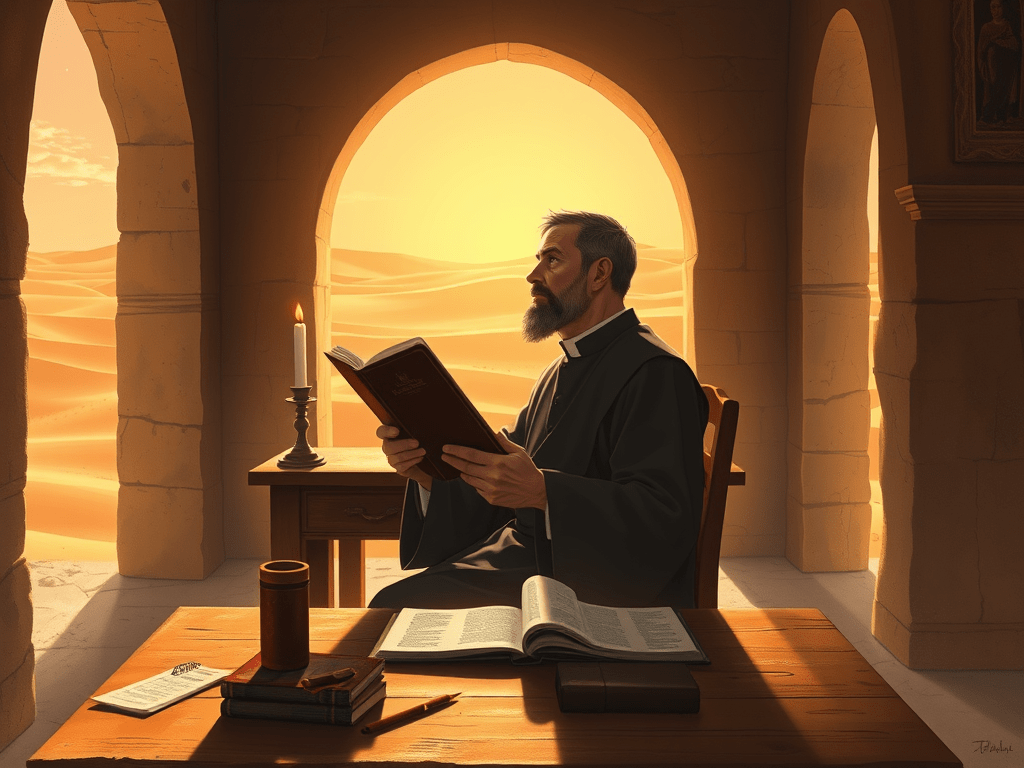
    The phrase “married to the Church” for Catholic priests sounds poetic, but it’s a double-edged sword. Celibacy frees one from spousal and parental duties, yet parish life binds you to schedules, crises, budgets, and souls—often more consuming than family. As one insight puts it: Celibacy removes intimacy, but responsibility removes silence.

    Historically, the Church distinguished paths:

    • Parish priests: Relational shepherds, sacrificing horizontally for people.
    • Religious priests/monks: Protected in community with structured prayer and limited demands.
    • Hermits/contemplatives: Radical solitude for unfiltered pursuit of God.

    Only the latter truly enable undistracted contemplation. Parish work, holy as it is, can crowd out interior life—the “work of God” displacing God’s presence. Saints often begged for solitude, fleeing overload.

    This reframes A.W. Tozer: A Protestant with a contemplative soul, lacking institutional protection, his calling’s cost fell on his family. A celibate parish priest might face similar interior erosion if mismatched.

    The irony? A married prophet wounds his kin; a celibate administrator wounds his soul. Modern Christianity excels at roles but falters at discernment. The pursuit of God demands not just renouncing marriage, but shielding from constant demand—why monasteries and deserts exist.

    Biblically, holiness isn’t sentimental: Prophets are lonely, obedience divides households. Tozer’s life wasn’t neglect; it was costly obedience. Christianity must own this: True calling can be holy, fruitful—and still wound those nearby.

    Reflect: How do institutions protect (or fail) the interior lives of servants?

    Developed with assistance from GROK and Gemini

  • The Beatitudes’ Radical Reversal

    The Beatitudes’ Radical Reversal

    Why the “Poor in Spirit” Are the Truly Fortunate

    At the heart of the Beatitudes (Matthew 5:3-12) lies one of Jesus’ most subversive teachings: the people society overlooks or pities are, in God’s eyes, the blessed ones.

    • Blessed are the poor in spirit (those who know their total dependence on God)—theirs is the kingdom of heaven.
    • Blessed are they who mourn—they will be comforted.
    • Blessed are the meek—they will inherit the land.
    • Blessed are those who hunger and thirst for righteousness—they will be satisfied.

    And it continues through mercy, purity of heart, peacemaking, and even persecution for justice’s sake.

    This isn’t a list of feel-good affirmations. It’s a declaration of divine favor on those who embody Kingdom values—humility, sorrow for sin and injustice, gentleness, mercy, integrity, reconciliation, endurance. The world measures fortune by power, wealth, comfort, status. Jesus says the opposite: True fortune belongs to the spiritually needy, the heartbroken over brokenness, the non-violent, the justice-seekers. Their reward isn’t delayed—it’s already breaking in (“theirs is the kingdom”).

    Whether your Bible reads “Blessed” (traditional emphasis on God’s bestowed favor) or “How happy are…” (Jerusalem Bible’s dynamic take on deep, divine well-being), the point holds: These aren’t optional extras for super-saints. They’re the path to authentic life in God’s upside-down Kingdom.

    The Beatitudes challenge us daily: Where do we see ourselves? Are we chasing worldly “happiness,” or Kingdom blessedness? Embracing poverty of spirit, mourning with those who suffer, pursuing mercy—these open the door to the joy Jesus promises.

    Which Beatitude speaks to you most right now? How does living it look in your life?

    Developed with assistance from GROK

  • Blessed, Not Just Happy:

    Blessed, Not Just Happy:

    Rethinking the Beatitudes

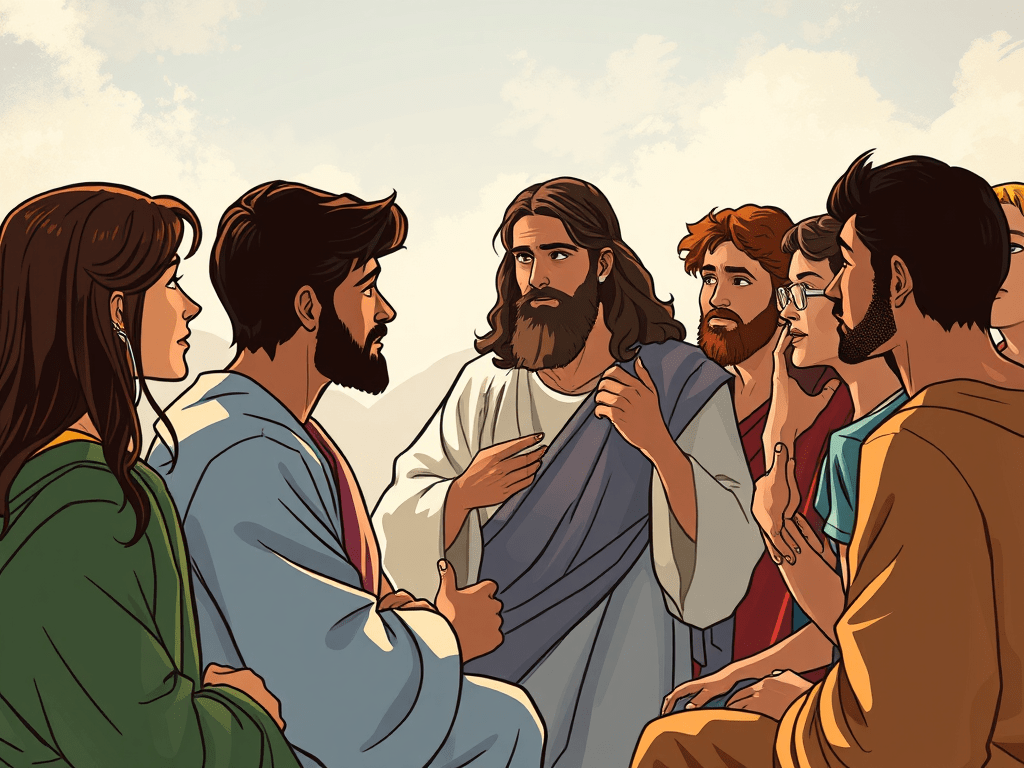
    Today’s Gospel (February 1, 2026—Fourth Sunday in Ordinary Time, Year A) brings us to the Beatitudes in Matthew 5:1-12a. Jesus ascends the mountain, sits, and delivers these revolutionary declarations:

    “Blessed are the poor in spirit, for theirs is the kingdom of heaven.
    Blessed are they who mourn, for they will be comforted.
    Blessed are the meek, for they will inherit the land…”

    And so it continues—pure “Blessed” from start to finish in the NABRE, the translation proclaimed at U.S. Catholic Masses.Yet I’ve heard (and perhaps you’ve noticed) a subtle shift in some circles: people quoting it as “Happy are the poor…” instead. It changes the tone. “Blessed” feels sacred, covenantal, bestowed by God. “Happy” sounds… everyday. Emotional. Fleeting. Like the poor went from being divinely favored to merely cheerful.Is there a real change here? Not in the official Catholic lectionary. The NABRE sticks with “Blessed,” as does the USCCB site and every approved liturgical text. No recent switch diluted it to “Happy” for Mass readings.The confusion likely comes from elsewhere:

    • Some Protestant or ecumenical translations (Good News Bible, certain paraphrases) render the Greek makarios as “Happy” to emphasize inner flourishing or well-being.
    • Informal retellings—sermons, kids’ Bibles, hymns, or older popular versions—sometimes swap in “Happy” for relatability.
    • Historical translation debates: Makarios means more than surface happiness; it’s profound, God-given joy tied to the Kingdom, often reversing worldly expectations (the poor, mourners, persecuted are the truly fortunate).

    “Blessed” preserves that depth—it’s God’s action declaring favor on those who embody Kingdom values: humility (“poor in spirit” = recognizing utter dependence on God), sorrow for sin, meekness, hunger for justice. It’s not about feeling good despite hardship; it’s about being right with God in ways the world overlooks.Jesus isn’t offering quick happiness hacks. He’s unveiling a radical reversal: In God’s economy, the ones society pities are the blessed ones. The Kingdom belongs to them now.So next time you hear “Happy are…,” pause. The Gospel proclaims something stronger: Blessed. Divinely favored. Eternally oriented. That’s the invitation—to live these beatitudes, not just read them.Question for reflection: Which Beatitude hits you hardest today? How does “Blessed” (vs. “Happy”) change how you hear it?

    Developed with assistance from GROK

  • Hidden Wisdom Revealed

    Hidden Wisdom Revealed

    The Depths of God (1 Corinthians 2:6-10)


    Reflection on Readings for Sunday 15FEB20126

    St. Paul contrasts worldly wisdom with divine mystery: “We have a wisdom to offer those who have reached maturity… the hidden wisdom of God… predestined to be for our glory before the ages began… the things that no eye has seen and no ear has heard… These are the very things that God has revealed to us through the Spirit, for the Spirit reaches the depths of everything, even the depths of God” (1 Cor 2:6-10).

    Catholic exegesis, drawing from Church Fathers like Augustine, sees this as the Spirit illuminating Christ’s mystery—eternal wisdom beyond human philosophy, hidden yet revealed to those who love God.

    In the Hero’s Journey, this is the “innermost cave” or abyss: the hero confronts ultimate trials and receives a transformative boon. Myths parallel this—Odysseus descends to the underworld for prophetic knowledge, or Aeneas gains insight that reshapes Rome’s destiny.

    Carl Jung’s individuation process aligns here: integrating the psyche’s hidden depths (the “shadow”) leads to wholeness. The brain’s default mode network activates during introspection and prayer, enabling insights beyond rational thought.

    The Gospel Acclamation invites childlike openness: “Speak, Lord, your servant is listening: you have the message of eternal life” (1 Sm 3:9; Jn 6:68), or “Blessed are you, Father… for revealing the mysteries of the kingdom to mere children” (Mt 11:25).

    This isn’t elite knowledge—it’s grace-given. Invite the Spirit today through silent prayer or Scripture reading. Ask for revelation in your struggles. As you mature in faith, hidden wisdom emerges, transforming confusion into purpose. What depths is God inviting you to explore?

    Developed with assistance from GROK AI

  • The Crossroads of Life:

    The Crossroads of Life:

    Choosing Fire or Water

    Reflection on Readings for Sunday 15FEB20126

    (Sirach 15:16-21 & Psalm 119)

    In the Book of Sirach (also called Ecclesiasticus), we hear a stark, empowering truth: “If you wish, you can keep the commandments, to behave faithfully is within your power. He has set fire and water before you; put out your hand to whichever you prefer. Man has life and death before him; whichever a man likes better will be given him” (Sir 15:16-17). God never commands godlessness or permits sin without consequence (Sir 15:20-21). This isn’t determinism—it’s divine respect for free will, a cornerstone of Catholic teaching on human agency and grace.

    Psalm 119 echoes this call: “Blessed are they who follow the law of the Lord! … Open my eyes, that I may consider the wonders of your law. … Teach me, O Lord, the way of your statutes” (Ps 119:1-2, 17-18, 33).

    This moment mirrors the Hero’s Journey archetype, where the ordinary person stands at the threshold of adventure. Joseph Campbell’s monomyth begins with a call, often refused at first, but here Sirach presents the choice plainly: life (water, virtue) or death (fire, vice).

    Mythologically, it recalls Hercules at the crossroads. In ancient Greek tales, young Hercules meets two figures—Vice offering ease and pleasure, Virtue demanding toil for lasting glory. He chooses the harder path, forging his heroic legacy through labors. Similar choices appear in Norse lore, like Odin sacrificing an eye for wisdom at the World Tree.

    Psychologically, this engages the brain’s structure. The prefrontal cortex handles executive decisions, weighing long-term consequences and exercising self-control. The amygdala drives emotional impulses—fear, anger, desire—often urging the “fire” of quick gratification. Neuroplasticity shows that repeated virtuous choices strengthen prefrontal pathways, rewiring habits toward resilience and moral growth. Grace elevates this natural capacity, turning biology into a tool for holiness.

    Today, you stand at your own crossroads. Where are you reaching for fire instead of water? Begin with small, deliberate choices: forgive a grudge, resist a harmful impulse, seek God in prayer. Commit to a daily examen—review your day, note patterns, and choose life anew. The path of virtue isn’t easy, but it leads to true freedom and glory. What choice will you make right now?

    Developed with assistance of GROK AI

  • A. W. Tozer’s Secret Affinity:

    A. W. Tozer’s Secret Affinity:

    A Protestant Closer to Catholic Saints Than Many Catholics

    A.W. Tozer was Protestant through and through, yet his spirit whispers Catholic mysticism. He devoured Church Fathers like Augustine, absorbed medieval devotionals like The Imitation of Christ, and emphasized transcendence, sin, grace, and interior transformation—hallmarks of classical Catholic teaching.

    Compared to modern Catholicism, often bogged in programs and softened edges, Tozer’s urgency feels more aligned with the Magisterium’s core: Holiness as heroic, non-negotiable. He critiqued superficial piety, standing apart from colleagues like Jesus from Pharisees.

    From a Hero’s Journey view, Tozer was the wanderer-prophet, slaying dragons of mediocrity while clashing with ordinary obligations. Protestant in identity, Catholic in imagination—he bridged worlds without converting.

    On ecumenism: The Church won’t canonize Protestant “saints” like Tozer, Lewis, or Bonhoeffer formally (it’s tied to sacraments and communion). But informally? They’re quoted by popes, taught in seminaries. Their content rediscovers ancient truths, reminding Catholics of their own heritage from outside.

    Truth doesn’t need labels; these men stand alone, functioning as bridges and prophets. Ecumenism thrives without annexation—unity in shared wisdom, not flattened differences.

    Why does this matter? It shows spiritual depth transcends labels. Dive into Tozer: You might find Catholic saints speaking through a Protestant voice.

    Thoughts: Who else bridges traditions like this?

    Developed with assistance from GROK and Gemini

  • Celibacy in Protestantism:

    Celibacy in Protestantism:

    Myth, Reality, and the Hero’s Path to Vocation

    Celibacy isn’t just a Catholic thing—unmarried Protestant ministers exist and thrive, especially in Anglican, Lutheran, and some evangelical traditions. Unlike Catholicism, it’s not required, but it’s permitted and sometimes chosen as a deliberate vocation. Think of it as opting for a life that’s a “sign” of undivided devotion, much like the early church’s monastic roots.

    In liturgical churches, there’s still a theology of vocation that echoes monasticism: life as sacramental, where celibacy allows for deeper contemplation. Non-liturgical denominations, though, often expect ministers to marry, viewing it as proof of stability. This can overlook celibacy’s power as a calling in itself.

    Tie this to the Hero’s Journey, and it gets even more intriguing. Heroes rarely marry mid-quest; the journey demands solitude for transformation. Marriage, when it happens, follows as a reward or integration. Early marriage can short-circuit this, stabilizing a man before he’s initiated into his deeper self, potentially sparking crises later.

    Modern marriage trends add fuel: We’re marrying later, but men aren’t always maturing—they’re just extending adolescence. Women face biological clocks, and historical norms (men marrying after proving competence, with moderate age gaps) get labeled problematic today due to fears of imbalance. But the real crisis? Misaligned vocations. Not every man called deeply to God is meant for marriage, and rushing in before self-knowledge can undermine both.

    Liturgical traditions preserve this wisdom: Some must enter the “wilderness” first. Tozer embodied this tension—a married prophet whose calling strained his home. It’s a call to discern: Is your path active or contemplative? Married or single? Engaging with these questions can transform how we view singleness not as a deficit, but as a heroic choice.

    What’s your take on celibacy in ministry? Is it undervalued today?

    Developed with assistance from Grok and Gemini

  • 🧎‍♂️ Prayer Includes Speaking Up

    🧎‍♂️ Prayer Includes Speaking Up

    What Luke 11 Teaches Us About Letting Ourselves Be Known
    By Tom Neugebauer | Seized by Christ

    “Ask, and it will be given to you; seek, and you will find; knock, and the door will be opened to you.” — Luke 11:9

    When Jesus teaches His disciples to pray in Luke 11, He invites them into something bold and persistent. Not just polite, private asking—but heartfelt, repeated knocking. The kind of prayer that won’t stop because the need is real.

    But what if one of the most powerful ways to pray isn’t just between us and God?

    What if part of that asking, seeking, and knocking means being willing to say out loud—to others—what we truly need?


    🗣️ Real Prayer Isn’t Always Silent

    Sometimes, we imagine prayer as a secret between us and God. And it can be. But if we never speak our needs to others—friends, family, fellow Christians—we may be cutting off the very path God wants to use to help us.

    When we share our burdens with someone we trust:

    • We invite them to pray with clarity and compassion.
    • We open the door to God’s grace working through human love.
    • We allow ourselves to be known—and that’s part of intimacy with God too.

    🤲 Vulnerability Is Part of Prayer

    Sharing our needs isn’t weakness. It’s humility and faith. It says:

    “I trust God enough to ask. And I trust you enough to let you in.”

    Jesus didn’t just tell people, “I’m praying for you.” He listened to what they wanted: “What do you want me to do for you?” (Luke 18:41)

    He taught us to ask God for what we need—and to bring those needs into real relationship.


    🧩 The Answer Might Begin with the Asking

    When we name our longings to those around us, we:

    • Help others understand how to pray for us
    • Create space for real help to come—not out of pity, but partnership
    • Remind ourselves that prayer isn’t just about waiting—it’s about honest engagement

    Sometimes God doesn’t move because we haven’t knocked on the door that’s right next to us.


    💬 What If Prayer Looked Like This?

    • We talk to God about our real needs—and not just in vague terms
    • We share those needs with a friend, a small group, or someone we trust
    • We allow others to become part of the story—not by fixing us, but by knowing us
    • We recognize that being known can be its own kind of healing

    🙏 Let Yourself Be Heard

    Next time you’re struggling with something:

    • Don’t just whisper it to God
    • Say it to someone you love and trust
    • Let that be part of your prayer

    You never know—God may be ready to answer. He just needed you to knock on more than one door.


    🕊️ If this reflection stirred something in you—maybe about how you share your needs or pray for others—please consider liking, subscribing, and sharing a comment below.

    We grow in faith together, and your story, insight, or question could be the nudge someone else needs today.

    • authentic Christian prayer
    • sharing prayer intentions
    • Luke 11 prayer reflection
    • praying with others
    • intercessory prayer meaning
    • Catholic prayer and relationships
    • asking God and asking others
    • vulnerability in prayer
    • how to pray effectively

    persistent prayer in Luke

  • The Victory That Bites Back

    When we decide to give our lives to Christ, we cross a threshold. It feels like a victory—and in many ways, it is.

    But right behind that victory lurks a subtle, spiritual poison. We begin to look at the world through a lens of “us” and “them.” We start to wonder: Am I better than they are?

    The short, jarring answer is: No.

    In the economy of Grace, there is no “better.” There is only the called, the seeking, and the found.

    This is the first crack in the armor of religious pride. The moment we cross into faith, the ego tries to turn grace into a status symbol. We quietly begin ranking ourselves above those still outside—or even those inside who seem less “advanced.”

    But grace doesn’t create a hierarchy. It levels the field. No one is elevated above another; we are simply at different points on the same path of being drawn, responding, or arriving.

    Pause today and notice if that subtle “us vs. them” lens has crept in. Where pride whispers “better,” grace reminds us: we are all recipients, never owners, of this gift.

  • A.W. Tozer’s Hidden Struggle:

    A.W. Tozer’s Hidden Struggle:

    The Prophet’s Family and the Price of Divine Calling 

    A.W. Tozer is revered as a spiritual giant, but behind the sermons and books was a man whose calling exacted a heavy toll on his loved ones. Married with seven children (six sons and one daughter), Tozer lived with an intensity that mirrored a monk’s devotion. His interior life was all-consuming, focused on God above all else. But that focus created emotional distance, especially for his wife, Ada.

    After Tozer’s death, Ada remarried and reportedly said, “Aiden loved Jesus Christ, but Leonard Odam (her new husband) loves me.” Ouch. It’s a raw admission that highlights the tension: Tozer’s prophetic vocation—marked by radical devotion—clashed with the demands of marriage. He wasn’t absent for selfish reasons like career ambition or escapism; his “absence” was poured into prayer, writing, and ministry that has inspired millions.

    This raises a thorny question: Should some men with such a deep calling avoid marriage altogether, or at least delay it until they’ve wrestled with their spiritual identity? In Protestant circles, marriage is often seen as a badge of maturity, but Tozer’s story suggests otherwise. It’s a reminder that not every path to holiness fits neatly into family life.

    Drawing from the Hero’s Journey archetype (think Joseph Campbell), the hero often remains single during the quest—marriage comes after transformation, as a crowning achievement. Tozer’s life illustrates the risk of flipping that script: early marriage can stabilize a man before he’s faced his true call, leading to strain or midlife reckonings.

    Tozer wasn’t a neglectful husband by worldly standards—many men are “absent” due to jobs, poverty, or distractions. But his was a holy absence, aimed at eternal good. Still, the cost was real, and it challenges us: How do we balance divine pursuit with human relationships? If you’re navigating a similar tension, Tozer’s biography is a must-read. It’s not a cautionary tale of failure, but of the tragic beauty in following God at all costs.

    Share your thoughts: Have you seen calling clash with family in your life or others’?

    Developed with assistance from Grok and Gemini