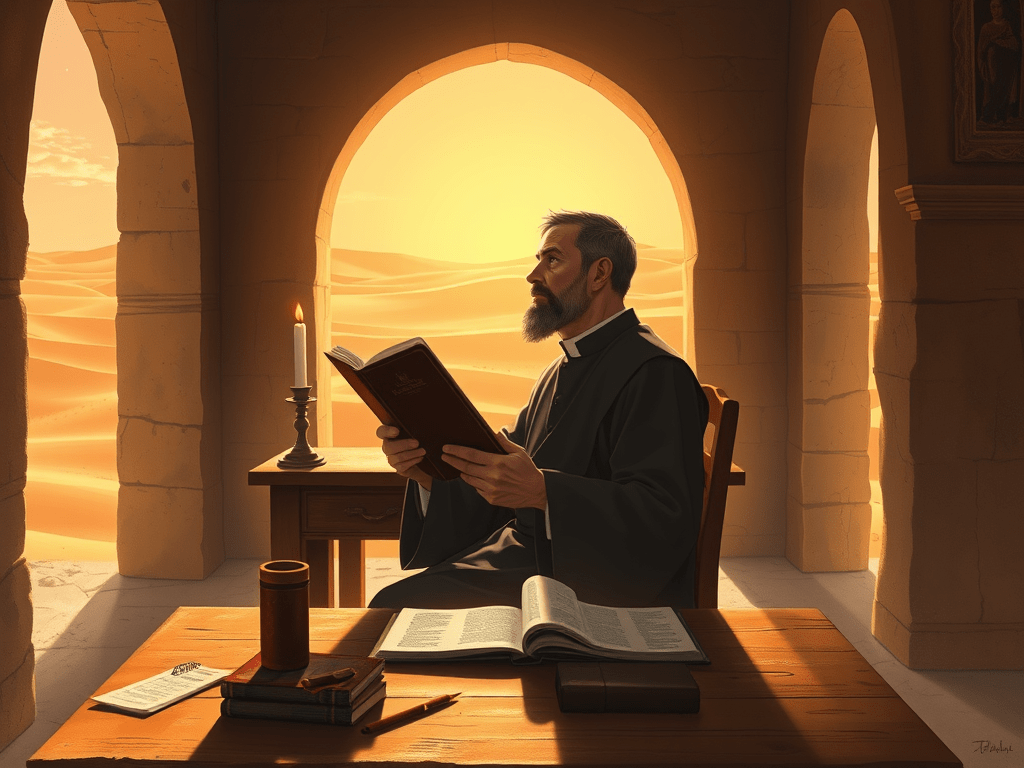
Celibacy, Parish Life, and the Pursuit of God
The phrase “married to the Church” for Catholic priests sounds poetic, but it’s a double-edged sword. Celibacy frees one from spousal and parental duties, yet parish life binds you to schedules, crises, budgets, and souls—often more consuming than family. As one insight puts it: Celibacy removes intimacy, but responsibility removes silence.
Historically, the Church distinguished paths:
- Parish priests: Relational shepherds, sacrificing horizontally for people.
- Religious priests/monks: Protected in community with structured prayer and limited demands.
- Hermits/contemplatives: Radical solitude for unfiltered pursuit of God.
Only the latter truly enable undistracted contemplation. Parish work, holy as it is, can crowd out interior life—the “work of God” displacing God’s presence. Saints often begged for solitude, fleeing overload.
This reframes A.W. Tozer: A Protestant with a contemplative soul, lacking institutional protection, his calling’s cost fell on his family. A celibate parish priest might face similar interior erosion if mismatched.
The irony? A married prophet wounds his kin; a celibate administrator wounds his soul. Modern Christianity excels at roles but falters at discernment. The pursuit of God demands not just renouncing marriage, but shielding from constant demand—why monasteries and deserts exist.
Biblically, holiness isn’t sentimental: Prophets are lonely, obedience divides households. Tozer’s life wasn’t neglect; it was costly obedience. Christianity must own this: True calling can be holy, fruitful—and still wound those nearby.
Reflect: How do institutions protect (or fail) the interior lives of servants?
Developed with assistance from GROK and Gemini
 Seized by Christ
Leave a comment